
If you have heard Bandi Chhor Divas described simply as the Sikh name for Diwali, you have been given the calendar connection without the moral centre. The lamps matter because they illuminate a particular choice: Guru Hargobind would not treat freedom as complete while other prisoners remained behind.
You can understand the day without collapsing Sikh and Hindu traditions into each other. You need to know what happened at Gwalior Fort, how it expressed Guru Hargobind’s vision of spiritual and temporal responsibility, and which historical details should be repeated with care.
The liberation of others is the heart of Bandi Chhor
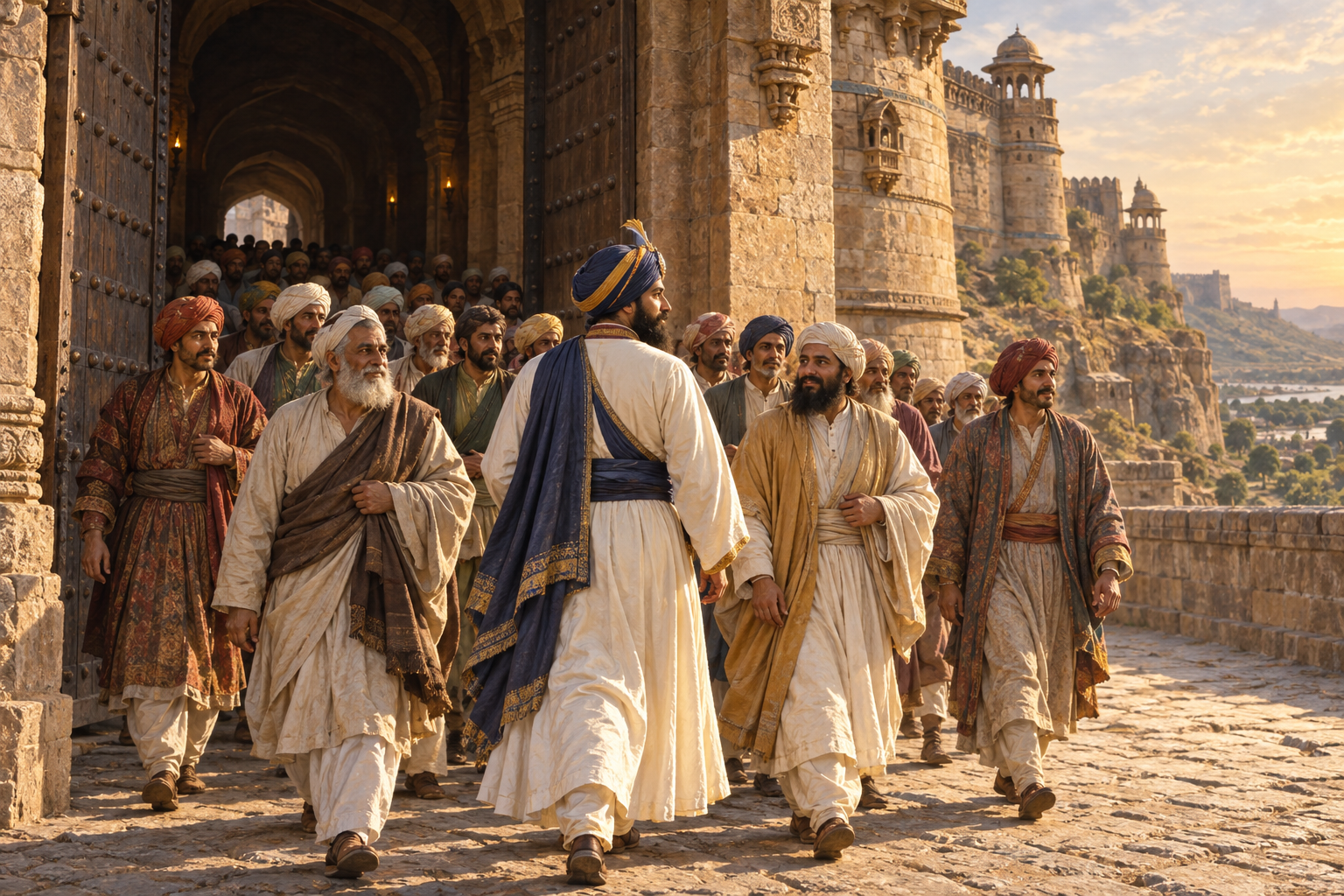
Guru Hargobind, the sixth Sikh Guru, was confined in the imperial prison at Gwalior Fort during the reign of Jahangir. When the emperor eventually agreed to release him, the Guru refused to leave unless the imprisoned rajas could also be freed. That refusal is the point around which the commemoration turns.
In the best-known telling, Jahangir permitted the long-term prisoners to depart if they could remain connected to the Guru’s clothing as he left. Guru Hargobind had a special robe prepared with 52 strings, allowing 52 rajas to hold on and walk out with him. He consequently became known as Bandi Chhor, the Liberator of Prisoners.
The number requires precision. A distinction is made between 51 short-term rajas released immediately and 52 long-term rajas associated with the robe. The familiar image of 52 strings concerns the second group. You should not casually combine the two numbers, claim that 103 rulers held the robe, or replace the well-known 52 with 51.
What makes the episode enduring is not an ingenious escape device by itself. Guru Hargobind could have accepted an individual benefit and walked away. He instead made his own departure inseparable from the fate of people outside his community. The Hindu rajas did not have to become Sikhs to be worthy of his concern. That is a genuine Sikh-Hindu connection grounded in conduct rather than a slogan.
Miri and Piri explain why the Guru acted publicly
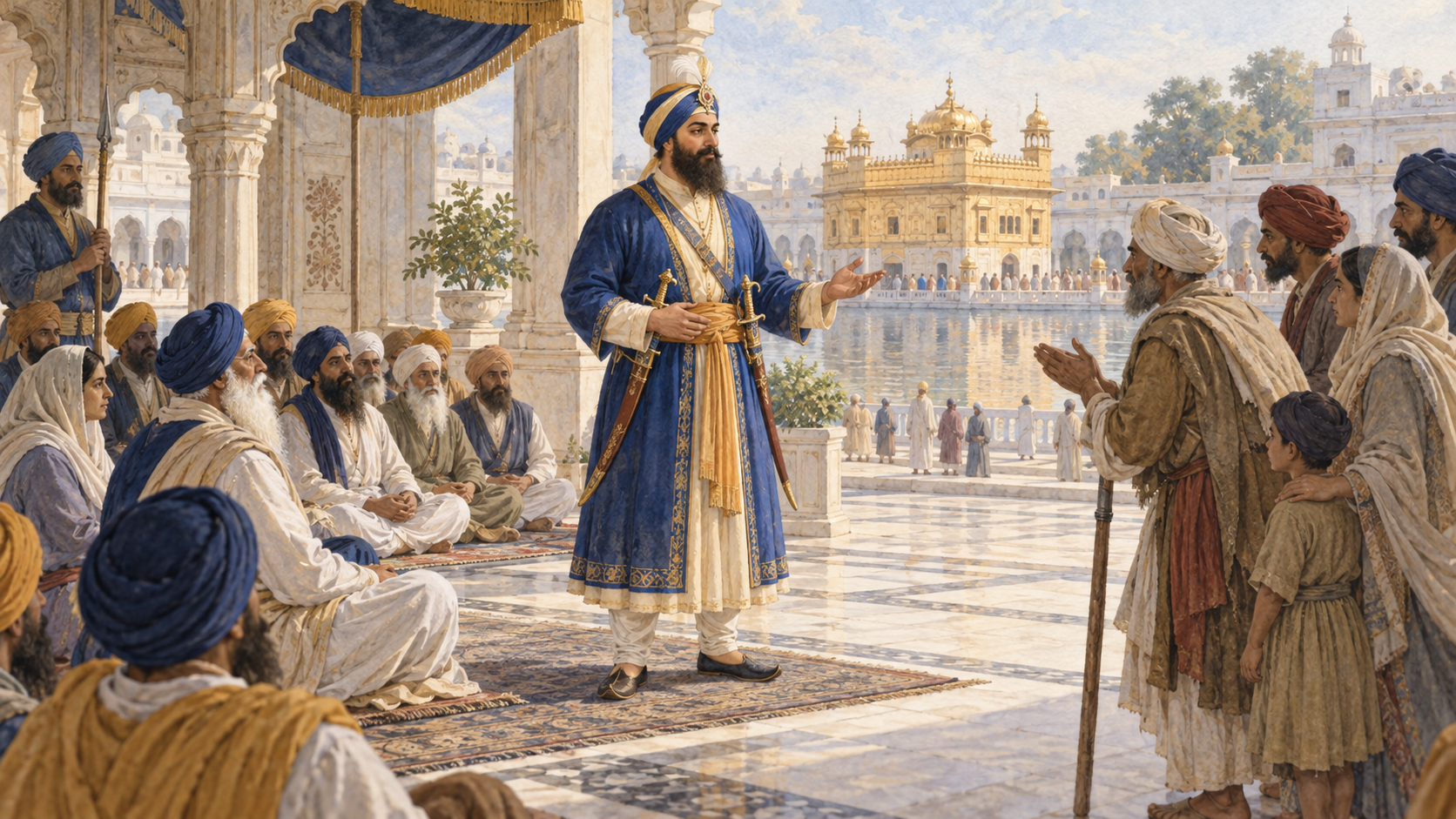
Bandi Chhor makes more sense when you place it within Guru Hargobind’s wider leadership. The martyrdom of his father, Guru Arjan, marked a grave turning point for the Sikh community. After becoming Guru, Hargobind wore two swords representing Miri, temporal responsibility, and Piri, spiritual authority. He encouraged physical training, horsemanship and readiness for defence alongside devotion.
This was not a decision to exchange spirituality for political power. Miri-Piri rejects the idea that inner discipline excuses indifference to public injustice. Spiritual authority has consequences in the world: it must protect dignity, resist coercion and accept responsibility when power confines the innocent.
The institutions associated with Guru Hargobind expressed the same integration. Lohgarh was constructed in Amritsar, and the Akal Takht was established across from the Harimandir. Defence, deliberation and spiritual life were not placed in sealed compartments. Bandi Chhor is Miri-Piri made visible at a prison gate.
If you are teaching this history, do not begin and end with the clever robe. First explain what kind of leadership made the robe possible. Guru Hargobind was a spiritual guide who understood that unjust imprisonment was also a public and moral question. The garment solved the immediate condition; Miri-Piri explains the decision behind it.
Keep the historical core and the disputed details separate
Respect for sacred history does not require false precision. The duration of Guru Hargobind’s confinement is openly uncertain. Estimates cited by different writers range from 40 days to 12 years, while another estimate places it at about one year.
The dates also need care. The arrest is placed sometime in 1613, liberation is associated with 26 October 1619 in the Bhattavahis, and the illuminated return to Amritsar is placed on 28 December 1620. These details do not produce a seamless chronology. If you are preparing a class, social-media graphic or festival address, do not present the length of imprisonment or every date as unanimously settled.
The identities of the rulers remain another open question. No complete, authenticated list presently establishes all 51 short-term and 52 long-term rajas, their kingdoms and the corresponding modern regions. Their probable connections include territories now within Rajasthan, Himachal Pradesh, Uttarakhand, Punjab and neighbouring areas, but probability is not proof of an individual name.
- Present the central remembrance plainly: Guru Hargobind was confined at Gwalior and would not accept freedom that abandoned the other prisoners.
- Introduce the 52-string robe as the celebrated or traditional account of how the long-term rajas left with him.
- Acknowledge that the duration, exact chronology and complete list of rulers remain unsettled.
- Do not circulate a confident list of 52 names unless you can identify and assess the historical basis for every entry.
This distinction strengthens the teaching. The ethical meaning does not depend on pretending that fragmentary records are complete. You can preserve the sacred memory and remain honest about the limits of historical reconstruction at the same time.
Bandi Chhor and Diwali can share light without becoming identical
Bandi Chhor Divas now coincides with the Hindu festival of Diwali, but the names should not be treated as interchangeable labels. Hindu communities approach Diwali through their own theological and regional memories. Sikhs mark Bandi Chhor Divas through Guru Hargobind’s liberation, the release of the rajas and the Guru’s return.
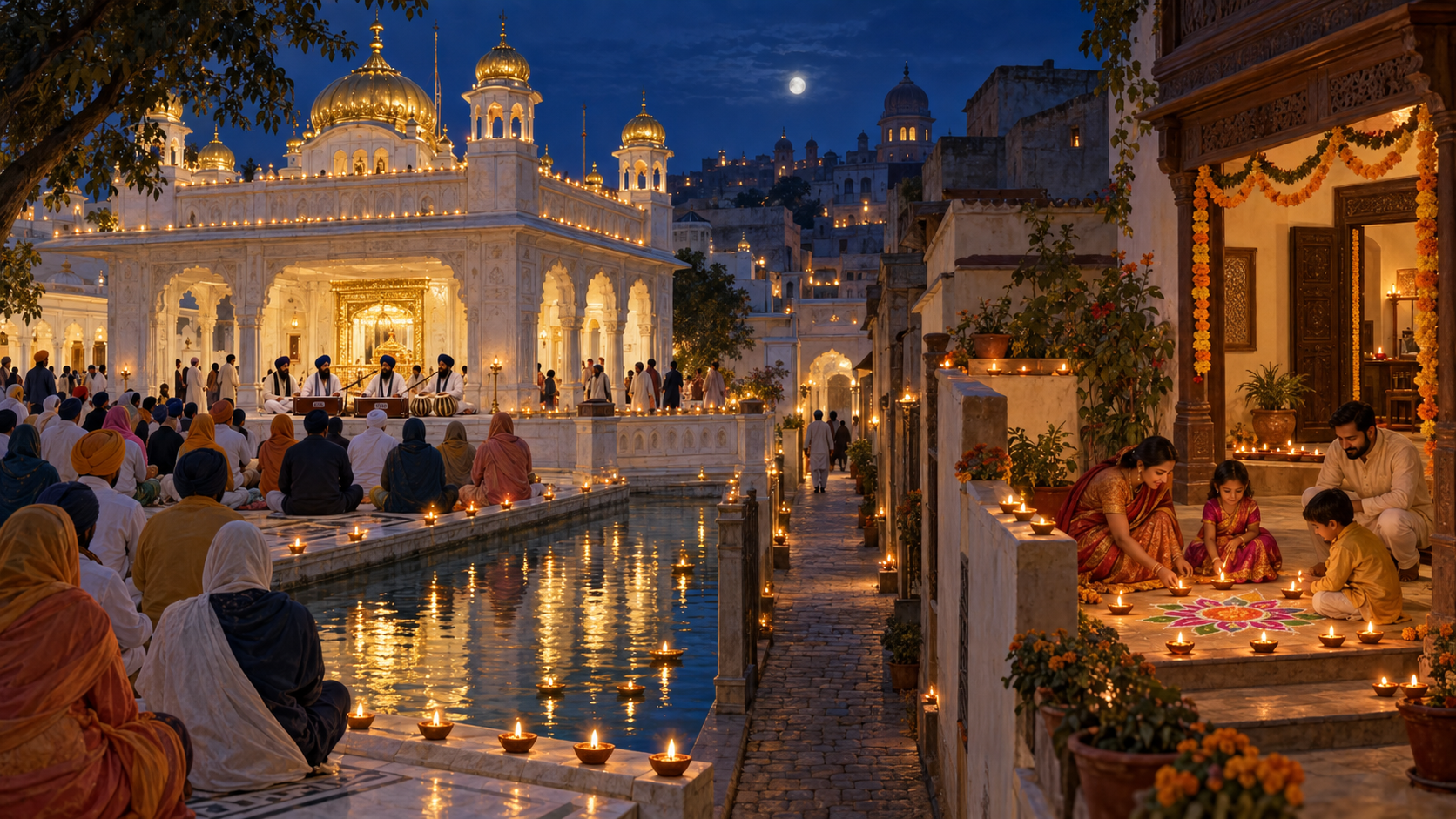
The relationship is neither simple identity nor total separation. Amritsar was illuminated with thousands of lamps for Guru Hargobind’s joyful return, and light became part of the remembrance. The shared festive season can therefore support neighbourly celebration, while the distinct name keeps the Sikh historical meaning audible.
A useful explanation is that Sikhs observe Bandi Chhor Divas during the Diwali season. Avoid saying only that Sikhs celebrate Diwali, because that can erase the liberation narrative. Avoid insisting that Bandi Chhor has nothing to do with the Diwali setting, because the calendar overlap and practice of illumination are real.
The Shiromani Gurdwara Parbandhak Committee formally included Bandi Chhor Divas in the Nanakshahi calendar in 2003. That was a formal calendar action, not a claim that the memory suddenly began in that year. Today, gurdwaras mark the occasion with prayer, kirtan and illumination. Major observances take place at the Golden Temple complex in Amritsar and at Gurdwara Data Bandi Chhor Sahib within Gwalior Fort, the place associated with the Guru’s confinement.
Key takeaways
- Bandi Chhor means Liberator of Prisoners and refers to Guru Hargobind.
- The decisive act was his refusal to accept freedom while other captives remained behind.
- The 52-string robe belongs to the remembered release of 52 long-term rajas; a separate group of 51 short-term rajas is also described.
- Miri-Piri supplies the larger framework: spiritual discipline and responsibility in worldly affairs belong together.
- Bandi Chhor Divas coincides with Diwali but preserves a specifically Sikh remembrance within the shared season of light.
Observe the day so that liberation reaches beyond the lamps
You do not need an elaborate programme to observe Bandi Chhor Divas meaningfully. You do need to keep the Guru’s choice at the centre. Use the following sequence at home, in a classroom or with a community group.
- Name the occasion before decorating. Explain that the light marks a liberation shared with others, not merely the Guru’s personal release.
- Attend a gurdwara programme as a learner. Local observances may include Akhand Path, special prayers and kirtan. Check the schedule, cover your head, remove your shoes where directed and follow the gurdwara’s guidance.
- Connect the lamp to a question. Ask which people remain excluded when those with access, safety or influence secure comfort only for themselves.
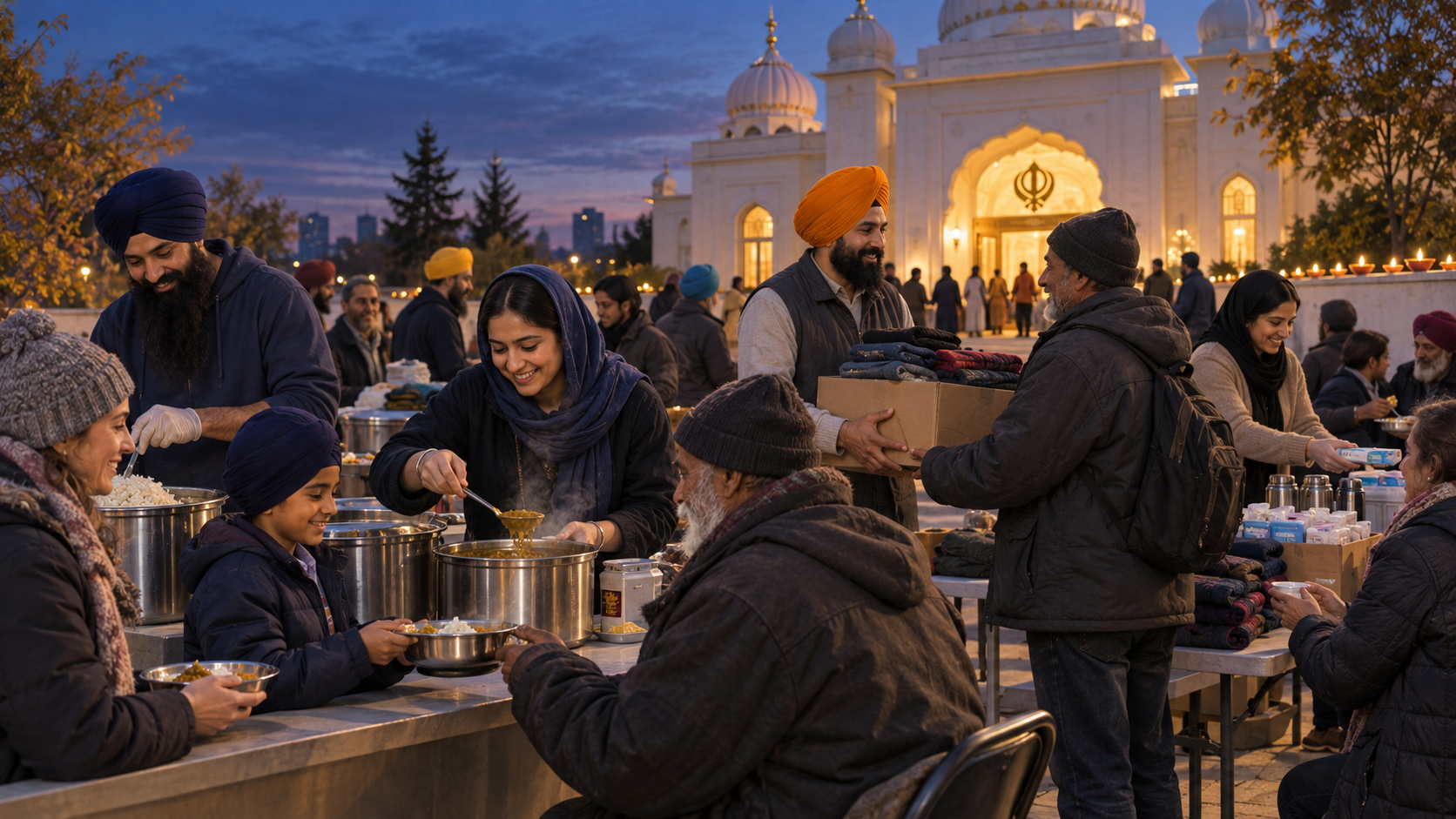
- Pair celebration with one act of seva. Join a trustworthy effort recommended by your gurdwara or community that restores food, companionship, dignity or practical agency to people under pressure.
- Teach certainty and uncertainty separately. Retell the central liberation clearly, identify the robe as the celebrated account, and admit that the exact chronology and complete list of rulers are not settled.
If you need a thirty-second explanation for a child, neighbour or colleague, use this structure: Guru Hargobind, the sixth Sikh Guru, was imprisoned at Gwalior Fort. When his release became possible, he would not leave the other imprisoned rajas behind. In the best-known telling, a robe with 52 strings allowed 52 long-term prisoners to walk out with him. Bandi Chhor Divas remembers freedom that was shared rather than hoarded.
For your next Bandi Chhor Divas, choose one gurdwara programme, learn one part of Guru Hargobind’s life and perform one concrete act of seva. Then let the central question accompany you after the lamps are extinguished: when a door opens for you, who else can you help through it?
References
