

If you are trying to decide whether missionary activity in your district is ordinary religious expression or a threat to Hindu continuity, do not begin with a slogan. Begin with conduct. Ask who is doing what, which human need is involved, what a family is being told, and whether help remains available when conversion is refused.
This discipline does not weaken a pro-Hindu position. It makes that position credible and effective. Hindu civilization is protected when people can inherit their traditions with knowledge, dignity, and material support—and when allegations of pressure are documented well enough to withstand scrutiny.
Choose precision over collective blame
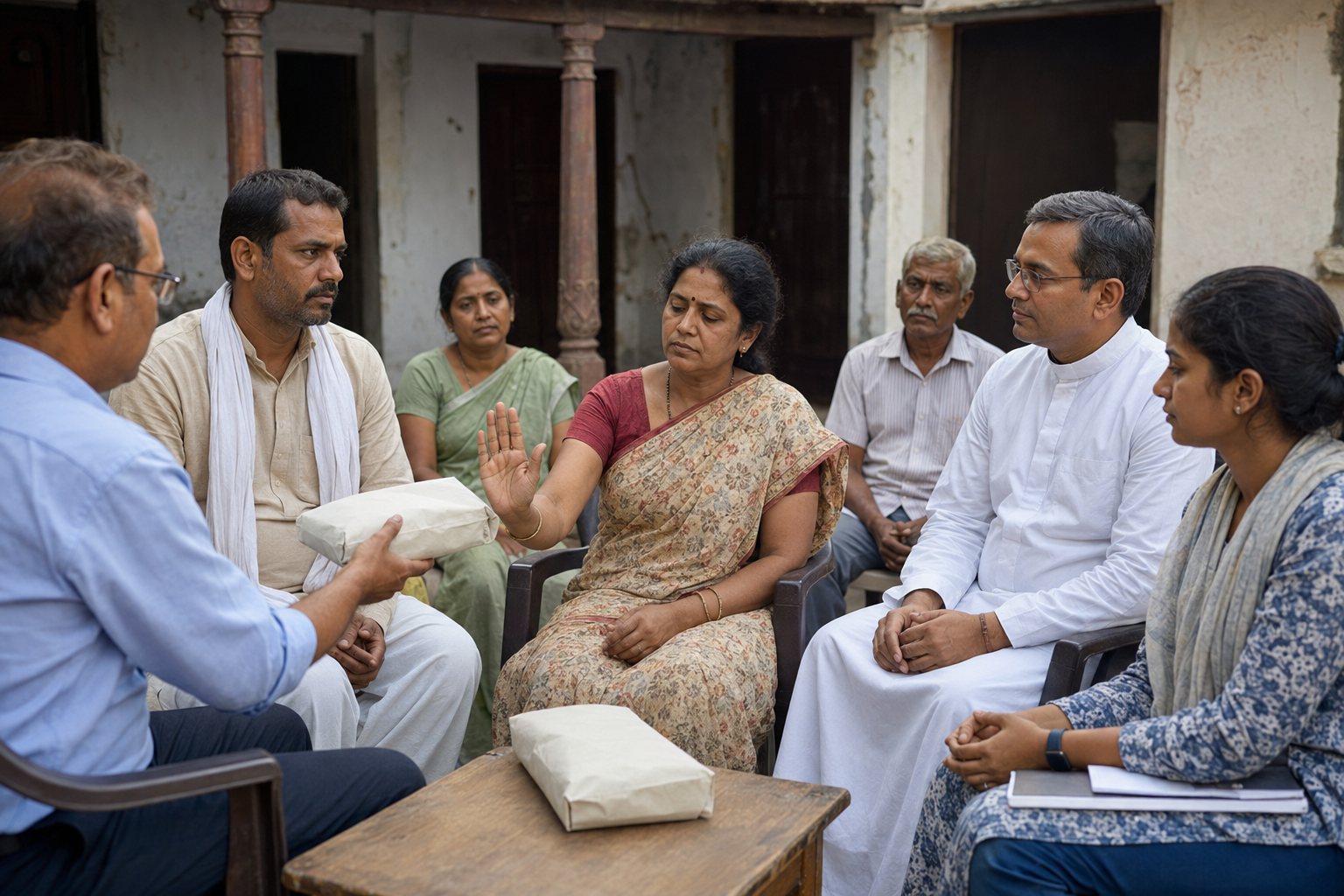
A Christian neighbor, an Indian Christian congregation, a missionary organization, and a religiously affiliated charity are not interchangeable. Treating them as one hostile mass obscures the very activity you may need to examine.
Missionary expansion is an organized effort to gain adherents and replace or displace inherited religious practice. That is different from a person practicing Christianity, discussing belief, or inviting a friend to worship. Freedom of conscience protects the individual. It does not place every institutional method beyond moral scrutiny.
Calling missionary expansion an unfinished conquest of India gives forceful expression to a Hindu civilizational fear. The phrase can identify institutional ambition and unequal power, but it cannot substitute for evidence about a particular school, charity, congregation, or worker. It should begin an inquiry, not end one.
Use four distinct categories when discussing a local situation:
- Personal faith: A person worships, identifies as Christian, or speaks about personal belief without controlling another person’s access to a benefit.
- Open evangelism: A person or organization explicitly invites others to accept Christian doctrine. You may contest its claims, but you should still describe the invitation accurately.
- Mission-linked service: A school, clinic, relief program, hostel, or charity has a religious connection. The relevant questions are whether that connection is disclosed and whether religious participation affects access to service.
- Manipulative conversion activity: An allegation that aid, employment, education, protection, or another benefit was conditioned on religious compliance; that material facts were concealed; or that authority over a vulnerable person was abused. Treat this as an allegation until the evidence establishes what occurred.
Use the narrowest accurate description. If someone offered to pray with a family, call it an invitation. If someone allegedly withheld food unless the family joined a ritual, record the exact condition, the words used, and the evidence. Do not inflate the first event or euphemize the second. Precision determines what response is proportionate.
Look for the mechanism that weakens cultural continuity

A civilization does not become vulnerable only when someone signs a conversion form. It becomes vulnerable earlier, when children inherit labels without knowledge, families encounter crises without community support, inherited practices are presented only as embarrassment, or socially excluded people find belonging everywhere except among fellow Hindus.
That means counting converts is not enough. You need to examine the conditions in which a religious decision is made. Four gaps deserve attention:
- The knowledge gap: Can young Hindus explain the meaning of the practices they see at home, or have they learned only the outer form? Give them language, context, and room to question rather than demanding memorized loyalty.
- The service gap: Whom does a family call when it needs tutoring, food, hospital navigation, help with documents, or an emergency referral? If the Hindu community is absent in moments of dependence, speeches delivered later will not repair that absence.
- The dignity gap: Does a person experience humiliation because of caste, poverty, occupation, language, disability, or family background? A community cannot plausibly defend belonging while tolerating exclusion inside its own institutions.
- The participation gap: Are temples and cultural associations places where ordinary families can contribute, learn, and lead, or are they spectators around a closed circle? Durable identity grows through responsibility, not occasional attendance.
Run a simple locality audit before launching a campaign. Ask which crisis most often sends families outside existing Hindu networks, which traditions local children cannot explain, which households rarely enter community spaces, and which oral histories will disappear when the present generation of elders is gone.
Then match the response to the gap. If students lack academic help, organize tutoring rather than another lecture about conversion. If isolated elders hold ritual knowledge, record them with consent. If a family is excluded from a temple committee, repair participation before asking that family to defend the institution. This is not appeasement. It is civilizational maintenance.
Investigate local allegations before making them public
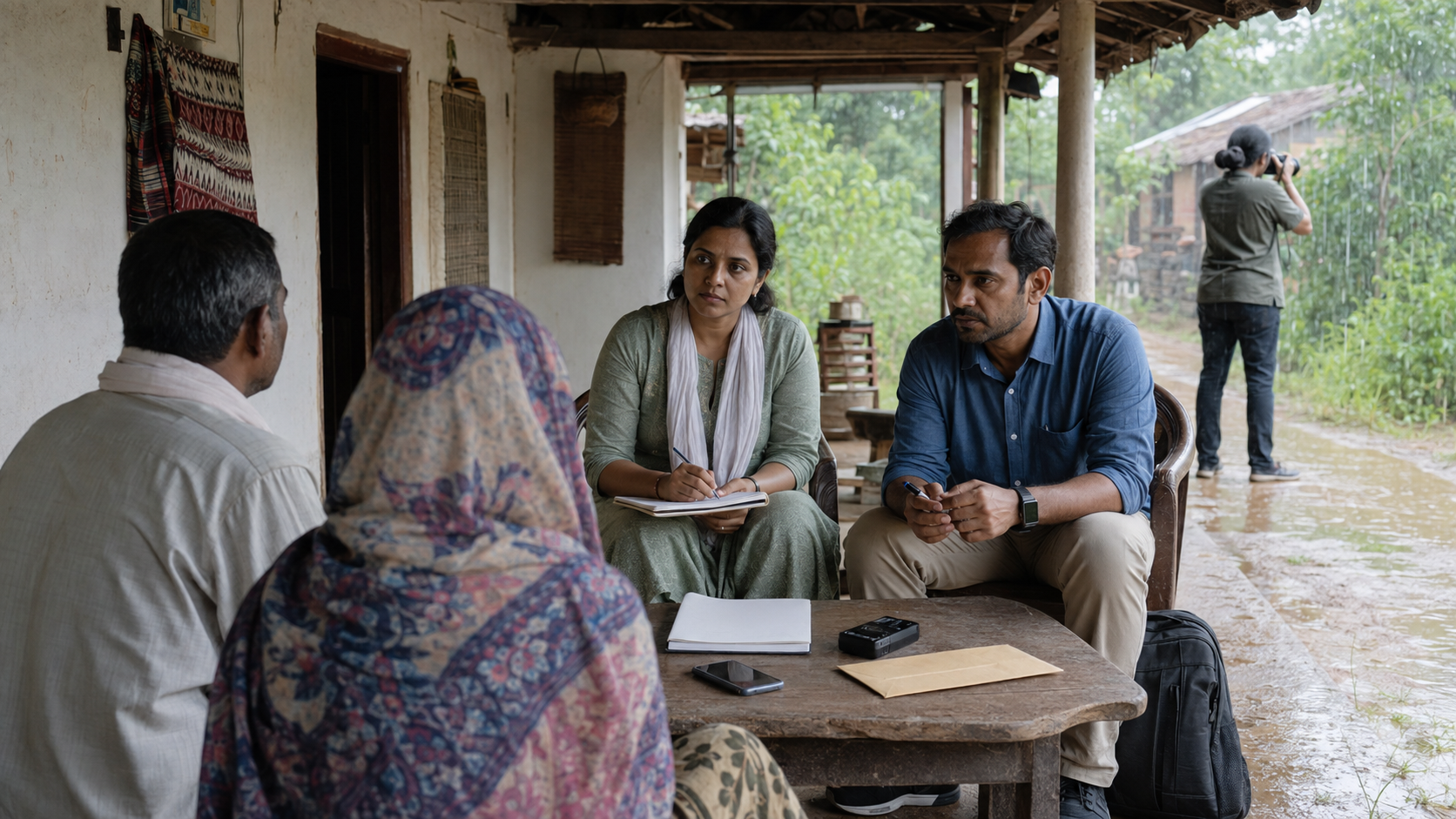
When someone tells you that conversions are occurring through pressure or deception, take the concern seriously without immediately broadcasting it. A careless accusation can expose a vulnerable family, defame an innocent person, trigger communal hostility, and make a genuine complaint harder to prove.
- Capture the first account privately. Record the date, place, people present, exact words remembered, and sequence of events. Mark clearly whether the speaker witnessed the conduct or heard about it from someone else.
- Identify the alleged exchange. What benefit, opportunity, threat, or religious request was involved? Was continued help said to depend on prayer, attendance, baptism, a change of name, removal of a household practice, or another act? Do not infer a condition that nobody expressed.
- Preserve original material. Keep messages, forms, leaflets, and correspondence in their original state. Note who supplied each item and when. Do not crop material in a way that removes context, and do not obtain recordings or private data unlawfully.
- Protect vulnerable people. Redact children’s identities and private medical, financial, and family information. Do not publish photographs, addresses, phone numbers, or school details merely to make a complaint more dramatic.
- Request an institutional answer. Ask in writing whether religious participation is required, whether assistance continues after a person refuses it, how consent is recorded, what personal data is collected, and where complaints can be filed.
- Route the complaint according to the harm. An internal policy failure may go to organizational leadership, trustees, funders, or an appropriate regulator. Suspected illegality should be discussed with a qualified lawyer familiar with the law and procedure in the relevant state. Do not guess at legal conclusions.
A usable incident summary follows one disciplined sentence: “On [date] at [place], [identified actor] offered, requested, or withheld [specific thing] while stating [words as accurately recalled]; [direct witnesses or preserved material] support the account, and [institution] responded [response or no response].” Separate each unknown from each verified fact.
Do not stage a confrontation, trespass, threaten workers or worshippers, seize devices, obstruct medical or relief work, or circulate names for online punishment. Those actions can endanger people, contaminate evidence, create legal exposure, and shift attention away from the conduct you wanted examined. A lawful response is not passive; it is controlled.
Make Hindu institutions capable of carrying an inheritance

Opposition alone cannot transmit a civilization. A child needs more than a list of forces to resist. A family needs practices it understands, a community in which it has standing, and institutions that remain present during ordinary life as well as public controversy.
A practical Hindu civilizational program can begin locally:
- Teach for understanding. Hold regular sessions in which young people learn the local language of worship, the meaning of one practice at a time, the history of their temple or tradition, and the strongest questions critics ask. Let them challenge weak answers without being shamed.
- Build a service desk. Create one clearly advertised point of contact for tutoring, food support, hospital navigation, emergency referrals, and assistance with public services. Publish eligibility rules, response times, and the limits of what volunteers can provide.
- Serve without purchasing loyalty. Do not make aid depend on ritual attendance, political agreement, donations, or public declarations of Hindu identity. If coercive conditionality is wrong when others use it, it remains wrong when used in the name of Dharma.
- Remove internal humiliation. Review who receives access, leadership roles, teaching opportunities, and practical help. Give people a confidential way to report discrimination or mistreatment, and require a recorded response from responsible office-bearers.
- Preserve local memory. With informed consent, record elders explaining festivals, pilgrimage routes, family observances, temple arts, songs, and the histories of local deities. Store copies under accountable community stewardship rather than on one volunteer’s personal device.
- Train volunteers for the work they actually do. Anyone handling children, private information, distressed families, or financial aid needs safeguarding rules, confidentiality boundaries, and reliable referral contacts. Religious enthusiasm is not a substitute for professional medical, legal, or psychological help.
- Publish governance. Make donation use, assistance criteria, decision-makers, conflicts of interest, and grievance contacts visible. Transparency strengthens trust and gives Hindu advocates standing to demand the same clarity from mission-linked institutions.
These measures reduce the vulnerabilities that can make outside dependency decisive. They do not guarantee that everyone will remain Hindu, nor should compulsion be the goal. Freedom of conscience includes the possibility that an informed adult may leave an inherited tradition. The legitimate civilizational aim is to ensure that the choice is knowledgeable and voluntary—not purchased through desperation, extracted through authority, or produced by ignorance that Hindu institutions refused to address.
Measure progress by capability rather than outrage. Track whether families know where to seek help, whether complaints receive answers, whether young people can explain their practices in their own words, whether excluded households participate, and whether local knowledge is being preserved. A viral accusation may disappear in days; an institution built with discipline can serve a generation.
Key takeaways
- Judge missionary activity by identifiable conduct, not by a person’s Christian identity.
- Distinguish personal faith, open evangelism, mission-linked service, and alleged manipulation before choosing a response.
- Test the decisive issue: whether aid, education, employment, protection, or another benefit was conditioned on religious compliance.
- Document direct evidence, protect private identities, obtain an institutional response, and use lawful channels.
- Do not answer a service vacuum with rhetoric. Build tutoring, crisis support, inclusive participation, cultural education, and accountable governance.
- Defend Hindu continuity through informed belonging and voluntary commitment, not collective blame or coercion.
You can begin this week in one locality. Name one cultural-transmission gap and one practical-service gap. Appoint accountable coordinators, open a confidential incident log, publish fair rules for assistance, and review the work each month. Keep the scope small enough to function and the records clear enough to earn trust.
A Dharmic response must be firm enough to expose coercion and disciplined enough to respect conscience. Protect the person, test the institution, and rebuild the community. That gives Hindu civilization something stronger than a defensive slogan: the capacity to carry itself forward.
References
