

You may have been told that a difficult Mahadasha is behind your delays, restlessness or sudden detachment. Then comes an overwhelming menu of pujas, mantras, fasts, donations and gemstones. Your real question is simpler: which remedy can you practise sincerely without fear, reckless spending or neglecting the duties already in front of you?
A useful Mahadasha remedy should make your conduct steadier, your mind less reactive and your relationship with dharma more honest. The aim is not to purchase control over the future. It is to meet a demanding period with devotion, discipline, service and better judgement.
First identify the pattern you are actually facing
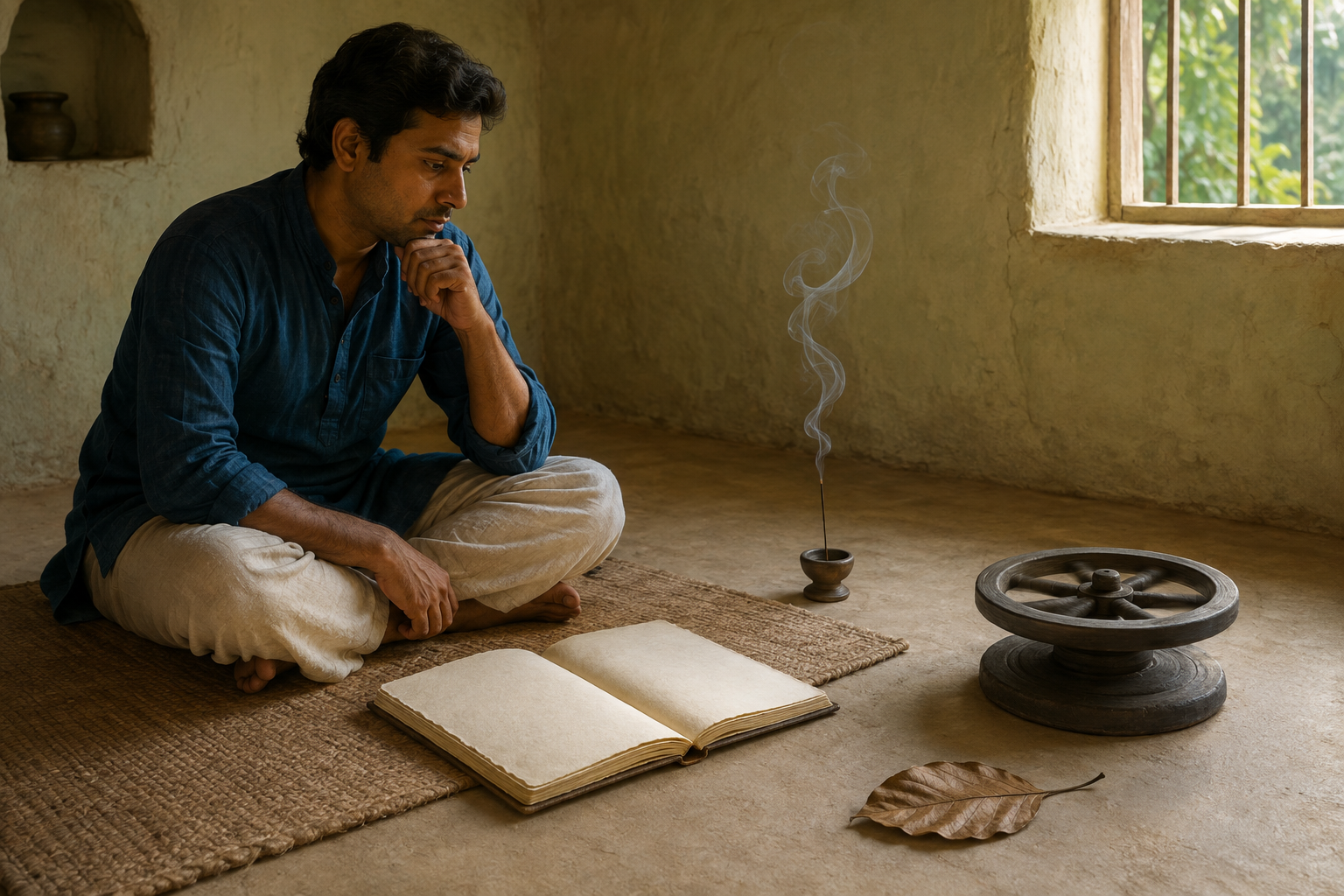
Do not begin by buying a supposed cure. Begin by naming the pressure. In traditional Jyotisha, Shani, Rahu and Ketu describe different kinds of difficulty and therefore call for different forms of inner work. These associations are interpretive lenses, not proof that every setback has a planetary cause.
| Mahadasha | Traditional duration | Commonly associated experience | Quality to cultivate |
|---|---|---|---|
| Shani | 19 years | Long tests of patience, hard work, accountability and structural change | Consistency, humility and responsible effort |
| Rahu | 18 years | Intense ambition, material highs or lows, restlessness, confusion and unconventional developments | Discernment, restraint and clarity |
| Ketu | 7 years | Detachment, sudden changes, uncertainty, isolation and heightened spiritual concern | Grounded spiritual practice and responsible non-attachment |
Write a single sentence before selecting a remedy: “My recurring difficulty is ______, and the dharmic quality I need to strengthen is ______.” If you cannot complete that sentence, another ritual will probably add activity without adding direction.
You may recognise traits from more than one row. Choose the pressure that is most active in your life rather than trying to remedy every possible influence at once. These Mahadashas span years, so living in permanent crisis mode is neither practical nor spiritually healthy.
Build a remedy around devotion, conduct and service
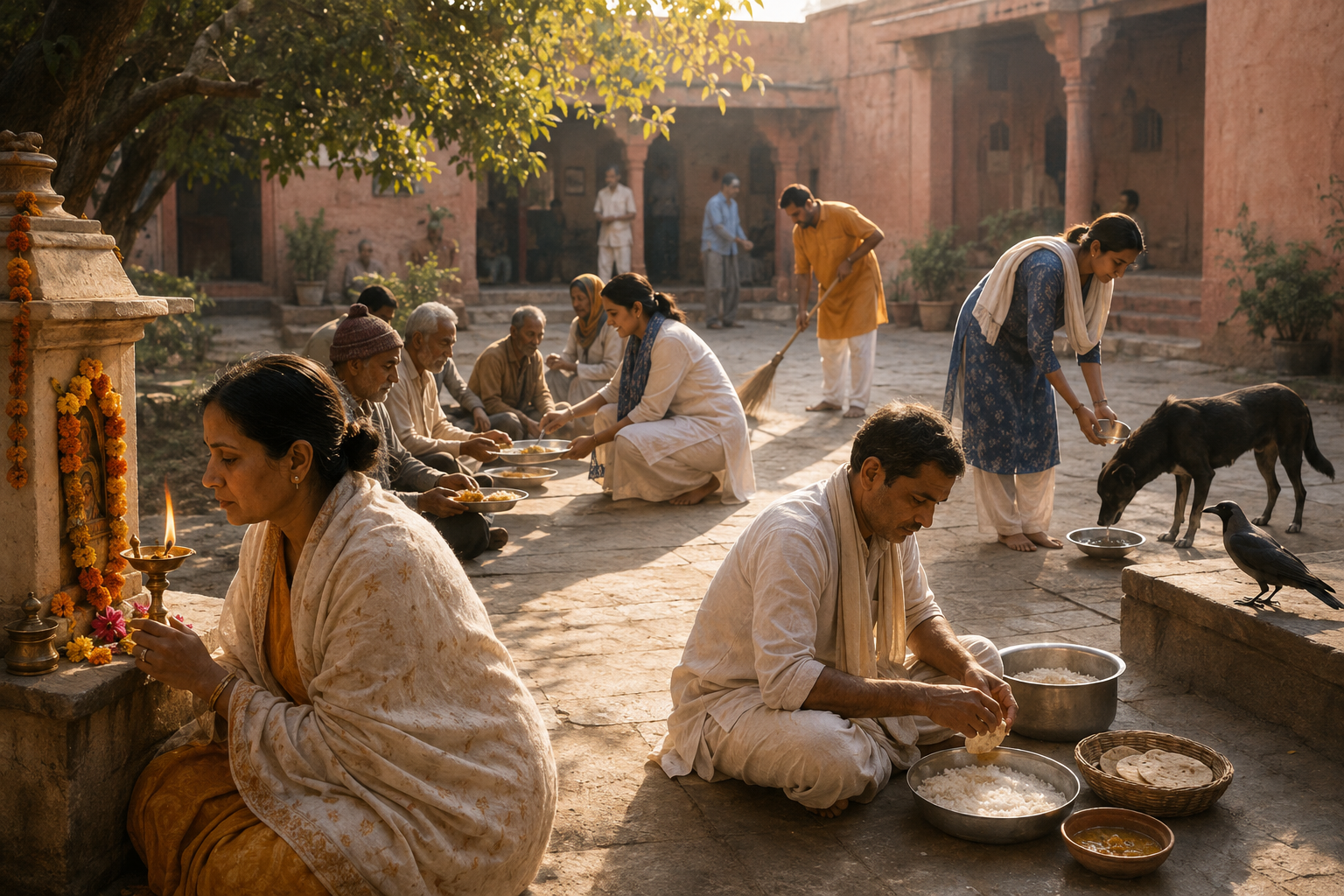
The established remedy families include puja, vrata, mantra, seva, daana and gemstones for Shani, corresponding devotional and charitable practices for Rahu, and puja, mantra, seva, daana and gemstones for Ketu. You do not need to undertake every category. A coherent practice is better than a crowded collection of remedies.
- State the purpose. Name the tendency you are working on: avoidance under Shani, impulsive confusion under Rahu or irresponsible withdrawal under Ketu.
- Choose one devotional anchor. Use a puja or mantra received through your guru, family tradition, sampradaya or trusted temple. If specialised initiation or pronunciation is required, seek instruction instead of improvising from an anonymous list.
- Add one correction in conduct. Make the spiritual intention observable. Complete a neglected obligation, verify a tempting claim before acting, or remain present for a duty you feel like abandoning.
- Connect the practice to seva or daana. Decide whom you will serve, what you can give without harming your household and how the commitment will be sustained. Quiet, affordable giving is enough; display is not part of the remedy.
- Review the effect on your character. Ask whether you are becoming more patient, clear and responsible. If the ritual is feeding fear, superiority or compulsive spending, revise it with competent guidance.
If your vrata includes fasting, do not turn deprivation into a test of devotion. Where fasting may be unsafe, take appropriate medical advice and ask a knowledgeable priest or teacher whether your tradition permits another form of restraint. A spiritual observance should not require you to ignore legitimate health needs.
Match the remedy to Shani, Rahu or Ketu

For Shani: make consistency the remedy
Shani is traditionally connected with karmic accountability, perseverance, demanding work and changes to the structure of life. A burst of elaborate worship followed by another period of avoidance misses that lesson. Choose a practice modest enough to continue when you are tired, delayed or disappointed.
- Identify one duty you repeatedly postpone and give it a fixed place in your routine.
- Keep one puja or mantra practice at a cadence you can honestly sustain.
- Use seva and daana to loosen resentment about effort and responsibility, while staying within your means.
- Correct the conduct that created avoidable disorder instead of asking ritual to conceal it.
The warning sign is a split between worship and life: disciplined at the altar but careless with promises, work or family obligations. For Shani, the repaired obligation may be as important as the formal observance.
For Rahu: reduce confusion before feeding ambition
Rahu is associated with ambition, sudden material movement, psychological restlessness and maya. The practical danger is not ambition itself. It is acting while fascination, fear or urgency has weakened your discernment.
- Before a major decision, write down the claimed benefit, the concrete risk and your exit path. If you cannot state all three plainly, you do not yet have clarity.
- Keep your mantra or puja stable instead of collecting new techniques whenever anxiety rises.
- Verify dramatic promises through independent facts, especially when money, status or a rapid life change is involved.
- Let seva or daana be quiet. Turning charity into personal display merely gives ambition a religious costume.
Do not make a large purchase, speculative commitment or abrupt career decision solely because someone predicts a Rahu event. Jyotisha may inform reflection, but it cannot replace financial, legal or professional due diligence.
For Ketu: practise detachment without abandoning dharma
Ketu is traditionally connected with vairagya, spiritual movement, sudden change, confusion and isolation. The central distinction is between non-attachment and neglect. Vairagya can loosen clinging; it does not automatically cancel your responsibility to communicate, work, care for dependants or keep reasonable commitments.
- Keep your devotional practice simple enough that it steadies you rather than becoming another escape from ordinary life.
- Maintain a basic rhythm for duties and relationships when the urge to withdraw is strong.
- Use periods of solitude for prayer and discernment, then return deliberately to necessary human contact.
- Choose seva that places you in useful contact with another person’s real need.
If confusion, withdrawal or isolation is seriously disrupting your ability to function or keep yourself safe, seek qualified mental-health care. Puja and mantra can remain part of your spiritual life, but they should not be treated as substitutes for needed care.
Keep gemstones and costly rituals in their proper place
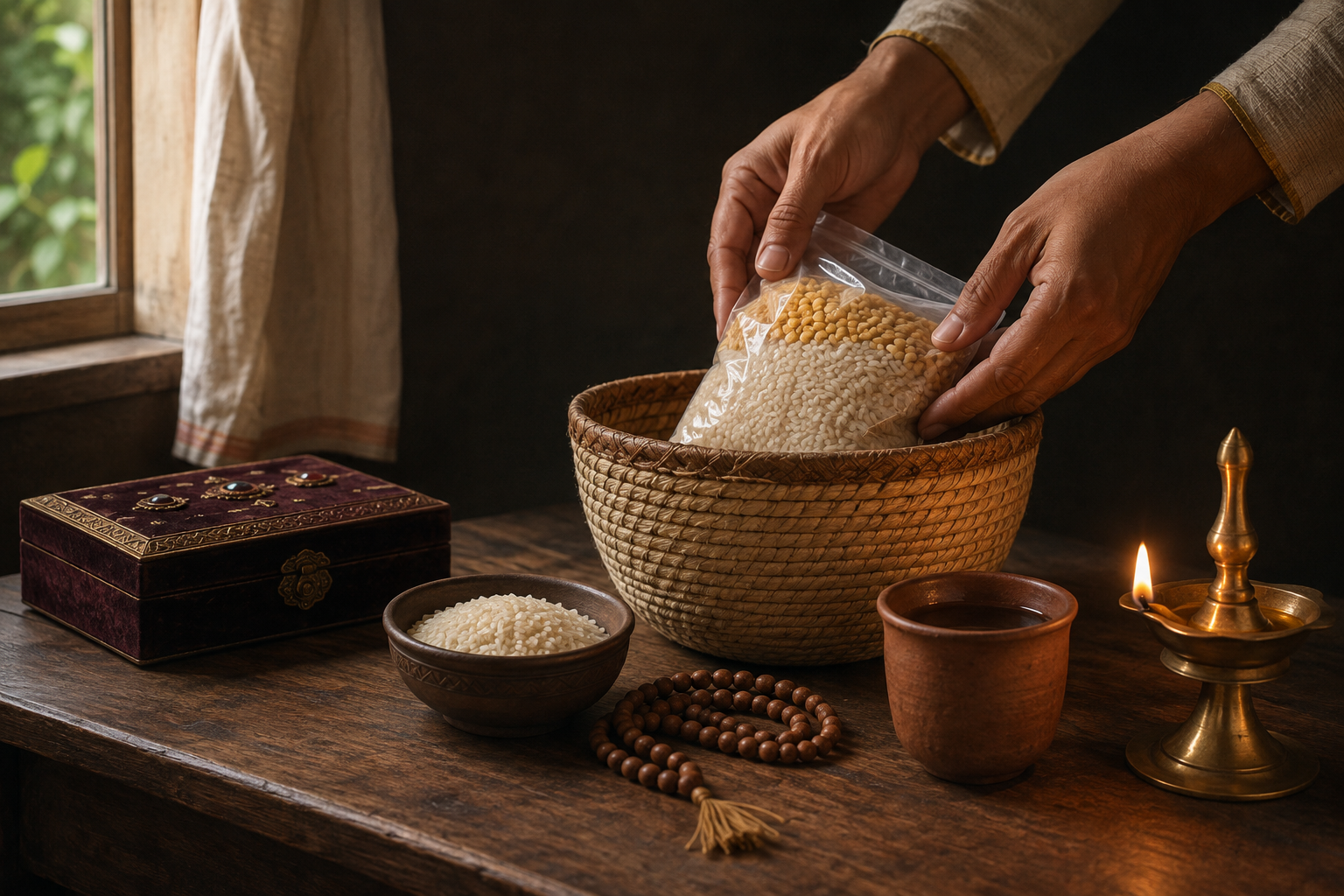
Gemstones appear among the possible remedies for all three Mahadashas, but that does not make a stone the automatic first step. A Mahadasha name is not an entire individual assessment. Treat any gemstone as optional and personalised, and do not infer a specific stone from a generic list.
- Ask the adviser to explain why the recommendation fits your individual situation.
- Ask whether the gemstone is necessary, merely optional or replaceable with a devotional or charitable practice.
- Set your spending limit before discussing size, setting or prestige.
- Ask what authentication, return terms and independent verification accompany the purchase.
- Notice whether the person recommending the stone also profits from selling it.
Never borrow money or strain your household to buy a Mahadasha remedy. Apply the same standard to an expensive puja: understand what is being performed, why it is appropriate and what it will cost before agreeing. The scale of an expenditure is not a measure of bhakti.
A trustworthy practitioner should be able to distinguish tradition from guarantee. Be cautious when anyone promises a certain promotion, marriage, cure, windfall or removal of all adversity in exchange for a purchase. Remedies belong within spiritual discipline; they are not contractual control over karma.
Key takeaways
- Shani calls for patient effort, accountability and consistency more than ritual intensity.
- Rahu calls for discernment, restraint and fact-checking before ambition becomes impulsive action.
- Ketu calls for grounded spirituality that does not turn detachment into neglect or isolation.
- Begin with one devotional anchor, one behavioural correction and one sustainable form of seva or daana.
- Use guidance from a trusted guru, sampradaya, temple or competent Jyotisha practitioner for personalised observances.
- Treat fasting, gemstones and costly rituals as optional matters requiring safety, affordability and informed judgement.
Choose the Mahadasha pattern that most closely matches your present difficulty. Write down the quality you need to cultivate, put your first observance into your actual routine and repair one neglected duty alongside it. Let the remedy become ordinary enough to live, because sustained dharmic conduct is more useful than a dramatic practice you cannot carry.
References
- Hindu Pad – Shani Mahadasha Remedies: Puja, Vrat, Remedial Mantras, Seva, Daana, Gemstones
- Hindu Pad – Rahu Mahadasha Remedies: Pooja, Remedial Mantra, Seva, Daana, Gemstones
- Hindu Pad – Ketu Mahadasha Remedies: Puja, Mantra, Seva, Daan, Gemstones
