

If you are looking at a floor plan and asking what Varuna in the west and Indra in the east actually mean, begin with the relationship between them. One guards the direction of arrival and awakening; the other guards the direction of containment and completion. Vastu asks you to read that entire axis, not merely attach two divine names to opposite walls.
This distinction matters because a directional guardian is not a one-line instruction about where to put a door, water tank, desk, or bedroom. The pairing gives you a disciplined way to notice how your home handles beginnings, activity, limits, and closure. Use it first as a framework for attention. Consider physical alterations only after the whole dwelling has been assessed.
Read Indra and Varuna as one east-west axis
A Dikpala is a guardian of a direction. In the Vastu framework considered here, Indra presides over the east and Varuna over the west. Their placement turns orientation into sacred relationship: a dwelling is not treated as inert shelter, but as an ordered space situated within a larger world.
The east naturally evokes emergence. It is where daylight appears and the visible day begins. Indra’s associations with authority, vigour, atmospheric force, and the overcoming of obstruction fit that directional character. The east therefore raises questions about readiness: How does life begin in this home? Is there clarity at the point of entry into action? Can initiative move without becoming disorder?
The west naturally evokes gathering and completion. It is where daylight withdraws and activity moves toward rest. Varuna’s associations with water, depth, encompassing order, and restraint fit that directional character. The west raises a different set of questions: How does the household contain what it has begun? Where are duties completed? What prevents activity, possessions, or unresolved obligations from spreading without limit?
Indra and Varuna should not be reduced to a crude contest between a favourable side and an unfavourable side. They represent complementary requirements. Initiative without restraint becomes turbulence. Restraint without initiative becomes stagnation. A healthy reading of the axis asks whether your household can both act and govern its action.
What Indra’s eastern guardianship asks you to notice
When you examine the east, do not start by hunting for a defect. First observe what is actually there. Mark the true eastern portion on a floor plan and note its openings, obstructions, light, circulation, cleanliness, and daily use. Do not assume that the wall facing the street is east or that the main entrance determines every other direction.
Then read the space through three practical lenses:
- Physical readiness: Can the area be approached and used without avoidable clutter, broken fittings, or confused circulation?
- Functional beginnings: Which household activities start there? Does the space support attention and deliberate action, or does it encourage frantic movement?
- Human conduct: Are decisions made clearly and responsibilities accepted, or is the household relying on an attractive arrangement to compensate for disorganisation?
This keeps Indra’s symbolism connected to lived dharma. A clean and luminous eastern area can serve as a reminder of alertness, courage, and purposeful beginning. It cannot manufacture those qualities for you. If mornings remain chaotic, commitments are repeatedly delayed, or authority in the household is exercised harshly, moving an object will not resolve the underlying problem.
Indra’s position in the east also does not establish that every eastern room or entrance is automatically suitable for every purpose. A direction-deity correspondence is one layer of Vastu interpretation. The building’s complete plan, proportions, centre, circulation, surroundings, and the method followed by a particular tradition may all affect a prescription. Keep the symbolic meaning and the architectural ruling separate until both have been examined.
What Varuna’s western guardianship asks you to notice
Turn next to the west and look for the household’s capacity to receive, contain, and complete. This is not a demand to make the west gloomy, sealed, or inactive. Containment is not neglect. It is the ability to give activity a boundary and bring it to a proper conclusion.
Ask concrete questions. Does the western portion accumulate things that no one has decided to keep, repair, give away, or discard? Do unfinished tasks disappear there? Are cupboards, records, or household supplies maintained well enough that the family knows what it possesses? Does the area support a calm end to daily activity, or has it become a physical register of postponed decisions?
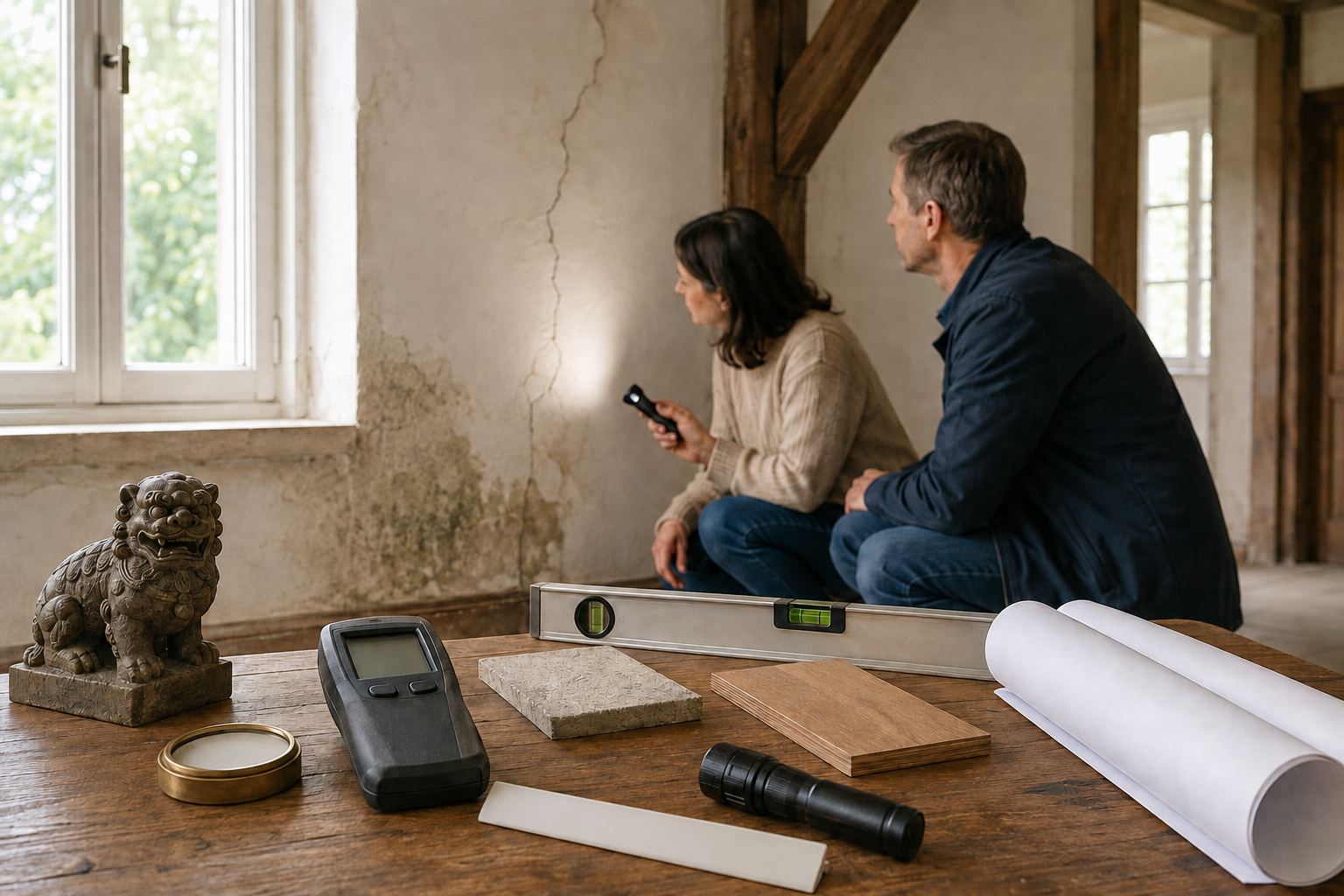
Varuna’s connection with water requires particular care in interpretation. It does not, by itself, prove that every water-related fixture belongs in the west. A deity’s symbolism and a technical placement rule are not interchangeable. Water storage, drainage, plumbing, moisture control, and room placement involve the building as a whole. Treat leaks, dampness, mould, and drainage failures as maintenance problems requiring competent attention, not as omens to be managed only through ritual.
At the ethical level, Varuna’s west asks whether power is answerable to order. Indra can signify the capacity to initiate and overcome; Varuna reminds the householder that strength needs limits, promises need fulfilment, and action needs completion. That is why the pairing is more useful than an isolated list of auspicious objects. It directs you from decoration toward conduct.
Apply the symbolism without turning it into superstition
You can make this teaching practical without pretending that symbolism is a substitute for architectural analysis. Use the following sequence whenever you assess a home, office, or room:
- Establish the directions on the actual plan. Label east and west clearly before interpreting either side. If you are working with a Vastu practitioner, ask which orientation convention is being used and keep that convention consistent.
- Record what exists before judging it. Note openings, fixed walls, furniture, stored objects, maintenance problems, movement paths, and the activities that occur in each area.
- Separate observation from interpretation. “The western cupboard contains unfinished paperwork” is an observation. “This reflects failed containment” is an interpretation. “Move the cupboard” is a prescription. Do not collapse all three into one claim.
- Audit the relationship. In the east, examine how the household begins and mobilises. In the west, examine how it completes, stores, reconciles, and rests. The question is whether the two functions support each other.
- Start with reversible corrections. Remove genuine obstructions, clean neglected areas, repair broken fittings, organise what is already present, and change a dysfunctional pattern of use. These actions improve the dwelling even if a later technical assessment leads to a different Vastu prescription.
- Treat sacred representation respectfully. If your household tradition uses an image, mantra, or remembrance of a Dikpala, let it support disciplined attention and worship. Do not use a deity as a decorative “fix” for a problem you have not understood.
- Pause before structural work. Moving walls, doors, plumbing, or major services can be costly and may affect safety or building compliance. Seek both a practitioner who can explain the relevant Vastu method and an appropriately qualified building professional before making an irreversible change.
This process also helps you evaluate advice. Be cautious when someone jumps directly from “Varuna rules the west” or “Indra rules the east” to a costly remedy without examining the complete plan. Ask which principle leads to the recommendation, what other parts of the dwelling were considered, whether the rule varies across traditions, and whether a reversible response could test the interpretation first.
You do not need to deny the sacred dimension in order to reject mechanical fear. Traditional symbolism becomes more meaningful when it sharpens observation and conduct. It becomes less meaningful when every inconvenience is blamed on a direction or every anxiety is answered with another purchased object.
Key takeaways
- Indra guards the east and Varuna guards the west within this Dikpala framework.
- The east-west pairing concerns a relationship: initiative and emergence must be joined to containment, accountability, and completion.
- A directional guardian is not automatically a room-placement command. Symbolic correspondence and technical architectural prescription are different layers.
- Read the actual floor plan before interpreting the directions; do not infer orientation from the street, facade, or entrance alone.
- Begin with reversible improvements such as clearing real obstructions, repairing damage, organising storage, and correcting patterns of use.
- Do not undertake expensive structural changes from one symbolic association. Have the whole dwelling assessed and involve a qualified building professional where construction is concerned.
The next time you stand between the eastern and western sides of your home, resist the urge to ask which side is simply “good.” Ask a better pair of questions: What are we being called to begin, and how will we bring it into order? That is where Indra and Varuna become more than labels on a diagram. They become guardians of a complete household rhythm.



References
