

If you are planning Parivartini Ekadashi in 2026, mark September 22 first, then confirm the observance and parana timings for your own city. That second step matters: a Hindu lunar vrata is not governed simply by the midnight-to-midnight date on a civil calendar.
You may also encounter the names Jayanti Ekadashi, Parsva Ekadashi, Vamana Ekadashi, or Jal Jilni Ekadashi. They refer to the same Bhadrapada observance in this context. The name Parivartini points to a turning, and the day gives you a practical occasion to turn your own attention from habit toward Bhagavan, self-restraint, and Dharma.
September 22 is the date, but your local panchang completes the answer

Parivartini, or Jayanti, Ekadashi is observed on the eleventh lunar day of Bhadrapada. In 2026, the published date is September 22.
Treat that as the date to reserve, not as a universal timetable. Tithi boundaries vary by location, and the correct period for ending the fast can also differ. This is especially important if you live outside Bharat and are looking at a calendar calculated for an Indian city.
Before the vrata, check a reliable panchang or the calendar used by your temple or sampradaya. Record three things in one place:
- The Ekadashi observance date for your location.
- The local start and end of the Ekadashi tithi.
- The prescribed parana window on the following day.
If your household tradition and a general online calendar differ, follow the authority that normally guides your observances. Calendar variation does not make the vrata meaningless; it means the lunar calculation and the lineage convention both deserve attention.
Choose a vrata you can observe with steadiness
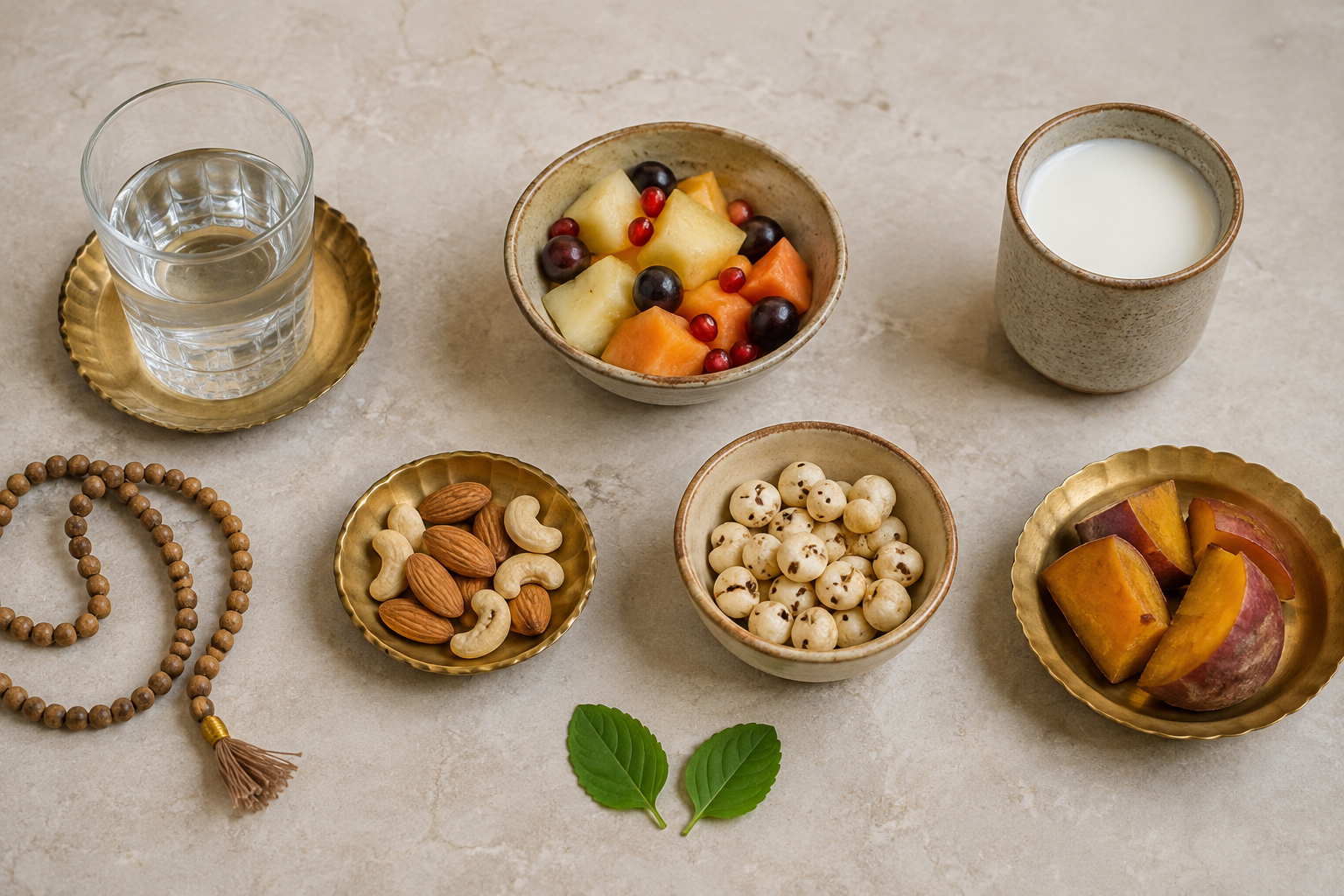
Decide the form of your vrata before the day begins. Waiting until hunger, work, travel, or family obligations intervene turns a devotional choice into repeated negotiation. A clear sankalpa is more useful than an ambitious plan that collapses halfway through the day.
Ekadashi disciplines vary among families and sampradayas. Some devotees undertake a complete fast, while others take water, fruit, milk, or permitted simple food. Many Ekadashi traditions avoid grains and pulses. Use the rule taught in your own tradition rather than assembling the strictest-looking practices from unrelated calendars.
The food rule is one part of the vrata, not its entire meaning. Give the day a positive discipline as well: additional japa, Vishnu smarana, katha shravana, quiet study, temple worship, dana, or seva. Otherwise, Ekadashi can shrink into a menu change while ordinary distraction continues untouched.
Choose one restraint that addresses your actual weakness. If harsh speech is the problem, keep deliberate silence during unnecessary arguments. If constant scrolling fragments your attention, set the phone aside during worship and study. If irritation appears whenever routine changes, make patience itself part of the offering. The vrata becomes personal when restraint is joined to self-observation.
Do not undertake a severe food or water fast merely to prove devotion. Children, older adults, pregnant or nursing people, anyone with an illness or a history of disordered eating, and anyone taking medicine that depends on food or hydration should not change intake without suitable medical guidance. You can observe through permitted food, prayer, charity, sense-restraint, and remembrance. A vrata should discipline the body without treating preventable harm as spiritual achievement.
A simple Parivartini Ekadashi home observance
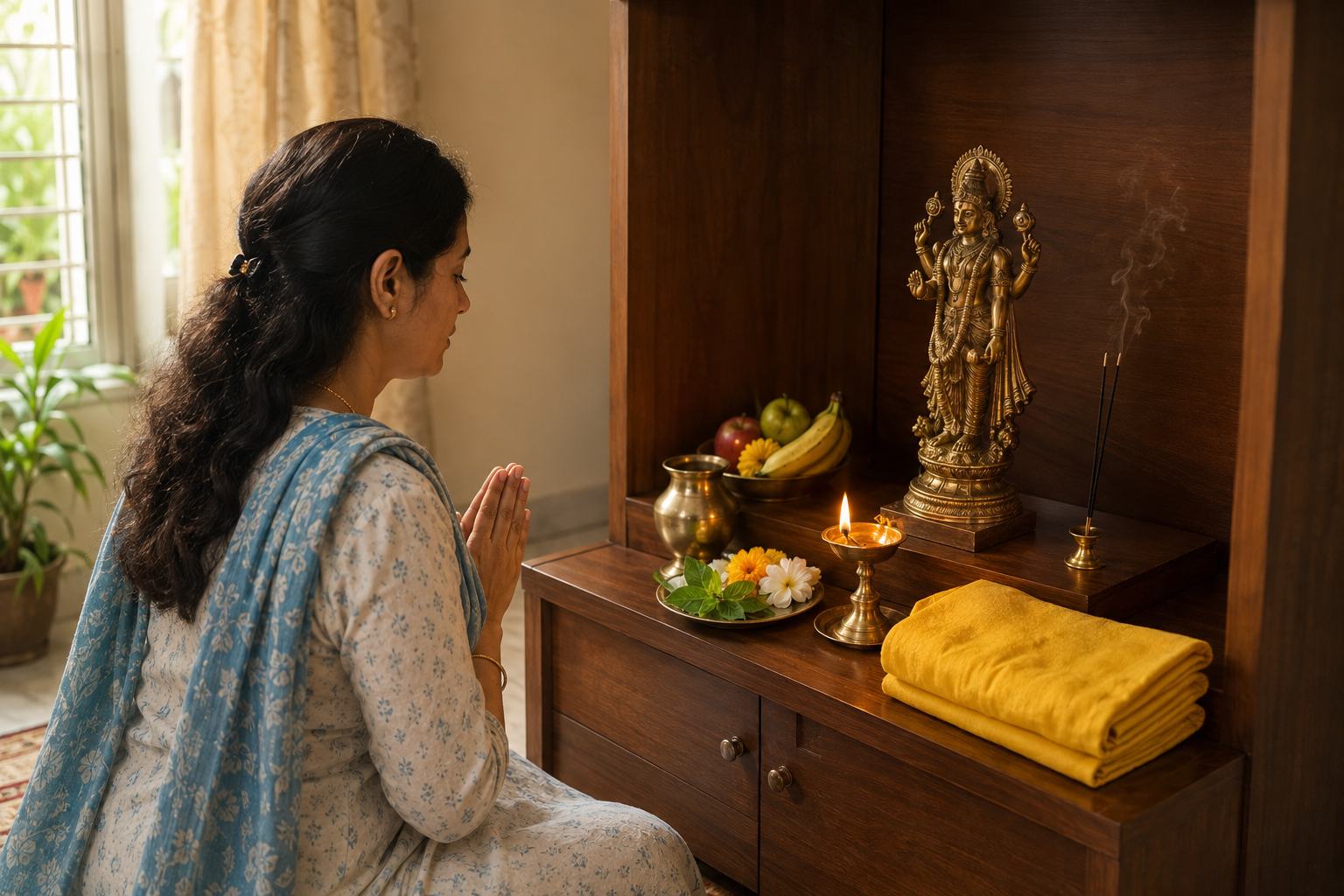
An elaborate ritual is not necessary for a sincere home observance. Prepare the space and your schedule in advance so that worship does not become an afterthought squeezed between ordinary tasks.
- Confirm the local calendar. Write down the observance date and the next day’s parana window. Do not rely on memory or on a calendar for another city.
- State your sankalpa. Decide what form of fasting or dietary restraint you will follow, what devotional practice you will add, and what unhelpful habit you will set aside.
- Prepare the puja place. Clean the worship area and place the murti or image of Lord Vishnu and Goddess Lakshmi according to your household practice.
- Offer worship simply and attentively. Use the customary lamp, water, flowers, fruit, incense, mantra, stotra, or nama-japa appropriate to your tradition. A smaller puja performed without hurry is better than a long sequence you cannot sustain with attention.
- Hear or read the vrata katha. Give the Vamana-Mahabali account enough time to become contemplation rather than treating it as an item to finish.
- Protect the rest of the day. Limit needless entertainment, gossip, anger, and overwork where your duties permit. Continue remembrance between formal periods of worship.
- Complete the vrata properly. On the following day, perform parana within the locally prescribed window and in the manner followed by your family or sampradaya.
If work or caregiving prevents a long puja, preserve the structure rather than abandoning the day: a clear sankalpa, a clean place, focused Vishnu worship, the katha, a manageable fast, and timely parana. Duties performed responsibly are not obstacles to Dharma; poor planning is the more avoidable problem.
What the turning of Vishnu asks you to notice
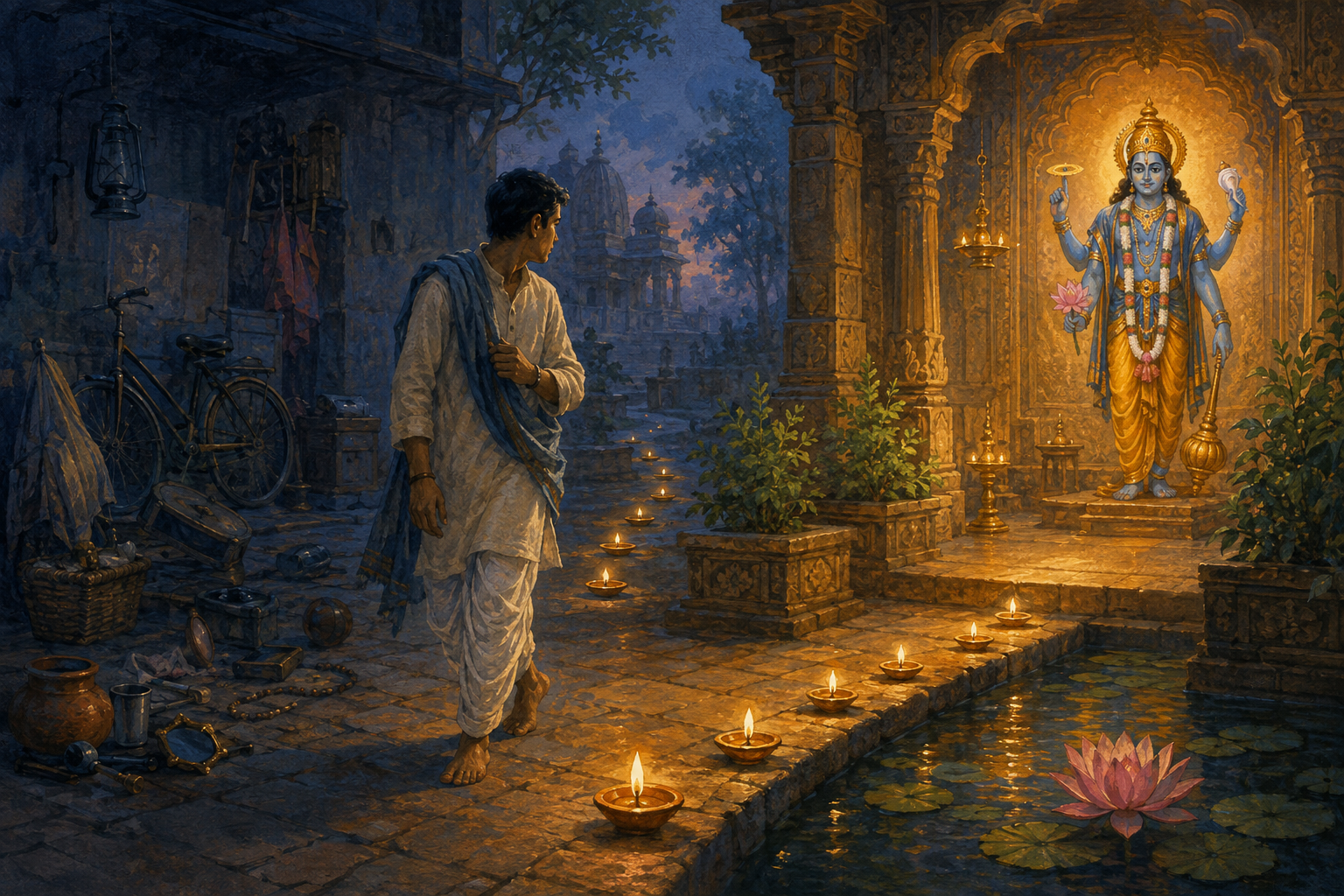
The traditional account associates this Ekadashi with Lord Vishnu’s yoganidra during Chaturmas. On this occasion, Vishnu is understood to turn from one side to the other. This change of position gives Parivartini and Parsva Ekadashi their distinctive identity.
The vrata katha is also associated with the appearance of Vamana Avatar and with Mahabali. Their encounter places power beside humility, possession beside surrender, and personal authority beneath a larger Dharmic order. The lesson is not that strength itself is wrong. It is that strength must know what it serves.
Use the katha to examine one area where you have become fixed. What are you defending simply because it is yours? Where has competence quietly become pride? Which promise, duty, or relationship needs to be restored to its proper place? Choose one answer you can translate into conduct after the fast ends.
This is where the meaning of parivartana becomes practical. A devotional turning need not begin with a dramatic life change. It may be returning to daily japa, apologising for needless harshness, restoring honesty to a decision, reducing an indulgence, or giving time and resources where duty calls. The important test is whether the observance alters what you do next.
Parana should therefore complete the vow, not erase it. When you end the dietary restraint, retain the correction you chose during the day. Hunger naturally ends; the deeper turning needs deliberate continuity.
Key takeaways
- Parivartini, Jayanti, Parsva, Vamana, and Jal Jilni Ekadashi name the same Bhadrapada observance in this context.
- The listed 2026 date is September 22, but tithi and parana timings should be checked for your own location.
- Choose the form of fasting according to health, duties, and your family’s or sampradaya’s practice.
- Prepare a clean puja space for Lord Vishnu and Goddess Lakshmi, make a clear sankalpa, worship, and hear the Vamana-Mahabali katha.
- Join dietary restraint to japa, study, seva, dana, guarded speech, or another concrete discipline.
- Carry one chosen correction beyond parana so that the day’s symbolic turning becomes a change in conduct.
Before September 22 arrives, save the local panchang details, decide your vrata, and clear a period for worship and katha. Then write down the one habit or duty you intend to turn toward Dharma. That single decision will give the observance a direction that lasts beyond the calendar date.
References
- Hindu Pad — How to observe Parivartini Ekadashi | Vrat Vidhi of Parsva Ekadashi
- Hindu Pad — Parivartini Ekadashi Vrat Katha | Story of Parsva Ekadashi
- Hindu Pad — Jayanti Ekadashi 2026
