

If Rupanuga Prabhu’s passing has left you searching for the right way to respond, begin with two duties that belong together: honour the devotee and protect the truth of his life. Grief can make a community eager to share every remembered story, but haste can also turn uncertain recollections into permanent biography.
A sound Vaishnava tribute does more than praise. It distinguishes what is known from what is remembered, preserves the person’s own voice wherever possible, and turns remembrance into seva.
What we can say about Rupanuga Prabhu with confidence
What can be stated with confidence is concise: HG Rupanuga Prabhu ACBSP left his body. The honorific “HG” means “His Grace,” while the designation ACBSP is commonly used to identify a disciple of A.C. Bhaktivedanta Swami Prabhupada.
That relationship supplies the essential spiritual context. Rupanuga Prabhu belonged to the generation through which Srila Prabhupada’s teachings, instructions and personal example were carried to later devotees. It does not, by itself, verify every biographical detail or anecdote that may circulate after his departure.
This is where your responsibility begins. If you share a memory, identify its kind. “I witnessed this” is different from “Rupanuga Prabhu told me this,” and both are different from “I heard this from another devotee.” Those distinctions are not signs of doubt or disrespect. They are how a sincere community prevents affection from becoming mythology.
Do not fill an incomplete chronology with plausible-sounding dates, responsibilities or encounters. Leave a gap visible until it can be supported. Satya is part of the tribute.
“Leaving the body” changes how a devotee meets death

In Vaishnava speech, saying that someone “left his body” is not merely a softer expression for death. It reflects the teaching that the conscious self is not identical with the temporary physical body. The body ceases to function, but the person cannot be reduced to that event.
That conviction should deepen your response, not make it emotionally evasive. Spiritual understanding does not require relatives, disciples or friends to suppress grief. A community can mourn the loss of someone’s visible association while maintaining faith in the soul’s continuing journey.
If you are writing to someone close to Rupanuga Prabhu, keep the message simple. Name your gratitude, offer prayer or service, and do not require a reply. Avoid speculation about private circumstances or claims about his spiritual destination that you cannot establish. Faith permits prayer; integrity forbids pretending to possess knowledge that you do not have.
You can also dedicate a concrete act of bhakti to his remembrance: chant with greater attention, hear Srila Prabhupada’s teachings, serve devotees, or help safeguard a reliable record of the departing Vaishnava’s service. The point is not to manufacture a ritual that Rupanuga Prabhu personally prescribed. It is to let remembrance strengthen the devotional life to which his ACBSP designation connects him.
How to preserve Rupanuga Prabhu’s legacy responsibly
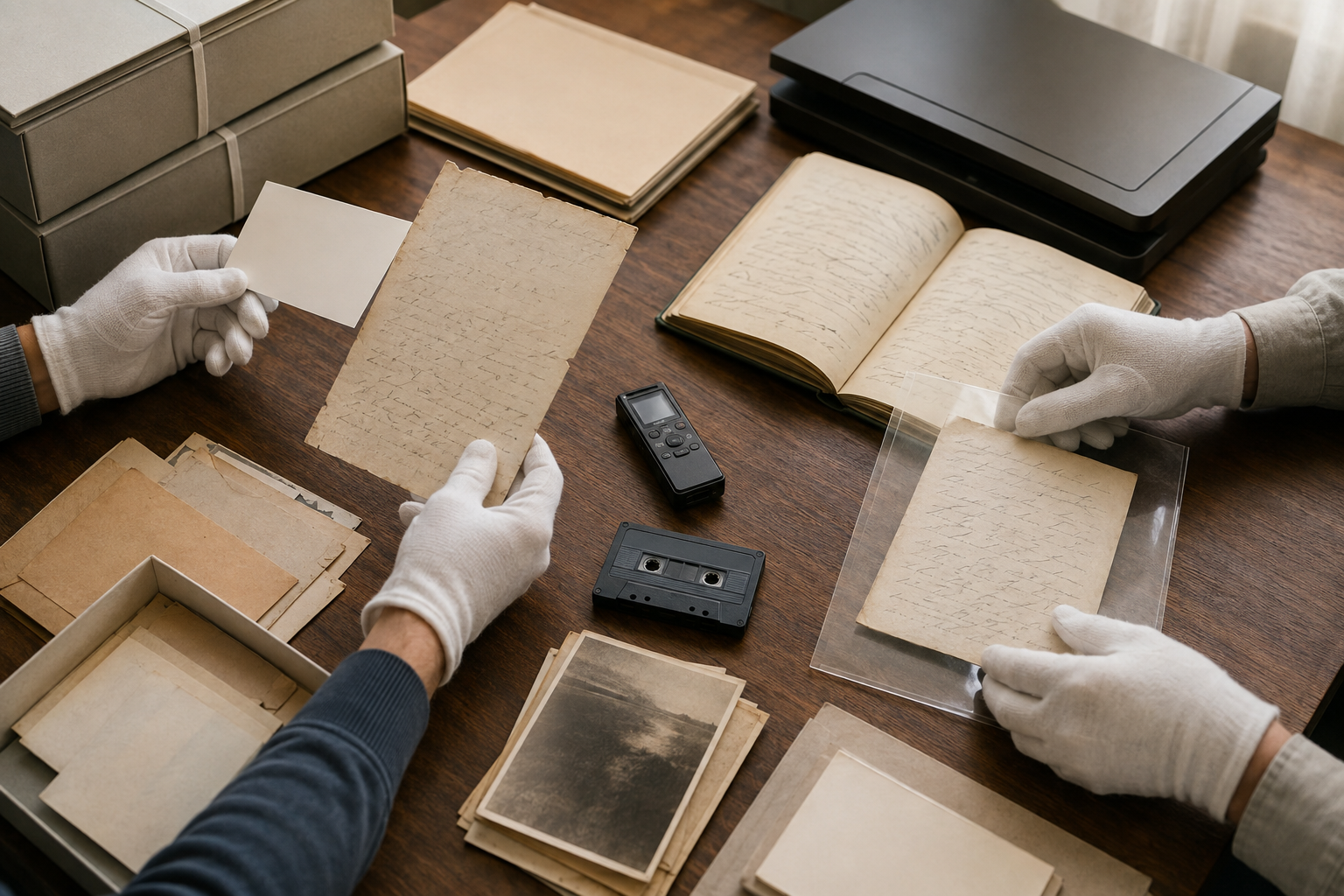
A legacy becomes useful when the next generation can encounter a devotee’s own words and understand where they came from. A collection of admiring social posts cannot do that by itself. If you have recordings, correspondence, photographs or firsthand memories connected with Rupanuga Prabhu, preserve them in a form that another person can verify.
- Begin with first-person material. Prioritise his own audio, video, letters, signed writings and complete talks. Treat an unattributed quotation card or short social-media clip as a lead to investigate, not as final evidence.
- Record provenance. For every item, note the speaker or writer, event, location, date if known, person who recorded or received it, and present custodian. If a date is approximate, label it as approximate. Do not convert an estimate into an exact date during transcription.
- Keep the original untouched. Preserve the raw recording or scan separately from edited copies. Noise reduction, colour correction and transcription can aid access, but they should never overwrite the master file. If automated tools were used, check their output against the original.
- Separate quotation from recollection. Put quotation marks only around words that can be checked. Label a summary as a paraphrase and a remembered exchange as a recollection. Never silently improve wording to make it sound more polished or doctrinally precise.
- Cross-check important memories. Ask witnesses for independent accounts before combining their recollections. If two sincere witnesses remember an event differently, preserve the disagreement instead of forcing a single seamless narrative.
- Obtain permission before publishing private material. A letter, photograph or recording may carry spiritual value without being intended for unrestricted circulation. Consult its custodian and consider the dignity of living family members and correspondents.
- Connect the archive to practice. A transcript can support a study gathering; an authenticated recording can introduce younger devotees to the earlier generation; a carefully catalogued collection can prevent teachings from being reduced to isolated slogans.
This discipline matters especially when verified public biographical information is limited. The unknowns should remain visible. An honorific is not evidence for an anecdote, and sincere admiration does not make every circulating quotation authentic.
At the same time, verification should not become an excuse for doing nothing. Contact the devotee who holds an old recording. Write down the setting of the photograph you took. Ask an elderly witness to identify the people in an image while that knowledge is still available. Small acts of documentation can determine whether a memory remains intelligible or becomes an orphaned file.
The strongest memorial will unite archive and sadhana. Preserve what Rupanuga Prabhu actually said and did, then ask how your own hearing, service and conduct should change in response. That is more demanding than praise, but it is also more faithful to guru-parampara.
Key takeaways

- Rupanuga Prabhu’s passing should be met with prayer, truthful remembrance and practical service.
- His ACBSP designation places his remembrance within the disciplic family of A.C. Bhaktivedanta Swami Prabhupada.
- “Leaving the body” expresses the Vaishnava distinction between the eternal conscious self and the temporary body; it does not require anyone to deny grief.
- A dependable legacy separates firsthand testimony, direct quotation, paraphrase and hearsay.
- Recordings and documents need provenance, untouched master copies and careful transcription if they are to serve future devotees.
- The most fitting tribute is to preserve authentic memory while allowing that memory to strengthen your own bhakti and seva.
If Rupanuga Prabhu’s departure has moved you, choose one act now: offer a prayer, save an authenticated record, or write down a firsthand memory with its names, place and context. A devotional legacy remains living when reverence is joined to truth and remembrance leads to service.
References
