

You may want to glorify Lord Krishna but find yourself repeating familiar words without much attention. Perhaps you have been asked to lead a family prayer, speak in a satsang, or share something devotional online and do not want your contribution to become sentimental, theatrical, or careless.
The useful question is not how many exalted titles you can place before Krishna’s name. It is how praise can steady your attention, purify your speech, and influence what you do next. A sound practice joins hearing, remembrance, expression, and conduct.
Glorification begins with accurate attention
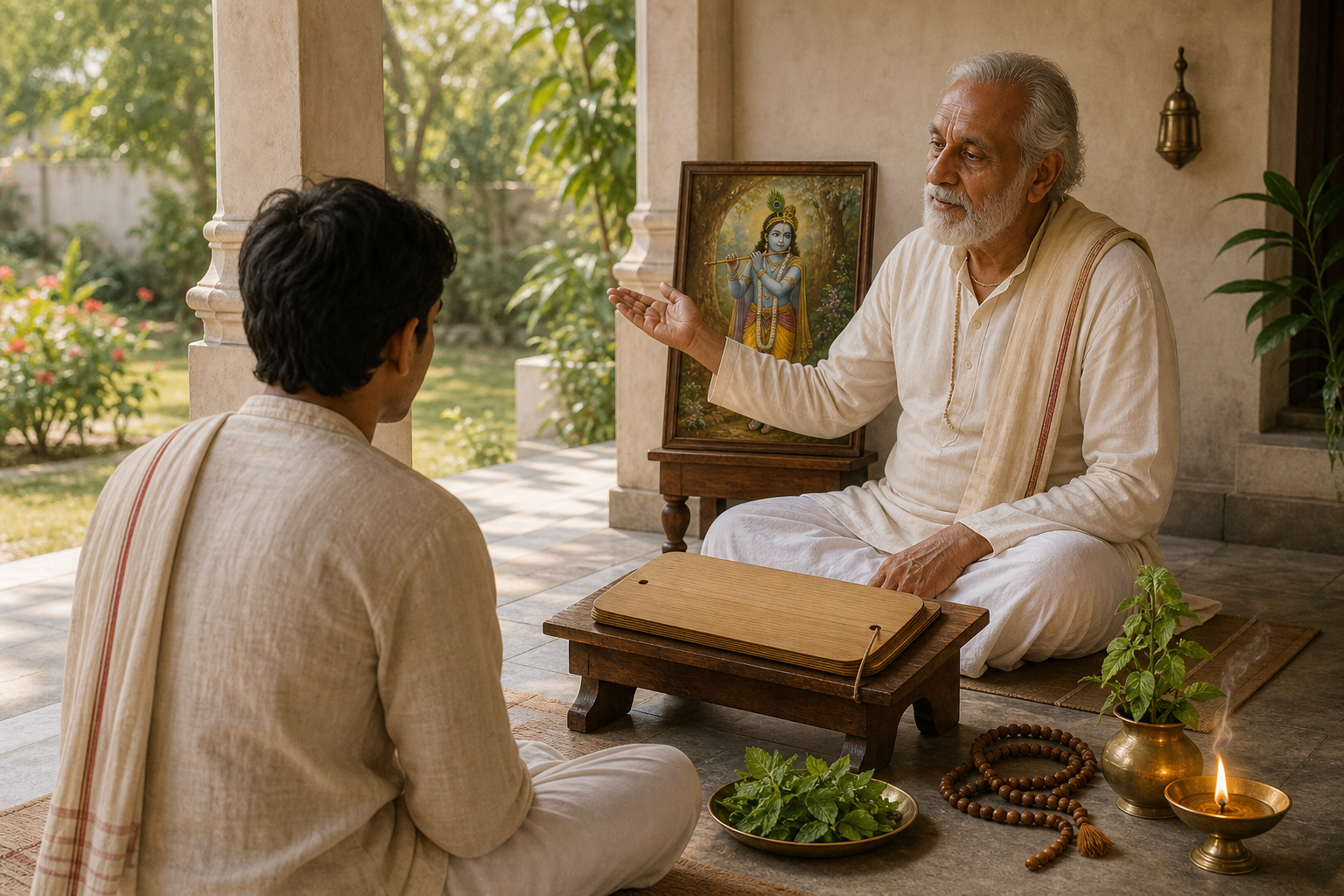
In Krishna bhakti, glorification is not image management for a deity who needs compliments. Bhagavan is complete. The devotee is the one being trained. By dwelling on Krishna’s names, form, qualities, lila, relationships, and teachings, you redirect attention from the restless self toward the Divine.
This distinction keeps praise from becoming flattery. Flattery exaggerates because it wants a result. Bhakti speaks truth because truth itself deepens remembrance. Sincere feeling does not give you permission to invent a quotation, embellish a traditional account, or repeat an unverified miracle claim.
Before you speak or sing, complete a simple sentence in your own mind: Today I am remembering Krishna as someone who reveals this quality, and therefore I will take this action. If you cannot identify either the quality or the action, hear more before saying more.
Choose a passage from the Bhagavad Gita, a prayer used in your sampradaya, or a reliable narration taught by a trusted Vaishnava teacher. Keep three distinctions clear:
- What does the accepted text or prayer actually say?
- What does your sampradaya understand it to reveal about Krishna?
- What is your personal application today?
Do not merge those levels. A personal insight may be valuable, but it should not be presented as a scriptural quotation. A commentary may faithfully unfold a text, but it should not be passed off as the text’s exact wording. Clear attribution protects both the listener and the tradition.
Use four doors: nama, guna, lila, and upadesha

You do not need to say everything about Krishna in one sitting. Enter through one devotional door and stay there long enough for attention to gather.
Nama: receive the Divine Name instead of rushing through it
When chanting Krishna’s names, let your ears participate. Pronunciation matters, but attention is not produced by anxiety. If the mind wanders, return to the name you are chanting now. Do not restart the entire practice merely to punish yourself for having been distracted.
If you have received a mantra and instructions from a guru, follow those instructions. An improvised internet routine should not displace a discipline entrusted through your lineage. In congregational kirtan, listen to the leader, respond as part of the assembly, and resist turning either musical skill or emotional display into the centre of attention.
Guna: praise one quality and accept its demand
Select one quality associated with Krishna: wisdom, friendship, protection, compassion, courage, playfulness, or steadfastness. Then connect it to a reliable teaching or lila rather than presenting the adjective by itself. The connection gives the praise substance.
Next, let the quality examine you. If you remember Krishna as the faithful friend, ask whether you are being faithful in your own relationships. If you praise divine compassion, notice where contempt has entered your speech. Glorification becomes formative when the quality you celebrate becomes a standard for your next decision.
Lila: preserve the meaning of the sacred account
Krishna-lila can be narrated so colourfully that listeners remember the storyteller but miss Krishna. Before retelling an episode, identify the theological centre: what does this lila reveal about Krishna, the devotee, their relationship, or the nature of surrender?
Use a reliable text and commentary from the tradition in which you are speaking. Different sampradayas may emphasise different moods, meanings, and forms of devotion. You do not have to erase those differences to honour a shared love of Krishna. State the interpretation you have received without pretending it is the only language in which every Vaishnava must understand the lila.
Upadesha: glorify Krishna by taking instruction seriously
Praise remains incomplete when Krishna’s teaching is admired but continually postponed. After reading the Bhagavad Gita or hearing katha, translate one insight into a visible act. Complete a neglected duty without resentment. Repair speech that was dishonest or cruel. Keep a promise. Offer food with attention. Serve someone without making the service a performance.
The action does not need to look dramatic. Its purpose is to prevent devotion from being confined to a song, lecture, festival, or social-media caption. When remembrance enters conduct, ordinary responsibilities become part of your answer to Krishna.
Build a practice that survives ordinary days
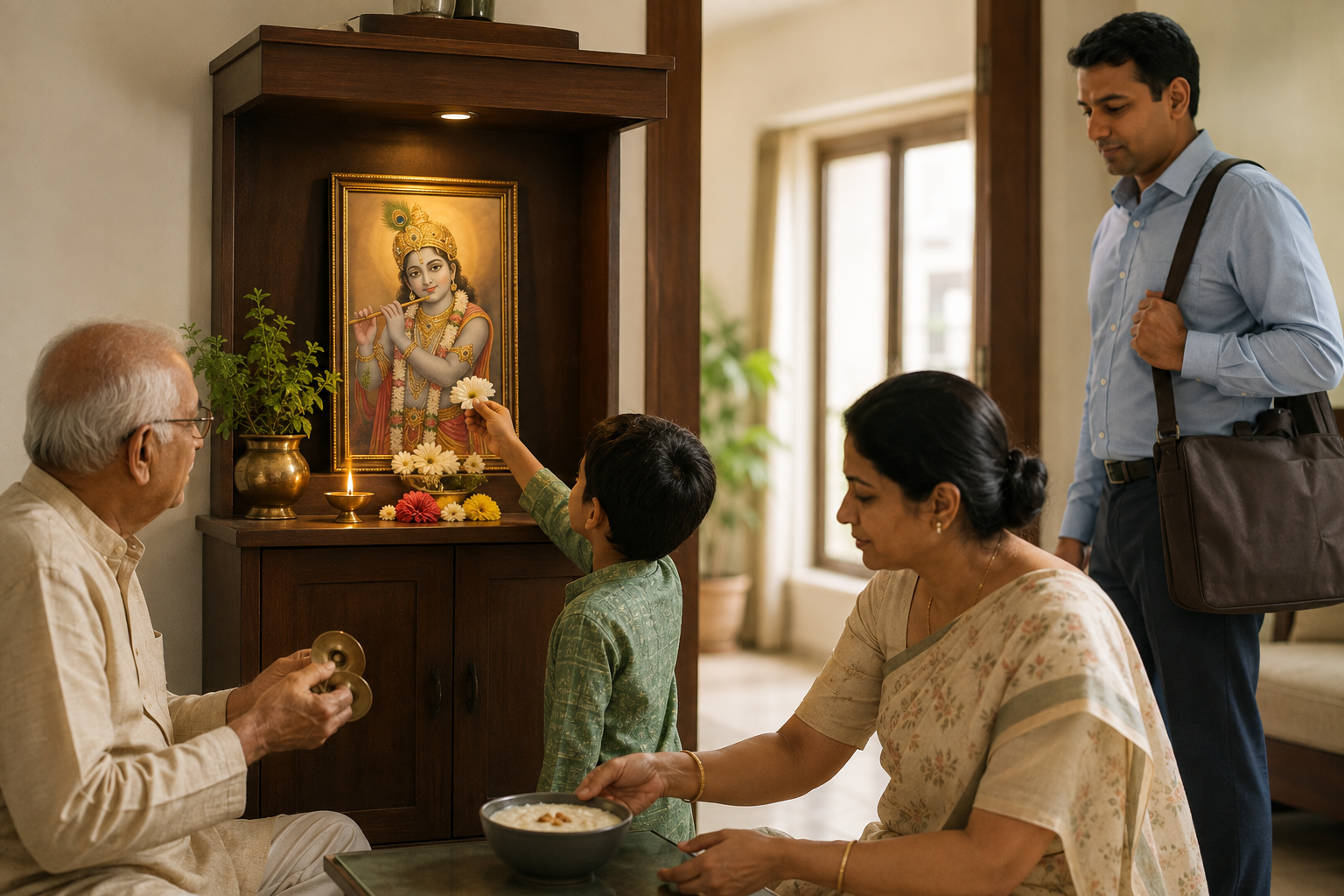
A sustainable practice should work on an uneventful weekday, not only when a festival, gifted singer, or powerful speaker creates the mood for you. Use a short sequence that can expand when time permits:
- Settle: put the phone away and prepare the place. Light a lamp or perform aarti if that belongs to your household practice, but do not confuse accessories with attention.
- Hear: read a connected passage, listen to kirtan, or receive katha from a teacher you trust.
- Remember: choose one name, quality, lila, or instruction rather than collecting unrelated devotional material.
- Express: chant, recite a known prayer, or speak a few accurate sentences in your own words.
- Apply: decide what act of duty, restraint, gratitude, repair, or seva will carry the remembrance into the day.
For a family practice, distribute participation. One person can read, another can lead the name or prayer, and each person who wishes to speak can name one practical application. Avoid correcting every minor mistake in the middle of worship. If pronunciation or meaning needs attention, return to it respectfully afterward so that learning supports devotion rather than embarrassing the learner.
For satsang, prepare enough to distinguish quotation, commentary, traditional narration, and personal reflection. When you do not know the textual origin of a story, say that plainly. A modest admission is more honourable than false precision.
Online sharing needs the same discipline. Before posting a quotation card attributed to Krishna or the Bhagavad Gita, verify its wording and location. If you cannot verify it, present the thought as your own reflection or do not share it. Dharma is not defended by attaching Krishna’s name to words he is not known to have spoken.
Keep praise truthful, humble, and non-sectarian
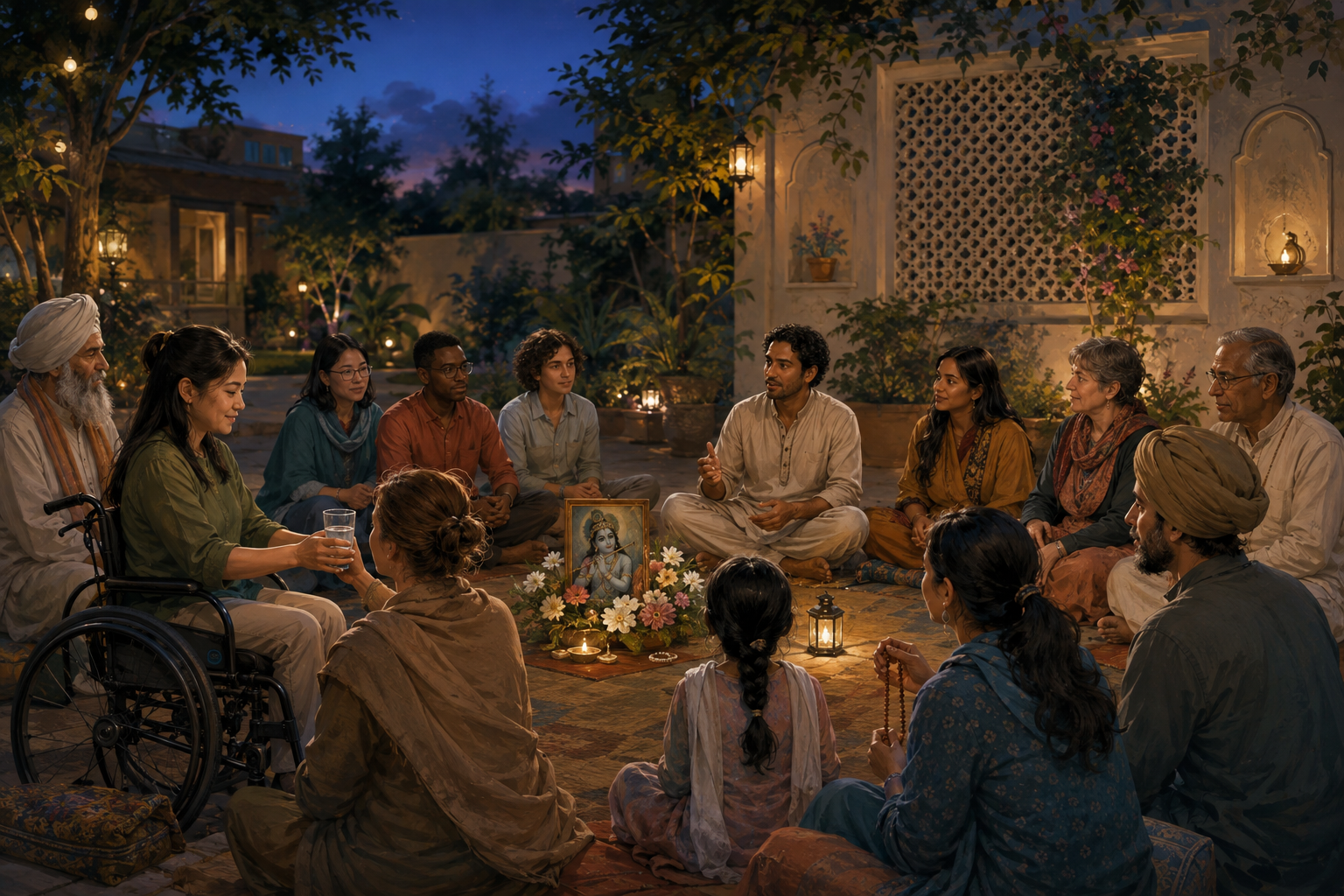
You can test a devotional contribution before offering it publicly. It should be accurate enough to trust, clear enough to follow, and practical enough to affect life. It should also leave the listener remembering Krishna more than the person speaking about him.
- Remove exaggerations that you cannot support. Krishna’s glory does not depend on invented evidence.
- Separate a verified quotation from your paraphrase. Both can be useful when they are honestly labelled.
- Cut details included only to display your learning. Retain the context the listener needs to understand the devotional point.
- Do not glorify Krishna by insulting another devata, sampradaya, guru, or Dharmic path. Positive devotion does not need contempt as fuel.
- Do not pressure listeners to imitate tears, dancing, or another outward sign. Emotional intensity may arise, but it is not a reliable public measure of anyone’s inner devotion.
- End with a practice, question, or act of seva. Give remembrance somewhere to go.
Beauty still has a rightful place. Melody, Sanskrit metre, flowers, murti-seva, aarti, storytelling, and sacred art can gather the senses around Krishna. The test is not whether the form is elaborate or simple. The test is whether the form serves remembrance or becomes a stage for status.
After your practice, ask yourself: What did I actually remember about Krishna? What changed in my speech or intended action? What claim should I verify before repeating it? These questions are more useful than asking whether the session felt sufficiently spiritual.
Key takeaways
- Begin with attentive hearing from a reliable text, prayer, teacher, or lineage.
- Focus on one door at a time: Krishna’s name, quality, lila, or instruction.
- Keep scripture, commentary, traditional narration, and personal application distinct.
- Connect every expression of praise to one concrete act of dharma or seva.
- Verify quotations and stories before sharing them, especially online.
- Measure the practice by truthful attention and changed conduct, not by eloquence or emotional display.
At your next prayer or satsang, do not try to describe all of Krishna’s glory. Choose one trustworthy name, quality, lila, or teaching. Attend to it, speak it truthfully, and decide what you will do before you rise. Repeated as abhyasa, that small discipline can make glorification more than an occasional devotional mood; it can give Krishna-remembrance a place in the shape of your day.
References
