
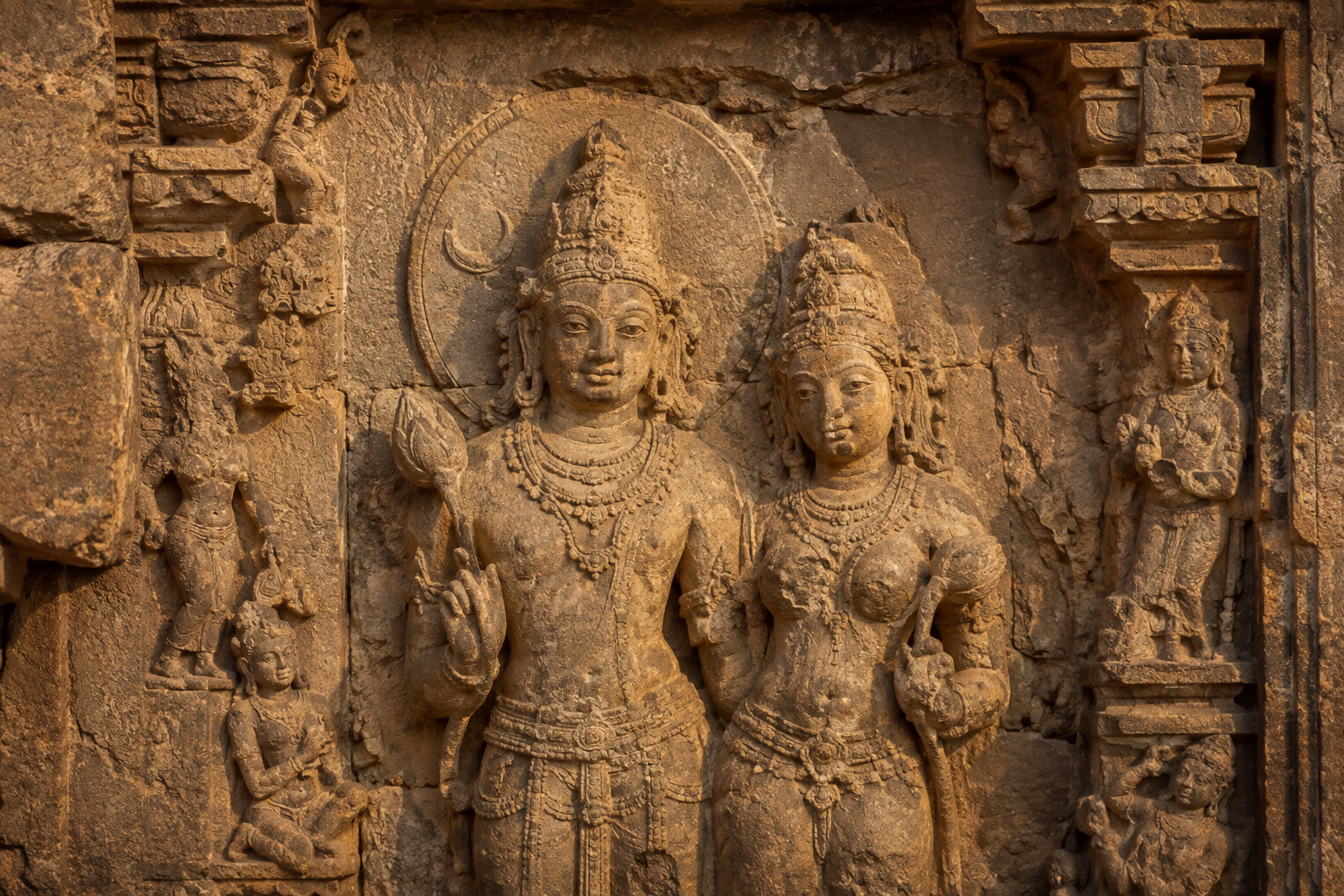
You are looking at a weathered temple relief: a male celestial deity, a female figure beside him, and few surviving attributes. Is this Chandra with Rohini, or are you attaching familiar names to an unidentified pair?
The safest answer comes from reading the sculpture at three levels – the principal deity, the relationship between the figures, and their place in the temple’s larger visual program. This approach will help you recognise a plausible Rohini-Chandra image without pretending that every damaged detail is certain.
Begin with the relationship, not a single attribute
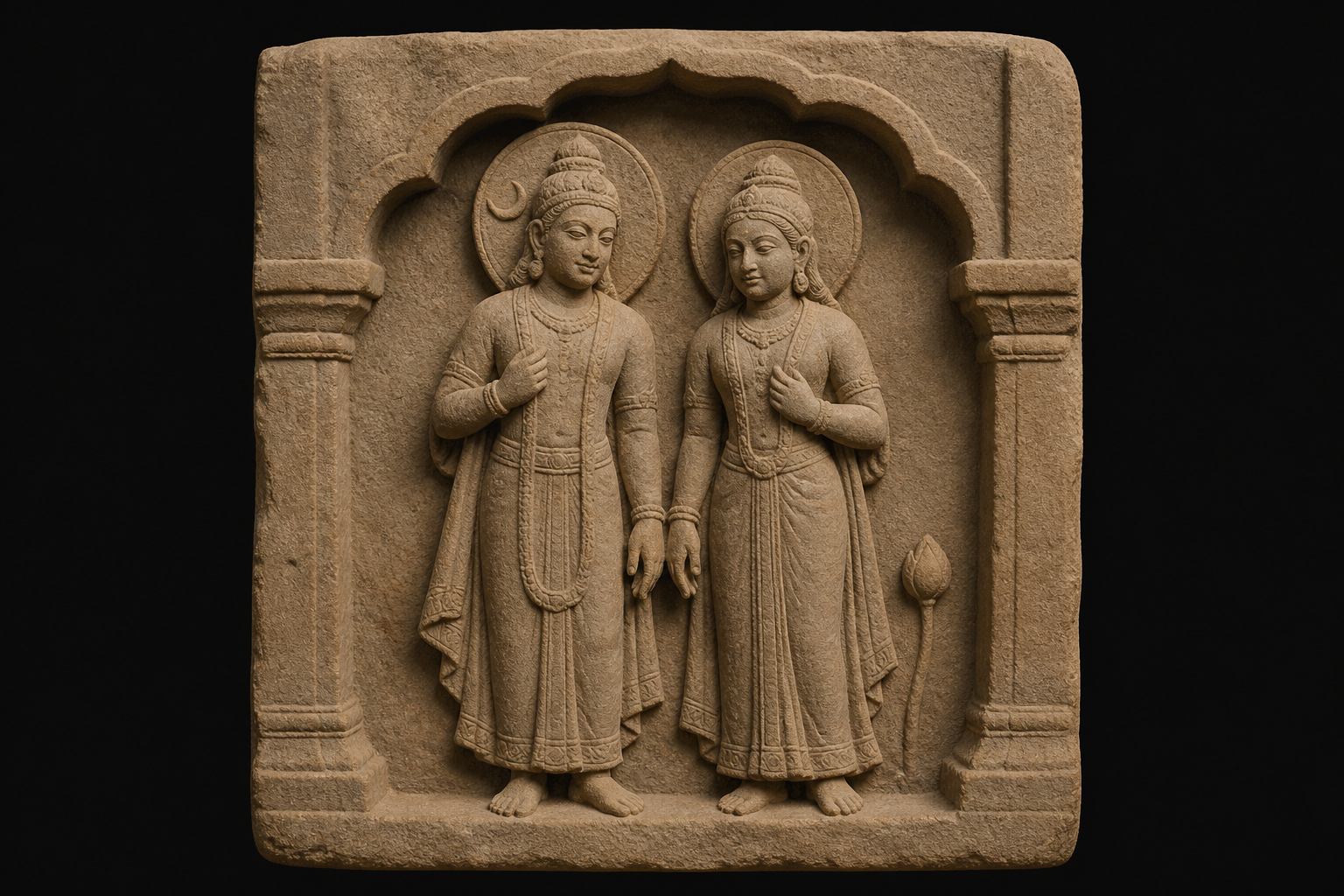
Chandra is the Moon God, but a lunar association alone does not settle the identity of every celestial-looking figure. Hindu iconography works through combinations: attributes, bodily posture, attendants or consorts, relative scale, architectural placement, and the company a deity keeps.
This matters because Chandra can be represented alone as well as with Rohini, his beloved consort. A solitary image foregrounds the deity. A securely identified pair asks you to notice relationship as part of the image’s meaning.
Do not begin by asking, “What one symbol proves this is Chandra?” Ask three narrower questions instead: Which figure appears primary? What makes the second figure a partner rather than an unrelated attendant? Does the surrounding sculptural sequence support a celestial identification?
That change in method prevents the most common error: finding one suggestive feature and forcing every other detail to agree with it. A convincing identification should explain the whole composition, not merely its most convenient fragment.
Read the sculpture in three concentric circles
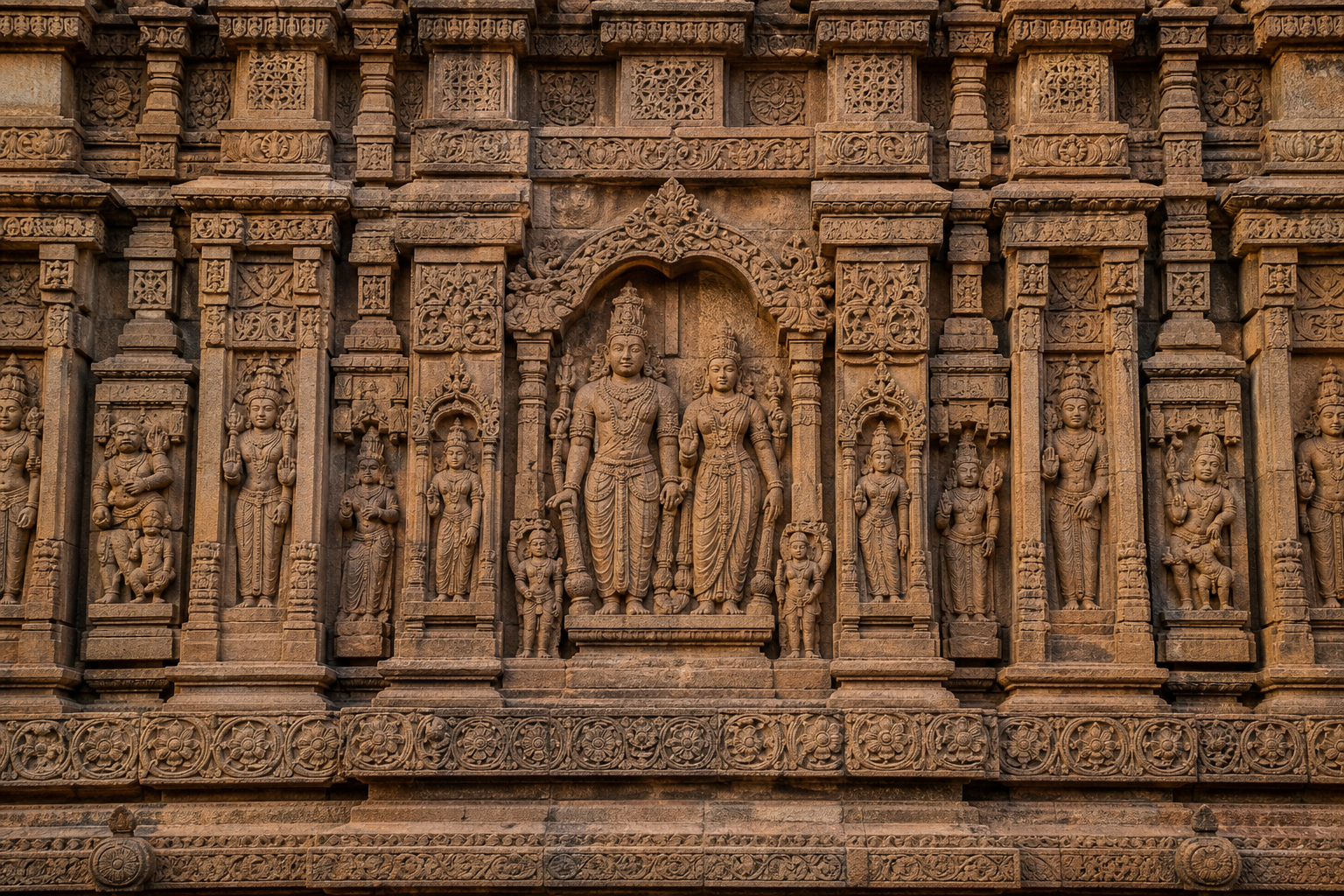
Start close, move outward, and then return to the pair. Each circle answers a different question.
- The principal figure: Record posture, surviving attributes, headdress, hand positions, and any lunar indication. Separate what is plainly visible from what you expect to see.
- The paired composition: Examine scale, orientation, proximity, shared framing, and gestures between the figures. These details can show whether the second figure participates in the central identity of the image.
- The architectural setting: Locate the relief on the building and note the neighbouring figures. Chandra belongs among the celestial deities found on Hindu temple exteriors, so the surrounding sequence may strengthen or weaken the proposed reading.
The third circle is often neglected because photographs are cropped. A close-up may show faces and ornaments beautifully while removing the information that explains why the figures are there. If you are working from an image online or in a catalogue, look for an uncropped photograph before reaching a firm conclusion.
Damage also changes the balance of evidence. A missing hand may once have held an identifying attribute. Erosion can turn a deliberate gesture into an ambiguous shape. When the physical evidence is incomplete, context must carry more weight – but context should not be used to invent a lost detail.
Use a five-step identification method
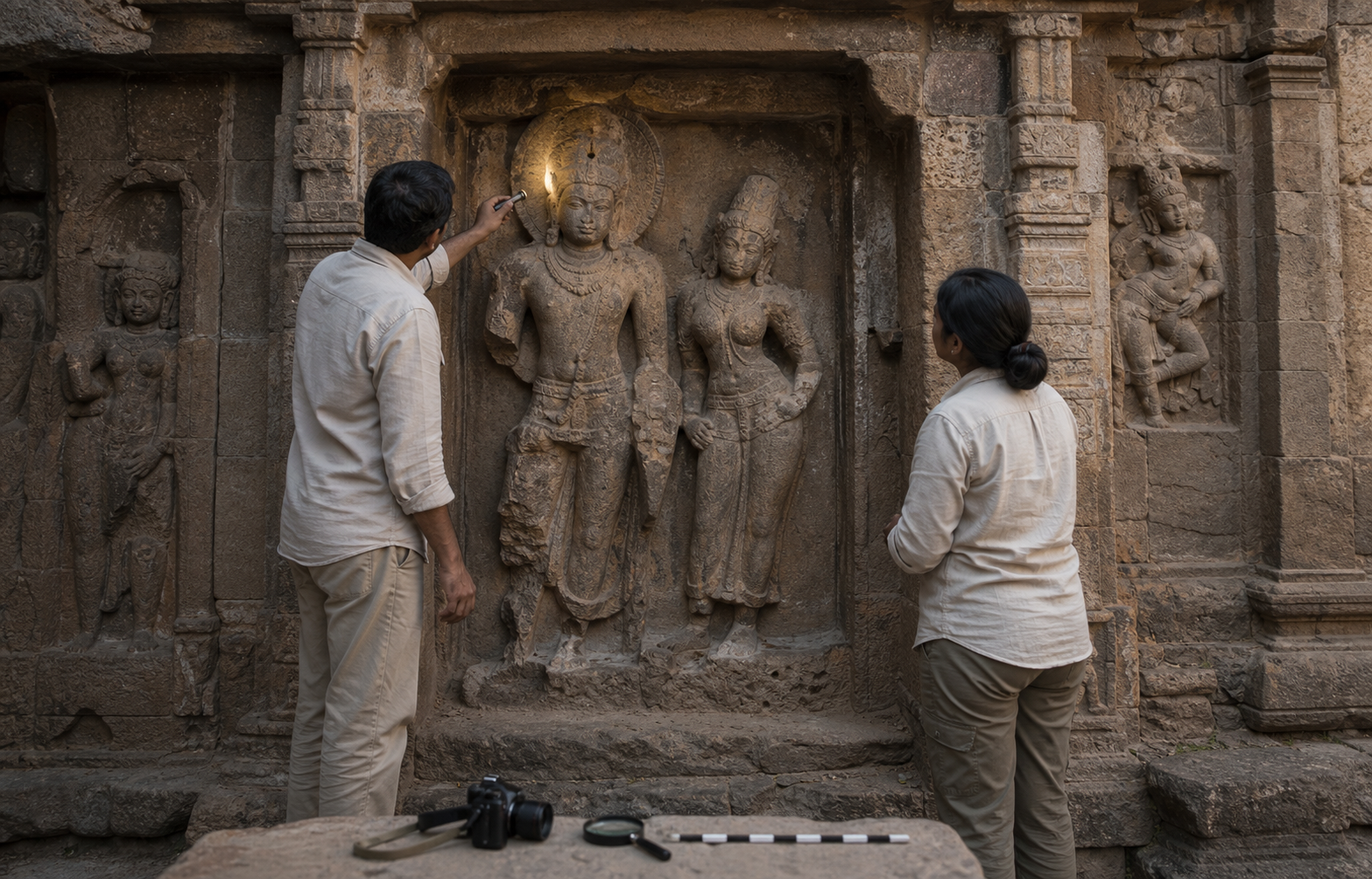
You can apply the following method in a temple, museum, archive, or digital collection. Keep notes as you go; memory tends to convert possibilities into certainties.
- Record the complete setting. Photograph or describe the whole panel, its position on the structure, and the reliefs immediately beside it. Follow local rules before taking photographs in a living temple.
- Describe before naming. Write down only observable features: two standing figures, relative height, direction of gaze, hand positions, surviving emblems, shared frame, and visible damage. Do not place the names Chandra and Rohini in this first description.
- Test the Chandra identification. Look for several mutually supporting clues rather than one apparent lunar feature. Include placement among celestial deities, the design of the principal figure, and any reliable label, inscription, temple record, or catalogue entry available to you.
- Test whether the companion can be Rohini. Ask whether she is integral to the paired composition. Proximity alone is weak evidence. Deliberate correspondence in stance, scale, framing, or gesture is more useful, especially when independent contextual information identifies the principal figure as Chandra.
- Assign a confidence level. Mark the identification as confirmed, probable, or possible. Use “confirmed” only when explicit identification or unusually strong combined evidence supports it. Use “probable” when several clues agree but decisive evidence is absent. Use “possible” when the reading depends mainly on resemblance or damaged features.
This confidence scale is not evasive. It preserves the difference between recognition and guesswork. It also lets another visitor or researcher understand exactly what would be needed to strengthen the identification.
If the pair is securely identified, read Rohini as more than a decorative female presence. Her inclusion makes divine relationship part of the composition. Chandra is no longer presented only as an isolated celestial power; the image also directs attention to companionship within the sacred order. That is an interpretation of the pairing, not permission to reconstruct an entire narrative from one relief.
Avoid the shortcuts that cause misidentification
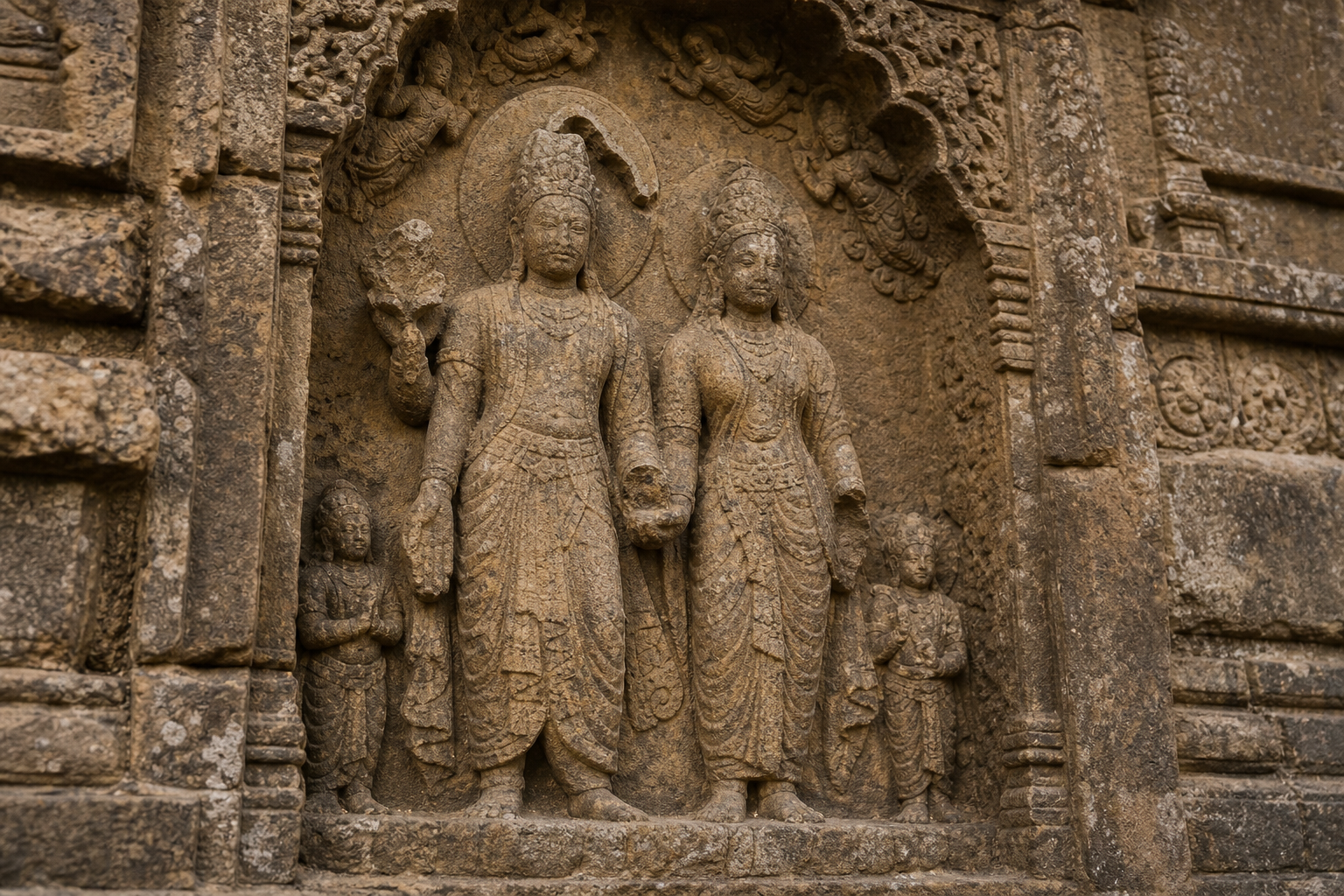
The hardest part of reading temple sculpture is often knowing when to stop. These shortcuts produce confident labels that the stone itself cannot sustain.
- Do not identify Rohini merely because a woman stands beside a male deity. She could be a consort, attendant, donor, or member of a larger scene. The composition must establish her role.
- Do not treat one damaged mark as conclusive. Confirm that it is carved, belongs to the original figure, and agrees with the rest of the panel.
- Do not detach the relief from the wall. Neighbouring deities and architectural placement can be part of the identification.
- Do not assume every region or workshop used an identical visual formula. Variation is not automatically an error. Let local sculptural conventions inform how much weight you place on any single feature.
- Do not turn recognition into biography. Identifying Chandra and Rohini does not, by itself, prove which episode, theological emphasis, or ritual purpose the sculptor intended.
- Do not hide uncertainty behind a bare caption. “Possibly Chandra with Rohini; identification based on paired composition and celestial context” is more useful than an unsupported certainty.
A museum label, local tradition, or catalogue entry can be valuable evidence, but preserve its wording and level of certainty. If one authority says “probably” or adds a question mark, do not silently upgrade the identification when repeating it.
Key takeaways
- Identify Chandra through a combination of figure, attributes, placement, and surrounding deities.
- Identify Rohini through her relationship to the principal figure, not through gender or proximity alone.
- Use uncropped views whenever possible; an outer-wall sequence may contain evidence missing from a close-up.
- Separate observation, identification, and interpretation in your notes.
- State whether your conclusion is confirmed, probable, or possible.
The next time you encounter a possible Rohini-Chandra relief, spend your first minute recording what the stone shows before naming anyone. Then widen your view to the panel and the wall. That small discipline will give you a more defensible identification – and a deeper encounter with the visual intelligence of the temple.
References
