
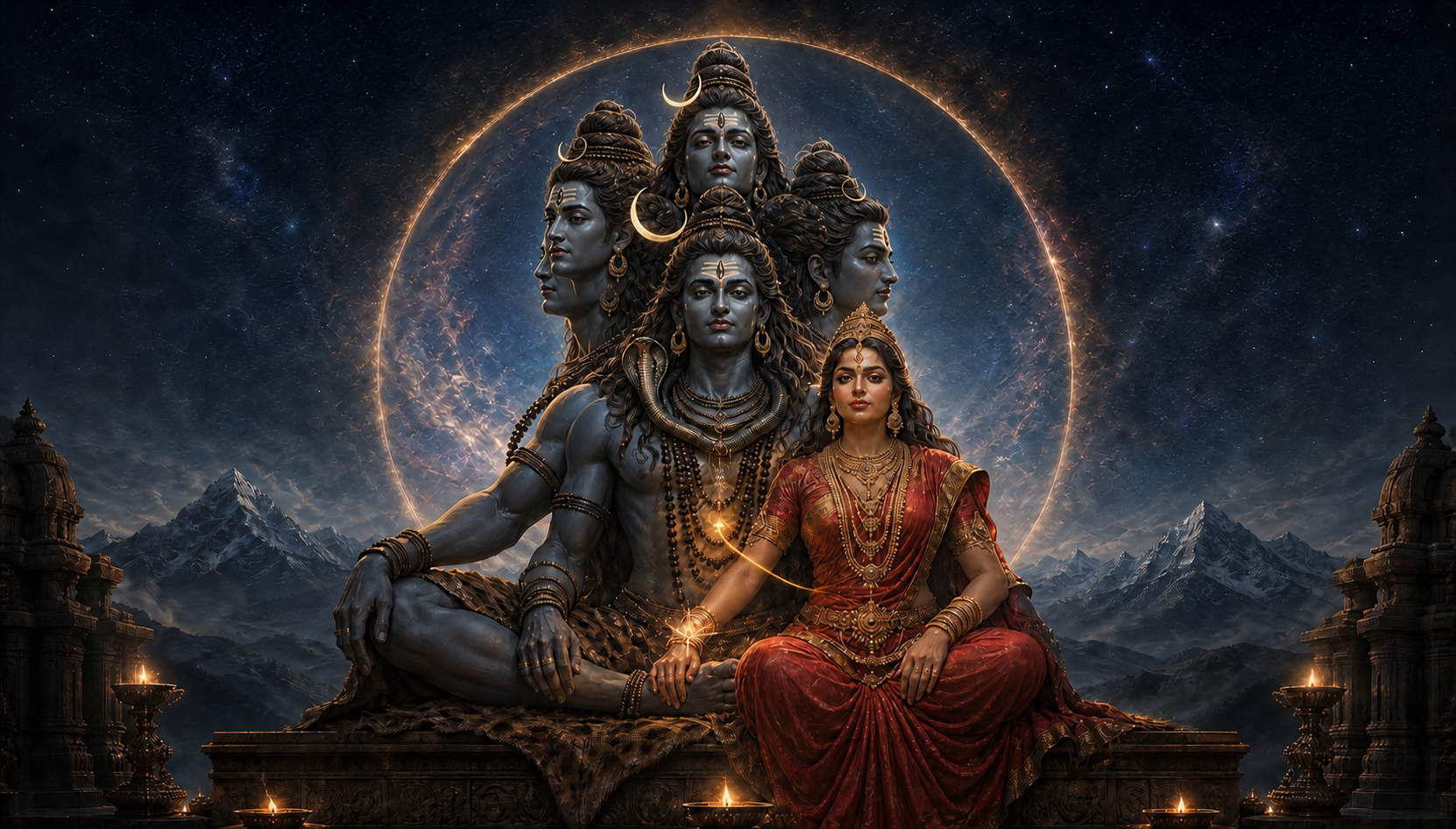
You have encountered the name Svachanda Bhairava, perhaps beneath a five-headed image, and want to know whether this is simply another fierce form of Shiva or something more specific. The clearest answer begins with one word: sovereignty.
Within the Bhairava Tantra setting, Svachanda Bhairava is presented as the supreme sovereign form among the Bhairavas. That position determines how you should approach his name, his five heads, and the Shakti who appears with him. Begin with divine freedom, keep Shiva and Shakti together, and do not manufacture ritual details from an image alone.
Svachanda means freedom that answers to nothing external

The name Svachanda means self-willed or moving according to one’s own will. You may also encounter the spelling Swachanda. In ordinary conversation, self-willed can mean stubborn, impulsive, or unwilling to listen. That everyday meaning is the wrong key for understanding the deity.
Svachanda is a name of Bhairava, not a celebration of the human ego. It points to a divine reality that is not directed, restrained, or authorized by a power outside itself. A useful shorthand is: Svachanda does not mean that every personal desire is sacred; it means that the supreme is not compelled by another.
This distinction matters whenever the name is turned into a modern slogan. If someone uses Svachanda to justify appetite, anger, or indiscipline, the interpretation has quietly replaced divine sovereignty with personal caprice. The name should challenge the ego’s claim to independence, not give that claim a Tantric endorsement.
The description of Svachanda as supreme among the Bhairavas also needs a boundary. It identifies his status within this Bhairava-oriented Tantric frame; it should not be converted into a claim that every Shaiva community arranges every form of Shiva in precisely the same hierarchy. When you read a strong theological title, first ask which ritual and doctrinal setting gives it that force.
What the five heads and Shakti allow you to see
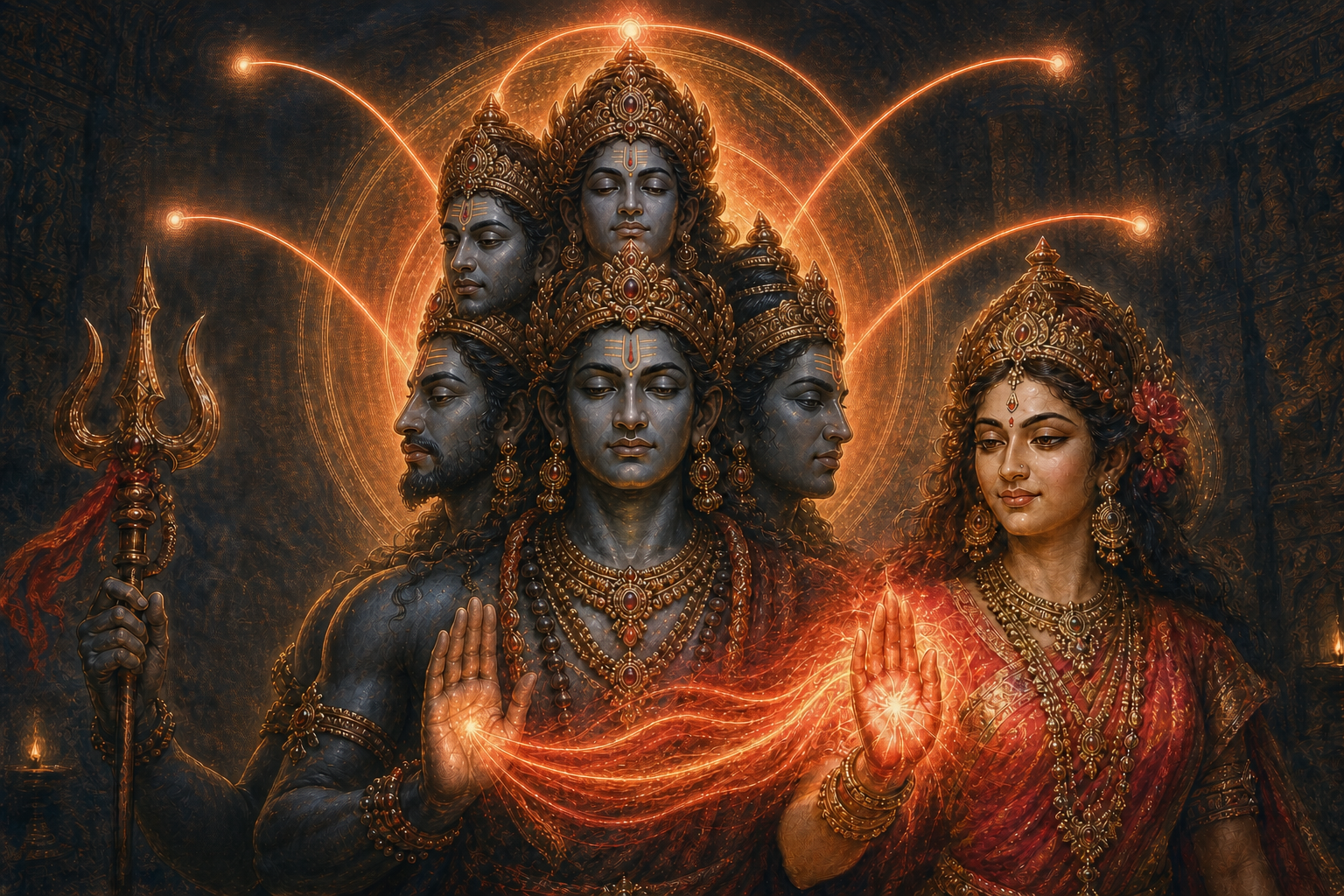
Svachanda Bhairava is depicted with five heads and a Shakti. Those two features should be read together. The image does not show an isolated, one-dimensional figure. It presents a single sovereign divinity through multiple faces while placing Shakti within the form’s theological field.
The five heads give you a disciplined first observation: plurality is held within one divine presence. They do not, by themselves, give you a complete chart of meanings. Different Tantric systems can organize directions, powers, sounds, elements, actions, and ritual placements through carefully defined correspondences. You should not assign one of those systems to this image merely because the number five appears.
Shakti is equally important. She is not an incidental ornament added to make the composition more elaborate. In a Shaiva Tantric reading, power cannot be separated from the possessor of power as though sovereignty were inert. Her presence prevents you from reducing Svachanda Bhairava to a solitary masculine ruler. The image asks you to contemplate freedom as active potency, not static authority.
At the same time, do not guess the Shakti’s specific identity, mantra, position, or ritual function when a caption does not supply them. A confident-looking diagram on social media is not enough. Before accepting a detailed interpretation, check whether it identifies a text, tradition, teacher, temple, manuscript, or established iconographic description. Without that provenance, stay with what the image securely tells you: Svachanda Bhairava, five heads, Shakti, and sovereign status among the Bhairavas.
Bhairava’s fearsome form is not the opposite of freedom
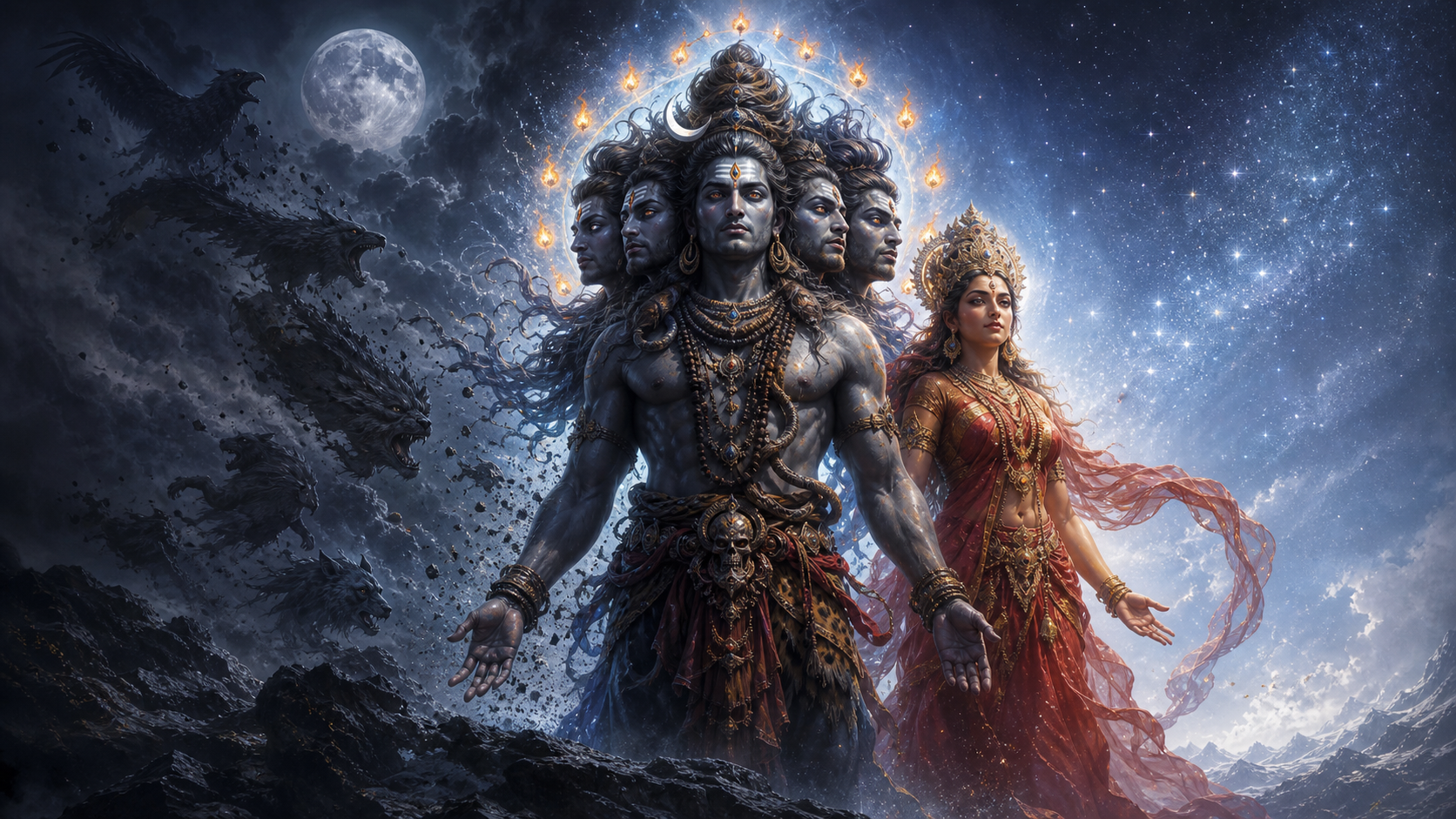
The word Bhairava can lead an unfamiliar viewer to treat the image as demonic, violent, or opposed to Shiva’s benevolent forms. That reading imports a moral division that does not fit Shaiva Tantra. A fearsome divine appearance need not signify evil. It can express a power before which ordinary defenses, comforting appearances, and imagined independence cannot stand.
Svachanda’s sovereignty therefore should not be softened into mere friendliness. A form that answers to no external authority cannot be made safe by the ego’s preferences. Bhairava confronts the part of us that wants the divine to confirm our existing habits while leaving our attachments untouched.
There is an opposite mistake as well: reducing Bhairava to a psychological metaphor. Symbolic reflection can help you notice fear, control, and attachment, but the deity is not merely a dramatic picture of your own mind. For worshippers, Bhairava is an object of reverence and ritual attention within a living sacred world. You can explore the symbolism without pretending that it exhausts the tradition’s claim.
When you look at a representation of Svachanda Bhairava, use three questions. What limitation does the fearsome form refuse? What does self-directed divine freedom mean here? How does the presence of Shakti keep that freedom active and relational? Those questions will take you further than counting frightening features or treating every attribute as an occult code.
Separate public understanding from lineage-dependent practice
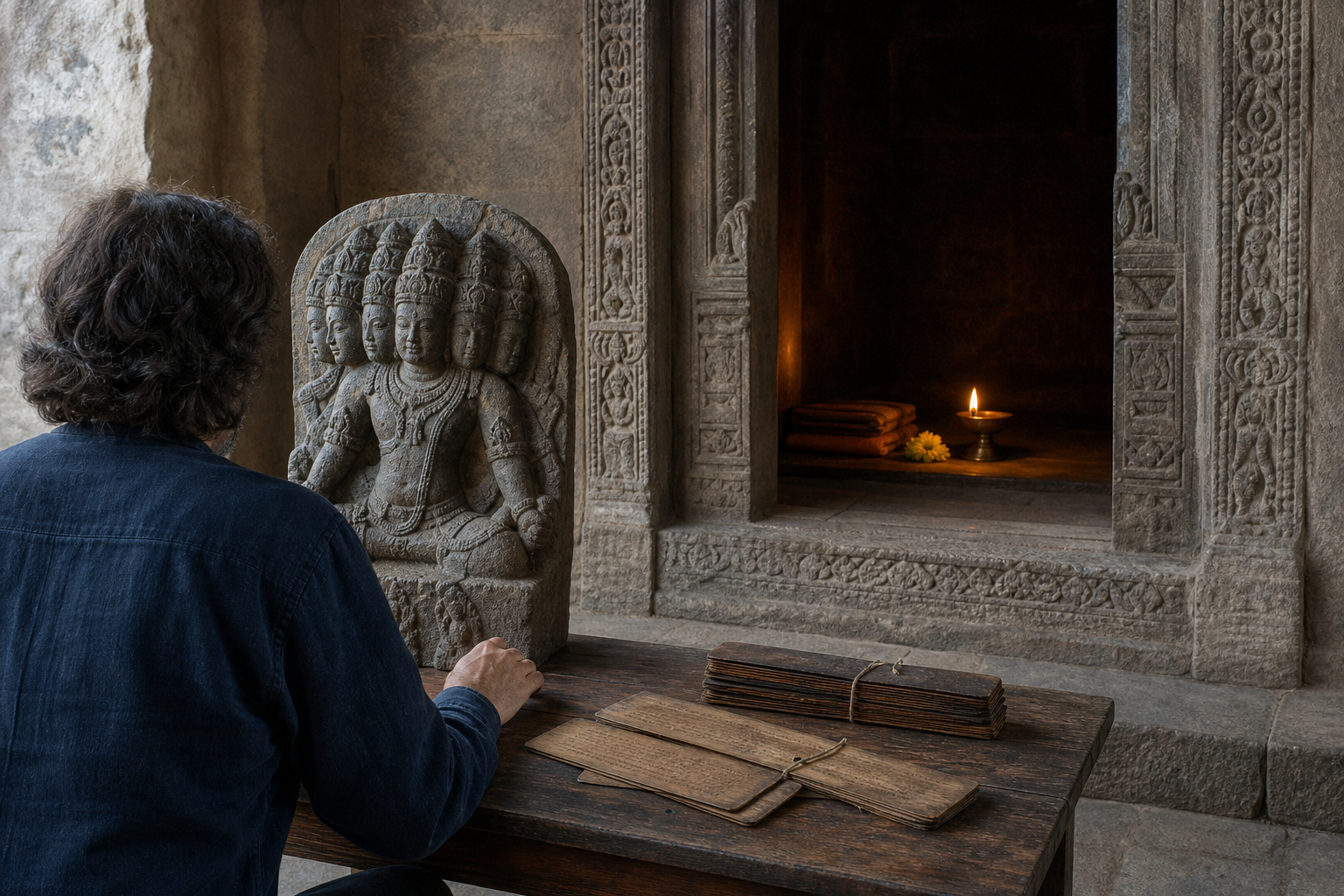
You do not need initiation merely to learn the deity’s name, recognize the five-headed form, or understand the basic theological idea of divine sovereignty. Technical Tantric practice is a different matter. Mantra, nyasa, visualization, mudra, mandala, and specialized offerings depend on exact instructions and relationships within a particular practice system.
- Begin with secure identification. Record where you encountered the name or image. Note the caption, spelling, number of heads, presence of Shakti, and any named text or tradition.
- Distinguish observation from interpretation. Five heads are observable. A claim that each head has a particular name, direction, mantra, or cosmic function requires further authority.
- Keep ordinary devotion grounded. If you already worship Shiva, reverence expressed through your established discipline is sounder than adopting an isolated internet mantra whose ritual context you do not know.
- Seek precise instruction for technical sadhana. Ask which text and lineage govern the practice, whether initiation is required, what preparation accompanies it, and which details must not be altered.
Be cautious when a teacher, channel, or website promises immediate powers, supplies a supposedly universal Svachanda mantra without context, or assigns elaborate meanings to every visual detail without identifying their basis. Complexity is not proof of authenticity. In Tantra, precision matters because a practice is an integrated discipline, not a collection of impressive syllables and images.
If you consult a knowledgeable practitioner, ask concrete questions: Which form of Svachanda Bhairava is being taught? Is the Shakti specifically identified? Does the visualization come from a named textual or lineage tradition? Is the mantra open for general recitation or transmitted through initiation? Clear answers help you distinguish genuine instruction from borrowed religious vocabulary.
Key takeaways for study and worship
- Svachanda means self-willed or moving according to one’s own will, but the name concerns divine sovereignty rather than human impulsiveness.
- Svachanda Bhairava holds a supreme position among the Bhairavas within the Tantric setting in which this form is presented.
- His five heads establish multiplicity within one divine presence; they do not authorize invented correspondences.
- The accompanying Shakti is essential to the image’s meaning because sovereignty is shown with active power, not as isolated authority.
- Recognition, study, and respectful contemplation are not the same as technical Tantric sadhana; exact ritual practice should come through a trustworthy textual and lineage context.
If you are deciding what to do next, do not begin by collecting a mantra. Begin by documenting the image or passage that brought you to Svachanda Bhairava. Once its provenance is clear, you can tell whether your next step is iconographic study, philosophical reflection, ordinary Shaiva devotion, or instruction within a living Tantric discipline.
References
