
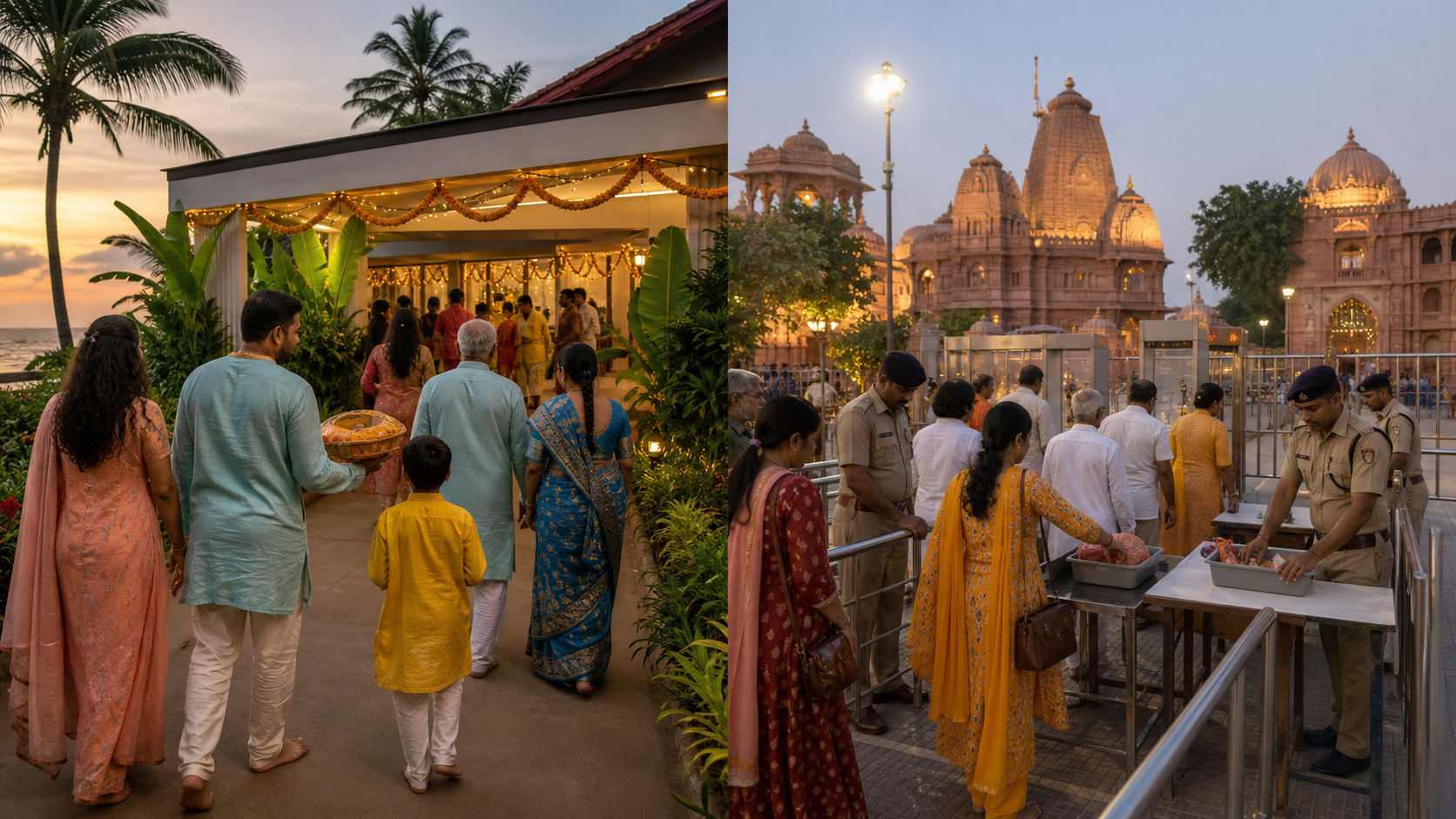
Your Janmashtami plan should begin with one practical question: are you entering a community programme or a high-security pilgrimage setting? The answer changes what you verify, what you carry, whose directions you follow and when you should turn back.
A Stanger Janmashtami programme identified with Durban took place on 23 August 2026. In Mathura, security was strengthened at the disputed Krishna Janmabhoomi-Shahi Idgah complex amid concerns about possible kar seva. Neither situation changes the purpose of the vrata or darshan, but each requires a different kind of preparation.
Key takeaways for worshippers
- For a Durban-area programme, obtain the full street address and a verified map pin. A city name or locality label is not enough to plan the journey.
- Confirm the current opening time, entry arrangements, permitted items, parking or drop-off point, and accessibility provisions with the responsible organiser.
- In Mathura, treat live instructions from police and authorised site personnel as more reliable than forwarded messages, old route plans or social-media claims.
- Concern about possible kar seva is not proof that an authorised mobilisation exists. Do not join an unscheduled procession or gathering whose organiser and permission cannot be verified.
- Give your family a meeting point, one lead contact and clear reasons for leaving before you enter a crowd.
One festival does not mean one kind of journey
Janmashtami can be observed through kirtan, vrata, puja, scriptural reflection, seva and darshan. The spiritual centre remains Sri Krishna, but the surrounding responsibilities depend on the place. At a community programme, the organiser generally manages timing, entry and volunteer coordination. At a heavily secured sacred complex, police instructions and changing access controls may determine where you can go.
This distinction matters because devotees often prepare the ritual and neglect the journey. You may know when you want to offer worship yet still lack a confirmed address, return route or family separation plan. Treat those practical details as part of your observance. Preventing confusion at an entrance is also a form of consideration for other bhaktas.
Entry rules and routes are operational facts, not permanent festival customs. Confirm them on the day you travel. A procedure followed in an earlier year, or even earlier in the same week, should not be treated as a promise that the same gate, road or item policy remains in force.
Keep the devotional core of Janmashtami independent of access to one venue. If illness, congestion, a closure or a security direction prevents entry, you can still chant, perform a simple home puja, read from the Bhagavad Gita or Bhagavata Purana, and offer your vrata without converting disappointment into confrontation. Darshan delayed is not devotion denied.
For Stanger and Durban, verify the destination before the ritual
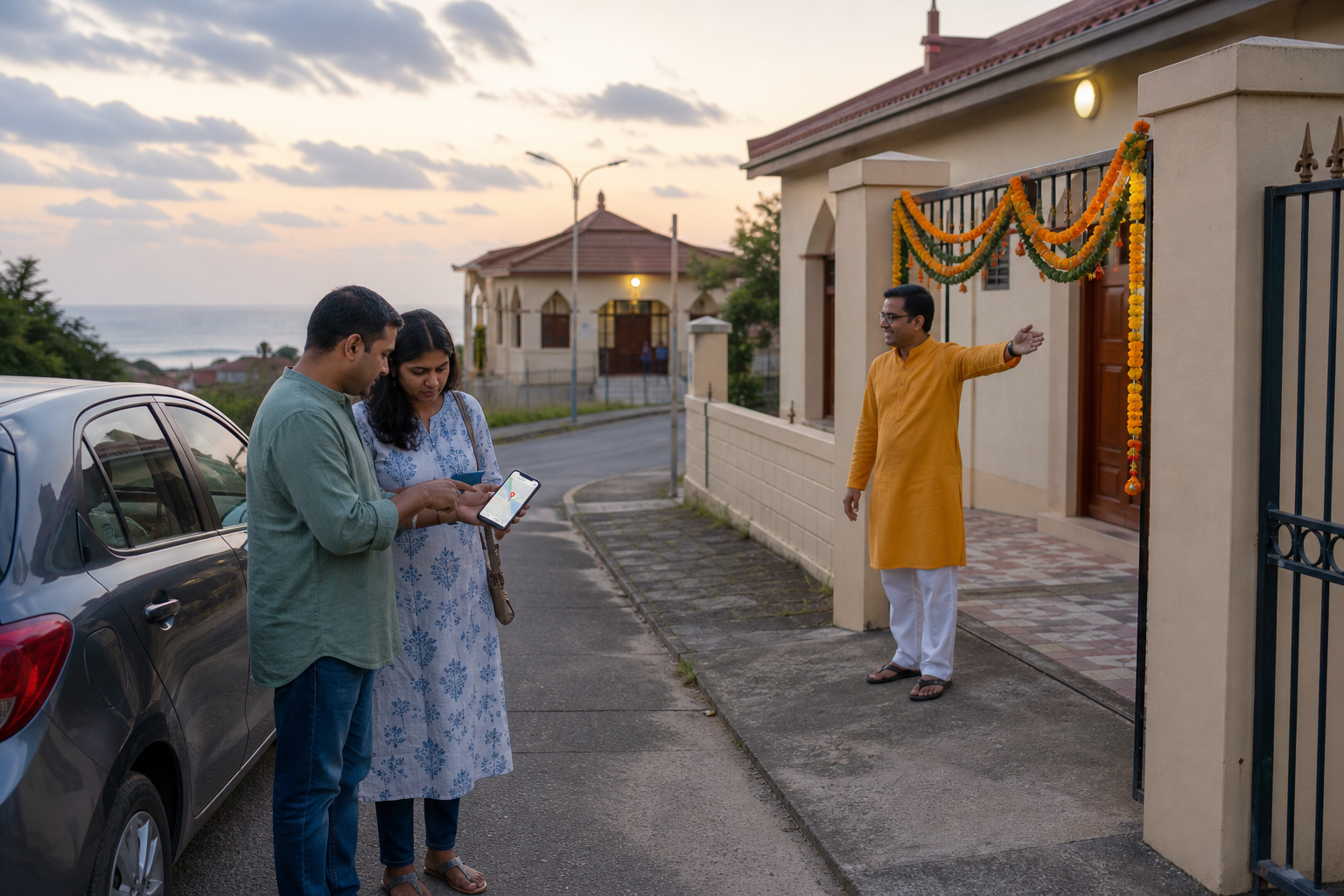
For the Stanger-Durban programme dated 23 August 2026, the first practical risk is simple: a broad location label can send a visitor to the wrong place. Do not build your route from a search for “Janmashtami Durban” alone. Ask the organiser for the complete venue name, street address and map pin, then compare the pin with the written address before leaving.
Confirm these details in one exchange with the organiser:
- The date and the opening and closing times, including whether the main observance begins at a different time from general admission.
- The exact entrance, especially if the venue has several gates or shares grounds with another institution.
- Whether registration, an invitation or any form of identification is required.
- Which bags, food, offerings, cameras or other items the venue permits.
- The designated parking, public-transport stop or passenger drop-off point, as well as a safe return plan after the programme.
- Accessibility arrangements for an elderly devotee, a person with limited mobility or a family bringing small children.
A forwarded flyer can remain in circulation after the event it advertised. The 23 August date therefore matters: do not use that notice as evidence of a later programme unless the organiser has issued a fresh confirmation. Check the year as well as the day and month before sharing it with your family or community group.
Once inside, make the volunteers’ work easier. Keep entrances and exit lanes clear, ask before photographing other families, and do not crowd the altar merely to obtain a better recording. If you are bringing children, give one adult explicit responsibility for them rather than assuming the whole group is watching. Choose a meeting point outside the busiest worship area before people disperse.
In Mathura, keep darshan separate from mobilisation
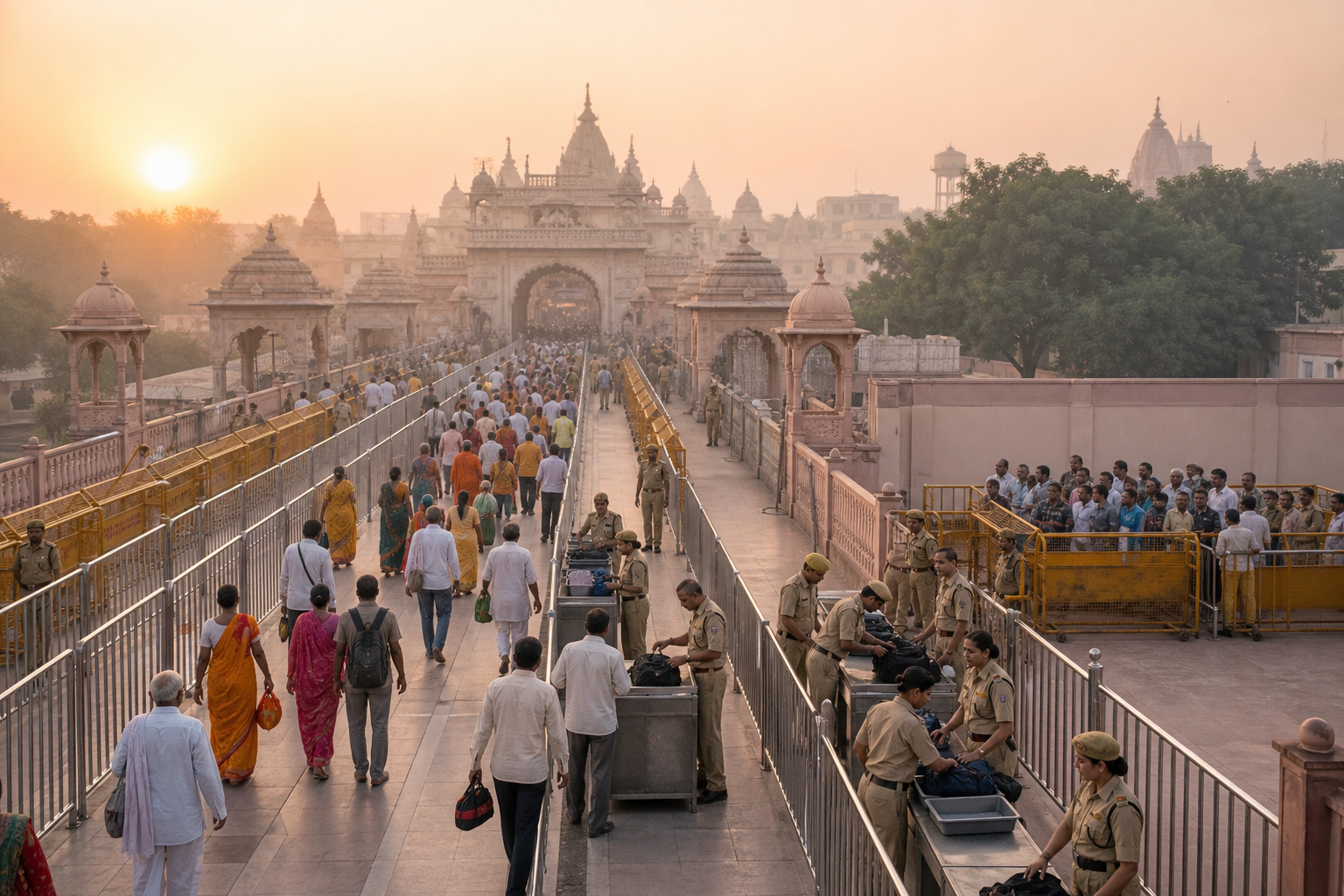
The relevant distinction in Mathura is not between devotion and fear. It is between a planned pilgrimage and an unverified call to collective action. The heightened security at the Krishna Janmabhoomi-Shahi Idgah complex was associated with concern about kar seva. A stated concern should not be inflated into proof that a particular mobilisation has been authorised, organised or permitted.
Kar seva, understood as voluntary service offered for a sacred purpose, has an honoured place in Dharmic public life. At a disputed and heavily secured location, however, the same expression can be used in a call that has legal, crowd-control and safety consequences. A forwarded appeal is not automatically a religious instruction. Before responding, establish who issued it, who is responsible for participants, where the assembly is meant to occur and whether recognised religious and civil authorities have confirmed it.
If those points cannot be verified, do not allow the language of seva to recruit you into an event you did not intend to join. You can hold a firm view about the sacred importance of Mathura while refusing anonymous or contradictory mobilisation. Restraint in an uncertain crowd is not indifference to Krishna Janmabhoomi.
At the site, make your conduct unambiguous:
- Follow the route, gate and queue that authorised personnel are directing at that moment, even if an older message names another approach.
- Do not cross, move or lean over a barricade. If access closes, step away rather than remaining at the boundary to argue or observe a commotion.
- Ask before filming. A sacred place being open to darshan does not mean every security area, worshipper or official activity is open to recording.
- Do not repeat a claim about a closure, clash, procession or threat unless you can establish where it originated. In a dense crowd, an uncertain message can change behaviour before anyone verifies it.
- If police and an informal organiser give conflicting directions, follow the public-safety instruction and leave the disputed point of assembly.
If you encounter immediate danger, move toward an open, monitored area as directed and contact local emergency services. Do not move toward a disturbance to discover what is happening, and do not stop in an exit path to make a video.
Build a five-minute plan for crowds and changing access
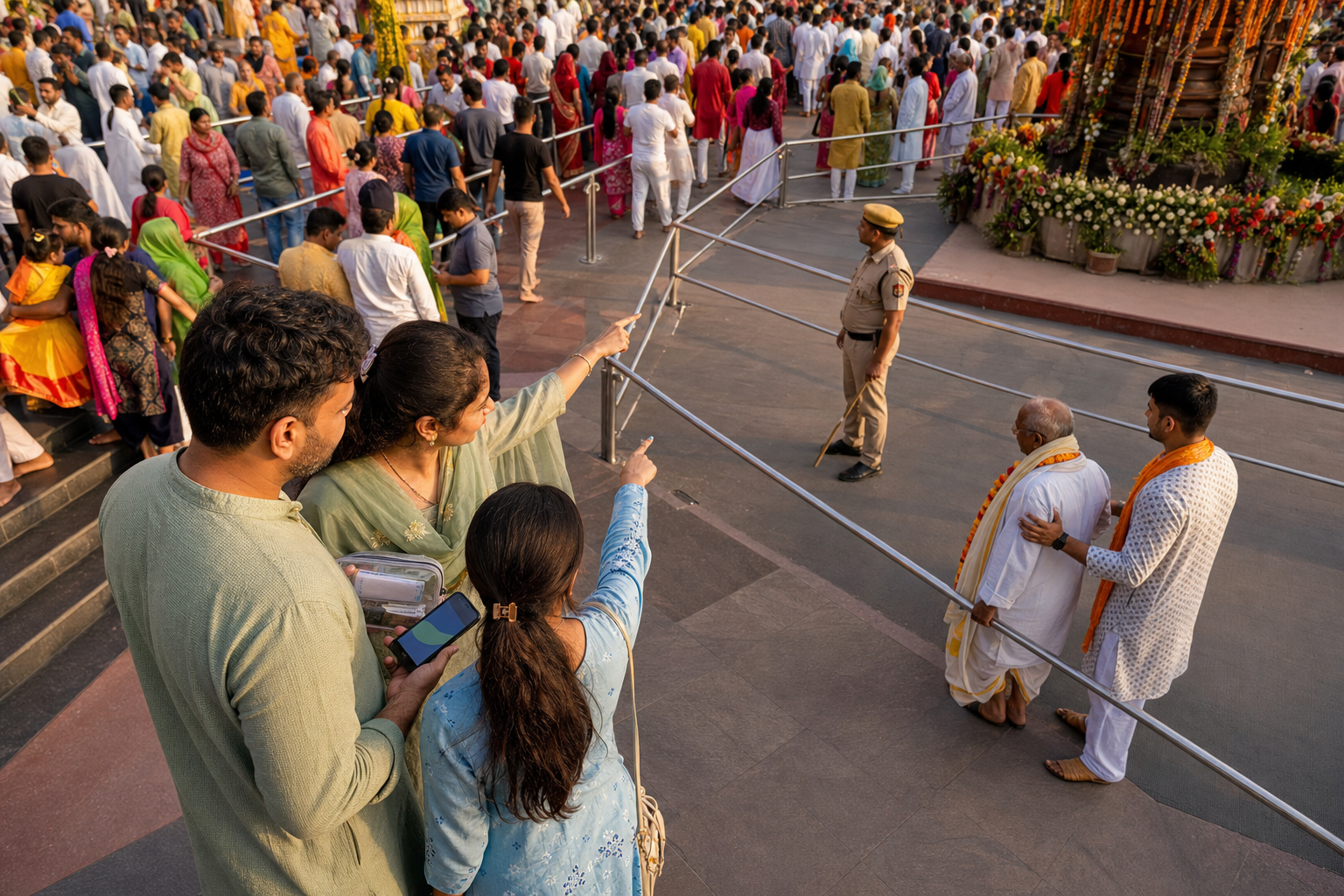
You do not need an elaborate security operation of your own. You need a small plan that everyone in your group understands before phones become difficult to hear or a route changes.
- Name one lead contact. Everyone should know who makes the decision to wait, enter or leave. This prevents family members from following different messages.
- Save the destination offline. Keep the written address, map pin and organiser’s contact details available without depending on a fresh search in a congested area.
- Choose a separation point. Select a visible location away from the densest entrance or inner queue. A meeting point beyond a controlled gate is useless if one person cannot pass that gate.
- Carry only what you need. Fewer bags and loose items make screening and movement easier. Confirm beforehand whether ritual offerings or other objects are permitted rather than debating them at the entrance.
- Protect dependants deliberately. A child should know the lead adult’s name and contact number. An elderly or medically vulnerable devotee should not be left alone in a queue while someone else investigates access.
- Agree on exit triggers. Leave if authorised personnel close the route, the group receives irreconcilable instructions, crowd movement becomes unsafe, or an unplanned mobilisation overtakes the darshan journey.
If you are fasting and have a health condition, follow the plan given by your own clinician rather than assuming a long, delayed queue will be harmless. Carry permitted medicines and do not let the wish to complete a particular visit override signs that you need medical help.
Public discipline is also seva
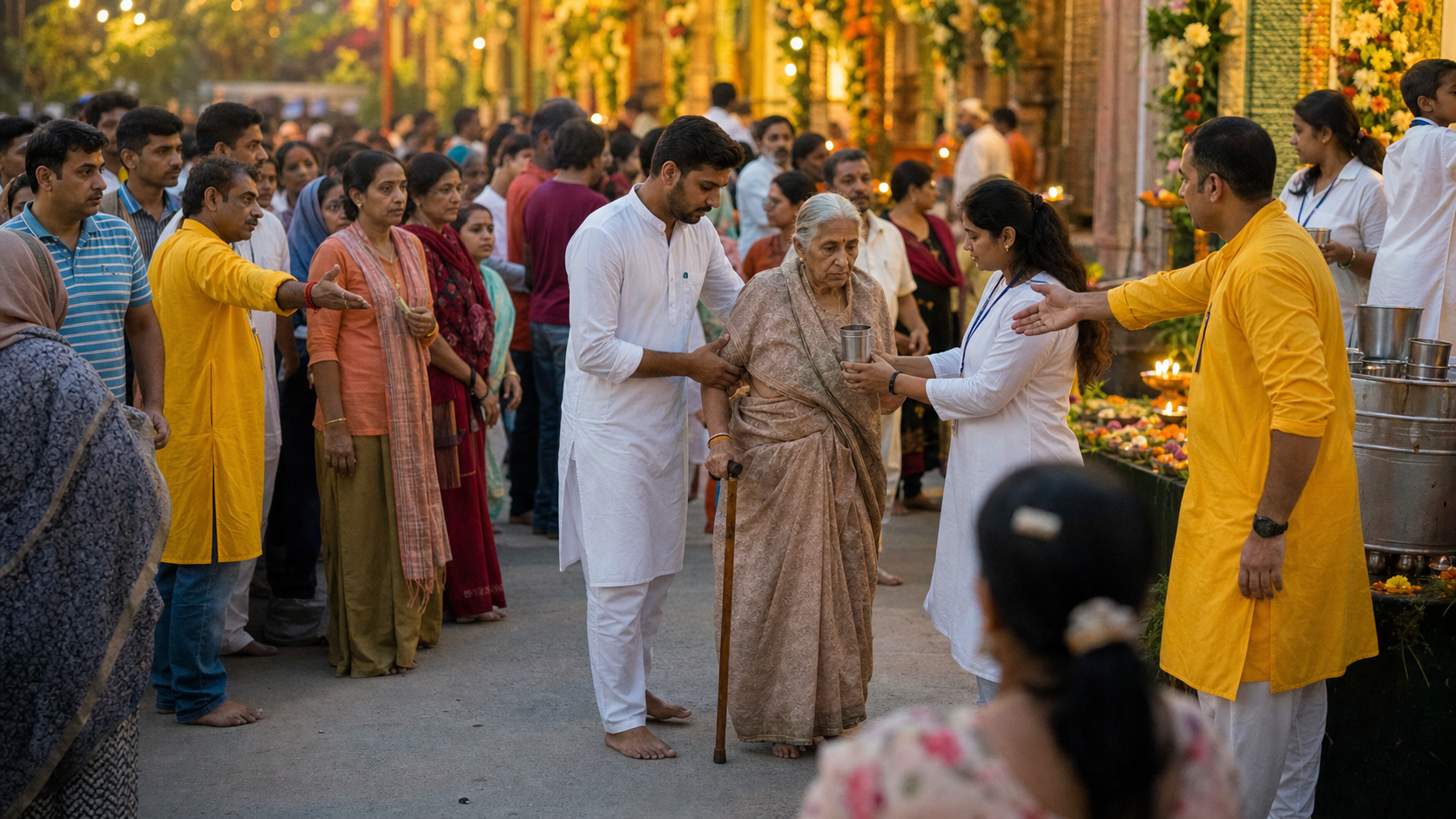
A Dharmic response to security is neither panic nor bravado. It is disciplined care for life, dignity, sacred space and the people performing difficult duties. Standing in the assigned queue, reducing the burden on volunteers, protecting children and elders, and refusing to spread an unverified alarm are practical forms of seva.
Security must not become a reason to treat ordinary worshippers as suspect. Worshippers, in turn, do not need to test a boundary to prove the depth of their faith. These truths can be held together. Firm attachment to a sacred place is compatible with calm conduct under temporary restrictions.
The Janmashtami gathering associated with Stanger and Durban also reminds you that Krishna bhakti is sustained far beyond Bharat through local congregations, volunteers and families. That continuity is strengthened when programmes are easy to find, responsibly managed and considerate of the surrounding community.
Before your next observance, send every traveller the verified destination, authorised contact and meeting point. If conditions in Mathura or Durban no longer match the confirmed plan, step back and preserve the worship in another form. Bhakti loses nothing when you protect life and keep the sacred occasion free from avoidable confusion.
References
- Dandavats — 23.08.26, Stanger Janmastami program, Durban
- Struggle for Hindu Existence — Krishna Janmashtami: Security Tightened at Disputed Krishna Janmabhoomi-Shahi Idgah Amid ‘Kar Seva’ Concerns
