
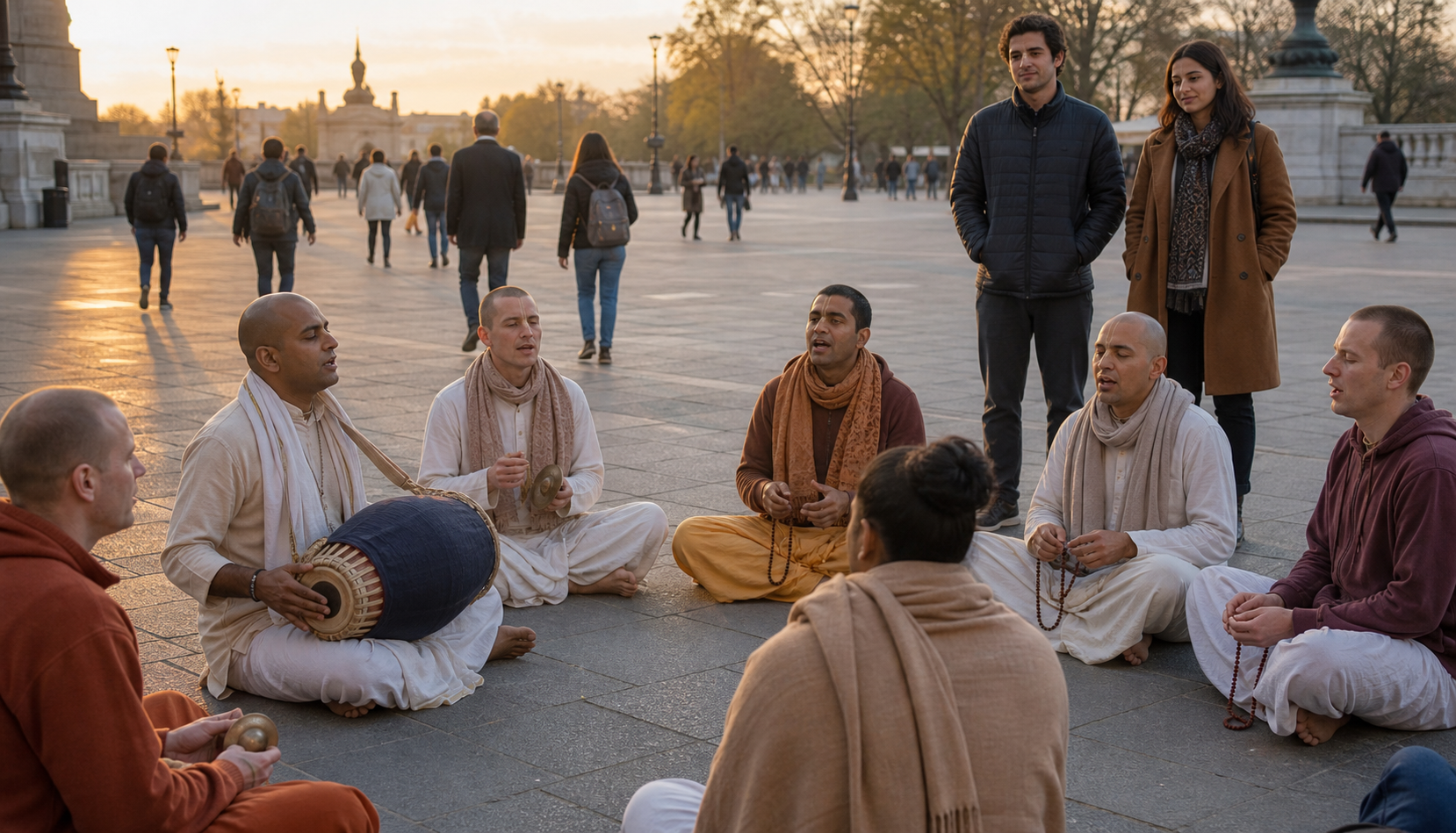
If someone is interfering with your chanting, worship, association with devotees, or public devotional activity, the first question is not whether the situation feels hostile. It is whether a person or institution is actually restricting a religious practice, and what consequence you face if you continue.
That distinction determines what you should do next. A dismissive remark, a written prohibition, a selectively enforced rule, and a threat of violence are all serious in different ways, but they do not call for the same response. You need a calm method that protects both your practice and your credibility.
First identify exactly what is being restricted

Religious freedom can sound abstract until it is translated into a specific act. For a practitioner of Krishna consciousness, the act might be chanting the holy names, hearing about Krishna, worshipping, meeting with other devotees, wearing an expression of faith, or communicating devotional teachings. The underlying freedom matters because the human opportunity to inquire about God and cultivate spiritual realization cannot be meaningful if a person is afraid to practise.
Before describing an incident as religious persecution or discrimination, write down the answers to five questions:
- What practice was affected? Name the action rather than saying only that your faith was disrespected.
- Who made the decision? Distinguish a colleague’s opinion from an employer’s instruction, a neighbour’s complaint from an official restriction, or a volunteer’s mistake from a temple policy.
- What was actually said or done? Preserve the precise words, written notice, email, rule, permit condition, or message.
- What happens if you continue? Identify any threatened penalty, exclusion, loss of access, disciplinary action, or physical danger.
- Is the rule applied consistently? Note whether comparable non-religious or other religious activities are treated differently, without assuming a motive you cannot establish.
This exercise prevents two common errors. The first is minimising a concrete restriction as a mere misunderstanding. The second is treating every disagreement as proof that religious liberty has been denied. A precise account gives a community leader, administrator, mediator, or lawyer something they can evaluate and act upon.
Respond in an order that preserves your options
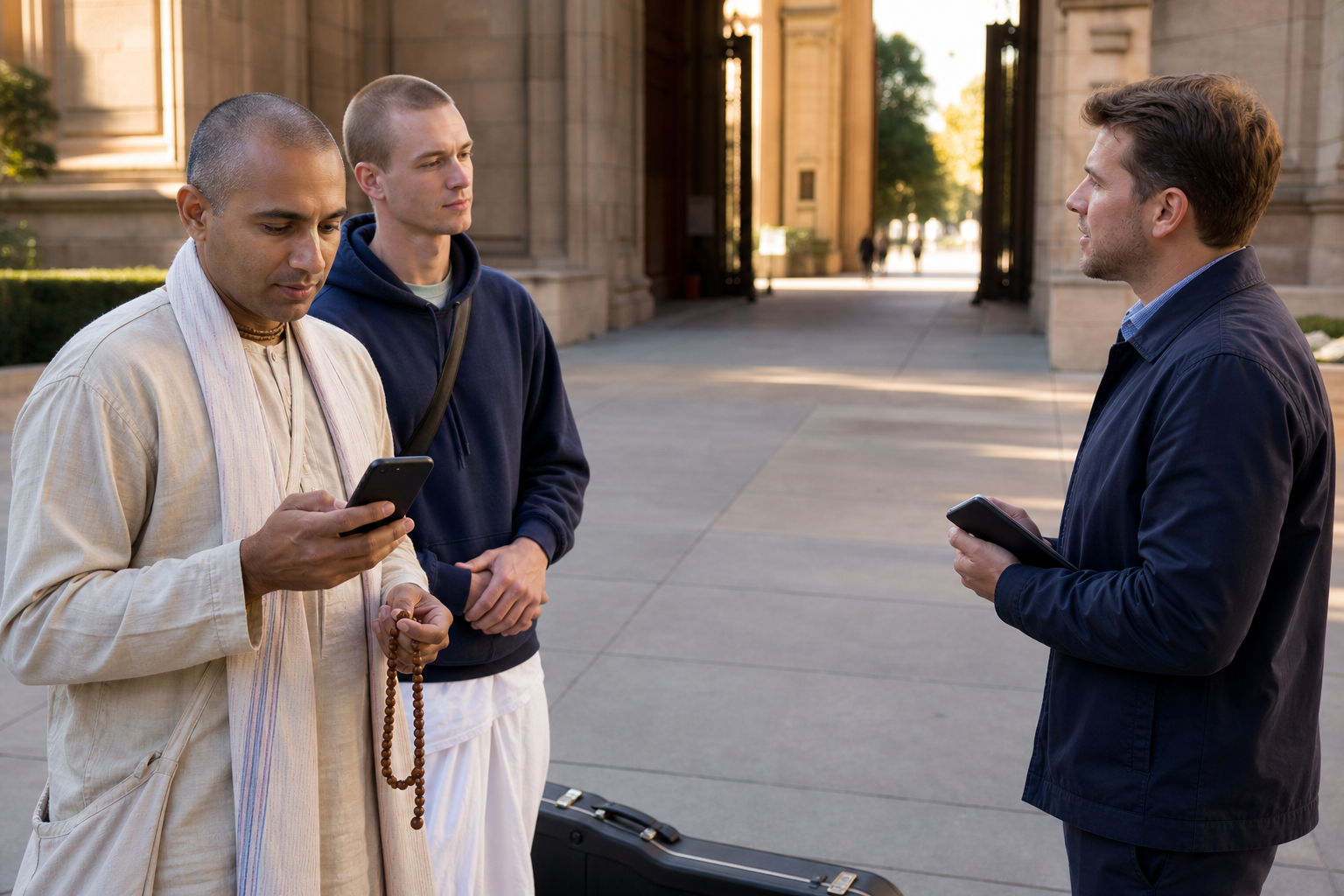
Your first response should usually be proportionate to the problem. Beginning with accusations can harden a correctable decision into a public conflict. Remaining silent when a deadline or penalty is approaching can be equally damaging. Use the following sequence unless there is immediate danger.
- Create a factual chronology. Record dates, locations, participants, exact requests, responses, and impending deadlines. Save the original messages and notices. If you are considering an audio or video recording, check the applicable local law first.
- Ask for the decision in writing. A neutral request such as, “Please identify the policy and explain how it applies to this practice,” is often more useful than an argument about motives.
- Explain the religious practice plainly. State what you do, why it is part of your faith, how often it occurs, and which part is essential. Do not assume that a school, employer, landlord, or official understands Krishna consciousness.
- Offer a narrow workable arrangement. If timing, sound, space, access, or another practical concern is causing the dispute, propose an adjustment that preserves the devotional purpose. Make clear which details can change and which religious element cannot.
- Bring in responsible support. A temple president, senior devotee, chaplain, community representative, or interfaith partner may be able to clarify the practice and reduce misunderstanding.
- Escalate when the consequence warrants it. Obtain qualified legal advice in the relevant jurisdiction when you face discipline, loss of employment or housing, denial of an official permission, a compulsory deadline, or pressure to sign away a claim. Do not ignore a formal notice while an informal conversation continues.
A useful written request is brief. Describe the practice, identify the decision affecting it, state the accommodation or correction you seek, and request a response by a reasonable date tied to any real deadline. Avoid attaching every theological argument you possess. The immediate task is to make the restriction and the requested remedy unmistakable.
If there is a credible threat of violence, stalking, vandalism, or immediate physical harm, do not treat it as an ordinary accommodation dispute. Move to safety, preserve the threatening communication, alert the responsible authorities, and inform trusted community leadership. Public debate can wait until people are secure.
Know what religious freedom does and does not settle
Religious freedom protects conscience and religious exercise, but it does not automatically decide every dispute in favour of the believer. The governing law, the type of institution, the precise practice, the reason for a restriction, and the jurisdiction can all matter. A sincere devotional motive is important, but sincerity alone is not a complete legal argument.
You should therefore separate three kinds of difficulty:
- Social disapproval: Someone mocks, criticises, or misunderstands your practice, but does not control your ability to continue. The best response may be explanation, boundaries, or disengagement.
- Institutional restriction: A person with authority imposes a rule, penalty, exclusion, or condition affecting your practice. Ask for the policy, document its application, request a workable resolution, and obtain advice when the stakes are material.
- Coercion or danger: Someone uses threats, force, surveillance, targeted harassment, or property damage to frighten you out of practising. Treat safety and evidence preservation as the immediate priorities.
This classification is not a legal verdict. It is a way to choose the next safe step. It also keeps advocacy honest. If you call an insult a legal ban, decision-makers may stop listening. If you call an enforceable prohibition a misunderstanding, the deadline may pass before you protect yourself.
Public advocacy also requires consent and judgement. Before publishing names, screenshots, addresses, or identifying details, consider the safety of the affected devotee and the permanence of online disclosure. Preserve unedited evidence privately. Share publicly only what you can substantiate and what the person at risk has authorised you to reveal.
Defend freedom as a shared dharmic responsibility
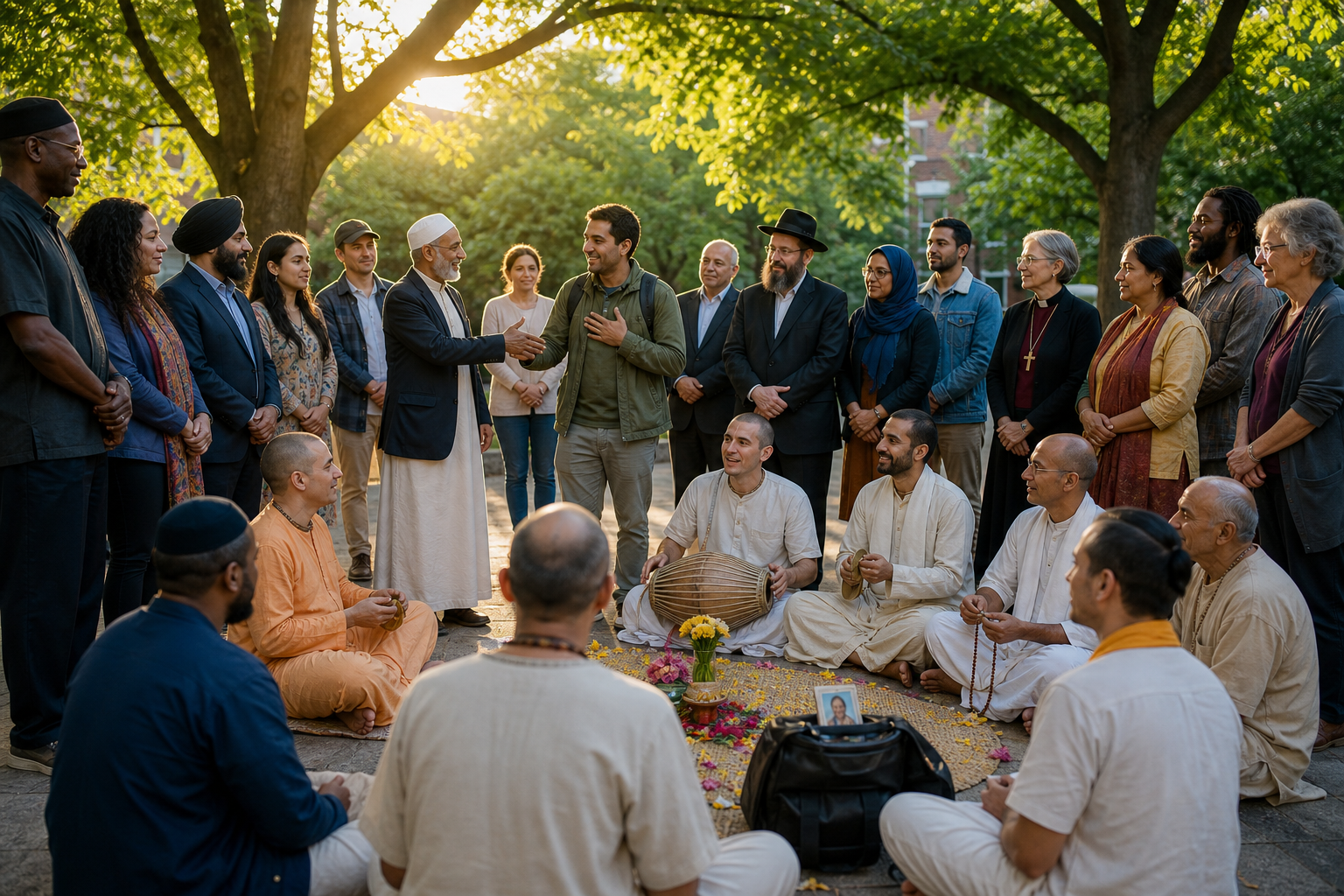
A community weakens its own case when it asks for liberty only for itself. Defending the freedom of people from other faith traditions is both principled and practical. It shows that the issue is conscience rather than privilege, and it creates relationships that already exist when a genuine crisis arises.
You do not need to erase theological differences to cooperate. A Krishna devotee, Sikh, Jain, Buddhist, Hindu of another sampradaya, Christian, Muslim, Jew, or person of another conviction may disagree about ultimate truth while still opposing coercion in matters of worship and conscience. Cooperation on religious liberty is not a declaration that all doctrines are identical.
Make that principle concrete before trouble begins:
- Identify the person in your temple or community who will receive reports of restrictions, threats, or vandalism.
- Keep contact details for local interfaith representatives and responsible civic institutions rather than searching for them during a crisis.
- Prepare a short, accurate explanation of core Krishna conscious practices for schools, employers, neighbours, officials, and event organisers.
- Support another community’s legitimate freedom of worship even when no Krishna conscious institution is directly affected.
- Correct false claims made by your own side. Exaggeration may produce attention, but it damages the trust needed for durable protection.
The spiritual standard must remain visible throughout this work. Srila Prabhupada placed the emphasis on whether religion awakens love of God, not on the social prestige of a label. That standard changes the tone of advocacy. The purpose is to preserve a person’s opportunity to hear about God, chant His names, and develop devotion without fear; it is not to turn bhakti into another instrument of contempt.
Before issuing a public statement, test it against four questions: Is every factual claim supported? Is the requested remedy clear? Does the language protect the affected person? Would we accept the same principle if another sincere religious community invoked it? If one answer is no, revise before publishing.
Key takeaways
- Name the exact devotional practice, decision-maker, rule, consequence, and deadline before deciding how to respond.
- Preserve original evidence and ask for institutional decisions in writing.
- Explain the religious need plainly, then request a specific arrangement that protects its essential purpose.
- Escalate early when formal penalties, expiring deadlines, major losses, or physical danger are involved.
- Do not confuse criticism with prohibition, or a correctable misunderstanding with a threat.
- Defend freedom of conscience consistently, including when another religious community is affected.
- Keep advocacy truthful, proportionate, and directed toward the freedom to cultivate devotion.
If your practice is being restricted, begin with one page: a chronology, the exact practice at stake, the evidence you have, the consequence you face, and the remedy you seek. Send it to the person capable of correcting the decision and to a trusted community leader. If a serious penalty, legal deadline, or safety risk is present, take that page to qualified local help without delay.
References
