

If you have seen the claim that 0.1% of Maharashtra’s Kumbh allocation could have saved 100 to 125 Marathi-medium schools, you are being invited to choose a side: defend a sacred gathering or defend children’s education. You do not have to accept that choice.
The arithmetic deserves attention because it makes the scale of public spending legible. But a fraction is not a funding plan. To decide whether the proposal is sound, you need five things: the correct budget denominator, a school-by-school diagnosis, the recurring cost, a lawful source of funds and a measurable definition of what it means to save a school.
The 0.1% arithmetic is real; the conclusion is not yet proven

Justice Prasanna B. Varale argued that the government allocates approximately ₹32,000 crore to ₹34,000 crore for the Nashik-Trimbakeshwar Simhastha Kumbh, and that 0.1% of this amount could have prevented the closure of 100 to 125 Marathi-medium schools.
A tenth of one percent is one-thousandth. One-thousandth of ₹32,000 crore is ₹32 crore; one-thousandth of ₹34,000 crore is ₹34 crore. The fraction therefore produces the stated order of magnitude.
Using the approximate ₹32 crore figure, an equal division would imply ₹32 lakh for each of 100 schools or ₹25.6 lakh for each of 125 schools. That calculation is useful, but only as a diagnostic. It does not show that every school needed the same amount, that the money would cover annual operations, or that inadequate funding was the reason each school closed.
The public intervention also identified roughly ₹11,000 crore for corridor projects. That figure should be examined separately. It should not be silently added to the Kumbh denominator unless official accounts show that the figures cover distinct projects, the same budget period and no overlapping expenditure.
Three budget terms also need to be kept apart: a projected cost, an approved allocation and money actually spent. None is automatically an uncommitted balance that can be transferred elsewhere. Before endorsing or rejecting the 0.1% proposal, ask which of those three figures the ₹32,000 crore to ₹34,000 crore range represents and which department controls each budget head.
Saved must become a school-level plan
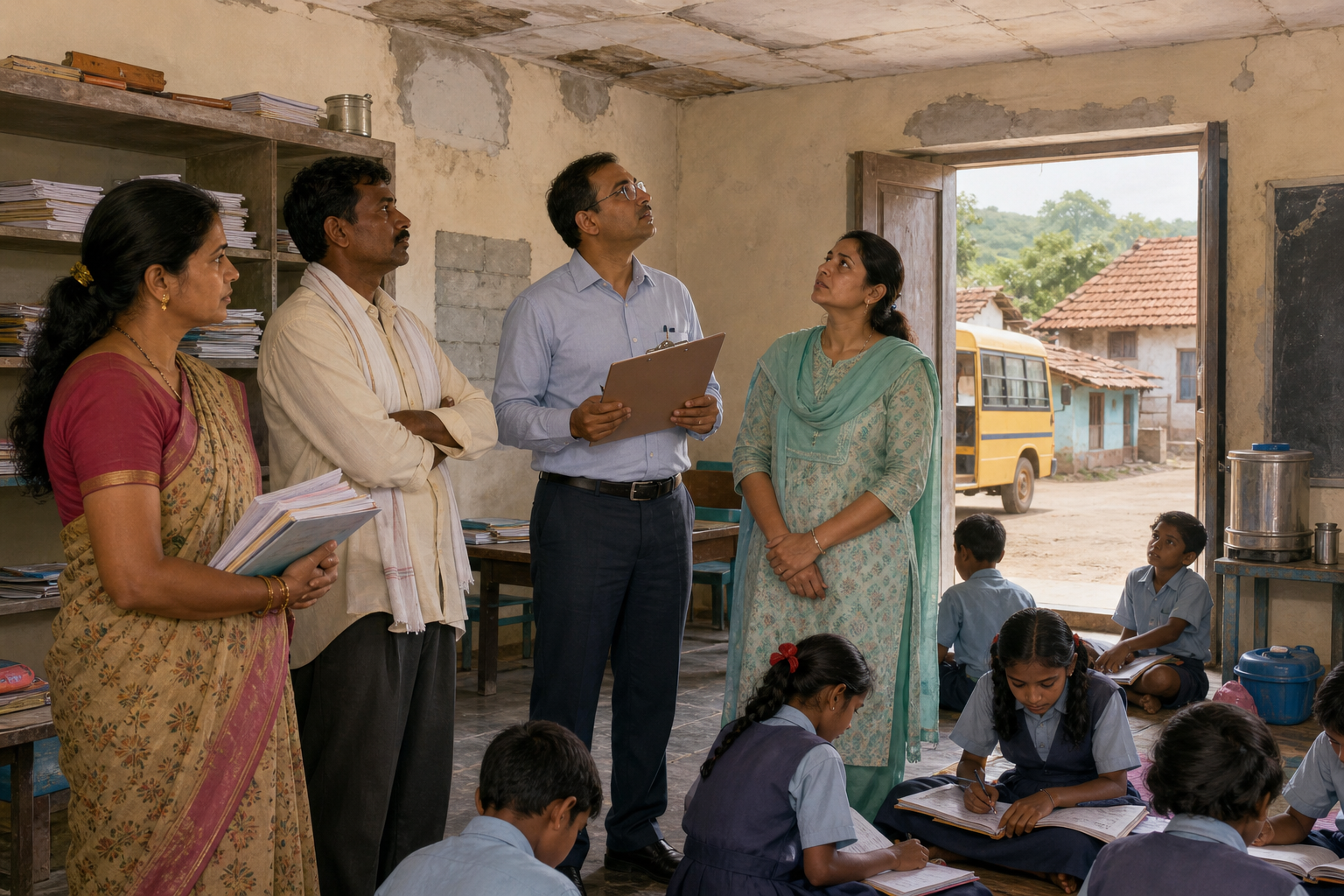
The word saved is doing most of the work in this debate. It could mean preventing a formal closure, reversing a merger, restoring a grant, retaining teachers, admitting a new class or reopening a campus. Those are different administrative actions with different costs. Until the intended action is named, ₹32 crore remains a comparison rather than a proposal.
For every school included in the count of 100 to 125, insist on the following information:
- The school’s name, location, management type and precise administrative status.
- The number of pupils enrolled when the closure decision was made and the number directly affected.
- The recorded reason for closure, merger or withdrawal of support.
- The specific action that would keep the school operating: staffing, recognition, premises, equipment, transport, an operating grant or another identified requirement.
- The one-time amount needed immediately and the recurring amount required in each subsequent year.
- The public authority empowered to reverse the decision and the conditions it would require the school to meet.
This distinction between one-time and recurring finance is decisive. A grant can repair a classroom or purchase equipment once. It cannot, by itself, guarantee teachers, maintenance and operating support year after year. If ₹32 crore merely postpones the same closure decision, it has bought time, not saved the school.
The equal per-school figures of ₹25.6 lakh or ₹32 lakh should therefore be treated as questions, not budgets. One school may need much less; another may need a continuing commitment that cannot responsibly be inferred from an average. A credible rescue programme begins with individual cost sheets and then produces a total. It does not begin with a politically attractive total and divide it evenly.
Kumbh and Marathi education are not rival civilizational goods
For Hindu society, the Simhastha Kumbh is not merely an entertainment event. It is a sacred gathering and a civilizational institution. Marathi-medium schools are also more than service-delivery units. They carry a language, a literary inheritance, local memory and a way for children to encounter knowledge without being taught that intellectual advancement requires cultural distance from home.
A Dharmic outlook has room for both duties. Organising a major pilgrimage competently is a public responsibility. Sustaining accessible education and protecting a regional language are public responsibilities too. The real question is whether each duty is being discharged with clarity, proportion and accountability.
Two shortcuts should be rejected. The first treats any scrutiny of Kumbh expenditure as hostility to Hindu faith. The second assumes that invoking school closures is enough to prove that spending on the Kumbh is excessive. Neither conclusion follows. Sacred importance cannot make every administrative line item efficient, while a large headline figure cannot make every line item wasteful.
Justice Varale’s own educational history gives the language question a human dimension. He studied through Class 10 in municipal and Zilla Parishad Marathi-medium schools and said that regional-language education did not obstruct his career but broadened his outlook. That experience rebuts the lazy assumption that a Marathi-medium background necessarily limits achievement. It does not, however, replace the school-level evidence needed to design a rescue programme.
The sound position is demanding in both directions: do not finance Marathi education by portraying Hindu pilgrimage as an indulgence, and do not defend the Kumbh by treating the decline of Marathi schools as someone else’s problem. Fiscal stewardship is not an attack on Dharma. It is part of responsible public duty.
Replace the slogan with two public ledgers
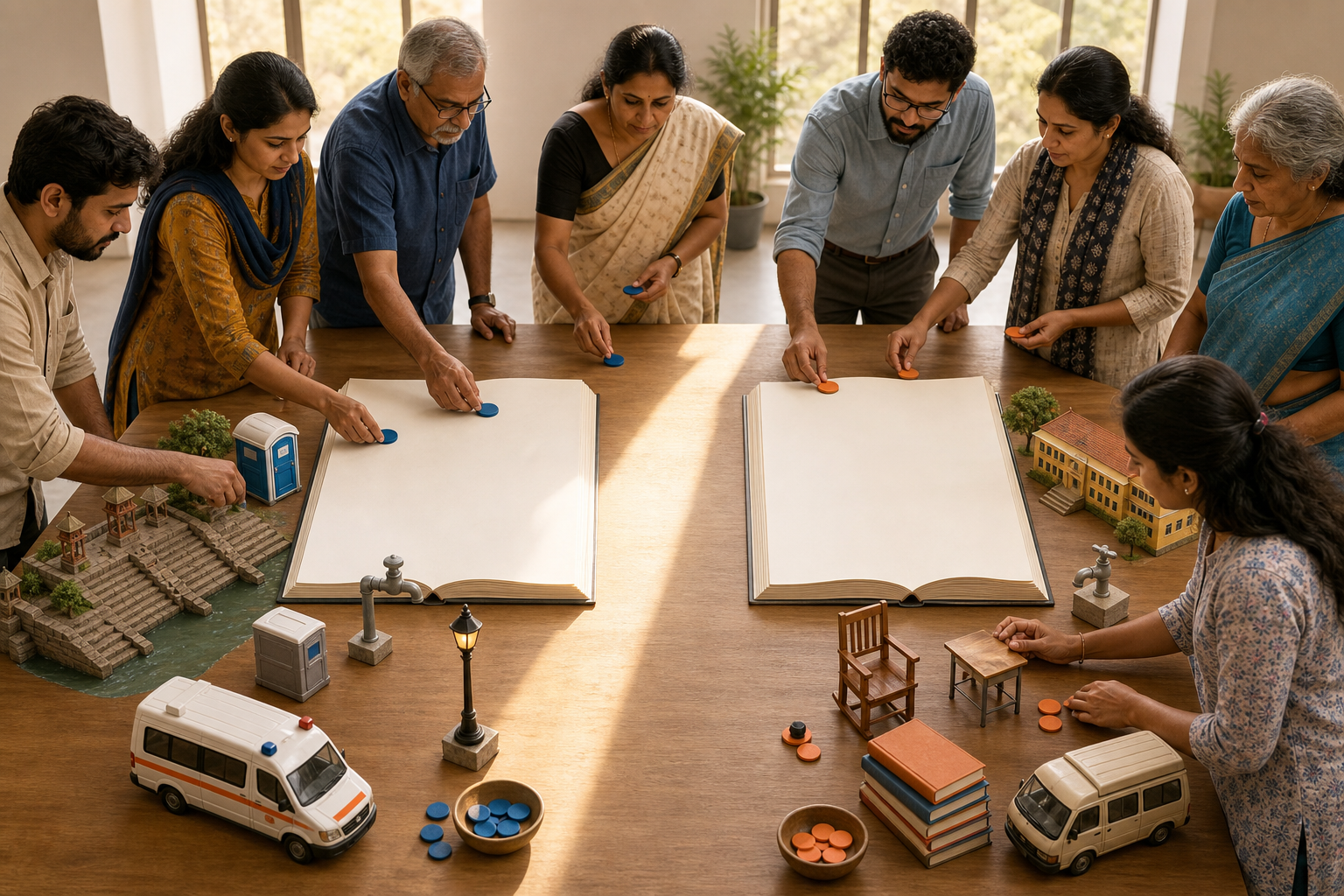
You can turn this controversy into a testable policy question by asking Maharashtra to place two ledgers side by side. The first should explain the Kumbh programme. The second should identify every school whose closure is being invoked.
- Publish the Kumbh ledger. Show the approved cost, budget period, responsible agency, individual project, amount committed, amount spent and amount uncommitted. Distinguish services needed for the gathering from assets intended to remain in public use. Show the corridor projects separately so that no cost is counted twice.
- Publish the Marathi-school register. Name the 100 to 125 institutions, their present status, the pupils affected, the recorded cause of closure and the authority that made the decision. A statewide total without school names cannot be audited.
- Prepare a rescue memorandum. For each viable intervention, specify the one-time requirement, annual recurring requirement, lawful budget head, recipient, conditions and expected result. Define whether success means reopening, avoiding closure, restoring admissions or maintaining a minimum educational service.
- Apply the same accountability standard to both. Kumbh administrators should explain what public result each project purchases. Education administrators should explain how a grant changes a school’s status and how long the change can be sustained.
If you want to act as a citizen, send a written request to your elected representative and the relevant education authority in these terms: Please publish the school-wise list behind the claim that 100 to 125 Marathi-medium schools could be saved with approximately ₹32 crore, including each closure reason, one-time requirement, annual recurring requirement, responsible authority and proposed outcome.
In the same request, ask for the project-wise breakup of the ₹32,000 crore to ₹34,000 crore Simhastha figure and the separate ₹11,000 crore corridor figure. If the response contains only another grand total, repeat the request at project and school level. Totals create headlines; line items permit judgement.
Do not begin a private fundraiser for a named school until its management confirms the actual impediment, the authorised recipient and the recurring obligation. Money collected for equipment will not solve a closure caused by a different administrative condition. Community support becomes effective only when it is attached to a diagnosed need and a responsible institution.
Key takeaways
- The 0.1% calculation is arithmetically sound: it produces roughly ₹32 crore to ₹34 crore from the stated Kumbh allocation range.
- The implied ₹25.6 lakh to ₹32 lakh per school is a ratio, not evidence of what any particular school needs.
- A real rescue plan must distinguish one-time assistance from annual operating support and identify the administrative cause of each closure.
- Kumbh and Marathi-medium education are both civilizational concerns; neither should be protected by refusing scrutiny of public administration.
- The most useful next step is publication of a project-wise Kumbh ledger and a school-wise closure and rescue register.
Your next step is not to pick a camp. Put the school list and the Kumbh budget breakup into the same written request, and insist that both be answered at the level where decisions are actually made. That is how a provocative percentage becomes accountable policy, and how you can defend Dharma and Marathi education without sacrificing either to a slogan.
References
