

If you are preparing to visit a teertha, the most important question is not how much you can fit into the route. It is what the journey is meant to change. Without that answer, even a revered place can be reduced to a stop, a photograph, or a completed obligation.
Teertha offers a stricter possibility. A sacred place is also a threshold: you approach it with a way of living, meet a discipline greater than personal preference, and return responsible for what you have received. The aim is not to manufacture a mystical moment. It is to make your travel capable of becoming passage.
Sacred geography is only half of a teertha
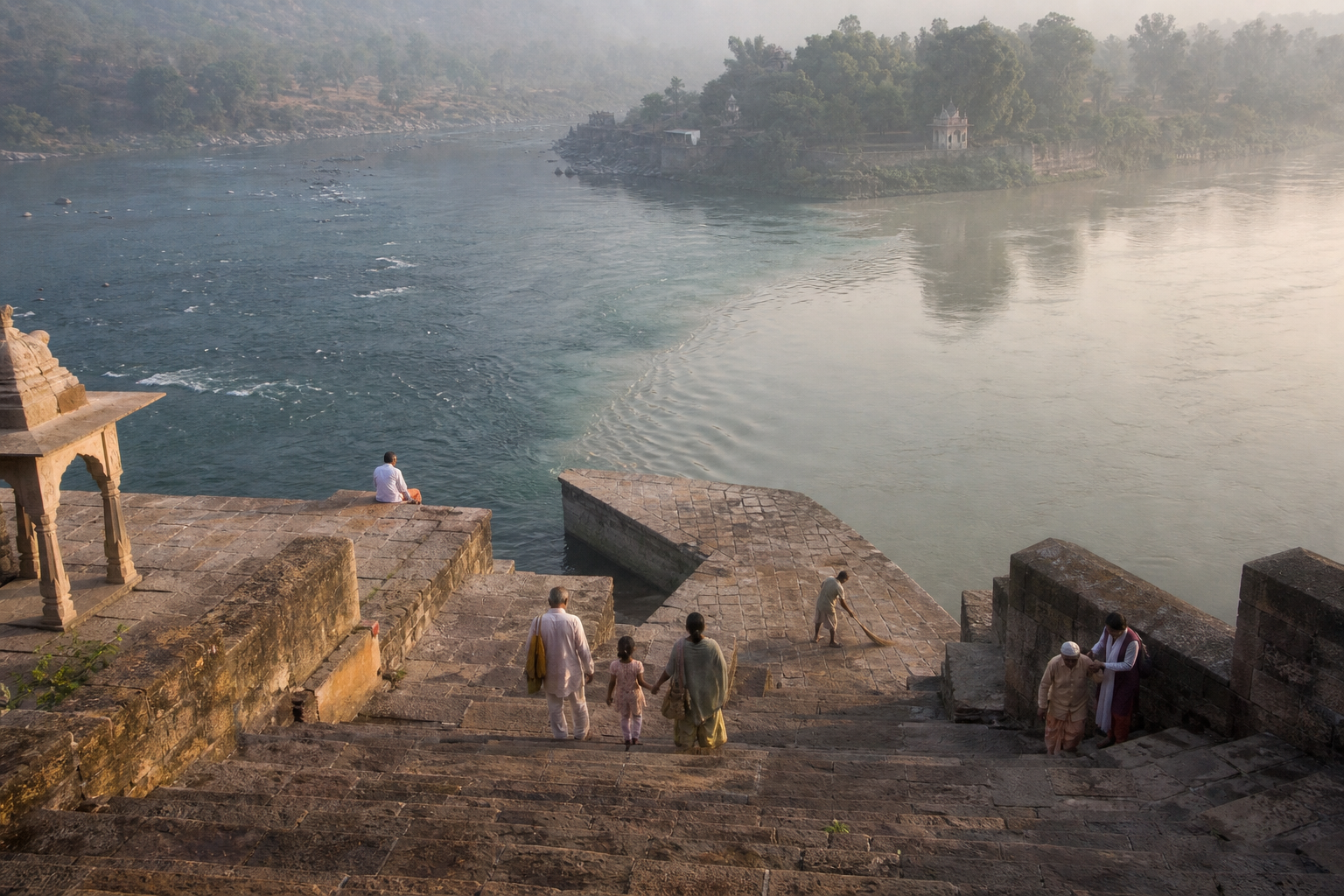
To treat teertha only as a pilgrimage destination is incomplete. It leaves you with geography but no crossing. Yet treating it only as an inward metaphor is also incomplete. That erases the actual place, its inherited sanctity, its custodians, its disciplines, and the generations of devotion associated with it.
You need to hold both dimensions together. The place is not scenery for a spiritual experience of your own design. The inward passage is not automatic merely because your body reached the place. Teertha emerges through the meeting of sacred locale, reverent approach, and willingness to be redirected.
Rig Veda 1.173.11 gives this distinction a form a pilgrim can use. For sincere worship, Indra is “like the lake at the teertha to a thirsty pilgrim”. When the mind is turned toward worldly preoccupations, the way becomes like a long road that delays arrival. The contrast is not between two locations. It is between two modes of approach.
This does not mean that arranging transport, meals, lodging, health needs, or family responsibilities makes a pilgrimage worldly. Those things require sensible planning. The problem begins when logistics occupy the whole field of attention, or when the sacred place is approached mainly for acquisition, display, status, or the mechanical completion of a religious task.
Before you leave, test your preparation through three lenses:
- Place: What makes this particular teertha worthy of reverence, and what does its living tradition ask you to respect?
- Passage: What habit, confusion, attachment, grief, or neglected duty are you carrying to the threshold?
- Return: What change in conduct would show that the journey entered your life rather than merely interrupted it?
If you can describe the route in detail but cannot answer any of these questions, your itinerary may be complete while your pilgrimage remains unprepared.
Prepare an intention strong enough to guide the journey
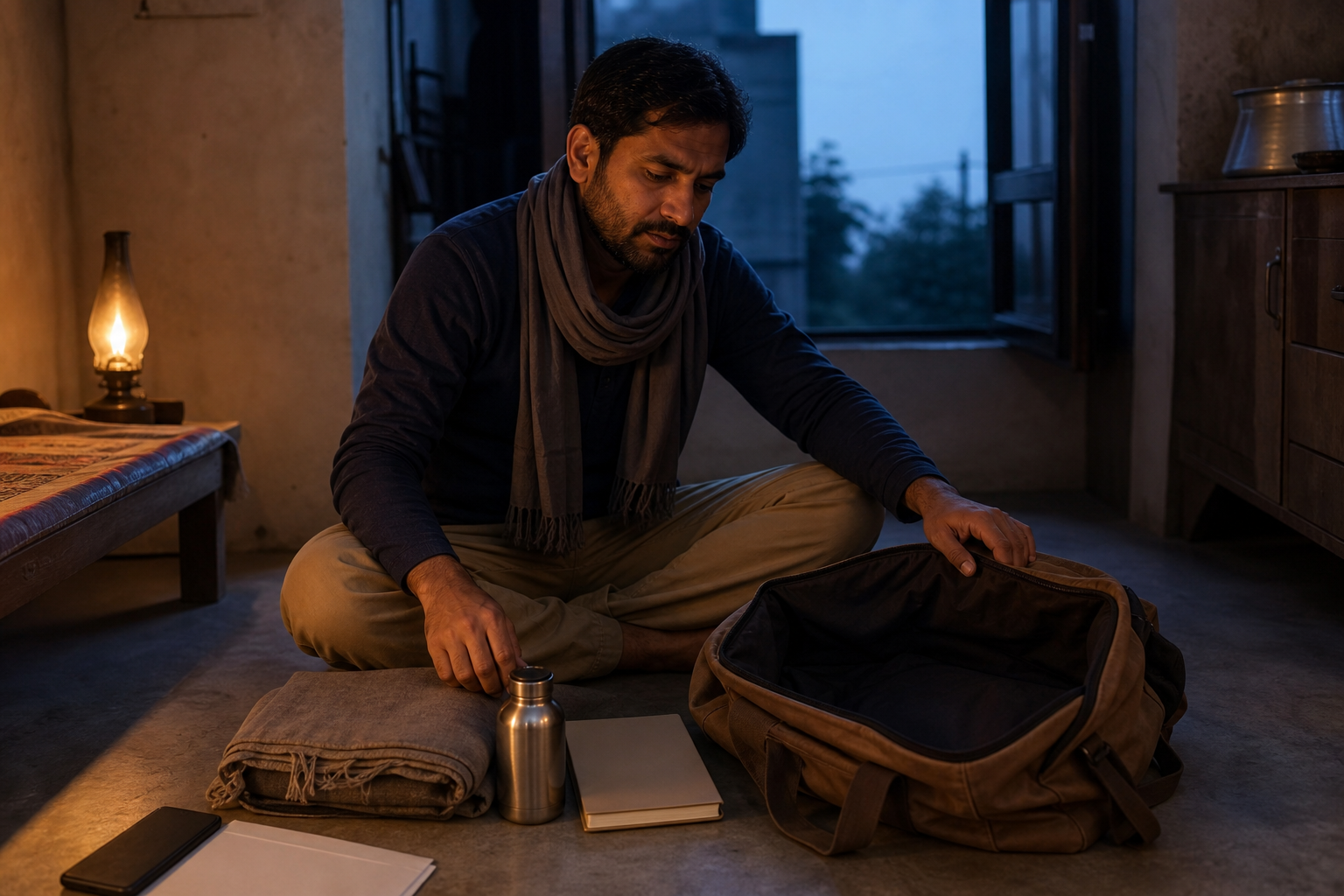
A useful intention is narrower than a catalogue of desires. It does not attempt to control what the teertha must give you. It names how you intend to become available to the encounter.
- State your purpose in one sentence. You might seek clarity about a duty, steadiness in practice, freedom from a particular resentment, or the humility to accept something you have resisted. Choose the concern that is actually shaping your life.
- Name what you may need to relinquish. A crossing implies that something cannot remain exactly as it was. This may be a defensive story, constant distraction, careless speech, or a demand that events unfold according to your preference.
- Learn the discipline of the place. Entry conditions, dress, photography, offerings, queues, ritual participation, and areas of restricted access can differ. Follow current instructions from the people responsible for the teertha instead of assuming that a custom observed elsewhere applies here.
- Protect your attention before arrival. Settle essential communications, tell family how you can be reached, and choose when the phone will remain put away. Otherwise, ordinary demands will follow you through the threshold and claim the very attention you travelled to gather.
- Choose a practice for the return. Decide how the intention could enter ordinary conduct. A regular prayer, the repair of a neglected relationship, more disciplined speech, or service performed without display can give the passage a continuing form.
Do not confuse avoidable hardship with sincerity. If you have health, dietary, or mobility needs, plan for them and seek appropriate professional and local guidance where necessary. Ignoring a genuine medical constraint does not make your attention purer; it can make the journey unsafe and place an unnecessary burden on companions.
Leave some room in the itinerary as well. When every moment is assigned to transport, queues, photographs, shopping, and the next destination, there is no unclaimed time in which the significance of a place can register. More sacred stops do not necessarily make a deeper pilgrimage.
If you are travelling with family or a group, agree beforehand on periods of quiet, necessary rest, and the difference between shared activities and individual practice. This prevents the pilgrimage from becoming a continuous negotiation over pace and preference.
Let the sacred place set the terms of your attention
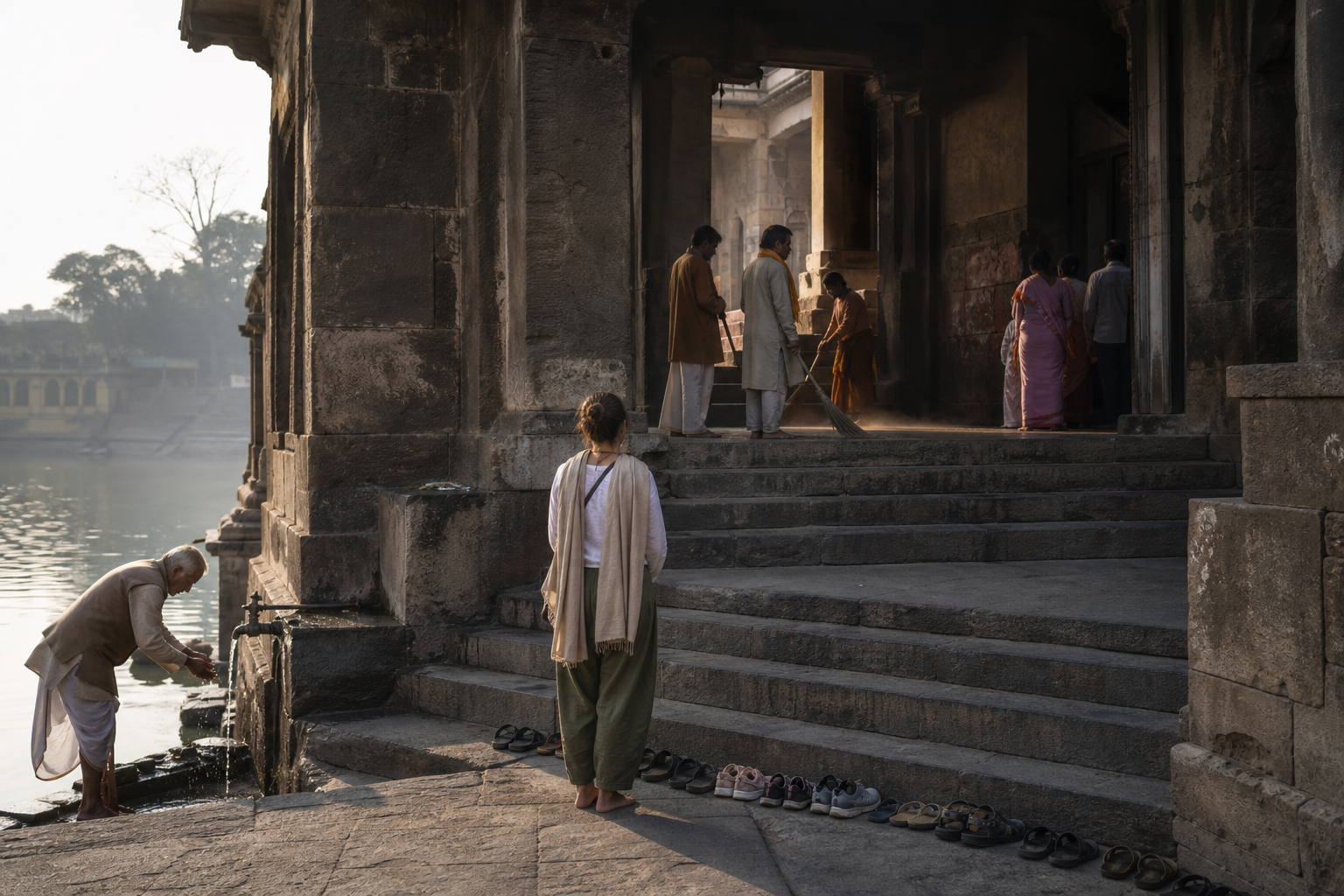
At the threshold: stop managing the experience
The transition into a teertha should be perceptible. You do not need an elaborate private ritual. You need a deliberate break from the consumer habits of evaluating, recording, and rushing.
- Put the phone away before entering rather than waiting for someone to correct you.
- Recall the intention you carried from home.
- Observe the local order before joining a practice unfamiliar to you.
- Ask an appropriate custodian or knowledgeable local person when the correct conduct is unclear.
- Let waiting, inconvenience, and the presence of other pilgrims become part of the discipline rather than obstacles to your private schedule.
This pause changes your stance. You are no longer treating the place as something delivered for your consumption. You are entering as a guest and a pilgrim.
At the sacred centre: receive before you interpret
Expectation can make attention surprisingly rigid. You may arrive anticipating peace, tears, certainty, or an unmistakable sign. Then the actual experience contains noise, fatigue, crowds, impatience, or no dramatic emotion at all.
Do not immediately decide that the visit failed. Attend to the place as it is. Offer the prayer or observance proper to the tradition. Remain quiet enough to notice both reverence and resistance. Restlessness does not have to be hidden; it may reveal how strongly the mind still insists on controlling the encounter.
Do not turn another person’s devotion into your backdrop. Avoid obstructing worship, narrating loudly, or recording people merely because their practice appears visually striking. A practice welcomed at one teertha may be inappropriate at another, so ask instead of extrapolating.
Include an act that is not about acquiring an experience. Keep your area clean, carry away your waste, make room for those who need it, assist a companion without announcing it, or use an accepted channel if you offer material support. Do not undertake ritual, cleaning, or service work in a controlled sacred area without permission.
On leaving: do not close the encounter too quickly
The first impulse after leaving may be to check messages, compare photographs, discuss the crowd, or hurry toward the next stop. Pause before doing so. Record a private response to these prompts:
- What became clearer, quieter, or more difficult to evade?
- Where did impatience, vanity, fear, bargaining, or distraction appear?
- What action does this encounter now ask of you at home?
Do not judge the pilgrimage solely by emotional intensity. Tears do not automatically prove transformation, and an undramatic visit does not prove absence of meaning. The better question is whether your relationship to a duty, attachment, or practice has shifted enough to affect what you do next.
The return is where spiritual passage becomes visible
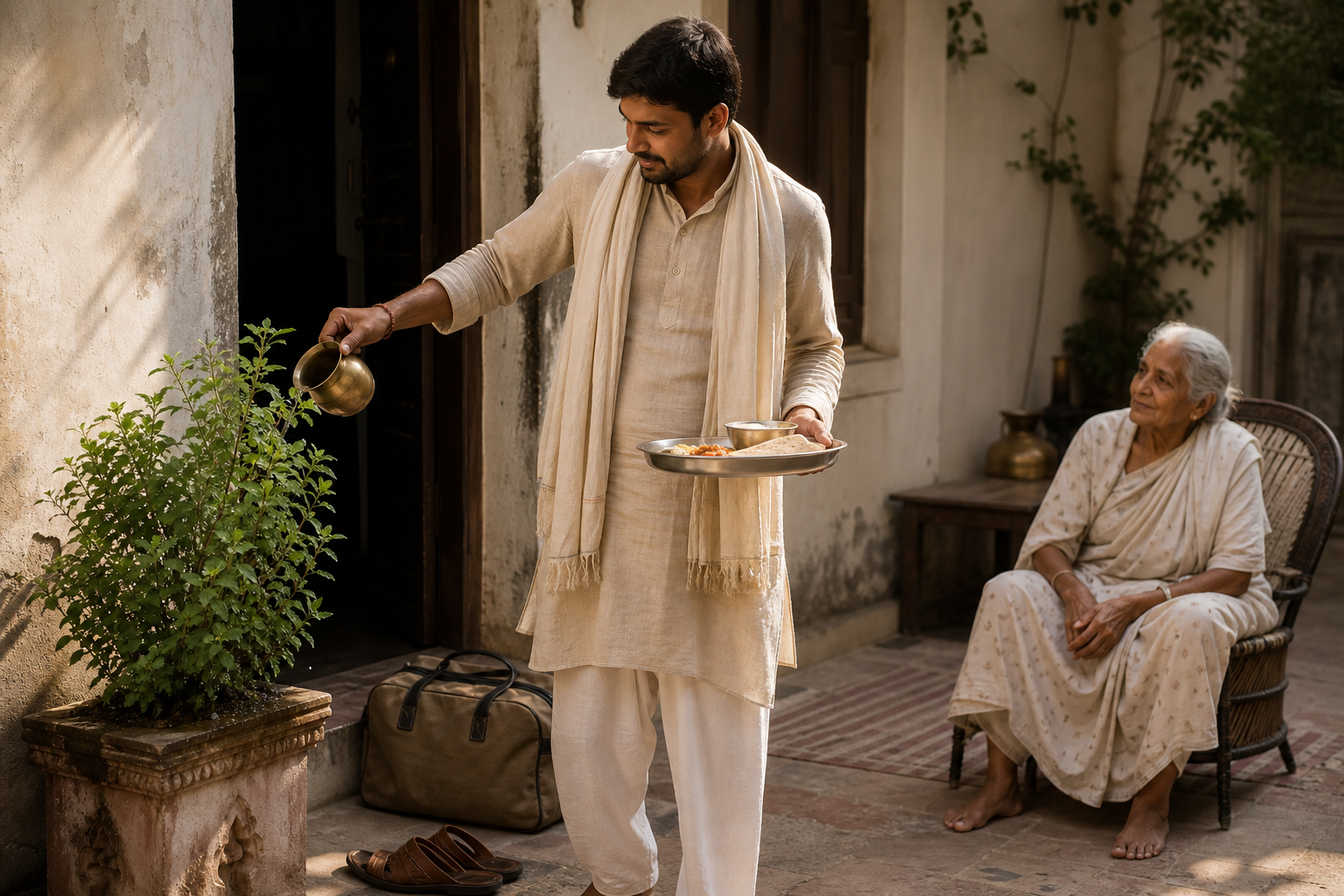
Ordinary life can neutralise a pilgrimage very quickly. Work expands to fill your attention, photographs circulate, sacred objects are placed on a shelf, and the habits carried to the teertha quietly resume. The journey remains memorable but no longer operative.
Prevent this by translating insight into conduct. “I will be more spiritual” is too vague to guide a difficult morning. “I will pause before answering in anger,” “I will resume the prayer I have neglected,” or “I will address the duty I have been postponing” identifies something you can actually practise.
- Act before you advertise. If the journey revealed a neglected responsibility, begin repairing it before presenting the pilgrimage publicly as a transformation.
- Attach the change to an ordinary cue. Connect prayer, silence, study, restraint, or remembrance to a stable part of your day so that it does not depend on recreating the mood of the teertha.
- Keep sacred objects in a supporting role. Prasad, images, water, or other permitted reminders may help recollection, but possession of a reminder is not the same as living the instruction it recalls.
- Review the intention honestly. Notice whether the promised change is appearing in speech, duty, consumption, family life, and treatment of others.
If the visit felt distracted or spiritually flat, do not invent a testimony. Return to the Vedic contrast and ask where the mind was turned away. Perhaps anxiety, ambition, conflict, or constant communication occupied it. Some worldly responsibilities cannot and should not be abandoned. The discipline is to place them in their proper order rather than allowing them to define the whole journey.
You can begin the crossing after returning by taking the action you failed to take while travelling. A distracted pilgrimage need not become a false one, provided you respond truthfully to what the distraction revealed.
Travel is not equally accessible to everyone. Cost, health, mobility, caregiving, and other duties can limit the journey. This does not require pretending that physical sacred geography is irrelevant. You can apply the same discipline of approach, attention, and return at an accessible sacred place while respecting the fact that established teerthas are not interchangeable with locations chosen solely by personal preference.
Local and sectarian traditions may prescribe forms more specific than this practical framework. Follow the discipline of the tradition responsible for the place. Preparation of attention supports those forms; it does not replace them.
Key takeaways
- A teertha is both sacred locale and possibility of passage; removing either dimension makes the idea incomplete.
- Prepare an inward purpose as carefully as you prepare transport, lodging, and the route.
- Learn local rules instead of carrying assumptions from one sacred place to another.
- Do not demand a dramatic feeling. Watch what the encounter changes in your attention and conduct.
- Give the return a concrete practice, because the crossing becomes visible in ordinary life.
Before adding another destination to your route, complete this sentence: “At this teertha, I seek to cross from ___ toward ___, and on returning I will ___.” If you cannot fill the blanks honestly, pause and learn more about both the place and your purpose. Once the answer becomes clear, let it reshape how you travel, how you enter, and what you do when you come home.
References
