

If your family observes Bhadrapada through inherited custom, a generic festival calendar can create more questions than it answers. Why does September 15 carry two Panchami observances? Does a Rajasthani mothers’ vrata belong on a Gujarati household calendar? Are the Sundays of Bhadrapada one festival or a recurring discipline?
You do not need to treat every regional custom as a universal obligation. Use this calendar to identify the observances connected to your family, mark the civil dates, and then confirm the applicable tithi with the panchang followed by your household or temple.
The 2026 dates at a glance
A Gregorian date is useful for planning, but it does not explain who traditionally keeps a vrata or why. The regional and household context in the final two columns is therefore as important as the date itself.
| Observance | 2026 date | Calendar or community context | Devotional focus |
|---|---|---|---|
| Bada Itvaar | August 30; September 6, 13 and 20 | Sundays of Bhadrapada under the North Indian Hindi calendar | Surya Bhagavan, together with the cow and calf |
| Sama Pancham | September 15 | Bhadarvi Sud Pancham in Gujarat; especially associated with agricultural families | A regional agricultural-household vrata observed after Ganesh Choth |
| Vishwamitra Jayanti | September 15 | Bhadrapada Shukla Panchami, also identified with Rishi Panchami | Remembrance of Brahmarshi Vishwamitra |
| Dubri Satam | September 18 | Shukla Saptami; observed mainly in Rajasthan and other parts of western India | Worship of Dubri Mata by mothers for their children’s well-being |
| Amkari Aatham, or Omkar Ashtami | September 19 | Bhadrapada Ashtami; a vrata observed by married women | Lord Shiva, Goddess Parvati and Lord Ganesha |
Regional belonging determines what you observe
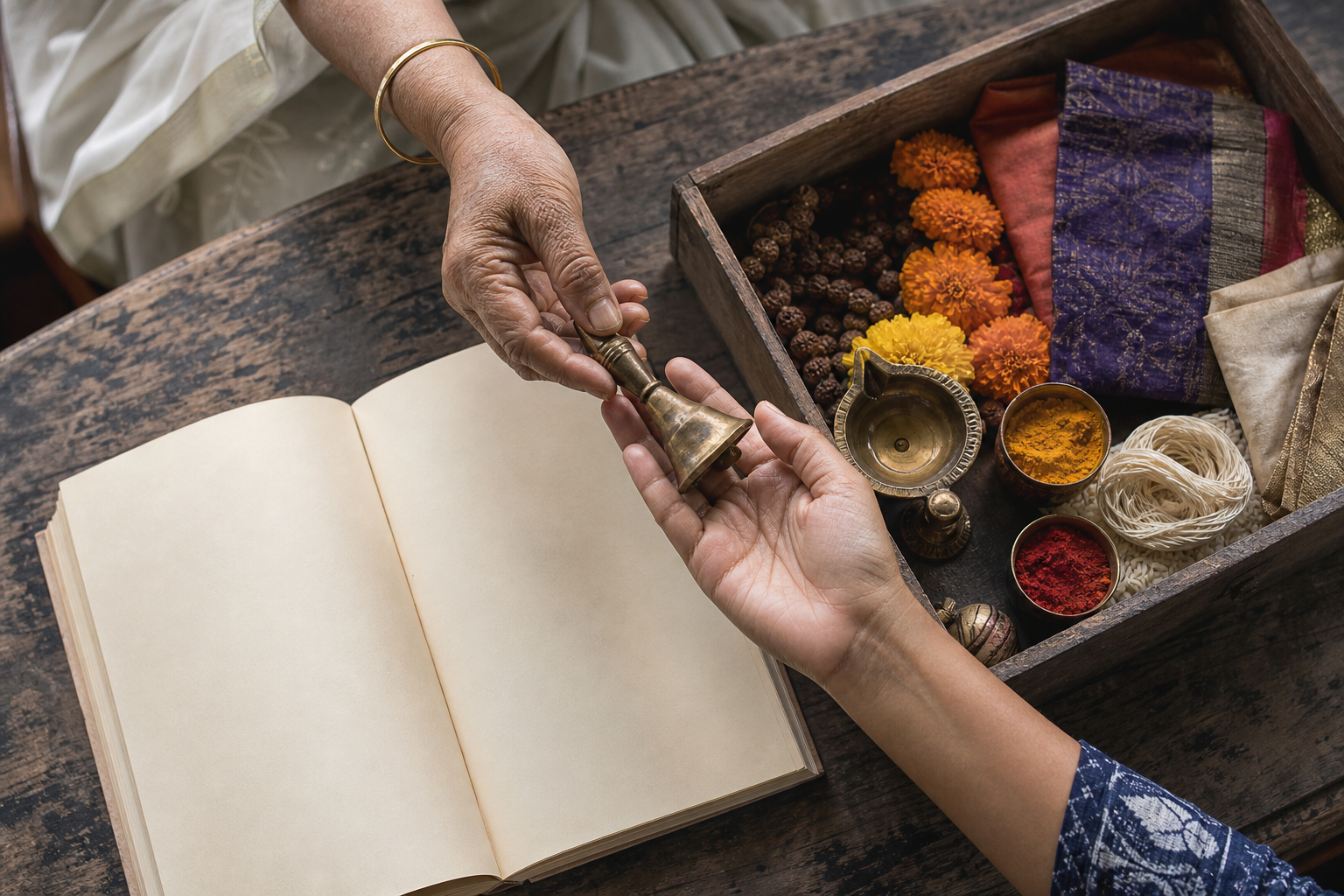
The wrong way to use the table is to turn five regional traditions into five compulsory entries for every Hindu household. A better question is: which of these customs has been transmitted through your region, kula, community or sampradaya? Preserving that distinction is not fragmentation. It is how a living tradition retains its meaning.
September 15 carries two different Panchami identities
Sama Pancham and Vishwamitra Jayanti share a civil date in 2026, but that does not make them alternate names for one rite. Sama Pancham belongs particularly to Gujarat. It falls on Sud Pancham of Bhadarvi Maas, follows Ganesh Choth, and has a strong place among agricultural families. Vishwamitra Jayanti marks Brahmarshi Vishwamitra on Bhadrapada Shukla Panchami.
If your elders speak of the Pancham following Ganesh Choth and connect it with the family’s agricultural heritage, record Sama Pancham. If the inherited observance is a remembrance of Vishwamitra on Rishi Panchami, record Vishwamitra Jayanti. Keep both only when both genuinely belong to your household practice; sharing September 15 does not require you to merge their purposes or procedures.
This is also a useful way to label a family calendar. Do not write only “Panchami.” Write the full observance and its purpose. That small addition prevents someone in the next generation from seeing two entries on the same date and mistakenly deleting one as a duplicate.
September 18 and 19 are adjacent, not interchangeable
Dubri Satam on September 18 is a Shukla Saptami vrata centred on Dubri Mata. Its clearest household marker is the relationship at its heart: mothers undertake it for the well-being of their children. Its regional centre is Rajasthan, with observance also found elsewhere in western India.
Omkar Ashtami follows on September 19. You may also hear the names Amkari Aatham, Oamkar Ashtami or Oamkari Ashtami. It is associated with Shiva, Parvati and Ganesha and is kept by married women. The vrata is described as an eight-year observance, so continuity matters more than adding a one-off reminder to a phone.
If Omkar Ashtami belongs to your family, establish before the date whether 2026 is the first, a continuing or the concluding year of the vrata. Ask the person who maintains the household sankalpa record rather than reconstructing the sequence from memory on September 19. If the name is unfamiliar, ask elders using its regional variants; a familiar practice can disappear from a calendar simply because one generation knows it by a different spelling.
Bada Itvaar belongs on a recurring calendar
Bada Itvaar differs from the cluster of single-date tithi observances. It recurs on the Sundays of Bhadrapada under the North Indian Hindi calendar. In 2026, make four entries: August 30 and September 6, 13 and 20.
Label each entry with its actual devotional focus: Surya Bhagavan and the worship of the cow and calf. A bare reminder reading “Sunday vrata” can easily be confused with another weekly discipline. The fuller label also helps the household prepare for the observance as a series rather than remembering it only after the first Sunday has passed.
If your family follows a calendar tradition other than the North Indian Hindi calendar, do not automatically import the four dates as a household duty. First confirm whether Bada Itvaar is part of your inherited practice. Regional calendars are most useful when they clarify belonging, not when they manufacture obligations.
Turn the dates into a household calendar
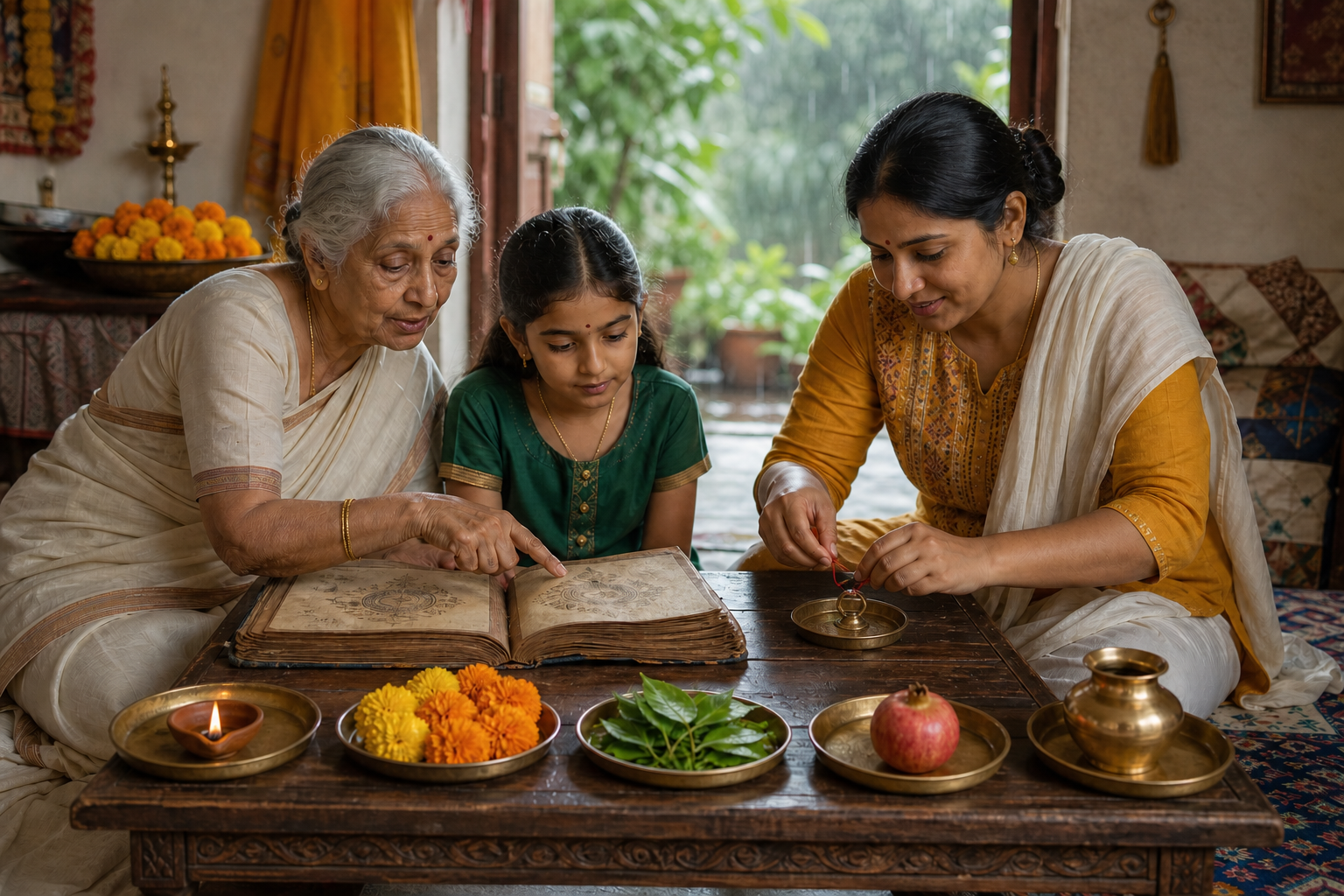
Most calendar confusion begins because an entry stores only a festival name and a date. For these observances, five fields will give your family a far more reliable record.
- Name the tradition fully. Record “Sama Pancham” rather than only “Panchami,” and keep alternate names such as Amkari Aatham beside Omkar Ashtami.
- Add the regional connection. Note Gujarat and agricultural-family practice for Sama Pancham, Rajasthan or western India for Dubri Satam, and the North Indian Hindi calendar for Bada Itvaar.
- Record the observer and intention. For example, Dubri Satam centres on mothers and their children’s well-being, while Omkar Ashtami is a vrata of married women devoted to Shiva, Parvati and Ganesha.
- Keep both the civil date and tithi. September 15 is convenient for scheduling, but “Sud Pancham” or “Shukla Panchami” preserves the calendar logic. Do the same with Saptami and Ashtami.
- Confirm the local application. Before making a sankalpa or arranging a community event, ask which panchang, location and sunrise rule your temple or family follows. A national Gregorian list is a planning aid; local panchang practice settles how a tithi is applied where you live.
- Track continuity. Mark all four Bada Itvaar Sundays as one recurring observance, and identify the year of an ongoing Omkar Ashtami commitment. This prevents a multi-date or multi-year vrata from being mistaken for an isolated event.
For a community calendar, add one more field: “intended participants.” That keeps a regional observance visible without implying that every reader follows it. A short label such as “Gujarati agricultural-family tradition” or “Rajasthani mothers’ vrata” is more informative than a long generic description.
Key takeaways
- Bada Itvaar recurs on August 30 and September 6, 13 and 20; enter it as a four-Sunday sequence.
- September 15 carries both Sama Pancham and Vishwamitra Jayanti, but they have different regional and devotional identities.
- Dubri Satam falls on September 18 and centres on mothers praying for their children’s well-being.
- Omkar Ashtami falls on September 19, is associated with Shiva, Parvati and Ganesha, and may form part of an eight-year vrata undertaken by married women.
- Use the civil dates for planning, then confirm the applicable tithi through the panchang and tradition followed by your family or temple.
Before August 30, take this calendar to the person who actually maintains your family’s vrata practice. Circle what has been inherited, cross out what does not belong, identify the observer, and confirm the local tithi. You will enter Bhadrapada with a clearer sankalpa and a record the next generation can understand.
References
- Hindu Pad – Amkari Aatham 2026 | Omkar Ashtami Vrat
- Hindu Pad – Sama Pancham 2026
- Hindu Pad – Dubri Satam 2026
- Hindu Pad – Bada Itvaar, Vrat on Sundays in Bhadrapada Month
- Hindu Pad – Rishi Vishwamitra Jayanti
