
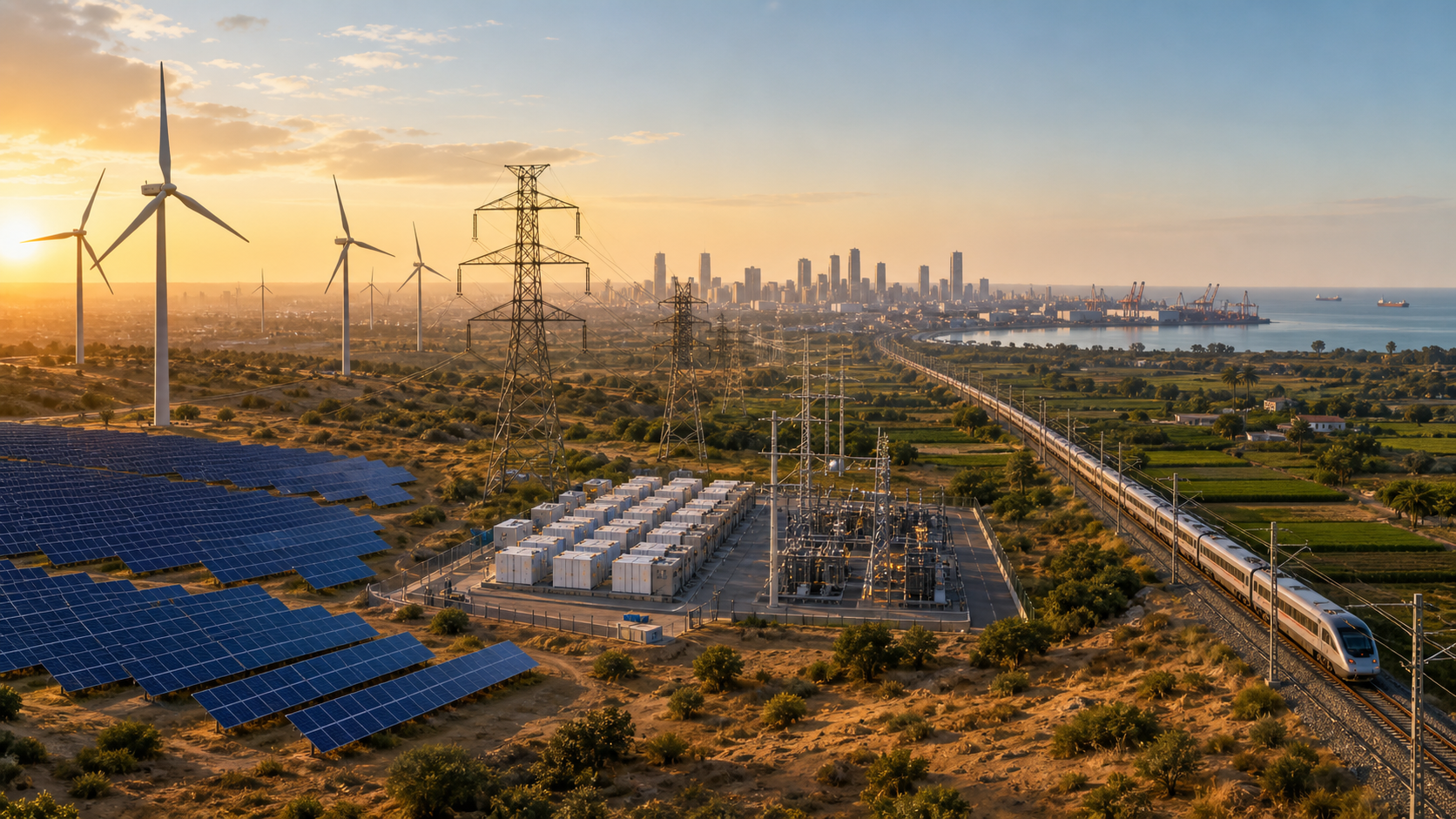
If you are trying to decide whether India’s renewable push genuinely makes the country safer during an oil and gas crisis, use a stricter test than installed solar capacity. Ask whether homes, factories, transport networks and essential services can keep operating at a tolerable cost when an overseas fuel route is disrupted.
The answer is encouraging but conditional. Renewable electricity can reduce Bharat’s exposure to imported fuels, yet panels alone cannot secure an energy system. Resilience appears only when renewable generation is connected to a capable grid, supported through difficult hours, used to electrify oil-dependent activities and backed by plans for the fuels that India must still import.
The Hormuz shock shows what resilience must withstand

The Strait of Hormuz is not a distant geopolitical abstraction. It carries roughly one-fifth of the world’s seaborne oil and a comparable share of liquefied natural gas. Disruption therefore affects more than the physical availability of fuel. It also changes freight costs, delivery times, insurance and the price that buyers must pay for risk.
Between late February and mid-August 2026, the strait repeatedly opened and closed around fragile ceasefires. At the height of the blockade, war-risk insurance rose from a fraction of 1% to more than 5%. That mechanism matters: a tanker does not have to sink for an energy shock to reach consumers. If insurance makes an otherwise normal voyage uneconomic, usable supply has already tightened.
Europe displayed the price side of that vulnerability. Its benchmark gas price moved from about €40 per megawatt-hour in early March to more than €60 in mid-August. Storage entered August below 57% of capacity, against a five-year average of roughly 71%. India, by contrast, experienced steady supplies and comparatively calm retail markets during the same period.
That contrast is a meaningful resilience outcome, but it is not a controlled experiment proving that solar power caused the whole result. Import diversity, supply contracts, inventories, taxes, subsidies, administered prices and demand conditions can all affect what consumers see. Price stability can also conceal a cost transferred from the fuel bill to the public budget. The defensible conclusion is narrower and more useful: domestic renewable generation can shrink the portion of India’s energy requirement that must pass through foreign suppliers, ships and chokepoints.
Match each renewable project to the vulnerability it removes
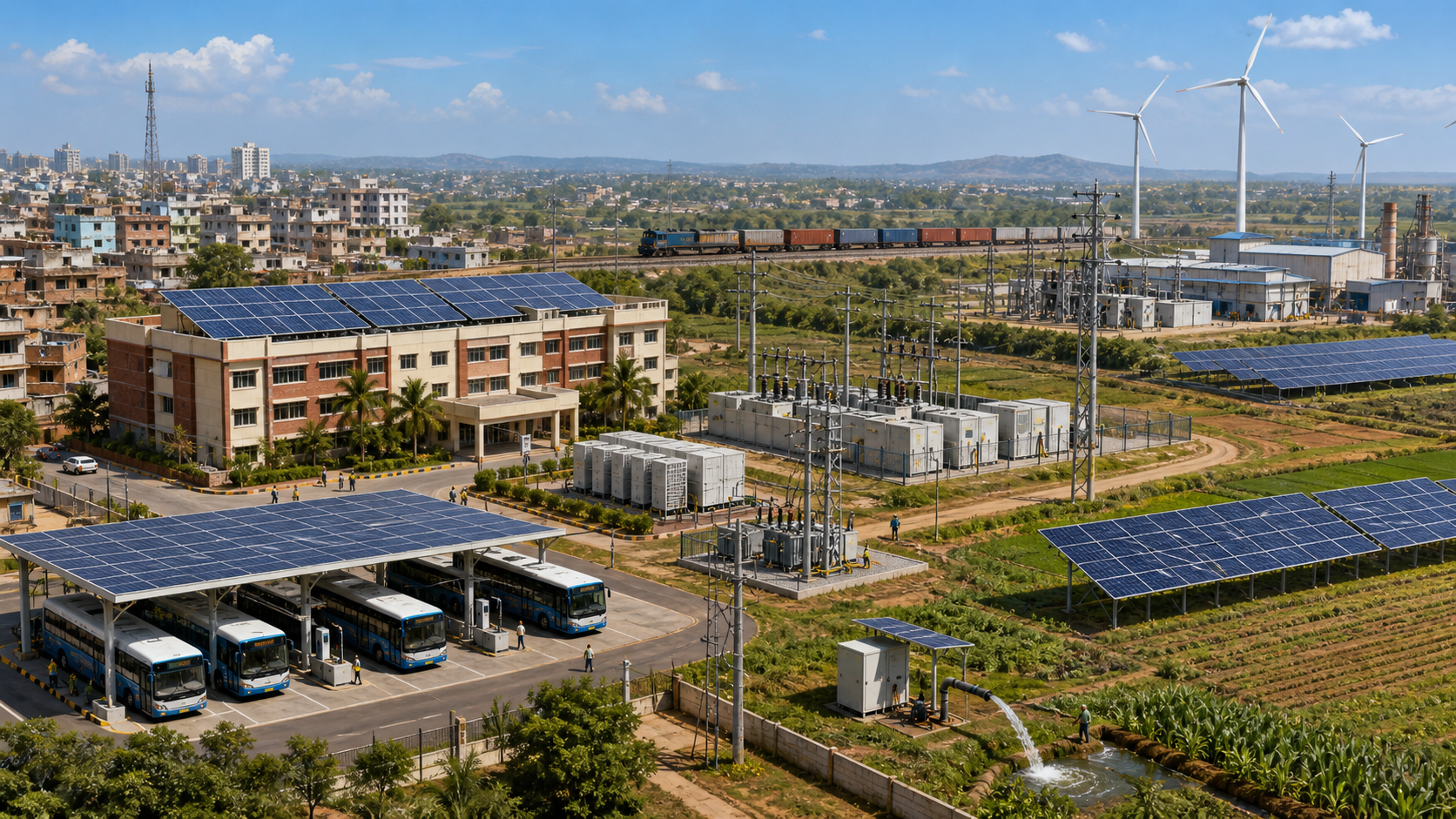
Installed capacity is only a starting point. Energy security comes from delivered energy that replaces an exposed fuel at the time and place it would otherwise be needed. You can test any renewable project or policy announcement with four questions.
- Which fuel will it displace? Solar and wind directly substitute for other sources of electricity. They reduce import exposure most clearly when they avoid generation from imported gas or coal. They do not directly replace petrol, diesel, aviation fuel or petrochemical feedstocks.
- When will the substitution occur? Solar production is concentrated in daylight hours. If the system’s hardest period arrives after sunset, the security value of midday generation depends on storage, flexible generation, demand shifting or another resource that can cover the gap.
- Can the electricity reach the user? A completed plant behind a congested or unfinished transmission connection is capacity on paper, not resilience in practice. Connection dates, grid availability and curtailment are therefore security indicators.
- What new dependency comes with it? Sunlight and wind are domestic resources, but modules, inverters, batteries, control equipment and critical materials can have concentrated supply chains. A project can reduce fuel dependence while creating equipment dependence unless procurement and industrial policy examine both.
Why oil security and power security cannot share one score
Crude oil is heavily tied to mobility and industrial products, while renewable projects primarily produce electricity. A cleaner and more self-reliant grid can therefore coexist with substantial oil exposure. Claims that treat every renewable megawatt as an equal reduction in crude imports commit a category error.
Electrification closes that gap. Electric road transport, electrified rail and electrically supplied industrial processes can move selected activities away from petroleum and onto the power system. But this is a transfer of responsibility, not the disappearance of responsibility. The grid must be able to serve the added demand reliably, including during its most difficult hours. Otherwise India exchanges a fuel-security problem for a capacity or reliability problem.
Why self-reliance does not require autarky
Energy sovereignty does not mean producing every component or fuel within India’s borders regardless of cost. It means avoiding a dependency whose failure could paralyse the country. The practical response is selective: develop domestic capability where concentration creates unacceptable risk, diversify foreign suppliers where trade remains sensible, maintain replacement inventories for critical equipment and design systems that can continue operating when one supply route fails.
The grid decides whether solar capacity becomes security
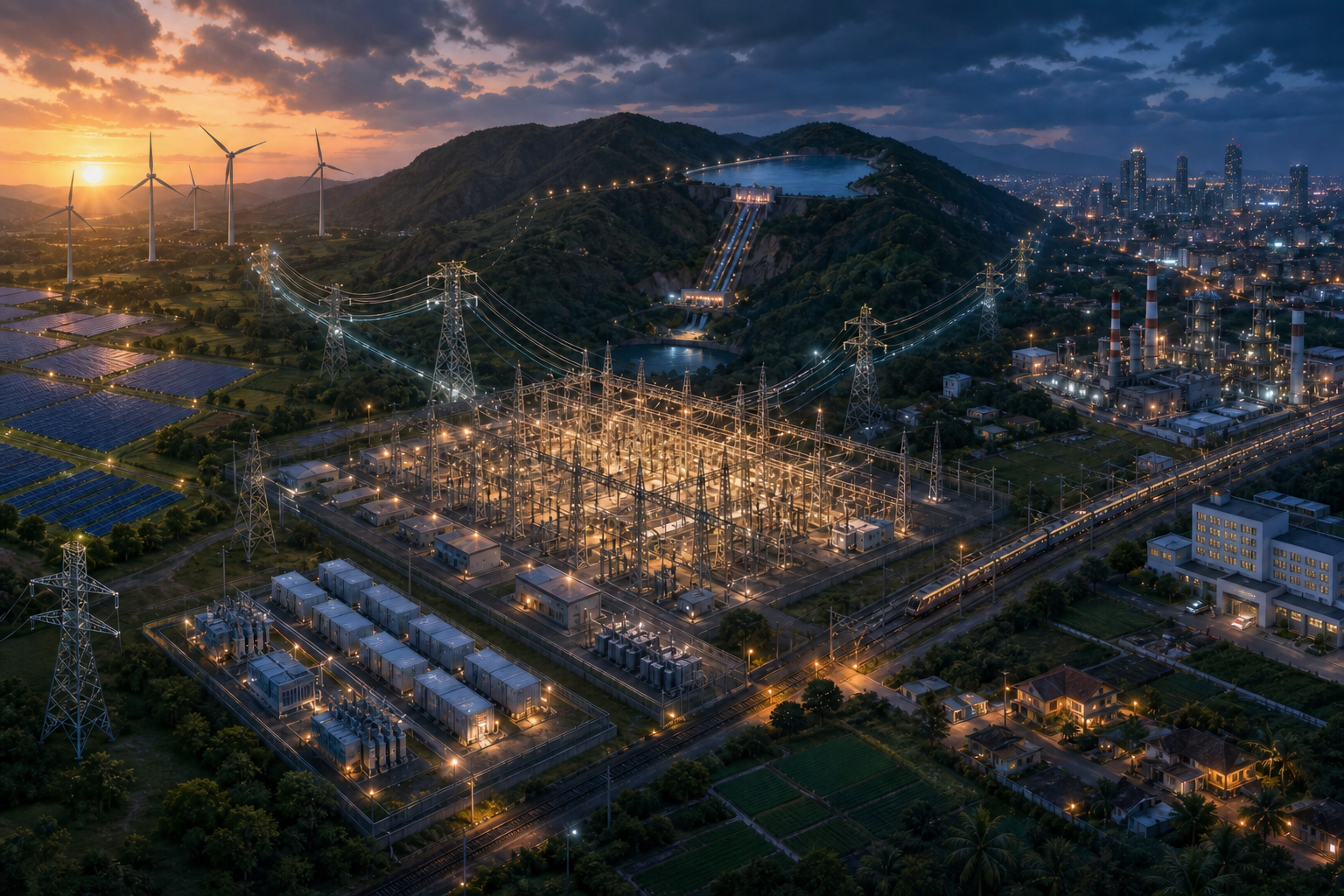
A secure power system must balance electricity supply and demand continuously. Solar generation can lower fuel use in the afternoon while doing little by itself for an evening peak. Wind may complement solar in some locations and seasons, but variable resources still have to be integrated as a portfolio. The policy unit should therefore be the complete power system, not the individual plant.
- Build transmission with generation. Grid studies, land, substations and interconnection should advance on the same schedule as the renewable plant. Delayed evacuation infrastructure turns completed capacity into stranded capital.
- Procure flexibility explicitly. Storage, responsive demand, flexible generation and stronger links between regions perform different jobs. Planning should identify whether the system needs fast balancing, several hours of shifting, seasonal support or emergency reserve before selecting a technology.
- Value supply at the critical hour. Annual generation is useful for measuring fuel displacement, but it does not establish peak reliability. Procurement should also state how much dependable capacity will be available when demand is highest or renewable output is low.
- Diversify resources and geography. A broader mix reduces the chance that one weather pattern, transmission corridor or regional disturbance suppresses a large share of supply at once.
- Make demand an operating resource. Time-sensitive tariffs and voluntary demand-response arrangements can move flexible consumption away from stressed hours. Large users should know in advance which loads can shift, which can pause and which must remain protected.
- Protect system restoration. Hospitals, communications, water systems, transport control and other essential services need tested backup and restoration priorities. A grid rich in renewable energy is not resilient if operators cannot restart it safely after a major failure.
The commercial chain matters as much as the engineering. A generator that cannot obtain a connection, a distribution utility that cannot pay for contracted power or a storage asset paid only for energy rather than availability may fail to deliver the service assumed in the plan. Contracts and market rules must pay for the reliability attributes the system actually needs.
Renewables also do not eliminate the need for conventional contingency planning. India will retain residual demand for oil and gas in sectors that cannot be electrified quickly or economically. Diversified suppliers, strategic stocks, flexible contracts, shipping arrangements and emergency allocation plans remain necessary. The purpose of renewable expansion is to make that residual exposure smaller and more manageable, not to pretend it has vanished.
Read energy-security claims with a six-line dashboard
When a government, company or commentator describes an energy programme as a security achievement, do not accept or reject the claim on the basis of one headline number. Look for six lines of evidence.
- Operating renewable energy: megawatts connected and generating, followed by megawatt-hours actually delivered. Awards, announcements and construction pipelines describe future potential, not present protection.
- Curtailment and congestion: renewable energy available but not accepted by the grid. Rising capacity alongside rising curtailment means the next rupee may be more valuable in networks or flexibility than in another similarly located plant.
- Peak-period adequacy: dependable supply during the hours when demand is hardest to meet. Separate this from annual renewable generation so that abundant midday electricity does not conceal an evening shortfall.
- Import displacement by fuel: the change in imported oil, gas and coal after accounting for changes in demand, domestic output and relevant prices. This prevents a fall caused by weak demand from being credited automatically to renewable expansion.
- Supply-chain concentration: the countries, companies and routes on which critical equipment, materials, software support and replacement parts depend. Track components that could stop generation or delay repairs, not merely the total value imported.
- Consumer and fiscal resilience: continuity of supply, retail-price volatility and any public cost used to cushion prices. A stable household tariff is a success for the consumer, but it is not evidence that the underlying shock imposed no national cost.
The dashboard prevents two opposite mistakes. It stops critics from dismissing genuine protection merely because India still imports oil, and it stops supporters from treating every solar installation as proof of complete energy independence. A country can become more resilient in one layer while remaining exposed in another.
It also clarifies how to interpret the 2026 Hormuz episode. Steady Indian supply and calm retail markets are important outputs. Assigning the correct share of credit to renewables requires the additional inputs: delivered renewable generation, the fuel displaced, the cost of price support, inventory changes and the performance of the grid during stressed hours. Confidence should rise when those measures move together.
Key takeaways and the next decisions
- Renewables strengthen energy security when delivered electricity replaces an exposed fuel, not merely when new capacity is announced.
- Solar’s security value after sunset depends on transmission, storage, flexible supply and demand that can move to better hours.
- Reducing crude-oil exposure requires electrifying suitable transport and industrial uses as the power system becomes more dependable.
- Domestic sunlight can coexist with dependence on imported hardware, so equipment and material supply chains need their own resilience plan.
- Judge success by continuity, total national cost and freedom of action during a shock, not by a single capacity or tariff figure.
The next round of renewable expansion should be designed as a system package. Each tranche needs a connection plan, a peak-hour plan, a flexibility plan and a clear statement of which import exposure it is expected to reduce. Electrification programmes should identify the petroleum demand they can realistically replace and the new grid capacity they require. Equipment policy should distinguish routine commercial imports from components whose interruption could disable essential generation.
You can apply the same discipline whenever a new energy claim appears. Ask what is operating, what reaches consumers, what happens at the difficult hour, which import is displaced and what dependency remains. If those answers are explicit, Bharat is acquiring resilience. If they are absent, it may be acquiring useful capacity while merely hoping that security follows. Energy swarajya is not isolation from the world; it is the ability to preserve national choice when the world becomes unreliable.
References
