
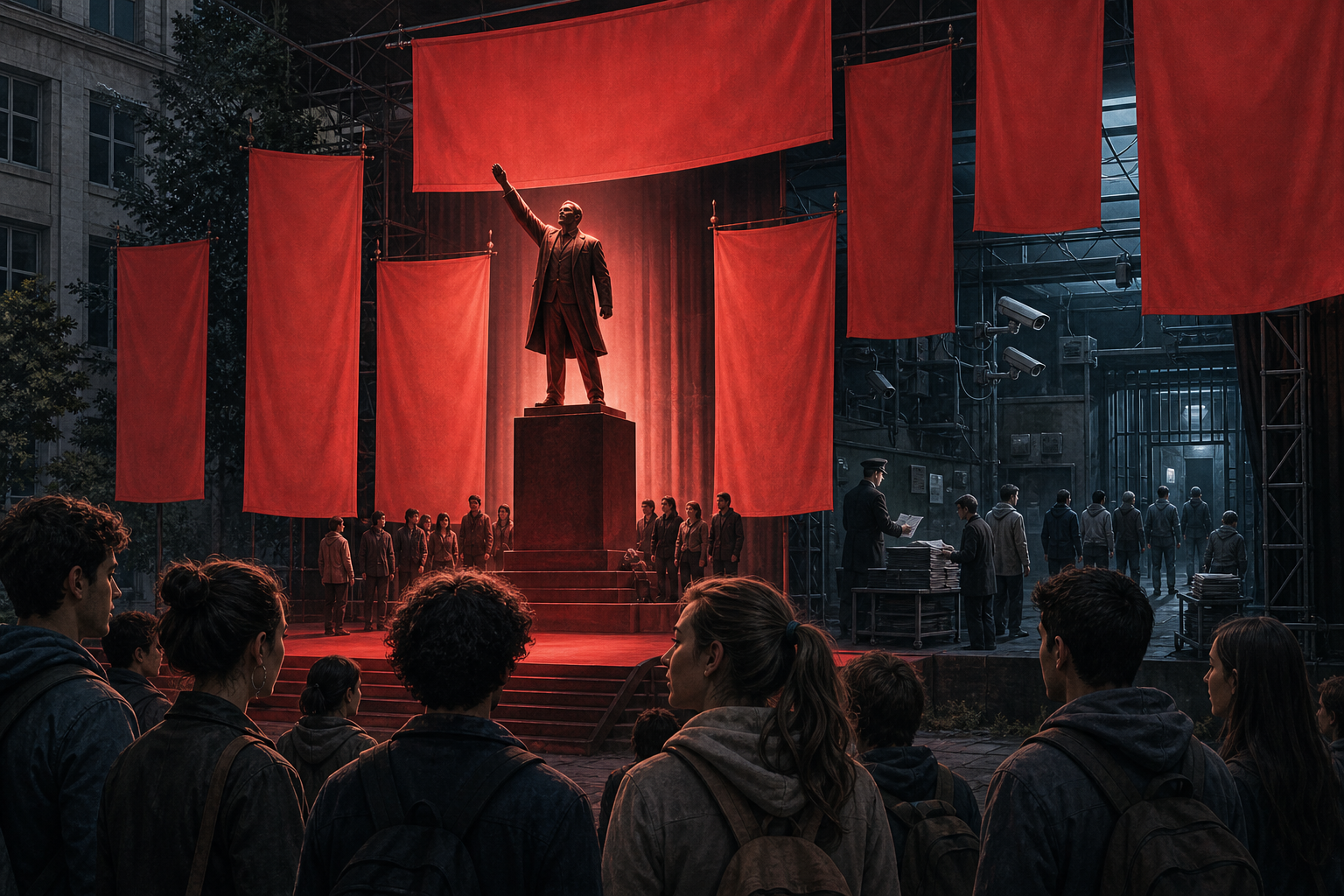
You see a young relative put Naxal in a social-media bio, a friend share a heroic Mao graphic, or a campus group turn revolutionary violence into a joke. Your choice is not limited to laughing it off or denouncing the person as an extremist.
The more useful response is to separate legitimate dissent from authoritarian romance. Ask what happens after the rebels acquire power, whether opponents remain free, and which human beings must be sacrificed to fulfil the promise. Those questions bring political theatre back to moral reality.
A provocative label is not the same as an argument
The attraction is easy to understand. A forbidden political name offers instant rebellion, a ready-made community and the feeling of standing outside respectable opinion. Social media intensifies that attraction because a complicated history can be reduced to a slogan, portrait or ironic profile name.
That dynamic is visible when a youth-facing online group adopts the name Dimagi Naxal Party while presenting itself as civic and satirical. Satire does not make every participant a militant. Calling every provocative student a terrorist would be reckless, inaccurate and politically counterproductive. It would also let the person avoid the real question: what history is being converted into an aesthetic?
In Bharat, Naxal is not an empty synonym for dissenter. It refers to a communist revolutionary tradition inseparable from armed insurgency, ambushes, improvised explosive devices and the killing of civilians and security personnel. The Union Home Ministry records 8,956 people killed by Left Wing Extremists across India between 2004 and 30 November 2025. It says that the majority of civilians killed were tribal people, often murdered after being branded police informers.
That last detail should change how you discuss the label. The victim is not an abstraction called the establishment. The victim may be a tribal villager whom an armed organisation has accused, judged and sentenced without evidence, counsel or appeal. A movement claiming to liberate the marginalised can reproduce domination inside the very communities it treats as its revolutionary constituency.
A joke does not cause an ambush. It can, however, make a political vocabulary easier to repeat while removing the people who suffered under it. A provocative word becomes a badge; the badge creates belonging; belonging makes criticism feel like betrayal. Notice that progression before assuming that irony will remain irony.
Judge a revolution by the power it builds
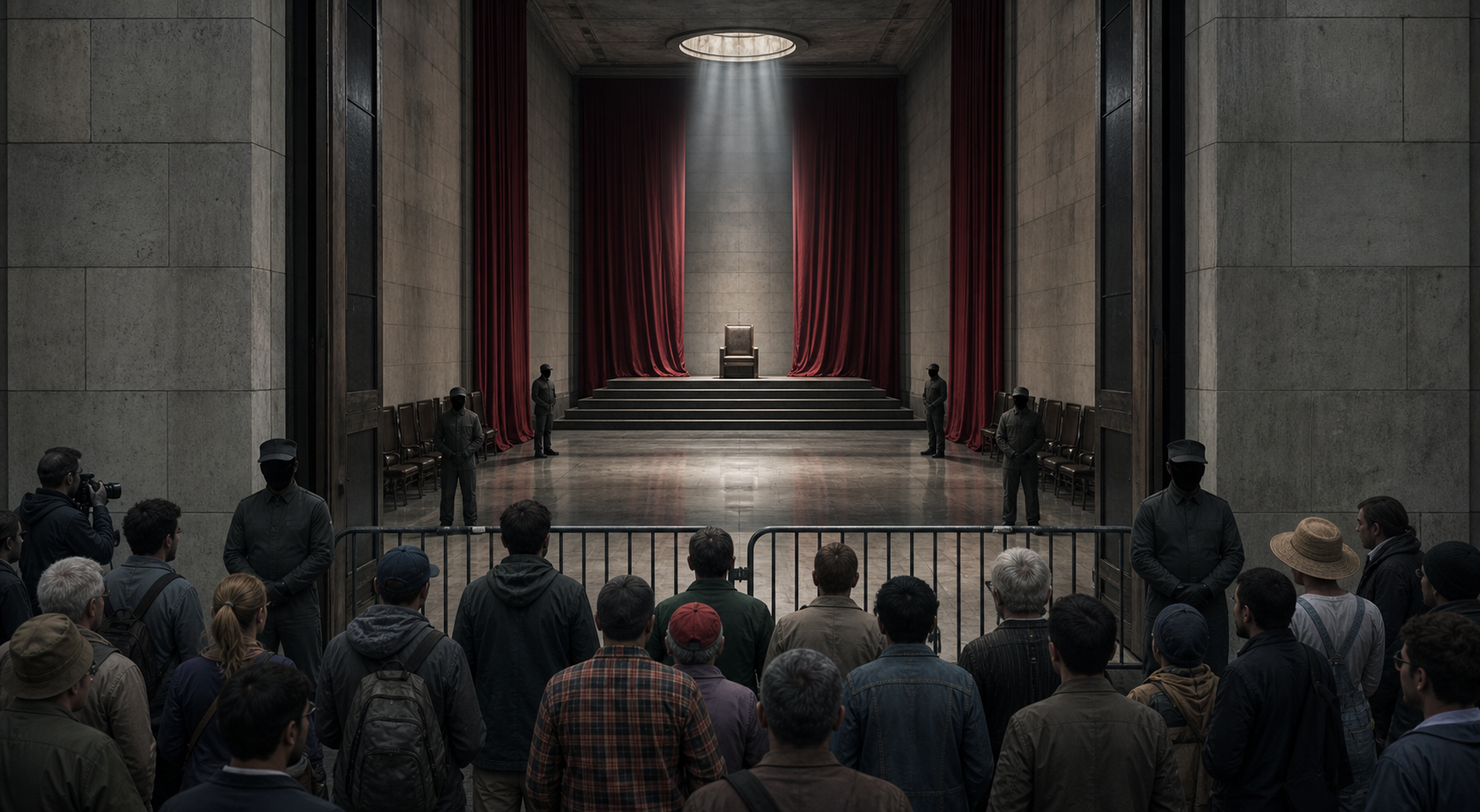
Romantic accounts usually stop at the dramatic moment: the march, the uprising, the fall of an old ruling class. Your evaluation should begin one day later. Who controls the police, prisons, farms, newspapers and courts? Can a worker oppose the party that claims to represent workers? Can a peasant refuse the programme designed in the peasant’s name? Can citizens replace the revolutionaries without another revolution?
This is the decisive distinction between a demand for equality and communist authoritarianism. Public welfare, labour rights, land reform, criticism of concentrated wealth and opposition to corruption can all be debated within democratic politics. None requires one-party rule, political imprisonment or the treatment of violence as a cleansing force. Do not smear every left-wing proposal with the crimes of Stalinism. Do not excuse Stalinism merely because it spoke in the language of equality.
Five warning signs reveal when emancipatory language is concealing authoritarian power:
- One group claims exclusive access to historical truth. Disagreement is no longer an error to debate; it becomes proof of moral corruption.
- People are converted into political categories. A neighbour becomes a class enemy, reactionary, informer or obstacle to history.
- Violence is presented as inevitable. No actor is responsible because history supposedly demanded the killing.
- The promised future cancels present obligations. Imprisonment, hunger and coercion are excused as temporary costs of a perfect society that never arrives.
- Power has no peaceful exit. Elections, independent courts, a free press and organised opposition are treated as bourgeois obstructions rather than protections for ordinary people.
The twentieth-century record matters because these mechanisms were not theoretical. Mao-era China experienced catastrophic famine, forced-labour systems, persecution and the political violence of the Cultural Revolution. Stalin’s Soviet system used forced collectivisation, deportations, purges, executions and a vast network of prisons and labour camps. In both cases, cruelty could be described as progress because the state claimed to act on behalf of history.
Arguments about the precise death toll can become a diversion if they are handled carelessly. Stéphane Courtois advanced an overall estimate approaching 10 crore deaths in The Black Book of Communism; higher estimates associated with Mao-era catastrophes reach approximately 6.5 crore, while a broad estimate of around 2 crore has been offered for Stalinism. These are estimates, not a single universally accepted ledger. Totals change depending on whether a calculation includes executions, camp deaths, deportations, state-induced famine and other categories.
You do not need to pretend that disputed categories are undisputed. Say what the estimate includes, acknowledge the range, and return to what no numerical disagreement can erase: political purges occurred, forced-labour camps existed, populations were deported, and human beings were imprisoned or killed after being placed in ideological categories. Uncertainty about an aggregate is not evidence of innocence.
Bring the person erased by the slogan back into view
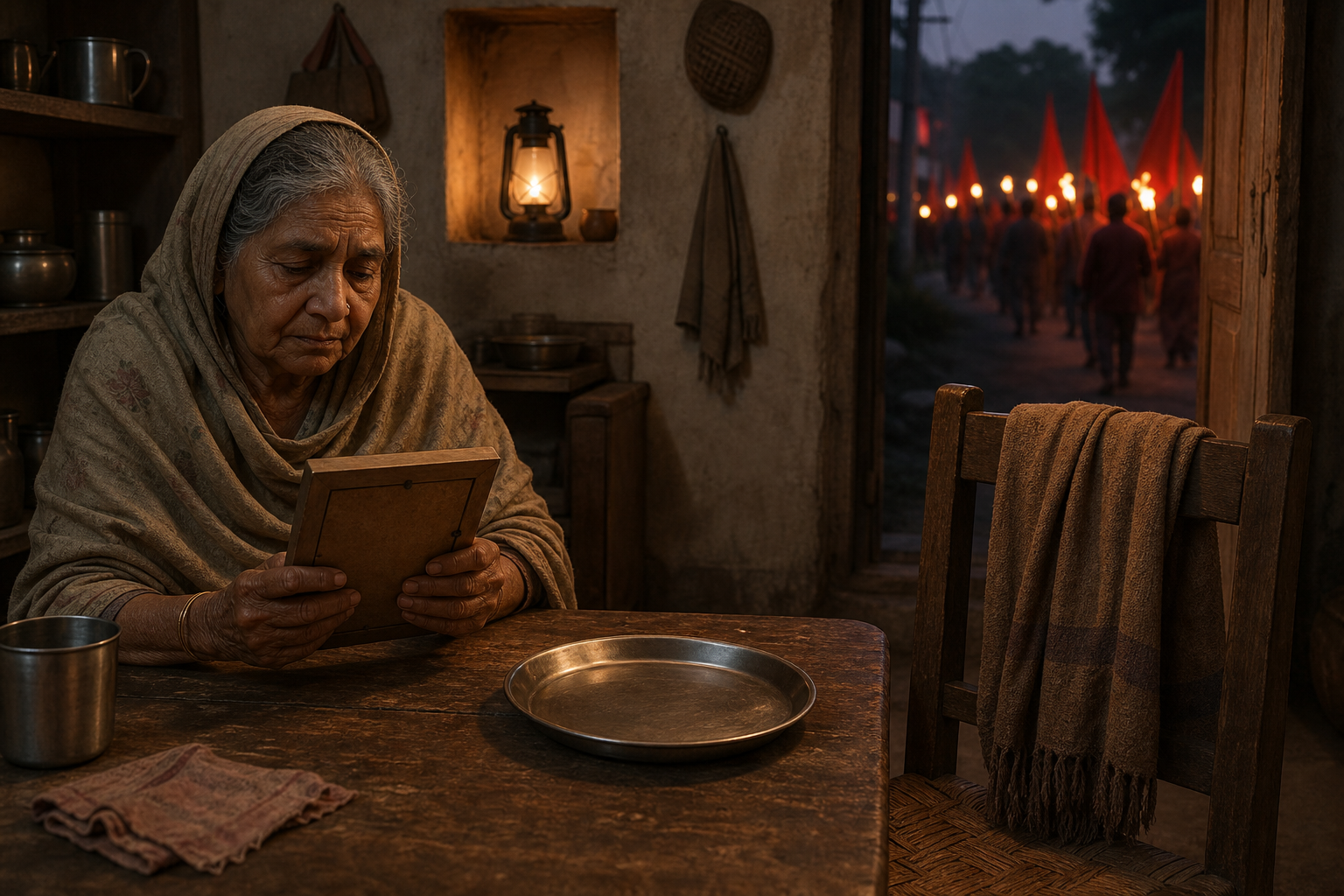
Body-count contests can make mass suffering strangely impersonal. One side announces a huge number; the other disputes it; neither asks what the political system permitted officials to do to an actual prisoner, farmer or family. Move the conversation from totals to institutions and lived consequences.
Alexander Solzhenitsyn had experienced Soviet imprisonment before giving the Gulag system its most enduring literary testimony in The Gulag Archipelago. His importance here is not that one writer settles every historical question. It is that the camp appears as an administrative system: files, accusations, interrogations, sentences, transport and forced labour. Authoritarian terror survives through offices and obedient routines as much as through public spectacle.
Harry Wu spent 19 years in China’s Laogai forced-labour system after being imprisoned as a political offender. He later worked to document that camp system internationally, and the Laogai Research Foundation has documented more than 1,000 camps. That experience supplies a useful question for anyone praising revolutionary discipline: what recourse does a wrongly accused person have when the party controls the accusation, prison and official account of the prison?
The same question belongs in a discussion of Indian Maoism. If a tribal villager is called an informer, who tests the accusation? If an armed cadre is wrong, who holds the cadre accountable? If a local family refuses to cooperate, can it remain neutral? A movement does not become just merely by declaring that its victims belong to the wrong class or serve the wrong state.
Use a simple practice when a revolutionary image appears online: replace every ideological category with a human description. Replace class enemy with a shopkeeper with a family. Replace informer with a villager accused without a trial. Replace counter-revolutionary with a citizen who disagrees. If the proposed action becomes harder to defend after that substitution, the category was doing the moral concealment.
A Dharmic test must examine means as well as ends
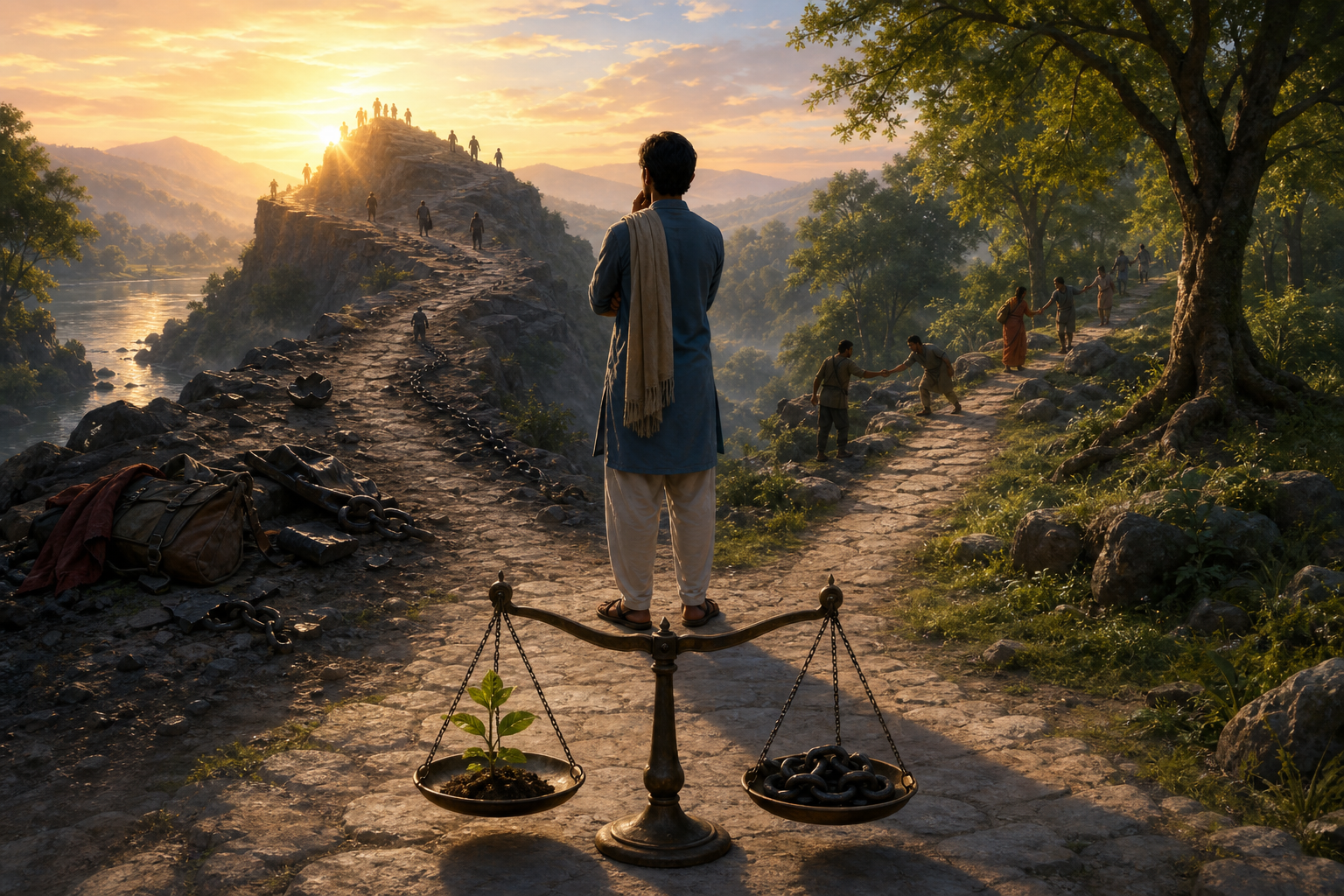
Dharmic traditions do not offer one uniform theory of government or force. Jain ethics gives radical weight to ahimsa. Buddhist traditions place non-harm and compassion near the centre of moral cultivation. Hindu and Sikh traditions also confront duty, protection, resistance and the disciplined use of force. Their answers are not interchangeable.
Yet a common moral challenge runs through them: you remain responsible for what you do, even when you claim a noble purpose. A distant egalitarian future cannot automatically purify cruelty in the present. Political action must be judged through conduct, restraint, responsibility and the dignity of the person affected by it.
Apply that challenge through four questions:
<!– wp:list {