
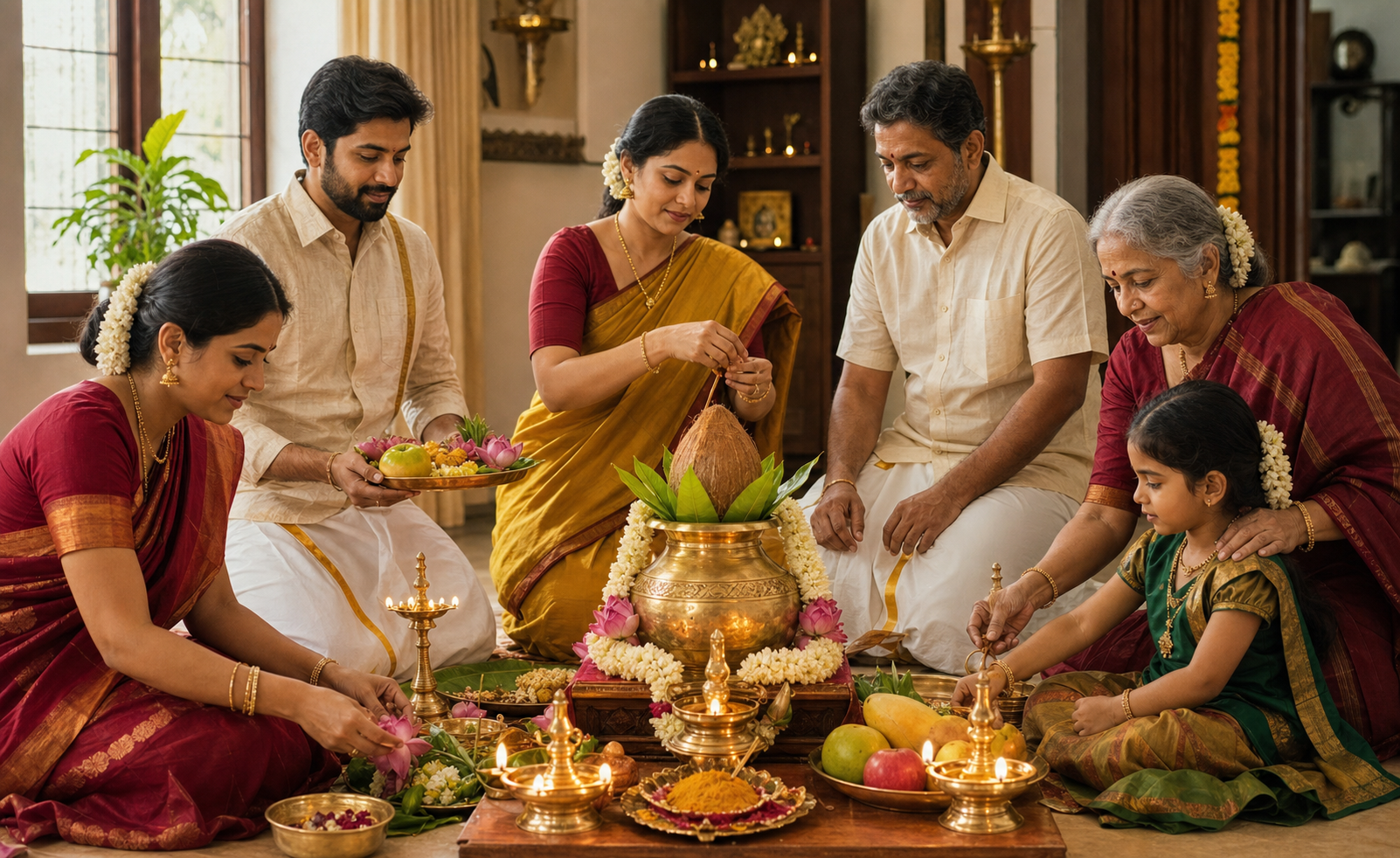
If you are preparing for Varalakshmi Vratham while one relative insists on the old household rules and another calls those rules patriarchal, you do not have to choose between abandoning Devi and dismissing a woman’s pain. The argument becomes manageable once you separate three things: the devotional heart of the vrata, the discipline of a particular ritual tradition, and the way relatives enforce family custom.
Preserve what directs the family toward Mahalakshmi. Examine rules that distribute work, access or honour unequally. Refuse humiliation, coercion and marital-status policing even when someone presents them as necessary to the puja. That approach protects both the vrata and the people gathering for it.
Do not let one label decide the whole question
Calling Varalakshmi Vratham either inherently patriarchal or automatically beyond criticism settles nothing. A female deity at the centre of worship does not guarantee that every household practice surrounding that worship treats women justly. At the same time, a family’s hurtful conduct does not establish that devotion to Mahalakshmi is itself the cause of the harm.
The useful unit of examination is the particular rule being enforced. Ask what the rule requires, who must obey it, who carries its cost, who is permitted to question it and what happens to a person who declines. This turns an ideological quarrel into a question you can actually answer.
- Is participation voluntary? A vrata freely undertaken is different from one imposed through fear, guilt or threats about family welfare.
- Is a ritual qualification being applied narrowly? A condition attached to one defined ritual role should not become a reason to expel someone from the home, meal or family gathering.
- Is the rule described without degrading anyone? Discipline can be stated as a discipline. Calling a woman dirty, inauspicious or spiritually inferior is a judgement about the person.
- Is the labour shared? If women alone must clean, shop, cook, decorate, host and perform while everyone else evaluates their devotion, the family has turned worship into an unequal obligation.
- Can the rule be explained precisely? “This is our household custom” is an honest answer. “All Hindu dharma commands this” is a much larger claim and should not be made without naming the tradition and basis.
A rule that is freely chosen, limited to a specific observance and carried without insult may function as personal religious discipline. A rule enforced through public exposure, unequal penalties or contempt for a woman’s body or marital status is operating as social control, whatever religious vocabulary surrounds it.
Separate the three disputes now being collapsed together
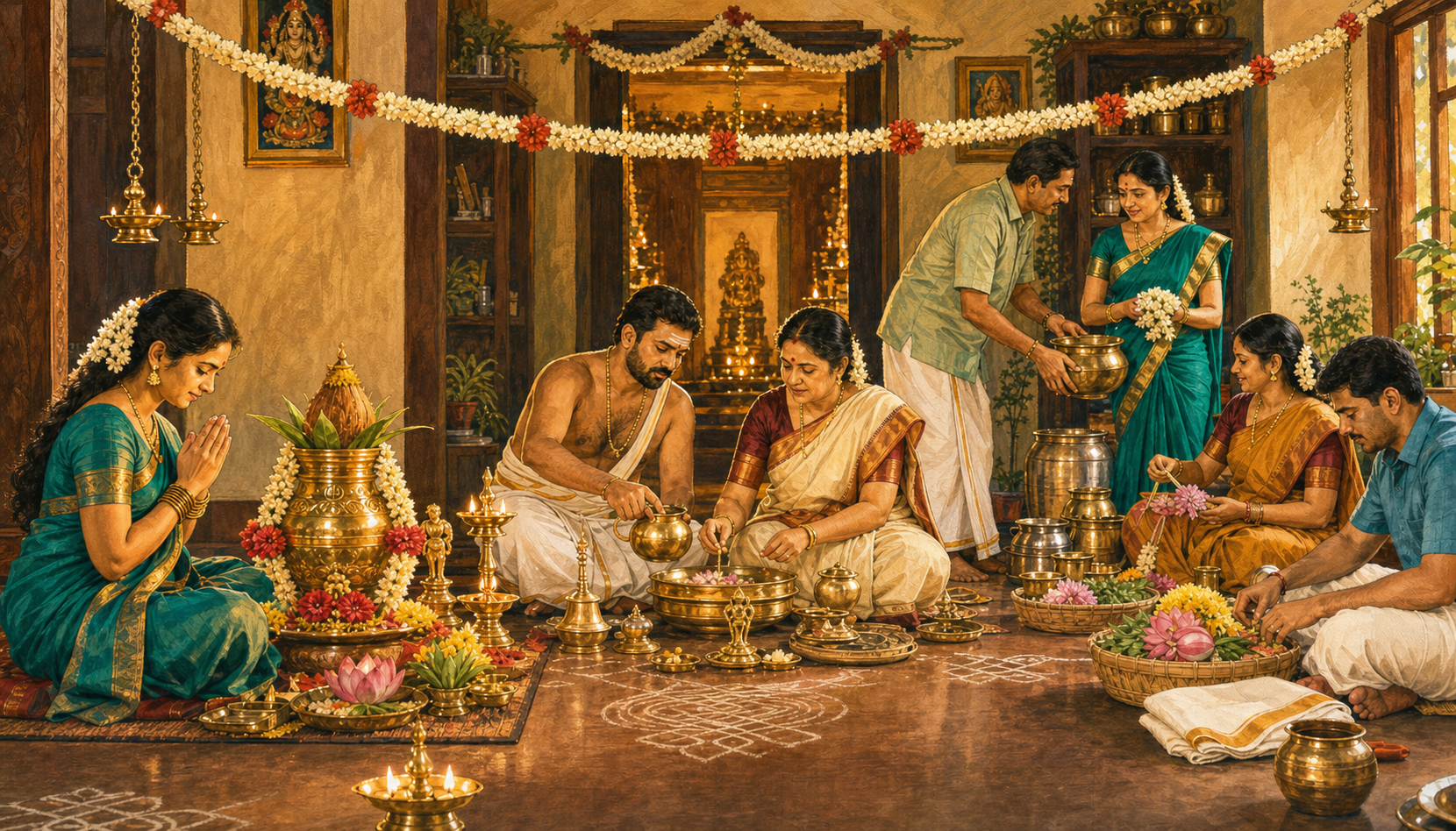
The public dispute following the 21 August 2026 observance brought three different concerns into the same argument: menstrual exclusion, the treatment of widows and the assumption that a married woman is necessarily auspicious even when her marriage is abusive. Each concern needs its own response.
Menstruation: distinguish privacy, discipline and degradation
Families do not all understand menstrual observance in the same way. That variation is precisely why sweeping declarations create more heat than clarity. Before defending or rejecting a practice, identify what is actually happening.
A personal decision not to perform a ritual is not the same as being interrogated about one’s cycle. A restriction on touching particular ritual objects is not the same as being excluded from conversation or a shared meal. Neither requires announcing private bodily information to relatives. Most avoidable harm occurs when these distinctions disappear.
- Tell invitees about important household expectations before the day, using neutral language.
- Do not question a woman publicly about menstruation or require her to explain why she is not performing a role.
- Allow someone to step back privately without inviting speculation, ridicule or pressure.
- Do not describe menstruation as a moral failure or use it to rank one woman below another.
- If the family is uncertain whether its sampradaya permits another form of participation, ask a teacher who actually belongs to that tradition. Ask about the exact role in question rather than requesting a verdict on the woman’s worth.
If a restriction cannot be explained without shaming the woman, the immediate problem is not a subtle theological disagreement. It is the humiliation being inflicted in the name of the observance, and that part can stop now.
Widowhood: do not turn one qualification into total exclusion
Arguments about widows often become confused because several kinds of participation are treated as if they were identical: performing the central rite, helping with preparations, receiving prasada, joining the meal, visiting the home and taking part in social exchanges. Even when a family believes that a specific ritual role carries a marital qualification, that belief does not require treating a widow as unwelcome or inauspicious in every other respect.
Name any role-specific condition narrowly. Do not expand it into a judgement that the loss of a husband has diminished a woman’s dignity, devotion or place in her family. Never use widowhood as permission to withhold ordinary warmth, food, hospitality or respect.
This distinction also prevents a common sleight of hand. A symbol associated by a family with marriage is one question. Whether a widow remains a full human and spiritual participant in the community is another. The second question should not be decided by the first.
Marriage: visible status is not evidence of wellbeing
The language of auspicious married womanhood can become cruel when it prizes the appearance of marriage more than the safety and truth of the woman living inside it. A living husband does not prove that a marriage is loving, safe or dharmic. Nor should a festival become an occasion to pressure a woman to remain silent about abuse so that the family can preserve an image of auspiciousness.
Do not tell a woman that Varalakshmi Vratham requires her to remain with an abusive partner, reconcile against her judgement or conceal violence. If she may be in immediate danger, move the conversation away from ritual debate and help her contact local emergency or domestic-violence support from a safe device. A puja is not a substitute for a safety plan or qualified assistance.
Why blaming women as gatekeepers is incomplete
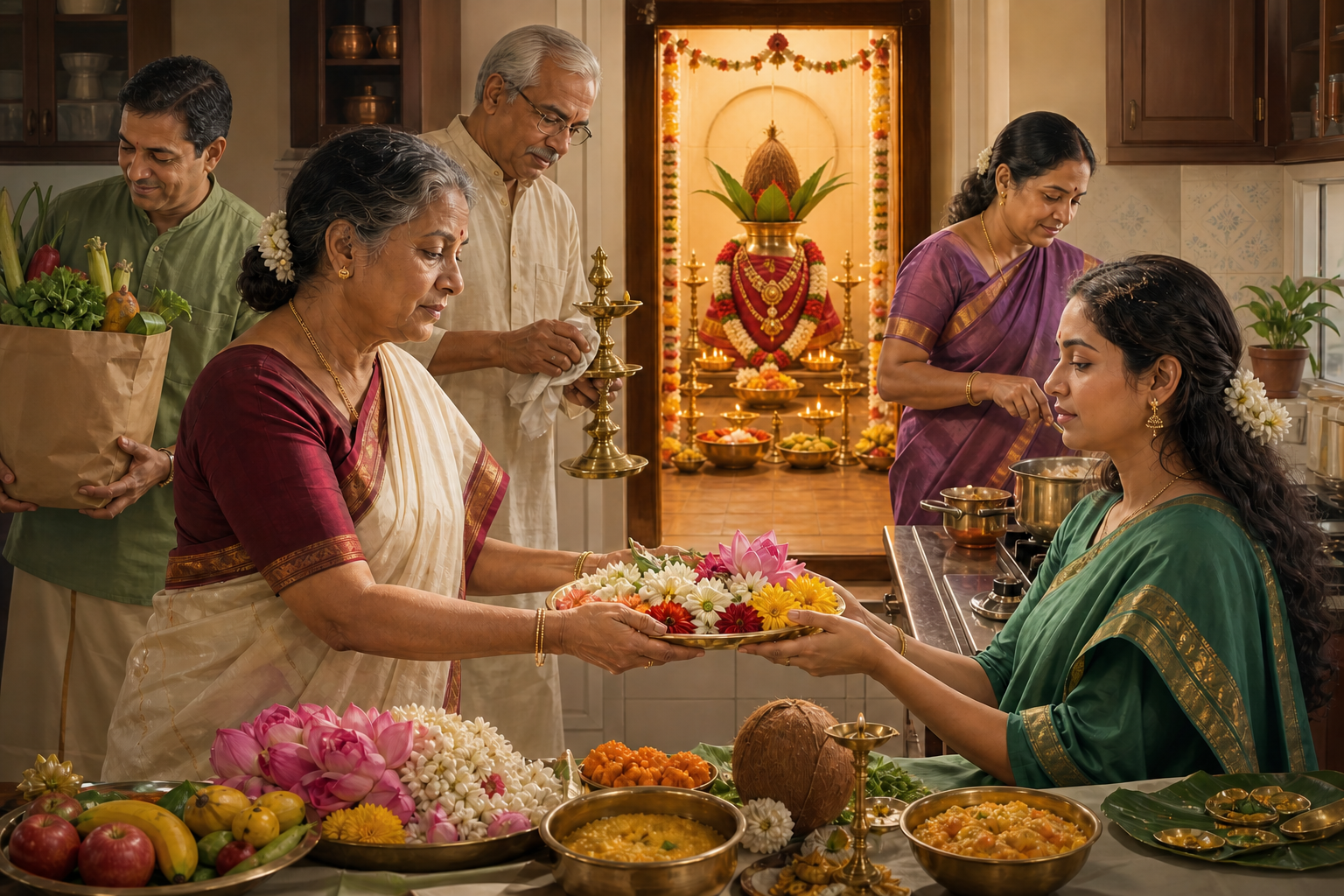
Women can enforce customs that disadvantage other women. Denying that agency is unhelpful. But assigning the entire system to the woman who announces a rule can also hide how authority works within the family. The person carrying out a custom may not be the person who defined it, benefits from it or feels free to revise it.
Use four questions to locate responsibility more accurately:
- Who states the rule to the participants?
- Whose approval is needed to suspend or change it?
- Who receives honour, convenience or authority from keeping it?
- Who is criticised, isolated or punished when it is questioned?
If an older woman enforces a rule but would herself face blame for changing it, calling her the sole gatekeeper mistakes delegated enforcement for complete power. If she does possess authority and uses it to humiliate someone, that responsibility should not be erased either. A serious analysis can recognise constraint and agency at the same time.
Men should not remain spectators to this discussion. They can share the shopping, cleaning, cooking, guest care and post-puja work. They can refuse jokes or insults directed at menstruating or widowed relatives. They can also stop treating ritual questions as “women’s matters” while retaining authority over the household in every other sphere.
Do not repair one form of humiliation by humiliating mothers and grandmothers. Ask them what they understand the practice to protect. Listen for the difference between devotion, fear of social judgement and habit. Then give the family a dignified way to change: “We are keeping the worship and the family gathering, but no one will be interrogated about her body or marriage.”
A practical plan for a reverent and non-coercive vrata
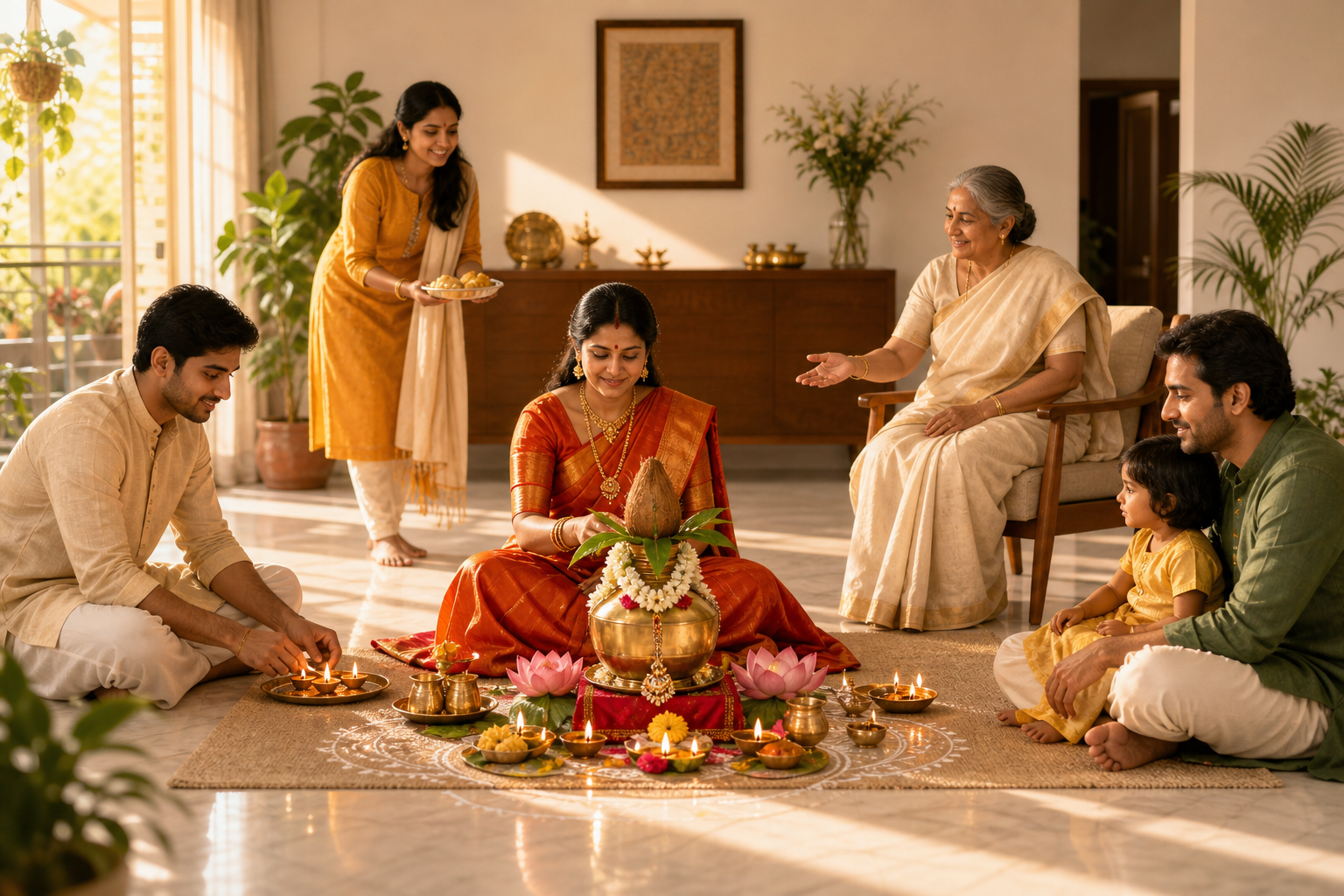
You do not need to redesign every ritual in order to remove preventable harm. Start with the parts under your control as host, and do not claim authority over mantras or lineage-specific procedure that you do not possess.
- State the devotional centre. Tell the family that the gathering is for the worship of Mahalakshmi and a sincerely undertaken vrata. This keeps the discussion anchored in what you are trying to preserve.
- Write down the non-negotiable ritual steps. Separate them from menu choices, dress expectations, inherited social habits and things done merely because they were done last year. A shorter list makes genuine religious questions easier to identify.
- Name who is choosing the vrata. Do not volunteer a daughter, daughter-in-law or other relative on her behalf. Ask privately whether she wants to participate and in what role.
- Send an honest invitation. Explain the schedule, expected work and any household observances in advance. Add that guests may participate according to their comfort and that nobody must disclose private bodily information.
- Divide the labour before the day. Assign purchasing, cleaning, food preparation, setup, guest care and cleanup across adults rather than treating female labour as part of the sacred requirement.
- Protect social belonging. Do not use inability or unwillingness to perform one role as a reason to exclude someone from the entire gathering, meal or respectful reception.
- Create a private route for disagreement. Ask one trusted host to receive concerns away from the altar and guests. Public argument encourages people to defend their status instead of solving the problem.
- Escalate only the real theological question. If the family remains uncertain about a ritual qualification, write the question in one sentence and take it to a knowledgeable teacher from the relevant tradition. “May this person perform this defined step?” is answerable; “Is feminism destroying our customs?” is not a ritual question.
- Review the observance afterward. Ask who felt pressured, who carried too much work and which expectation was unclear. Change the hosting plan before the next vrata rather than waiting for the same conflict to return.
This plan leaves room for serious ritual discipline. What it removes is the assumption that discipline must be produced through surveillance or shame. It also prevents “reform” from becoming a vague command to discard everything inherited.
A Dharmic repair should be recognisable by its fruits: greater truthfulness about family life, less cruelty, more responsible participation and deeper attention to the deity rather than to social ranking. Those tests do not settle every question of sampradaya, but they reveal when a family argument has drifted far from worship.
Key takeaways
- Varalakshmi Vratham and a family’s method of enforcing its customs are not the same thing.
- Worship of a female deity does not excuse unequal labour, humiliation or exclusion, but harmful conduct in one home does not define the devotional meaning of the vrata everywhere.
- Menstrual discipline, forced disclosure and public degradation are different practices. Do not defend them as one package.
- A narrow marital qualification for a particular role should never become a declaration that a widow has lost dignity or spiritual belonging.
- Women may enforce patriarchal customs, but responsibility also belongs to everyone who defines, rewards and protects those customs.
- The most durable reform preserves sincere worship while removing coercion, shame and judgements about a woman’s worth.
Before your next Varalakshmi Vratham, have one concrete family conversation: identify the devotional core, the actual ritual requirements and the social habits that have accumulated around them. Then assign the work, communicate expectations privately and make it explicit that no guest will be degraded because of menstruation, widowhood or marital difficulty.
You do not defend dharma by making every inherited habit untouchable. You defend it by bringing conduct back under the discipline of truth, reverence and human dignity.
References
