
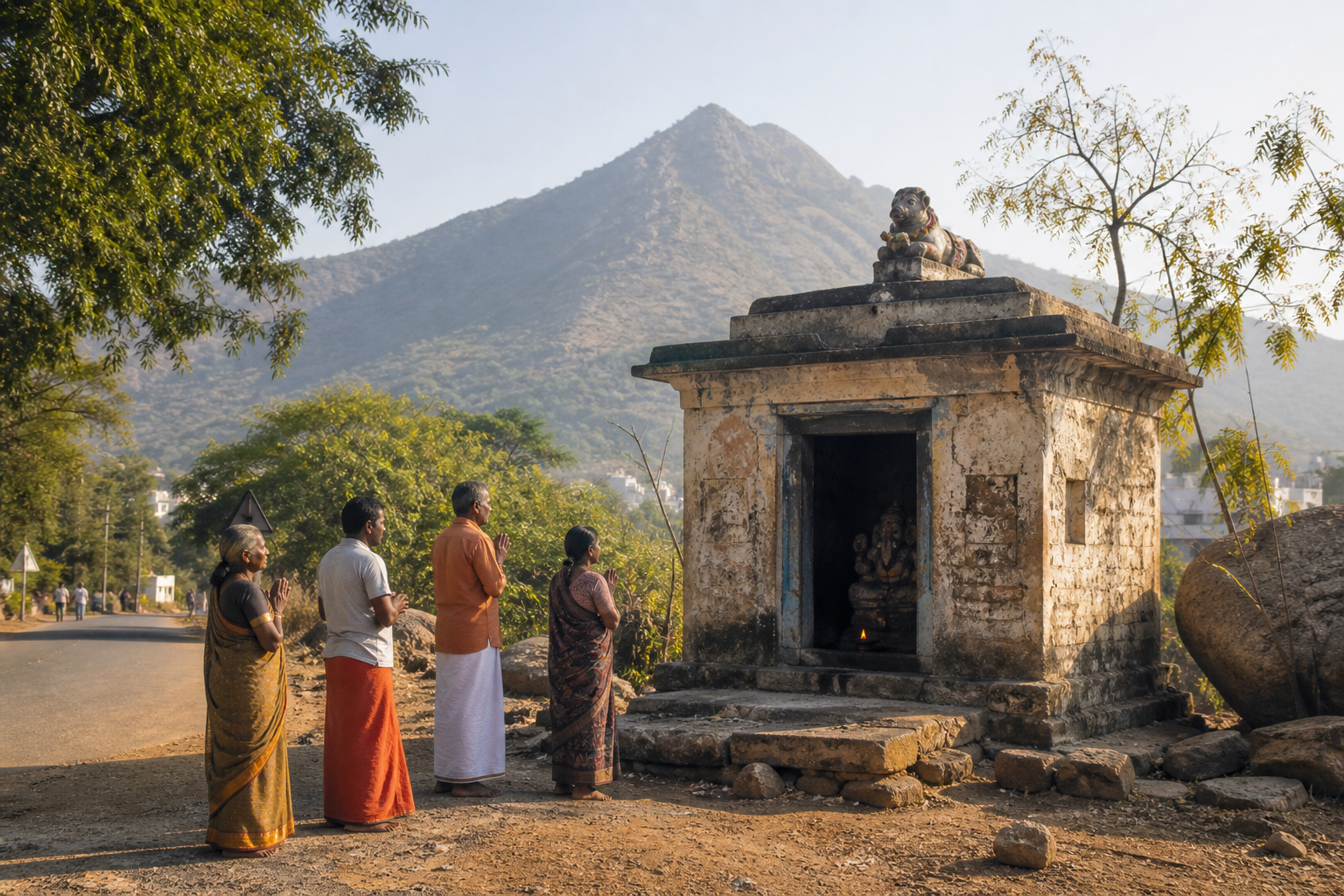
If Idukku Pillayar Temple is on your Arunachala Girivalam plan, you face two separate decisions: whether to stop and pray, and whether to enter its confined passage. You can make the first choice without committing yourself to the second.
That distinction protects both the devotional purpose of your visit and your physical safety. The narrow access is not a test of faith, and declining it does not prevent you from offering a sincere prayer to Bhagwan Vinayaka.
Place the temple within the larger Girivalam
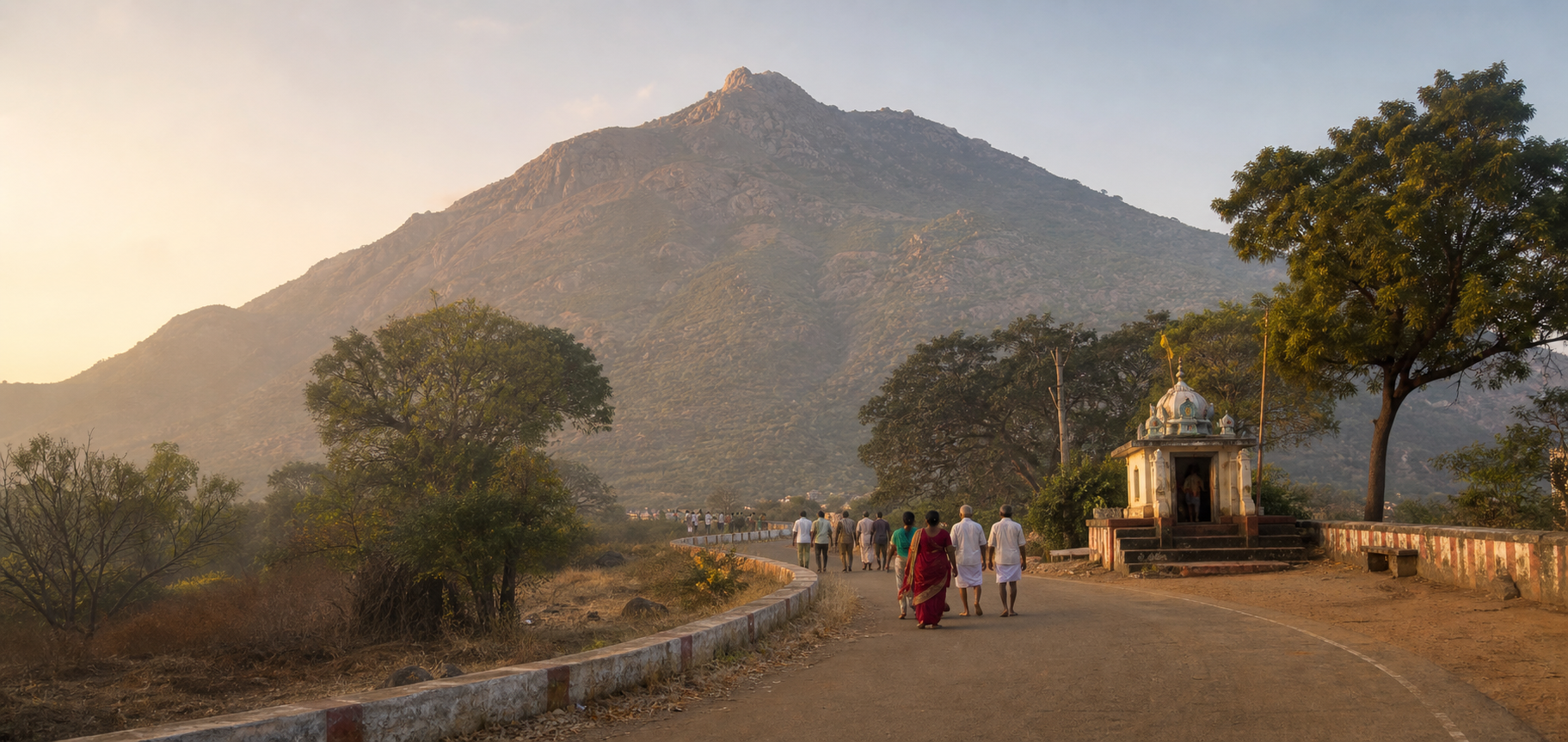
Arunachala is not merely the setting for this pilgrimage. The sacred hill is worshipped as Bhagwan Shiva, and Girivalam is the circumambulation of that divine presence. The circuit is about 14 kilometres long and is described as taking at least three hours.
Treat three hours as a floor, not as a promised finishing time. Your circuit may take longer when you pause at shrines, encounter a busy full-moon crowd, or simply walk at a pace that keeps your mind settled. Trying to recover a schedule by rushing through a confined temple entrance is a poor trade.
The path includes numerous small temples and places associated with Seshadri Swamigal, Ramana Maharishi, and Yogi Ramsurat Kumar. Idukku Pillayar belongs within this wider sacred landscape. Let it be a meaningful stop in the pradakshina rather than a physical obstacle that comes to dominate the journey.
Separate the blessing from the physical passage
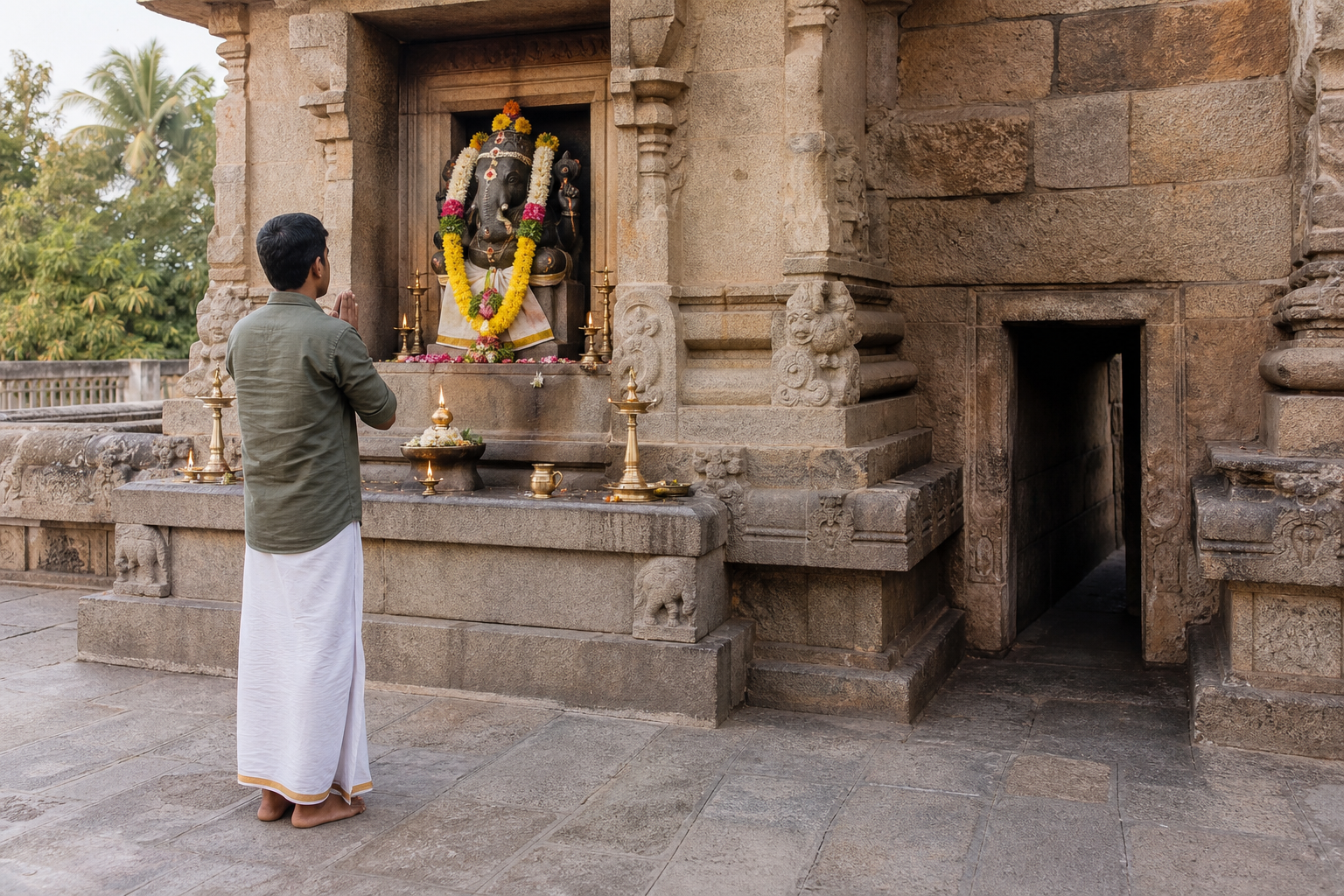
Devotees visit Idukku Pillayar in large numbers during full-moon Girivalam and pray for their wishes to be fulfilled. Newly married couples also come seeking Bhagwan Vinayaka’s blessings for steadiness and harmony in married life. Vinayaka is approached as the remover of obstacles, so the stop naturally becomes a place to entrust a difficult beginning, an uncertain decision, or a hoped-for change to the divine.
Devotional traditions surrounding the temple also include beliefs about healing, the fulfilment of prayers, and attaining moksha after visiting. Receive these as expressions of sacred faith, not as guarantees that require you to force your body through the entrance. If you are living with an illness, prayer may accompany proper medical care; it should never replace diagnosis or treatment.
A mantra associated with this stop is Om Sri Idukku Vinayakane Namo Namaha. Chant it with your attention on Bhagwan Vinayaka rather than on the people entering ahead of you. No competitive act, public display, or hurried repetition is needed. The purpose is one-pointed remembrance.
Make the safety decision before you enter
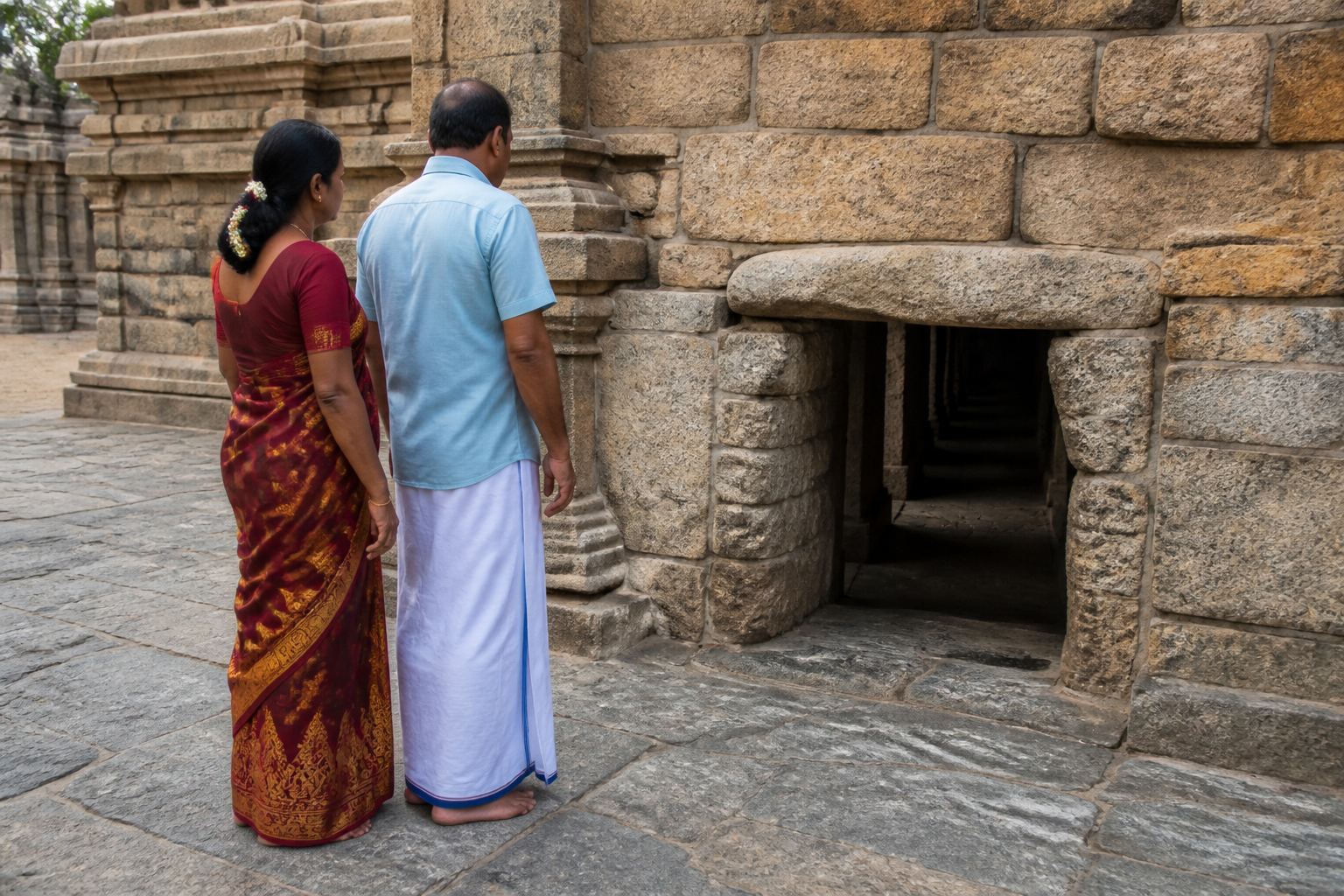
The passage into and out of Idukku Pillayar Temple can be difficult, especially for some larger-bodied visitors. The danger is not hypothetical: restrictions were introduced after a devotee with obesity reportedly died when he was unable to come out. That history should govern your decision more than enthusiasm, group pressure, or an assumption that someone can pull you free.
- Pause before joining the entrance flow. Read any current instructions and ask responsible temple personnel about the access rule where they are available.
- Treat the rule in force on the day of your visit as final. An older description, photograph, or another devotee’s experience is not permission to ignore a restriction.
- Do not enter if you expect difficulty because of your body dimensions, mobility, balance, breathing, injury, or discomfort in confined spaces. You do not need to attempt the passage to discover whether it is too tight.
- Do not count on another devotee pulling you through. Informal assistance is not a reliable safety system, particularly where there may be little room to reposition your body.
- On a full-moon day, let a hurried line move without you. The impatience of people behind you does not change the dimensions of the passage or your ability to use it safely.
This is not a judgement about anyone’s size, fitness, courage, or devotion. It is a decision about the fit between one body and one confined space. If that fit is uncertain, the safe answer is not to enter.
Keep the stop devotional when you remain outside
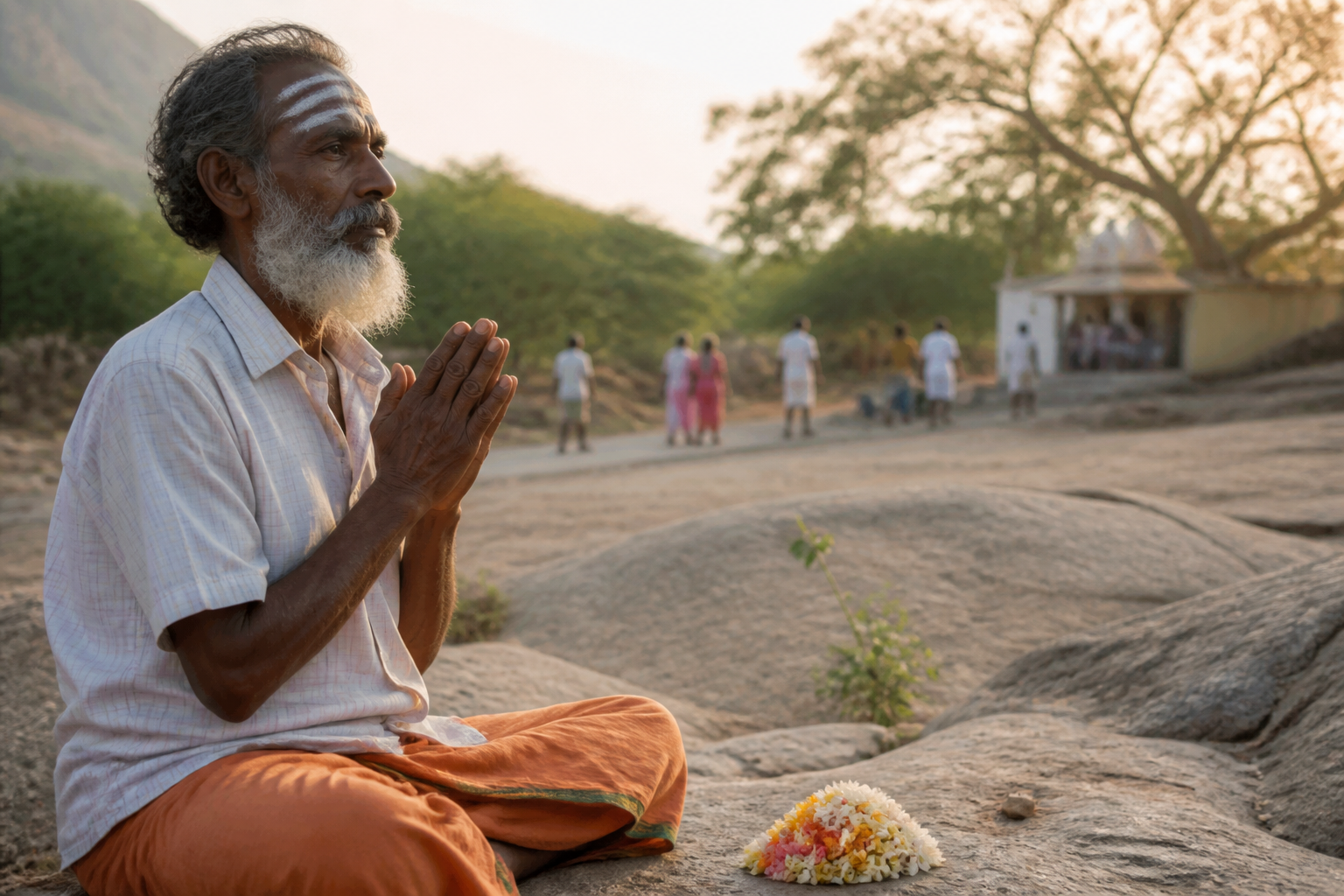
If entry is restricted or unsafe for you, do not turn disappointment into a struggle with the doorway. You can still make a deliberate spiritual stop from a place where you are permitted to stand.
- Step aside without obstructing devotees who are entering or leaving.
- Bring your attention back to Bhagwan Vinayaka and offer namaskara. If the current arrangement provides a permitted sightline, take darshan from there; if it does not, do not force access.
- Chant Om Sri Idukku Vinayakane Namo Namaha with a steady mind. Let the mantra, rather than the confined passage, become the centre of the stop.
- Offer the prayer that brought you there, whether it concerns married life, a difficult beginning, an obstacle, or gratitude.
- Resume Girivalam without carrying resentment about what you could not physically do. Your pradakshina continues around Arunachala, the form of Bhagwan Shiva.
For a newly married couple, this also removes an unnecessary pressure: neither partner needs to prove auspiciousness by entering a space that may be unsafe. Seek the blessing together, respect one another’s physical limits, and begin married life with precisely that kind of care.
Key takeaways for your entrance decision
- Plan for the whole pilgrimage: the Girivalam circuit is about 14 kilometres and takes at least three hours, before allowing for devotional stops.
- Keep prayer and entry separate: you may honour Bhagwan Vinayaka without treating the narrow passage as compulsory.
- Follow present restrictions: conditions and access rules at the temple take precedence over past accounts or another person’s experience.
- Do not experiment with a doubtful fit: if you foresee difficulty entering or exiting, remain outside the passage.
- Keep health claims in their proper place: healing and moksha are matters of devotional belief, not medical guarantees or reasons to disregard safety.
When you reach Idukku Pillayar, stop before the entrance and make the safety decision calmly. Then give Bhagwan Vinayaka your undivided attention from the place that is both permitted and safe. That is a sound way to preserve the sanctity of the stop and continue your Girivalam with steadiness.
References
