
You want to use the Diwali Pushya Nakshatra muhurat well, but you do not want an auspicious occasion to become a rushed purchase or a vague ritual. For 2025, the practical question is simple: what should you prepare before the window opens, and what should you actually complete during it?
The most useful approach is to separate preparation from action. Set your budget, compare sellers, review documents and decide your charitable commitment beforehand. Then use the muhurat for the deliberate step that marks a new beginning.
The 2025 Pushya Nakshatra window and what it means
Pushya Nakshatra begins at 11:54 AM on 14 October 2025 and ends at 12:00 PM on 15 October 2025. These times are given in Indian Standard Time. The continuous interval gives households and businesses enough room to choose a practical moment rather than forcing every observance or transaction into a few hurried minutes.
Treat those times as your planning boundary, not as a substitute for a local panchanga. Regional calculation methods and community practice can shift the operative muhurat slightly. Before arranging a puja, signing ceremony or major purchase, confirm the local timing with the panchanga or temple calendar followed by your family.
Key takeaways
- The stated 2025 interval runs from 11:54 AM on 14 October until 12:00 PM on 15 October, in IST.
- Common uses include buying gold or silver, opening bahi-khata, acquiring educational or professional tools, and completing trade-related formalities.
- Research, comparison and document review should happen before the muhurat; the window is for a considered action, not a pressured decision.
- Check the timing against the local panchanga or temple calendar your community follows.
- Connect the pursuit of prosperity with daana, seva, gratitude and honest dealing.
Choose one meaningful action for the muhurat
You do not need to fill the entire interval with ceremonies or purchases. Choose the action that best represents the beginning you intend to make. That might be paying for a carefully selected gold item, entering the first line in a new ledger, acquiring a tool needed for your work, or formally commencing an already reviewed agreement.
A useful test is to ask what will remain valuable after the festival has passed. An ornament chosen within a sustainable budget, a properly maintained accounting system, a book you will study or a tool that supports honest work has a continuing purpose. An impulsive purchase made only because the clock is running does not gain wisdom merely by occurring during a muhurat.
- For household prosperity: choose a durable purchase that fits an agreed family budget.
- For a business: open the new bahi-khata or make the first properly documented entry.
- For education: obtain a book, course material or practical tool you have already decided to use.
- For professional work: begin using an essential tool or complete a reviewed administrative step.
- For an agreement: use the window only if the terms, obligations and risks have already been understood.
Do not sign a contract simply to preserve the date. If a financial, commercial or legal commitment is unclear, delay it and obtain the appropriate professional advice. The possible cost of an unsuitable obligation is real; an auspicious time does not remove contractual risk.
Prepare a gold or silver purchase without financial pressure
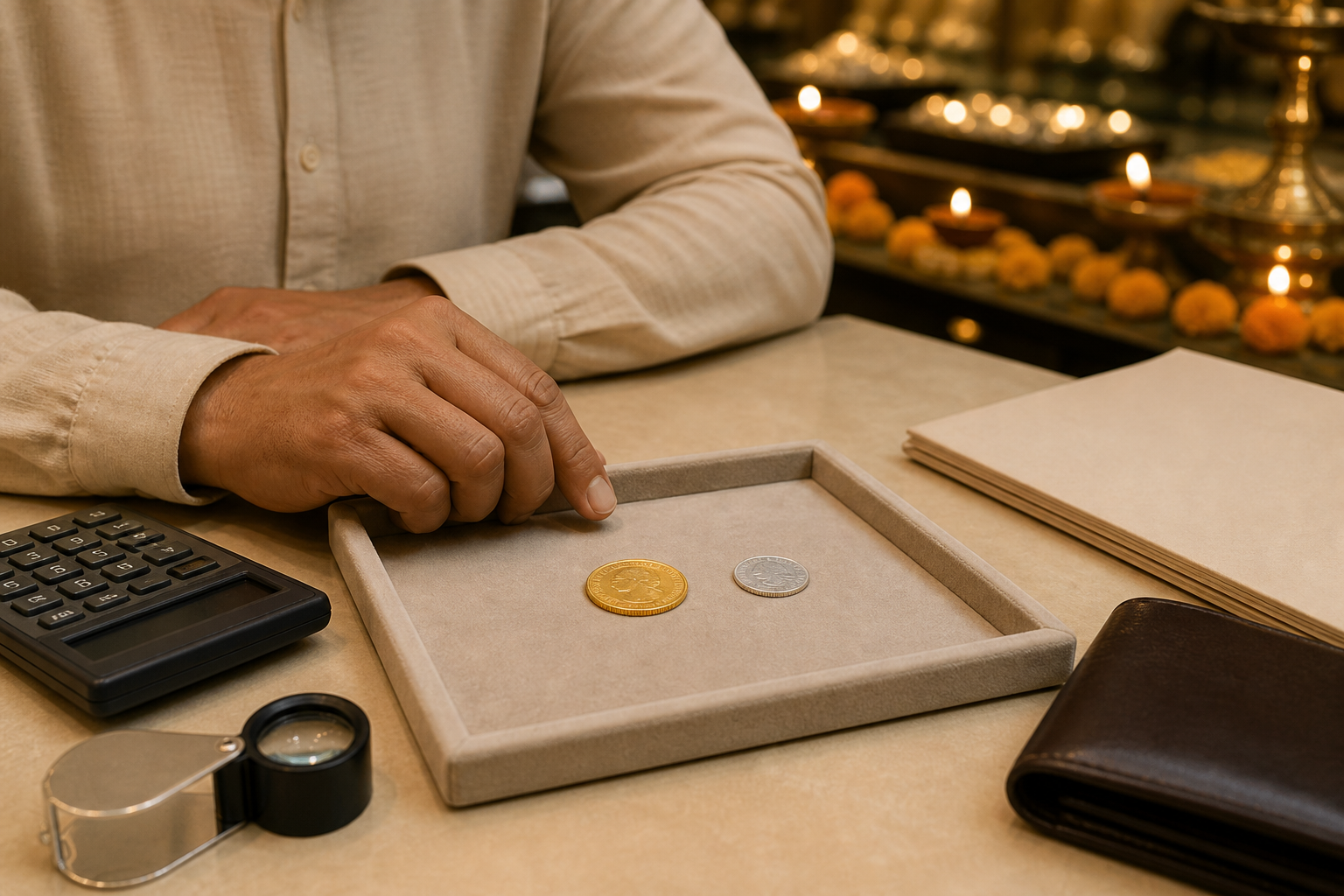
Gold and silver purchases are closely associated with this Pushya interval, but the decision should be complete before you enter the shop or payment screen. The muhurat should determine when you carry out a suitable purchase, not whether you can afford one.
- Fix the purpose. Decide whether you are buying jewellery, a ceremonial item or another form of precious metal. Do not let availability quietly change your objective.
- Set the maximum total cost. Include the metal, making charges and any other amount shown in the final bill. If the total exceeds the limit, choose a smaller item or do not proceed.
- Compare before the window. Check more than the displayed metal price. Compare weight, purity or hallmarking information, making charges, seller terms and the final payable amount.
- Verify before paying. Make sure the invoice accurately identifies what you are receiving and that its details agree with the item.
- Keep the record. Retain the receipt and related documentation where you can retrieve them for household records, accounting, warranty questions or an audit trail.
If you discover a discrepancy during the muhurat, stop the transaction. Verification matters more than completing the purchase before noon. You can still mark the occasion through puja, a modest act of daana or the opening of a new ledger without taking on an unsuitable expense.
Open bahi-khata as a commitment to accountable work
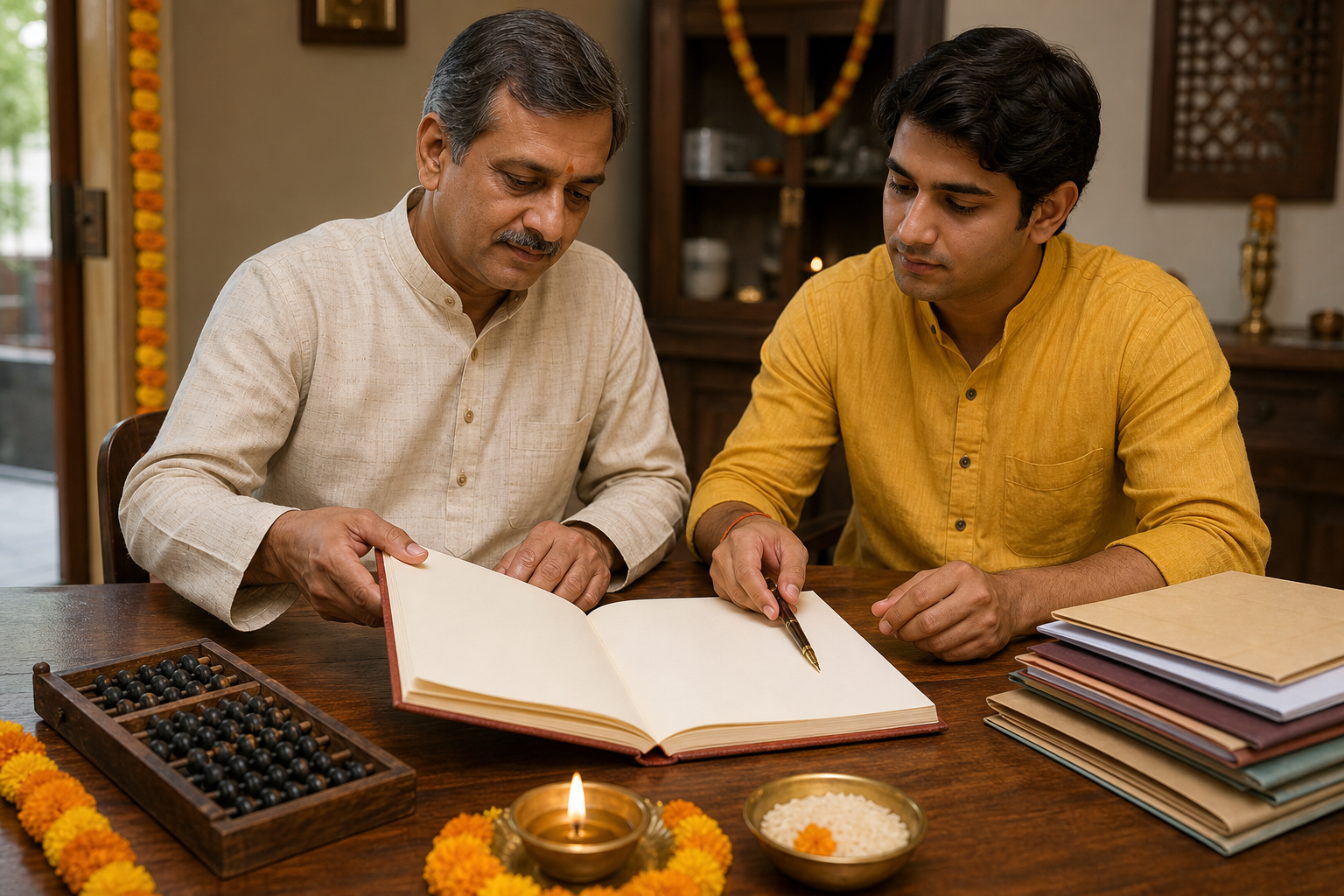
Opening new accounting books has meaning when the fresh page leads to better conduct. Whether your records are kept in a traditional bahi-khata or in a digital system, prepare the structure in advance. Confirm account names, opening balances and supporting documents before the Pushya window begins.
During the muhurat, make a clear opening entry and attach a measurable intention to it. A business might commit to recording transactions promptly, preserving invoices, separating household and business expenses, or reviewing its books on a regular schedule. Choose the practice that corrects a real weakness in your present system.
- Reconcile the old records before carrying balances into the new books.
- Write the opening date and identify the accounting period clearly.
- Record the first entry with the same detail you expect to maintain later.
- Assign responsibility for preserving receipts and supporting documents.
- Write down one measurable financial or operational goal beside the ceremonial beginning.
The spiritual and practical meanings reinforce each other here. Lakshmi puja expresses reverence for abundance; transparent books express responsibility for it. If an entry is concealed, unsupported or misleading, the problem is not repaired by making it at an auspicious hour.
Place prosperity within the wider dharmic meaning of Diwali

Pushya Nakshatra can focus your attention on material resources, but dharmic prosperity is larger than possession. Wealth carries obligations: earn without deception, spend without vanity, maintain accurate records, support those in need and remain grateful for the people whose labour makes your household or enterprise possible.
This wider frame also helps you honour the diversity of the Diwali season. Hindu families may connect their preparations with Lakshmi puja. Jains observe Mahavira Nirvana Kalyanak, while Sikhs commemorate Bandi Chhor Divas. These are distinct observances and should not be collapsed into a single ritual. Their presence in the same season can nevertheless direct attention toward light, liberation, ethical restraint and service.
Choose daana or seva as deliberately as you choose a purchase. Decide the recipient or form of service beforehand, set aside an amount or commitment you can genuinely sustain, and complete it without turning another person’s need into a display. Ahimsa should also shape your buying and business conduct: avoid waste, pressure, concealment and exploitation.
Before 11:54 AM on 14 October, finish the comparisons, budget decisions and document checks. Within the locally confirmed window, carry out one meaningful purchase or beginning, make the first accurate record and fulfil your chosen act of giving. That is enough to make the muhurat both spiritually sincere and practically sound.
References
