
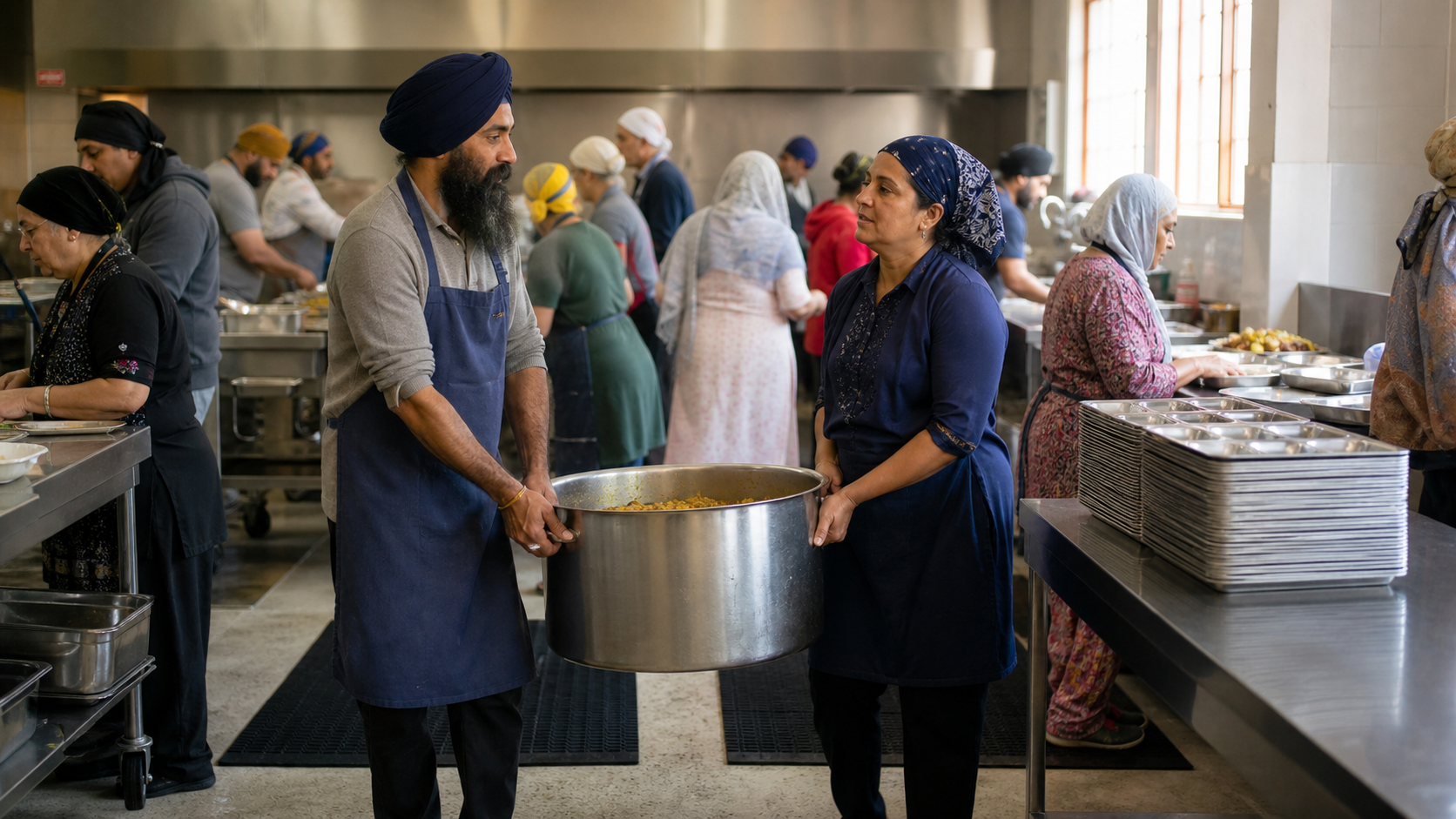
You may have been asked to lead a langar shift, a relief effort, a tutoring programme, or a neighbourhood clean-up. The obvious question is how to organise the work. The harder question is how to use authority without making service about your authority.
A project can be efficient and still humiliate the person receiving help, exhaust the volunteers, or turn generosity into status. The Sikh discipline of seva offers a more demanding standard: carry responsibility, protect dignity, share the burden, and measure leadership by the welfare it enables.
Start with the burden, not the title
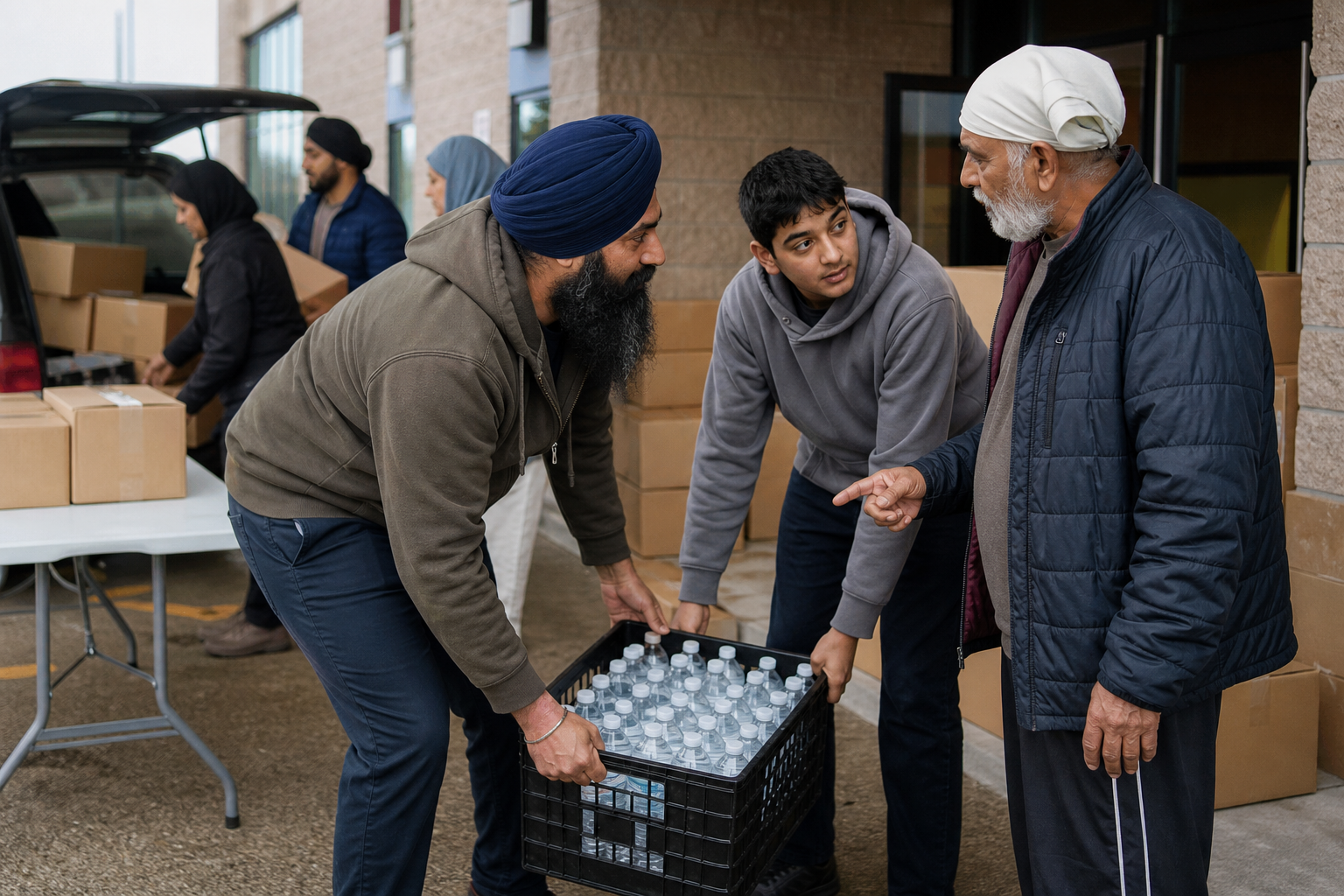
Seva changes the leader’s first question. Instead of asking, “How do I get people to follow me?” ask, “What burden needs to be carried, and what is my duty toward the people carrying it now?” That shift does not remove authority. It disciplines the motive behind authority.
Before you announce a programme or recruit volunteers, work through these checks:
- Need: Can the person or community affected describe the burden in their own words?
- Dignity: Which part of the proposed process could expose, shame, patronise, or exclude someone?
- Motive: Which useful task would you still do if your name were never attached to it?
- Outcome: Does the decision serve a faction, or does it move toward sarbat da bhala, the welfare of all?
This is especially important when you have more money, confidence, education, or institutional standing than the person being served. Compassion can quietly become paternalism when the leader assumes the need, designs the solution alone, and expects gratitude afterward. Ask before assuming. Offer meaningful choices where possible. A person receiving assistance remains your moral equal, not a prop in your account of doing good.
Consider a busy langar. If vessels are piling up while newcomers wait without direction, compassionate leadership is not an inspiring speech about service. It is a clear assignment, a respectful welcome, and a leader taking a fair share of the least visible work. The leader notices both the operational bottleneck and the human being who might otherwise feel useless or unwelcome.
This Sikh approach also creates practical common ground across the dharmic family. Hindu traditions speak through seva, dana, and dharma; Buddhism places karuna and dana at the centre of compassionate action; Jainism brings ahimsa and aparigraha to questions of harm and possession. Shared values can support joint service without erasing the distinct language or discipline of any tradition. When organising an interfaith effort, agree on the need and the standard of dignity first, then allow each community to explain why it serves in its own voice.
Turn compassion into a system people can trust

A generous impulse may solve today’s problem. Leadership asks whether care will still be available when the original organiser is absent. The traditional forms of tan, man, and dhan provide a useful planning framework because they reveal more than one way to carry the work.
| Form of seva | What it contributes | The leader’s practical duty |
|---|---|---|
| Tan | Physical effort and presence | Join the work, make roles clear, and rotate repetitive or invisible tasks instead of leaving them to the same dependable people. |
| Man | Mental and emotional attention | Listen carefully, plan the handoff, explain the purpose, and make it safe for volunteers or recipients to identify a problem. |
| Dhan | Money, food, equipment, or other material resources | State what is needed, account for its use, allocate by need, and never allow a larger donation to become a claim to greater moral rank. |
Do not force everyone to contribute in the same form. A person with limited physical capacity may offer planning, patient listening, or material support. Someone without money may contribute time and practical skill. Equality does not require identical contributions; it requires that no contribution becomes a basis for domination or humiliation.
Build capacity in the manner of Guru Har Rai Ji
Guru Har Rai Ji’s care for animals, cultivation of fruit trees, herbal gardens, and dispensaries shows compassion operating across different time horizons. An animal requires care now. A tree must be cultivated before it gives fruit. A garden and dispensary create an organised capacity to support well-being beyond a single generous moment.
You can apply the same method without running a large institution:
- Meet the immediate need without making the recipient wait for your ideal system.
- Notice whether the same need keeps returning and where the present response breaks down.
- Create the smallest repeatable process that would make the next response faster, clearer, or more dignified.
- Give that process a steward and a handoff so it does not depend on one charismatic organiser.
- Ask the people affected whether the system actually reduced their burden.
If families repeatedly need meals, the next act of seva may be a dependable preparation rota, a clearer supply list, or a simpler distribution point. If students repeatedly ask for tutoring, the next step may be shared materials and a recurring schedule rather than another improvised session. The aim is not to make every effort bigger. It is to make care more reliable.
This is where compassionate leaders distinguish themselves from benevolent personalities. A personality gathers attention around the helper. A trustworthy system directs attention toward the need, the dignity of the person served, and the continuity of the response.
Give compassion a spine through the saint-soldier standard

Compassion is sometimes mistaken for avoiding conflict. Sikh leadership refuses that split. The formation of the Khalsa on Vaisakhi 1699 under Guru Gobind Singh consolidated the saint-soldier ethos and the union of spiritual wisdom with temporal responsibility known as miri-piri. Care for the vulnerable therefore belongs beside courage, discipline, and public duty.
A leader who preserves surface harmony by leaving a vulnerable person exposed is not being compassionate. The cost of that peace is being paid by someone else. At the same time, courage without self-restraint can turn justice into retaliation. The Sikh standard asks you to confront the harm while refusing hatred as a governing motive.
Before using authority in a conflict, test the decision with these questions:
- Protection or punishment: Is the action stopping harm, or satisfying the leader’s anger?
- Impartiality: Would you apply the same standard to a close ally and a persistent critic?
- Voice: Can the person at greatest risk describe what happened without retaliation?
- Restraint: Are you using only the authority required to protect people and restore a workable standard?
- Accountability: Can you explain the decision openly and accept correction if you have misjudged it?
- Restoration: Where it is safe, is there a path for changed conduct and repaired trust?
Suppose a volunteer publicly belittles someone receiving help. A compassionate leader does not ignore the conduct to keep the shift pleasant. Stop the humiliation, secure the person’s immediate dignity, and make the behavioural standard clear. Correction can happen privately when circumstances allow, but repair cannot be replaced by silence.
Raj Karega Khalsa can be read as sovereignty of character and stewardship rather than sectarian domination. Political interpretations of the phrase exist, but this ethical reading gives a community leader a concrete discipline: govern the self before seeking to govern a situation. Rehat, remembrance, seva, and accountability keep power answerable to something higher than personal preference.
This is compassionate power, not passive niceness. It protects plurality, resists injustice, and refuses to reduce an opponent to an object of hatred. Authority becomes a trust held for the common good.
Protect chardikala by sharing the weight
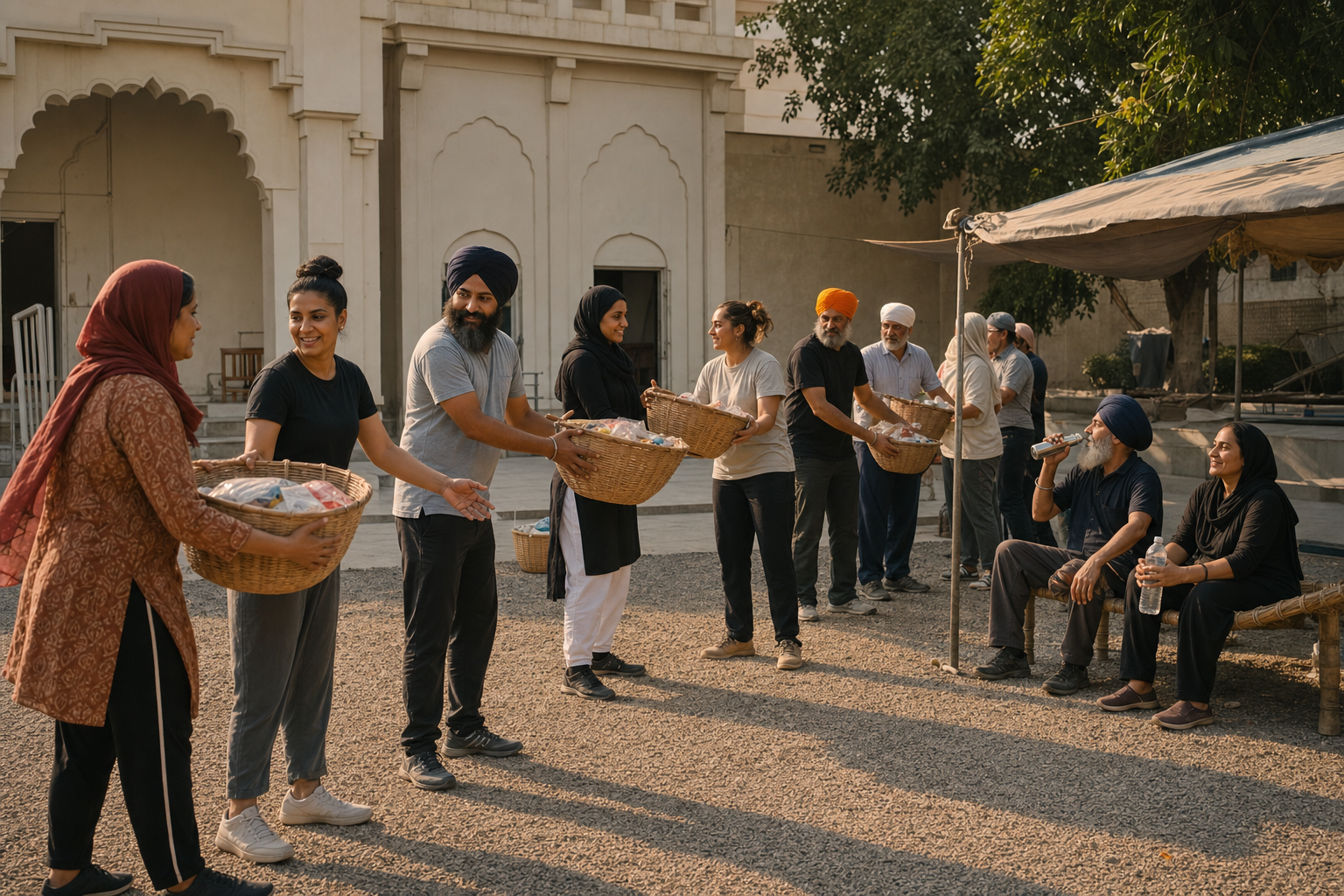
Chardikala brings resilient, buoyant spirit into seva. It helps service remain an expression of meaning rather than a performance staged for approval. But chardikala should never be used to demand constant cheerfulness from tired people. If a volunteer cannot name exhaustion, confusion, or grief without being judged as spiritually deficient, the leader has turned resilience into pressure.
Selflessness is not self-erasure. The ego may need discipline, but the human being still needs rest, honest limits, and a team that shares responsibility. A leader who repeatedly rescues every failing process can accidentally teach the community that exhaustion is the price of belonging.
For your personal practice, keep the rhythm small enough to become real: set a daily intention for one useful act, keep a recurring weekly commitment where possible, and reflect briefly on whether the act protected dignity or merely made you feel useful. Reflection matters because good intentions can conceal poor listening.
For a team, conduct a short seva review around the work itself:
- Who benefited, and how do we know from their experience rather than our assumption?
- Whose burden became heavier while the visible work was being completed?
- Which task is repeatedly falling to the same person?
- What can be simplified, stopped, or handed over before the next activity?
- Which unseen contribution should be acknowledged without turning recognition into rank?
Make capacity visible before assigning work. Give people a clear way to decline or change roles without moral judgement. Rotate the tasks that bring little recognition. Pair willing newcomers with people who know the process. Keep handoffs simple enough that the work can continue when a regular volunteer is absent.
Chardikala is strengthened when people can see that their service has meaning, their limits will be respected, and the community will not abandon them once they become the ones in need. That reciprocity is not a transaction. It is evidence that seva has become culture rather than an event.
Key takeaways
- Begin with the actual burden described by the people affected, not with the programme a leader wants to launch.
- Use tan, man, and dhan to recognise physical, attentive, and material forms of service without ranking contributors.
- Convert recurring compassion into simple, dependable capacity with clear stewardship and handoffs.
- Join care to courage: protect the vulnerable, apply standards impartially, restrain anger, and remain accountable.
- Sustain chardikala through honest limits, shared work, reflection, and freedom from performative charity.
At your next seva effort, choose one recurring burden that attracts little attention. Carry a fair share of it, then improve the handoff so the work no longer depends on your presence. That is how compassionate intention matures into Sikh leadership.
References
- DharmaRenaissance Blog – Raj Karega Khalsa: The Complete, Proven Journey from Spiritual Vision to Shared Sovereignty
- DharmaRenaissance Blog – Discover Guru Har Rai’s Proven Path: How Gurbani Transforms Compassion into Living Wisdom
- DharmaRenaissance Blog – Seva in Chardikala: Essential, Proven Ways Everyday Kindness Transforms Communities
