
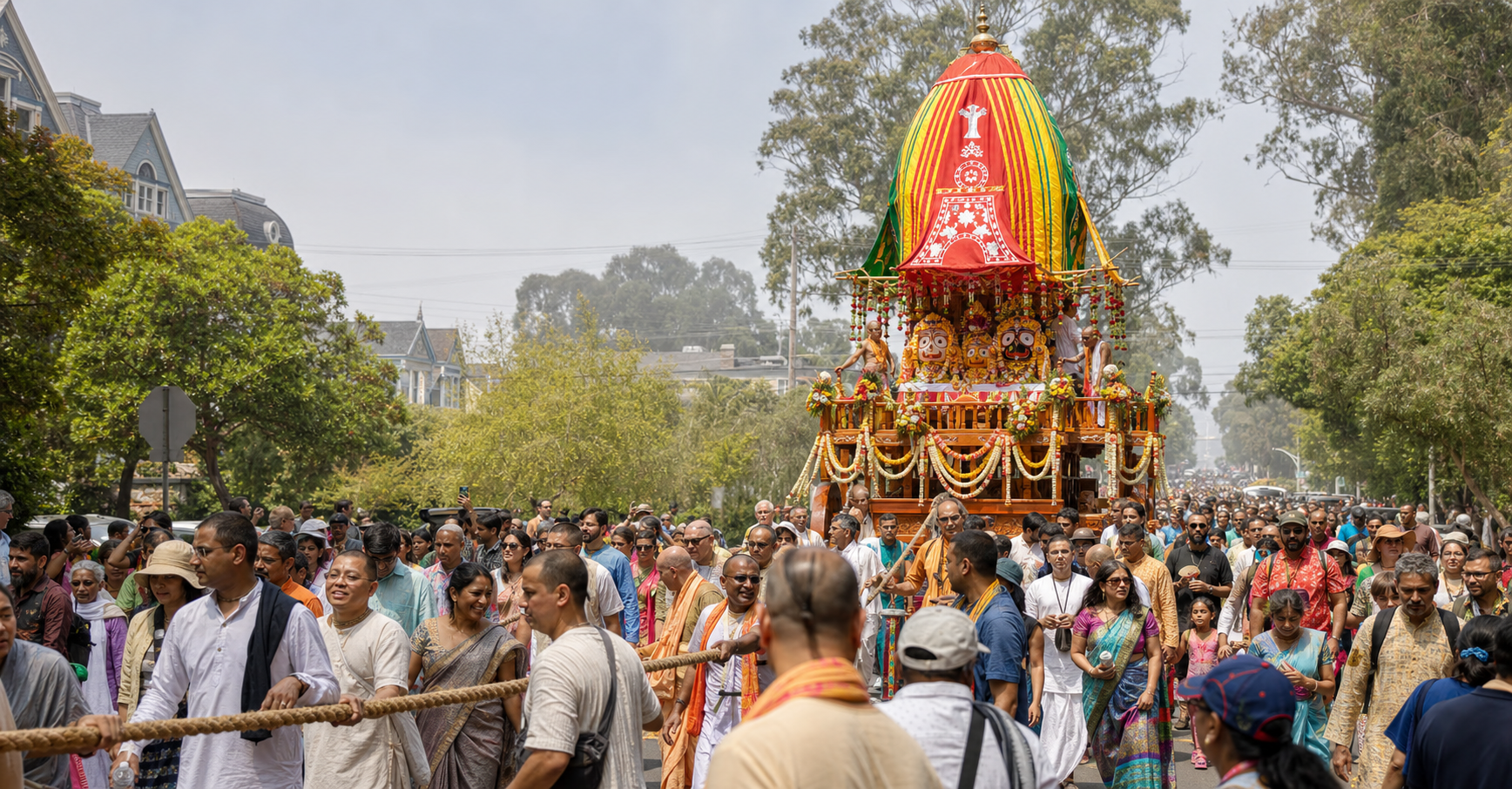
You have found the festival and want to attend, but you may not know the prayers, the etiquette, or the difference between watching and participating. You do not need insider knowledge. You do need to recognize that the chariot belongs to an act of worship in motion.
A good first visit is simple: confirm the practical details, arrive with enough time to observe, and let the conduct of the devotees guide your own. That approach allows you to enter the celebration without treating a sacred procession as merely another street attraction.
See the chariot as worship moving through the city
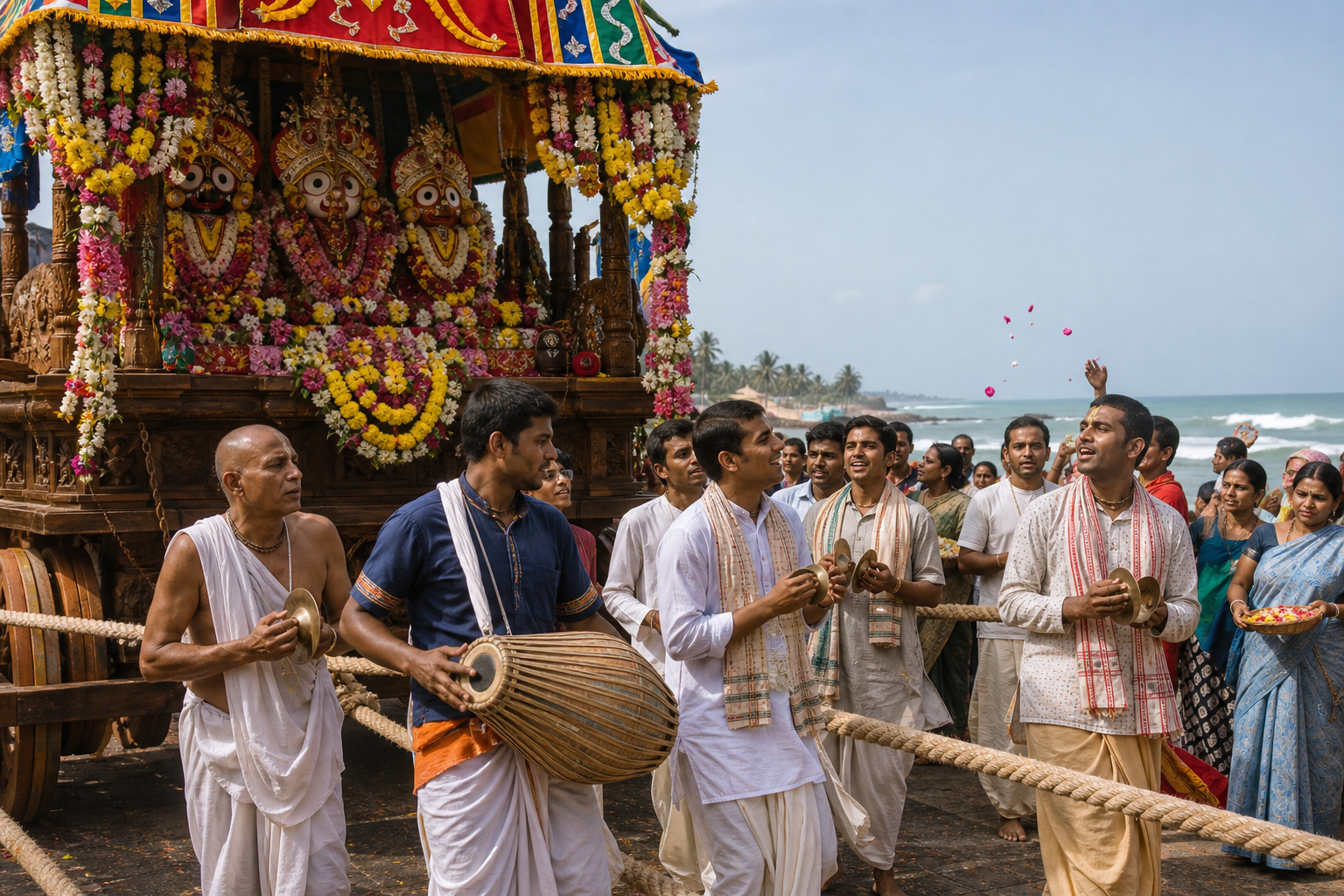
The San Francisco Festival of Chariots brings a form of public devotion into the shared space of the city. This form is commonly called Ratha-yatra: ratha means chariot, while yatra means a journey or procession.
The public setting makes the festival approachable, but it does not turn the central sacred action into secular entertainment. For devotees, the presence carried on the chariot is worthy of reverence. The chariot is therefore not just a decorated vehicle, and the procession is not simply a parade with religious imagery attached to it.
This distinction tells you how to behave. Watch how devotees approach before moving closer. Keep the path between worshippers and the chariot clear. Do not touch the chariot, its ropes, an altar, sacred objects, or offerings unless a devotee or steward clearly invites participation. A respectful greeting with your palms together is sufficient; you do not have to imitate a ritual you do not understand.
You may also hear the word darshan. Devotees use it for an encounter with the sacred through seeing and being seen. If you want to understand the festival rather than merely photograph it, pause when the chariot comes into view. Look attentively before reaching for your phone. That brief change in sequence turns your attention from collecting an image to receiving the moment.
Prepare for the procession without guessing the details
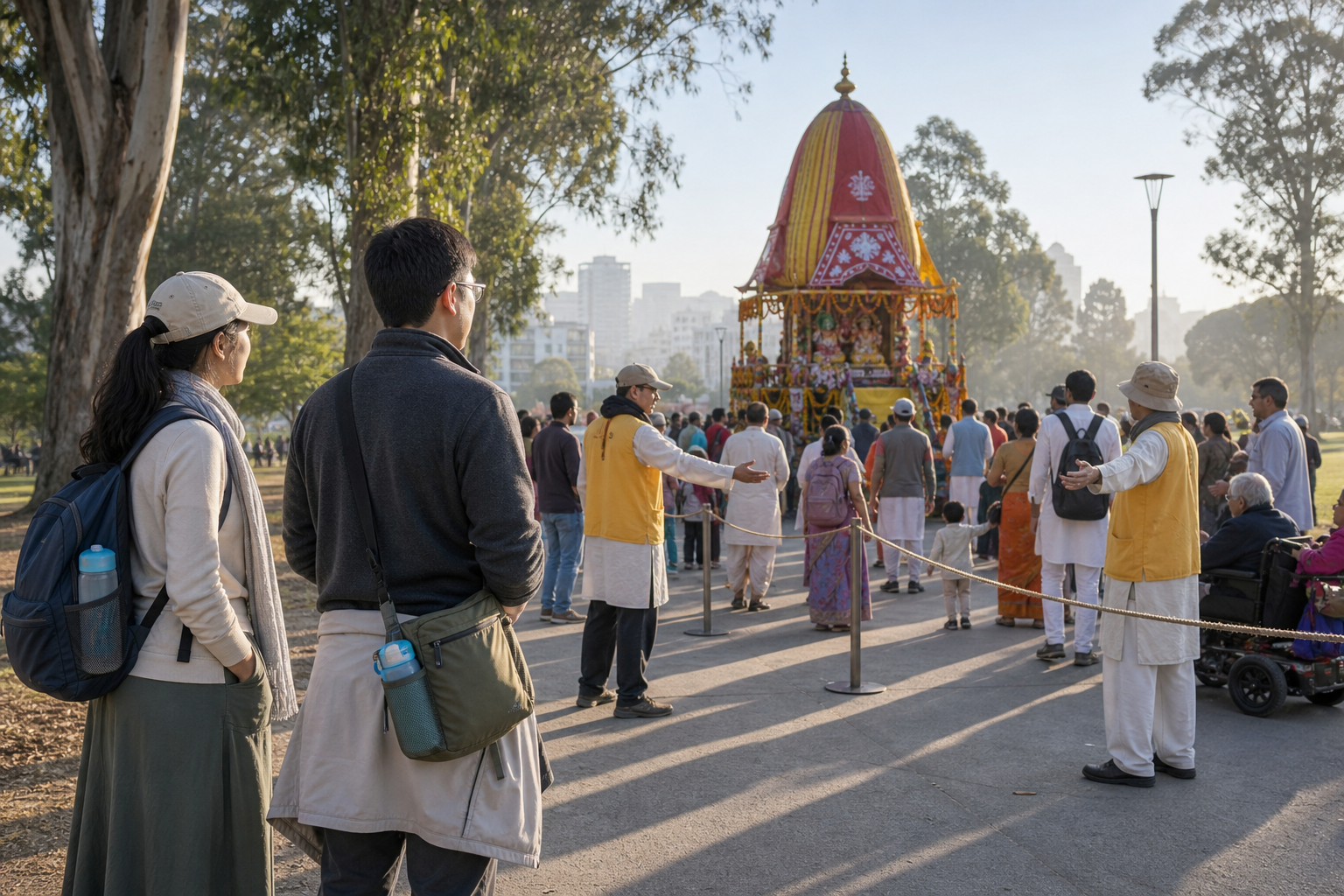
A festival announcement is not the same thing as a complete day-of plan. Routes, assembly points, access arrangements, and timing can affect whether you actually reach the procession. Prepare in this order:
- Confirm the current logistics. Start with the linked San Francisco event information, then check any later organizer update before leaving. Verify the date, start time, gathering point, route, public-transit conditions, accessibility, and expected weather. Save the meeting point on your phone rather than relying on the festival being easy to spot.
- Dress for worship and walking. Choose clean, comfortable clothing appropriate to a public devotional gathering, along with footwear that can handle time on city streets. Carry only what you can keep close without occupying procession space.
- Arrive early enough to observe. A few quiet minutes near the gathering area will show you where participants stand, how the procession moves, and which people are coordinating it. Follow stewards rather than using the crowd’s movement as your only instruction.
- Choose a meeting point. If you attend with family or friends, agree on a fixed place outside the moving procession. A chariot, musicians, and a changing crowd are poor landmarks once people become separated.
- Give children one clear boundary. Tell them in advance that they must not climb on the chariot, cross beneath ropes, touch sacred objects, or enter the procession lane without permission. If an organizer invites families to help, follow the organizer’s directions at that moment.
These preparations are deliberately ordinary. They leave you free to pay attention once the sacred activity begins. When you are still solving transport, meeting-place, or crowd-navigation problems, the festival becomes background noise.
Participate at the level you genuinely understand
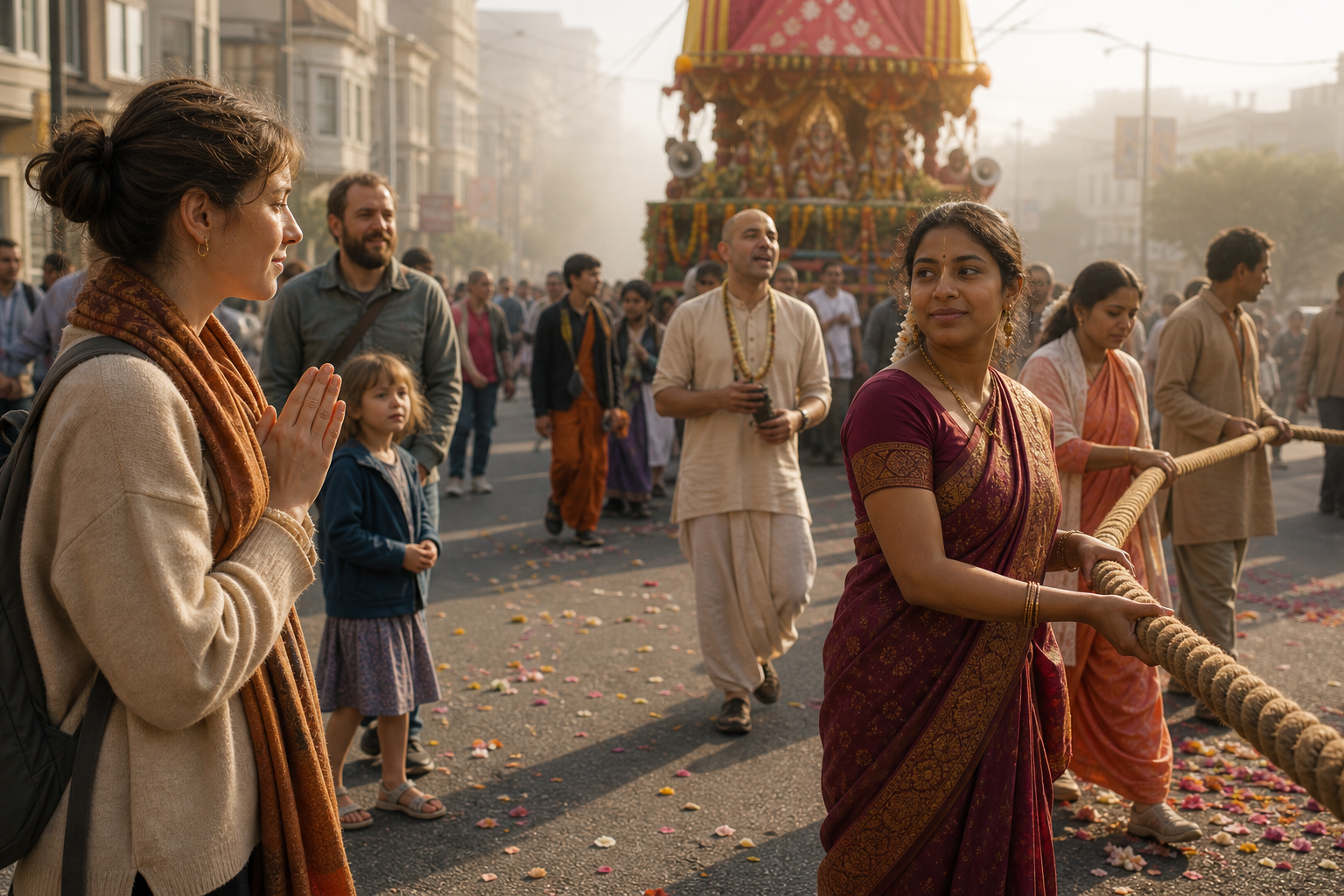
You do not have to choose between being a detached spectator and pretending to be an experienced practitioner. There are several honest ways to take part.
- Begin with darshan. Stand without blocking others, bring your attention to the sacred presence on the chariot, and allow worshippers to approach at their own pace.
- Listen before joining a chant. If there is congregational singing, hear the response before repeating it. You can also listen silently. Devotional sound does not require theatrical enthusiasm from a newcomer.
- Accept guidance around the chariot. If pulling a rope or joining a particular part of the procession is open to visitors, wait for a clear invitation and follow the directions given there.
- Receive shared food thoughtfully. Food offered in worship and then distributed is commonly called prasada. Take only what you intend to eat. If you have allergies or dietary restrictions, ask about ingredients before accepting; the food’s devotional significance does not answer a medical or dietary question.
- Photograph without taking over the encounter. Avoid blocking the procession, holding a phone in front of someone offering prayers, or stepping into a restricted space for a better angle. Ask permission before making a close portrait, especially when a person is worshipping or serving.
- Offer service when a real need is identified. Seva means service. It may be as modest as following cleanup instructions, helping an accompanying family member, or doing a task assigned by an organizer. Do not invent a role in a controlled procession area.
If you want a conversation, wait until the person is not chanting, carrying something, directing people, or performing worship. Specific questions work best: What does the journey represent? How should a visitor approach the chariot? Is there a temple or community gathering where this tradition can be learned more quietly? Those questions give a devotee something concrete to explain.
The deeper lesson is that public dharma can be welcoming without becoming casual. You are not required to claim a religious identity at the gate, but you are responsible for treating devotion as devotion. Curiosity becomes respectful when it accepts boundaries, and participation becomes meaningful when it is guided by attention rather than display.
Key takeaways for your first visit
- Confirm the latest time, meeting point, route, access information, transit conditions, and weather before travelling.
- Approach the chariot as part of worship, not as a parade prop or an unrestricted photo setting.
- Observe devotees and stewards before touching ropes, entering the procession, receiving offerings, or joining a ritual action.
- You may listen, offer a respectful greeting, or take darshan without knowing the prayers.
- Ask about ingredients if you have dietary restrictions, and ask permission before close photography.
- Choose one deliberate form of participation: attentive darshan, careful chanting, an informed question, or organizer-directed seva.
Before you go, make one concrete choice: decide whether your first act will be to pause for darshan, listen to the chanting, ask a thoughtful question, or look for properly directed seva. Then put the phone away for that part of the encounter. You will leave with more than photographs, and with a clearer doorway into the tradition if you choose to continue learning.
References
