
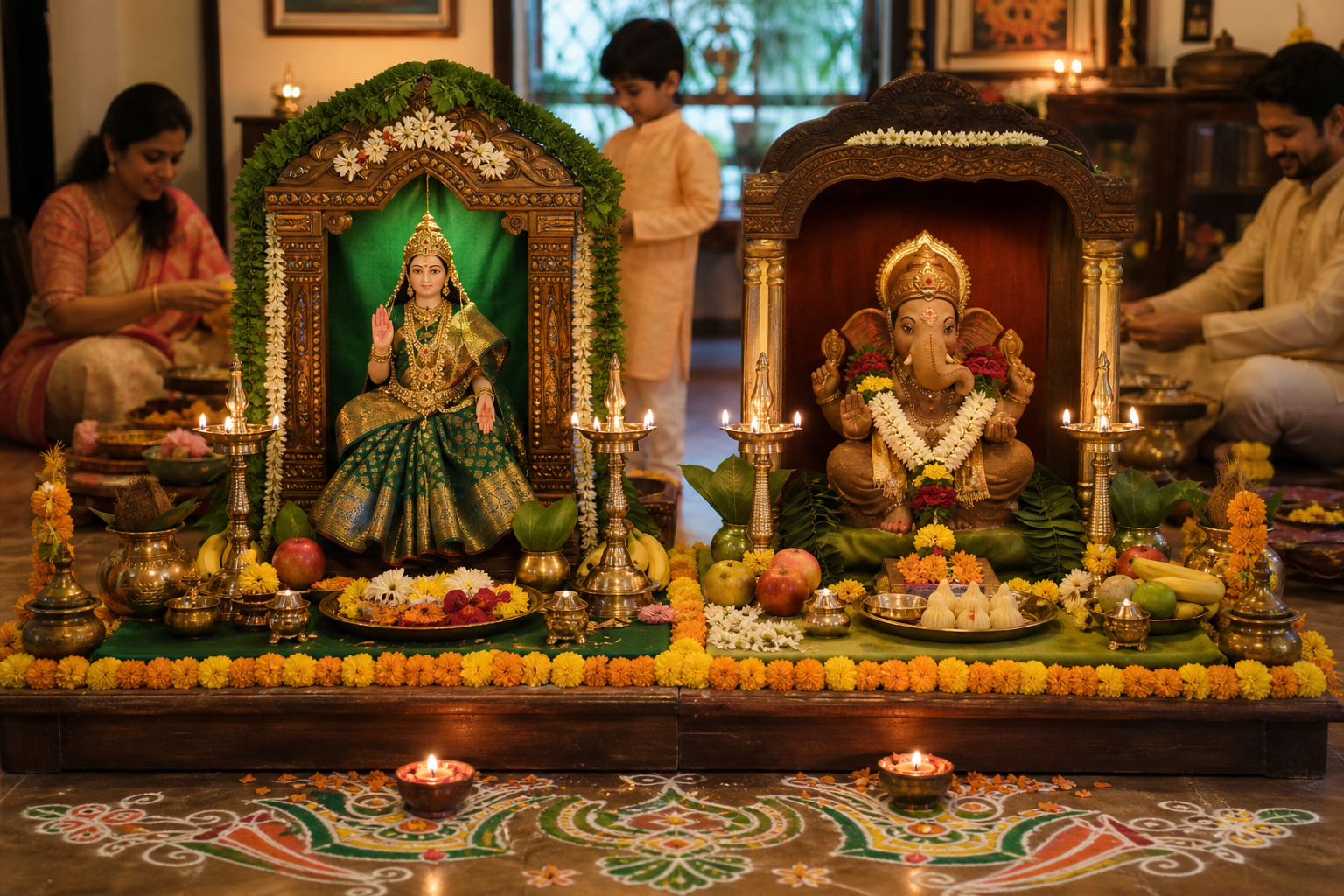
If you are arranging leave, inviting relatives, or preparing a home puja, reserve Monday, September 14, 2026, but do not publish a clock time yet. Swarna Gauri Vrata falls on September 14, and the 2026 Ganesh festival period is also listed as beginning that day.
That apparent overlap needs attention because Swarna Gauri Habba is customarily observed before Ganesh Chaturthi. Do not settle the sequence by guessing that one puja must happen in the morning and the other later. Hold the date, then confirm the applicable tithi and puja windows for your location and family tradition.
The 2026 dates to place on your calendar
| Observance | 2026 calendar placement | What you should plan |
|---|---|---|
| Swarna Gauri Vrata, also called Swarna Gowri Vrata or Gauri Habba | Monday, September 14 | Reserve the date and confirm the local puja interval before inviting participants. |
| Ganesh Chaturthi, also called Vinayaka Chavithi | The Ganesh festival period begins September 14 | Confirm whether your panchanga places your household’s Ganesha worship on the same civil date as Gauri Vrata. |
| Conclusion of the longer Ganesh festival period | September 25, on Anant Chaturdashi | Keep this date only if your household, temple, or community follows the longer Ganeshotsav cycle. |
The table gives you a planning frame, not a universal household timetable. A family performing only the principal home puja needs a different schedule from a community holding an extended Ganeshotsav. Decide which observances you are actually undertaking before buying materials or asking relatives to keep several days free.
Why September 14 does not settle the muhurta
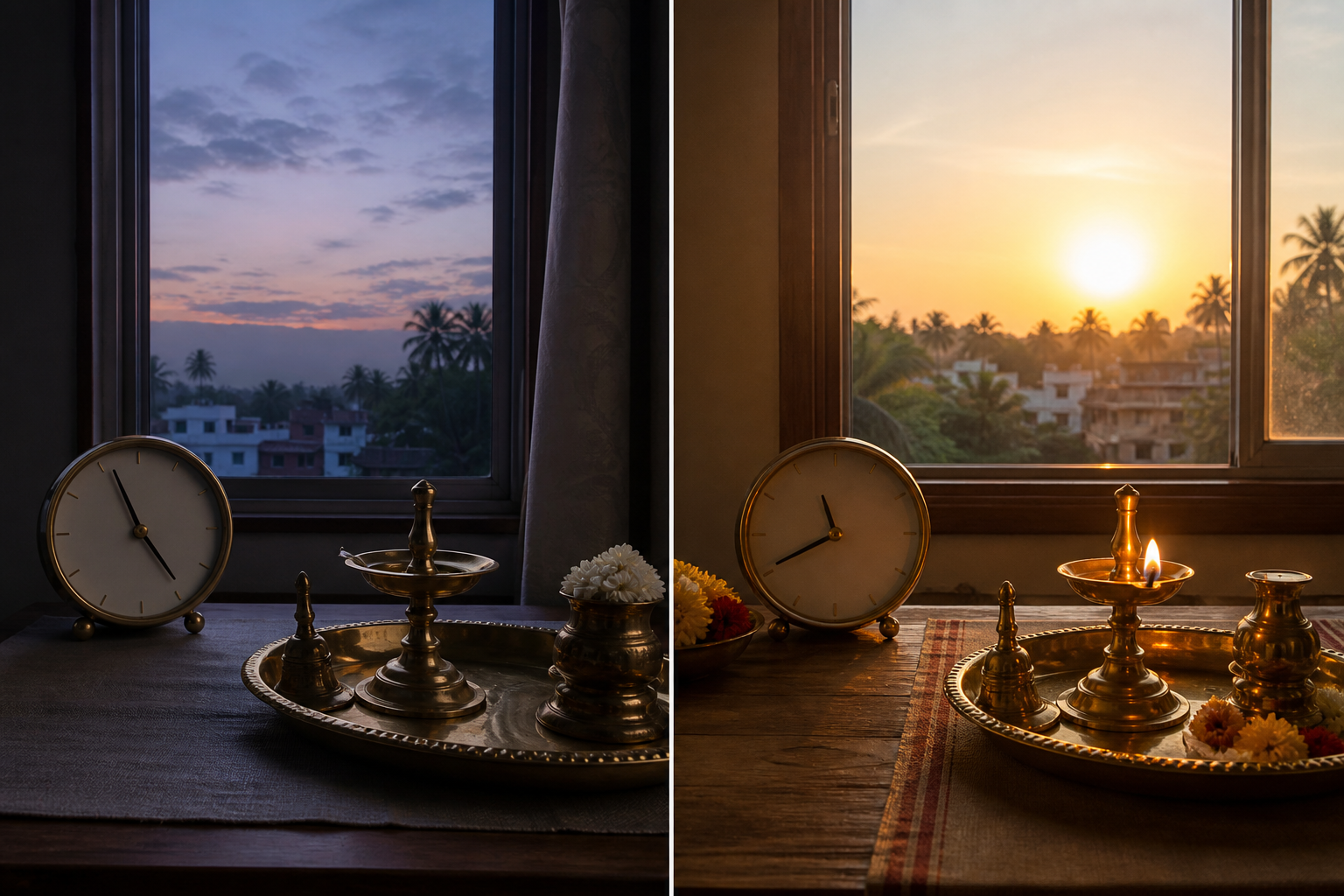
A tithi and a midnight-to-midnight civil date are not identical units. A tithi can begin or end within a civil day, while the way it is assigned to an observance can depend on the applicable calendrical rule. Location also matters when clock times are calculated. This is especially important for diaspora households that may be consulting a calendar prepared for a city in Bharat.
The 2026 date descriptions create a real practical question: Gauri Habba is traditionally described as the observance before Ganesh Chaturthi, yet both observances are associated with September 14 in the available 2026 dates. This could reflect a calendrical convention, the way a tithi meets the civil date, or a difference among calendars. None of those possibilities should be chosen without checking the panchanga you actually follow.
Timing on September 14 is further framed through distinct considerations such as Abhijit Muhurta, Varjyam, and Rahukaalam. Abhijit Muhurta is regarded as auspicious in many places, but “in many places” is not the same as a rule binding every sampradaya or household. Do not extract one familiar muhurta label and treat it as the only permissible period.
Ask a family priest, temple, knowledgeable elder, or trusted local panchanga one precise question: “Please confirm the Gauri Vrata and Ganesh Chaturthi dates and puja windows for our city in 2026, using our family tradition, and tell us whether the same civil date is intended.” Include your location. If your family follows a named panchanga, include that as well. This wording exposes the ambiguity instead of hiding it behind a generic request for “the festival time.”
Keep Gauri and Ganesha connected without merging the rites
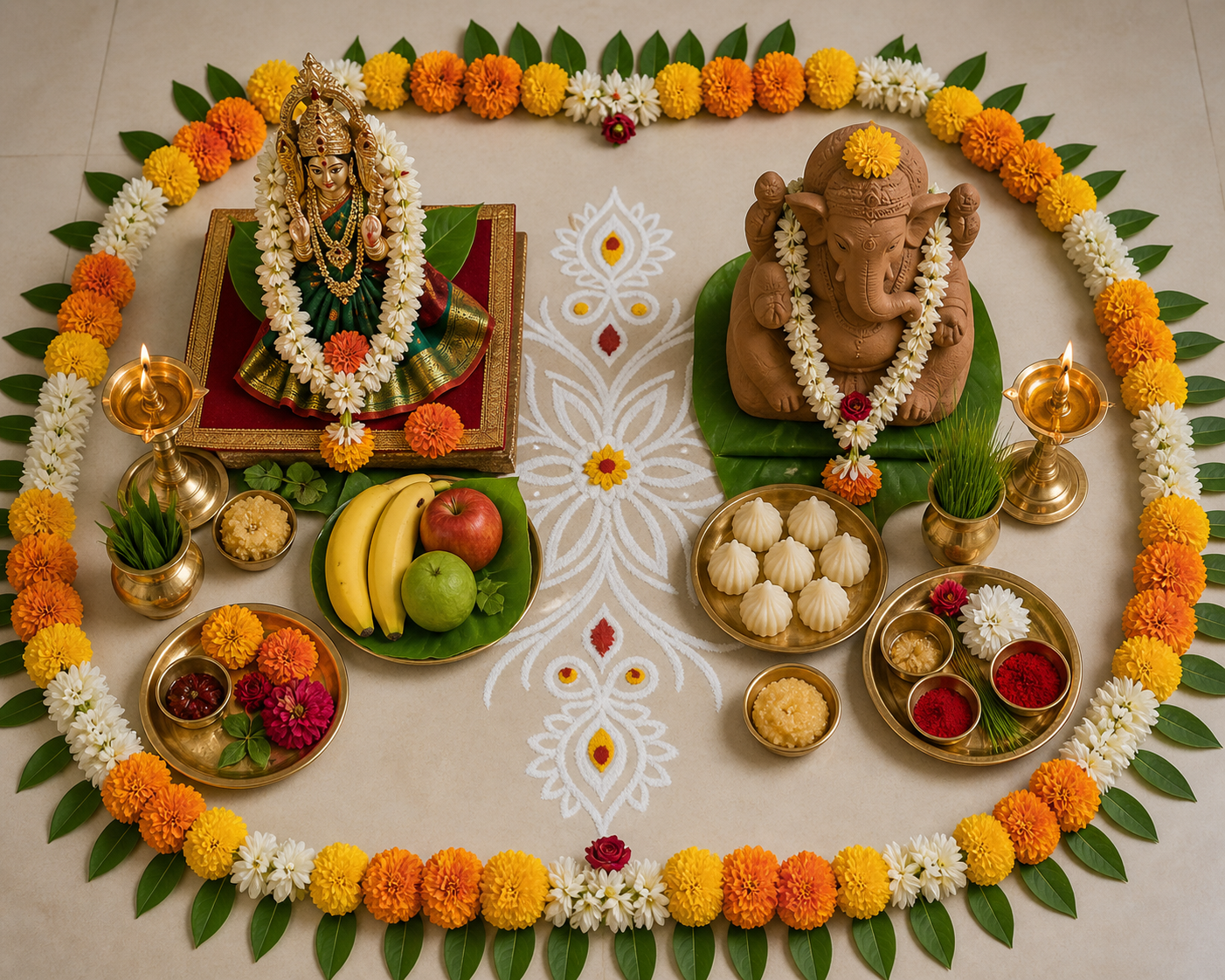
Swarna Gauri Habba is a Karnataka observance dedicated to Goddess Gauri, the consort of Shiva. Ganesh Chaturthi is centered on Ganesha and is observed as his birth celebration. Their proximity creates a devotional sequence, but it does not turn them into one interchangeable puja.
This distinction should shape your preparation. Keep separate lines in the household plan for the Gauri observance and the Ganesha observance, even if your local calculation ultimately places both within September 14. Record the sankalpa, method, materials, food rules, participants, and completion practice under the correct observance. A single undifferentiated “festival supplies” list is where inherited details are most easily lost.
The names themselves can be confusing when relatives use different regional vocabulary. Gauri and Gowri are spelling variants. “Habba” is the Kannada festival term, while “vrata” emphasizes the religious observance or vow. Ganesh Chaturthi and Vinayaka Chavithi name the Ganesha occasion in different linguistic settings. Ganesh Utsav or Ganeshotsav can refer to the broader festival period rather than a separate deity or unrelated celebration.
Use the names familiar to your family, but label shared messages clearly. “Gauri puja” and “Ganesh puja” are more useful schedule entries than a single “Gauri-Ganesha function,” especially when different participants, preparations, or timings apply.
Build one household plan before purchasing anything
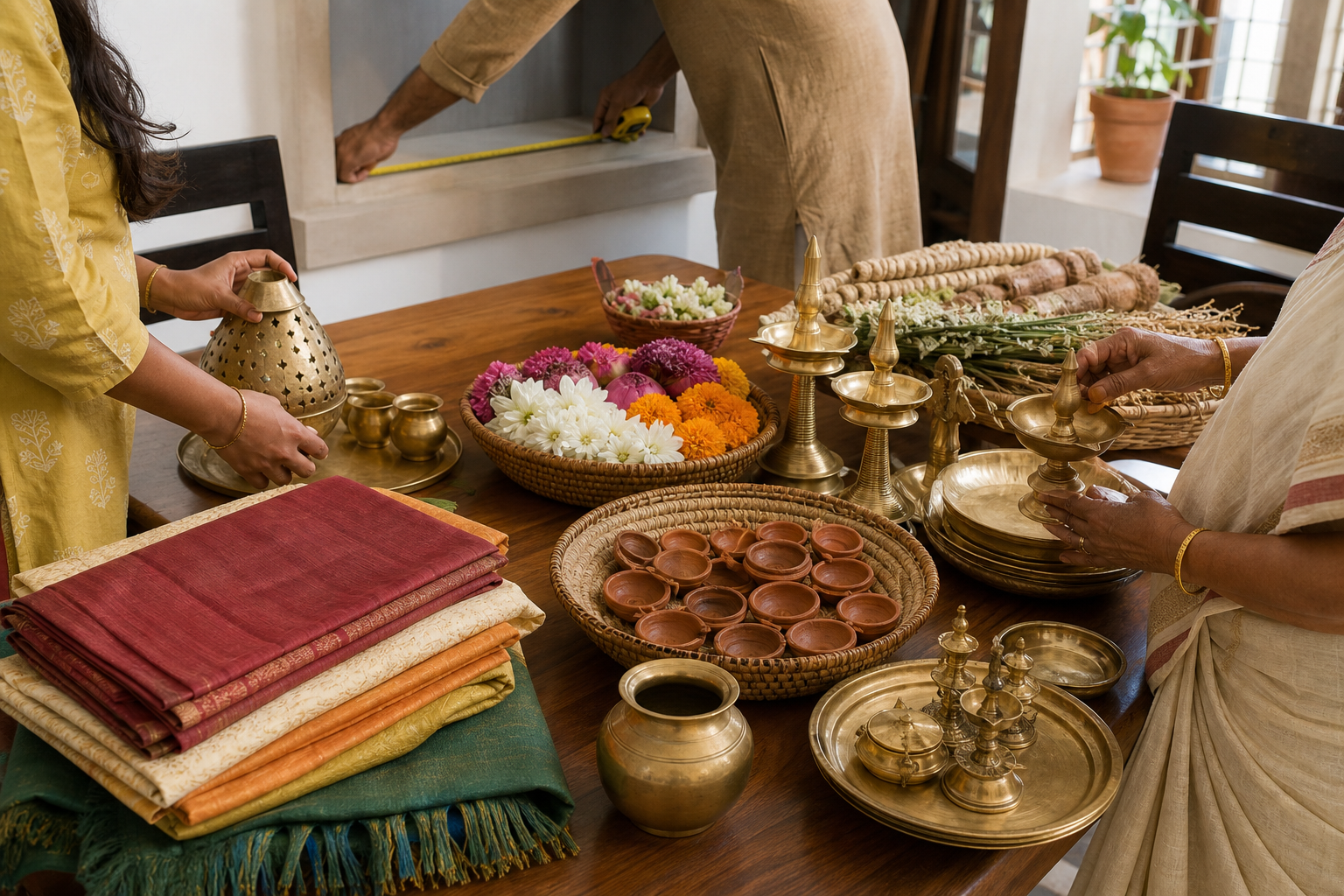
The fastest way to create confusion is to collect several generic checklists first and decide the method later. Reverse that order. Choose the practice you will follow, obtain its instructions from one trusted tradition-aware person or institution, and build the materials list from that method.
- Write your city, time zone, family tradition, and chosen panchanga at the top of the plan. This prevents a time copied from another location from being treated as local.
- Create separate entries for Gauri Vrata and Ganesh Chaturthi. Leave the exact clock times blank until they have been confirmed.
- Decide the scope: Gauri only, Ganesha only, both observances, or a longer Ganeshotsav continuing toward September 25. Do not assume every household must follow the entire festival window.
- Ask the person providing the ritual method for the matching materials and food requirements. This is more reliable than combining several regional lists into a hybrid practice.
- Assign practical responsibilities: preparation of the worship space, obtaining required items, preparing offerings according to household rules, welcoming participants, and handling the concluding observance.
- If your household or community concludes Ganesha worship with visarjan, confirm its date, venue, and local arrangements separately. The September 25 end of the wider festival period does not by itself determine the duration chosen by every home.
Share the finished plan in two layers. The family members performing the rites need the complete method and timings. Guests usually need only the arrival time, the observance they are joining, and any household expectations relevant to them. Keeping those two messages separate reduces last-minute questions without turning a sacred observance into an event-management exercise.
Key takeaways
- Swarna Gauri Vrata is placed on Monday, September 14, 2026.
- The 2026 Ganesh festival period is also listed as beginning on September 14 and concluding on September 25 with Anant Chaturdashi.
- Because Gauri Habba is customarily described as preceding Ganesh Chaturthi, confirm the intended sequence with the local panchanga and your family tradition.
- Do not announce an exact muhurta from the date alone. Location and the applicable treatment of Abhijit Muhurta, Varjyam, and Rahukaalam must be checked.
- Plan Gauri and Ganesha as connected but distinct observances, with separate ritual instructions and materials.
- Use September 25 only if your chosen home or community observance follows the longer Ganeshotsav period.
Mark September 14 now, hold September 25 if the extended observance is relevant, and send the location-specific confirmation question before circulating invitations. Once the date, sequence, and muhurta are settled, you can prepare from one coherent tradition instead of trying to reconcile conflicting instructions on the day of worship.
References
- Hindu Pad — Swarna Gowri Vrata 2026 | Swarna Gauri Habba in Karnataka
- Hindu Pad — Ganesh Chaturthi 2026 | Vinayaka Chavithi 2026 | Ganeshotsav
- Hindu Pad — Swarna Gowri Vratha 2026 Puja Time | Auspicious Muhurtha for Gauri Puja
