
If you’re trying to decide whether the Bhopal deliberations mark a real advance toward Hindu Rashtra, don’t begin with the slogan. Separate what the gathering established from what supporters still need to demonstrate. That distinction lets you take Hindu organisational work seriously without mistaking a declaration for a completed programme.
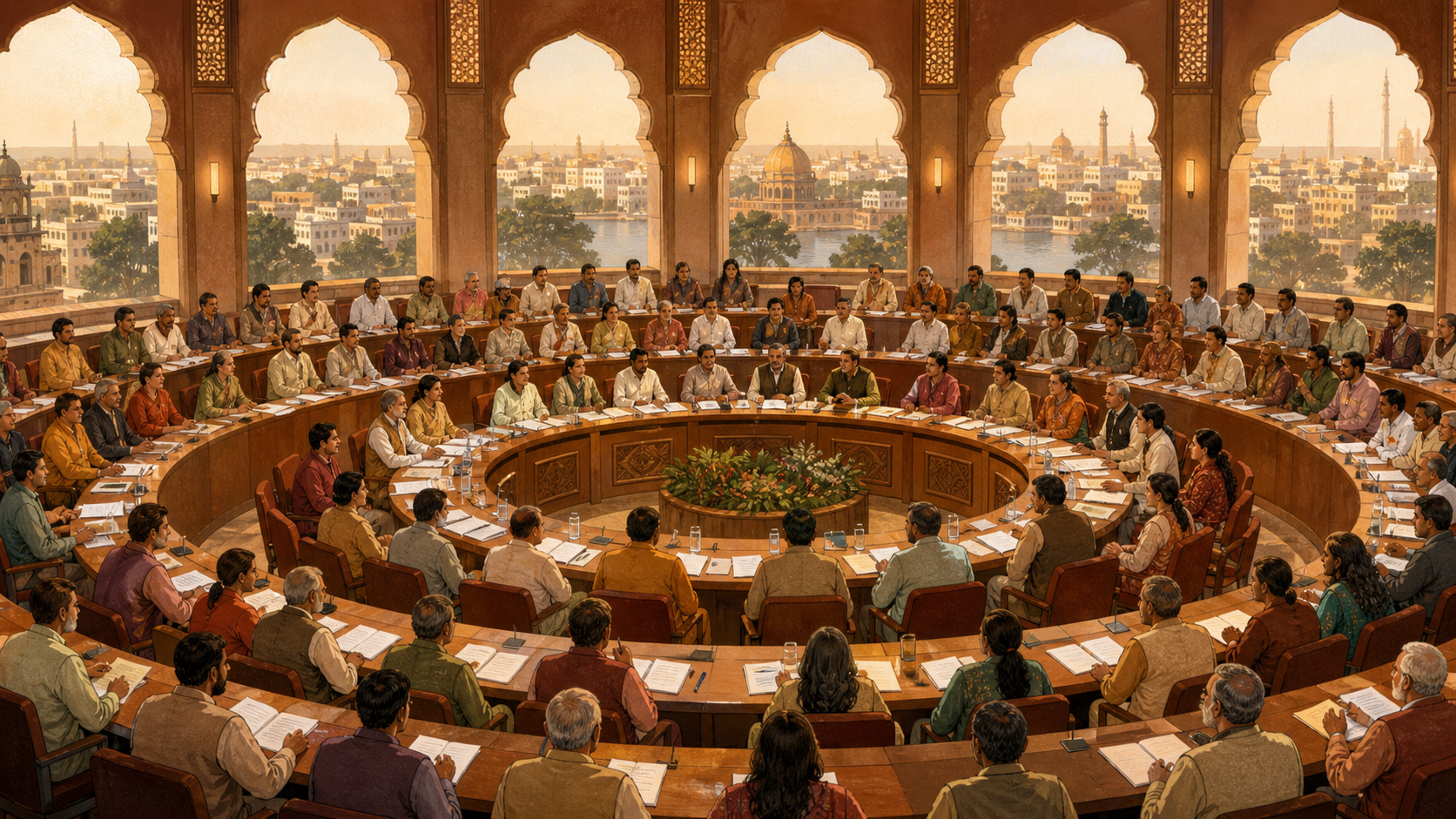
Representatives described as coming from more than 50 Hindu organisations met in Bhopal for the 11th Hindu Rashtra Vichar Manthan, made a collective pledge toward Hindu Rashtra, and discussed social issues. This is evidence of organised intent and continued coordination. By itself, however, it does not establish a shared definition, an implementation plan, a nationwide mandate, or measurable results.
What the Bhopal gathering establishes – and what it cannot
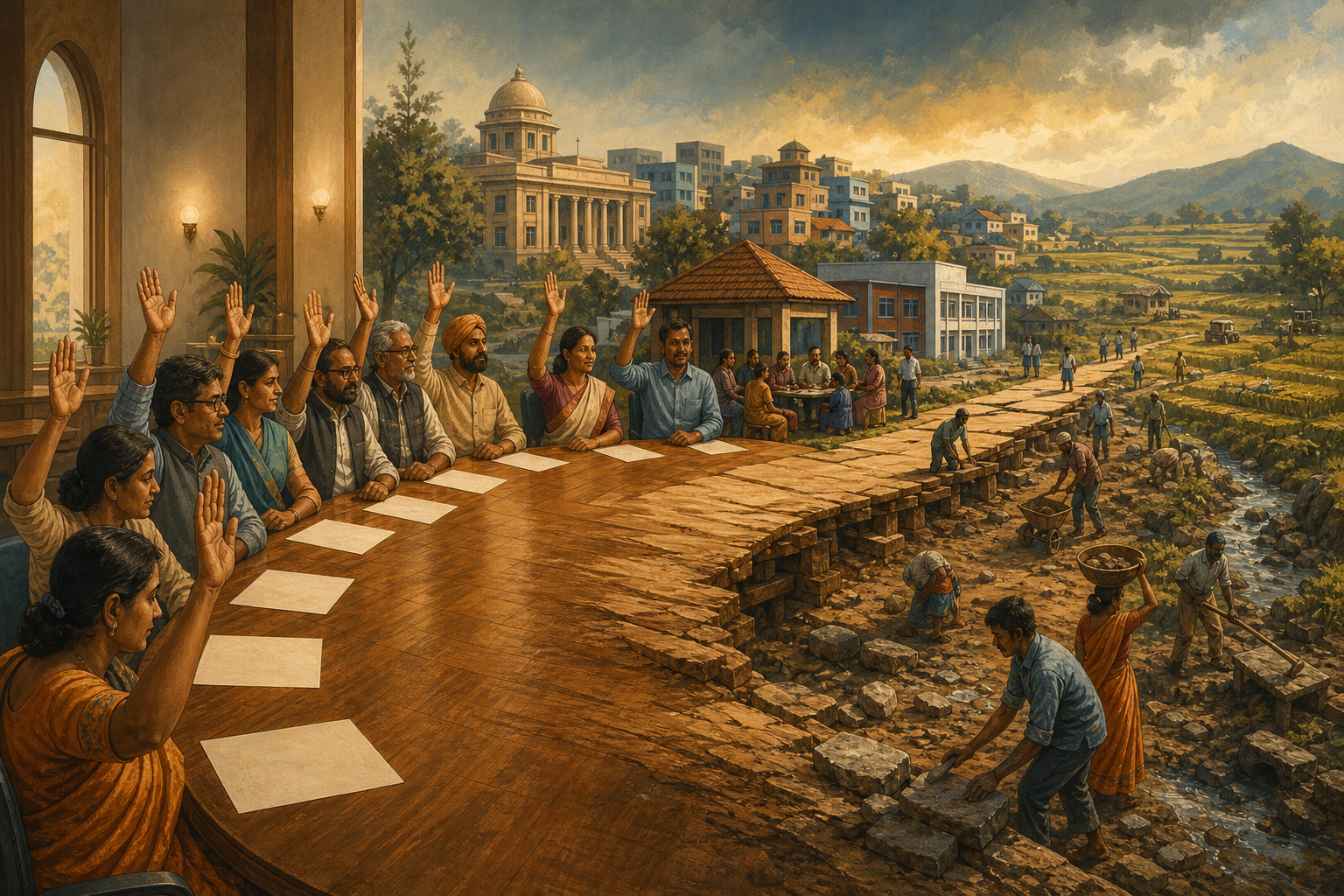
The meeting supports four careful conclusions.
- There is a recurring organisational forum. Calling this the 11th deliberation indicates continuity rather than a one-time reaction.
- The organisers can convene across organisational lines. Participation by representatives from more than 50 organisations points to network breadth, although an organisation count is not a membership count or a measure of electoral support.
- Participants were willing to affirm a common destination. A collective pledge reduces ambiguity about the gathering’s declared objective.
- The discussion was connected to social questions. This places Hindu Rashtra within an organisational and civic frame, not only a ceremonial or devotional one. The exact issues and agreed responses still matter.
None of those observations proves that every participating organisation defines Hindu Rashtra in the same way. They also do not tell you whether each representative had authority to bind an organisation, whether resources were committed, or whether the resolution created obligations after the meeting.
If you want to assess the event responsibly, ask for the exact resolution, the participating organisations, the decisions attached to particular social issues, and the mechanism for reviewing progress. These are not hostile demands. They are the basic records that distinguish collective aspiration from collective governance.
Why recurring organisational deliberation still matters

Movements rarely fail because nobody cares. They fail when conviction remains dispersed: organisations use different language, duplicate work, compete for attention, or leave decisions without an owner. A recurring forum can reduce that friction by building relationships, clarifying priorities, and creating a place where disagreements can be handled before they become public fractures.
The word “11th” therefore matters, but only in a limited way. Repetition can build institutional memory. It does not prove that the same organisations returned, that earlier resolutions were fulfilled, or that the forum has become more effective over time. To establish those things, readers need continuity records and outcome reports.
You can evaluate the strength of the coordination by placing its outputs on four levels:
- Symbolic: participants express support, make a pledge, or affirm a shared identity.
- Procedural: they adopt precise language, record decisions, and identify areas of agreement and disagreement.
- Operational: named organisations accept defined tasks, resources, and review points.
- Accountable: the forum later publishes what was attempted, what was completed, what failed, and what will change.
Bhopal clearly reached the symbolic level described in the public facts. You should look for evidence before assuming that it reached the operational or accountable levels. The stronger the claim made on behalf of the gathering, the stronger that evidence should be.
A Dharmic test for a Hindu Rashtra resolution

For a Dharmic audience, Hindu Rashtra cannot be judged only by how firmly the words are spoken. Dharma concerns duties, right conduct, restraint, and the ordering of power toward a just purpose. A proposal should therefore explain what becomes more dharmic in public life, who carries the corresponding duties, and what prevents authority from becoming arbitrary.
Use five questions when you encounter this or any later Hindu Rashtra resolution:
- What exactly is being proposed? A civilisational description, a programme of cultural renewal, a set of public-policy changes, and a change to state institutions are not interchangeable. If more than one is intended, the relationship between them should be stated.
- Which present problem would it solve? Each proposal should identify the specific cultural, educational, institutional, or social failure it addresses. A goal that cannot name its problem cannot be tested against an outcome.
- What duties and restraints follow? A serious Dharmic programme should specify the obligations of public institutions, Hindu organisations, leaders, and citizens. It should also explain the limits on coercion and the safeguards against misuse of power.
- How will dignity and plurality be protected? Hindu society contains many sampradayas, practices, languages, regions, and philosophical positions. A civilisational project gains credibility when it explains how internal plurality, freedom of worship, and equal civic dignity will operate in practice rather than leaving them to implication.
- What is the lawful path from resolution to action? The answer may involve education, cultural work, social service, institutional reform, or democratic advocacy. Whatever the path, it should be peaceful, lawful, public, and open to correction.
These questions do not require abandoning the ideal. They require translating it. If two organisations use the same phrase but give incompatible answers, their unity is rhetorical rather than operational. Discovering that difference early is healthier than concealing it until implementation.
What to watch for after Bhopal
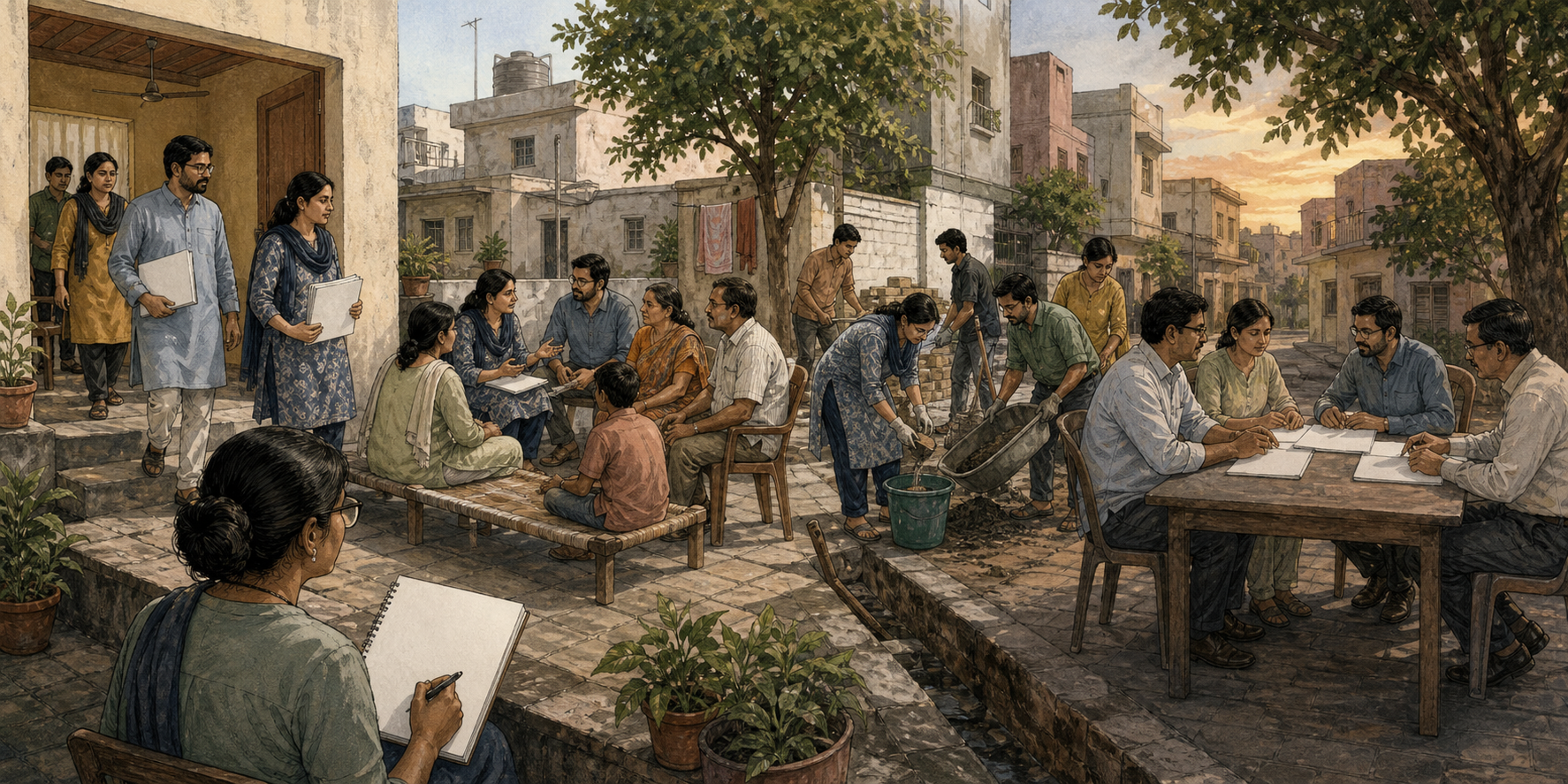
The most revealing evidence will come after the gathering. Another photograph, slogan, or conference count would show continued visibility. It would not show whether the deliberation changed conduct. Look instead for the following public signals:
- The resolution’s precise wording. This allows supporters and critics to respond to what was actually adopted rather than to their preferred or feared interpretation.
- Clear organisational ownership. A task assigned to a named body is more meaningful than a general appeal addressed to everyone.
- Defined work connected to the social issues discussed. The public should be able to see which problem was selected, what intervention is planned, and what would count as progress.
- A review mechanism. A future check-in, progress record, or revised decision shows that the pledge has consequences beyond the meeting.
- Transparent treatment of disagreement. Durable coordination does not require pretending that every Hindu organisation has identical priorities. It requires a method for identifying common ground without suppressing principled differences.
- Evidence of service as well as advocacy. Where the resolution addresses a social problem, practical work among affected communities will reveal more about capacity than declarations alone.
Do not treat the absence of one of these signals as automatic proof of bad faith. Treat it as an unresolved question. Ask for the information, record the answer, and revise your judgment when new evidence appears.
Keep one further distinction in view: coordination among organisations and consent among the wider Hindu public are different achievements. The first can help build the second, but it cannot substitute for it. Claims of broad representation require broader evidence than the number of organisations present at a closed deliberative gathering.
Key takeaways
- The Bhopal meeting is a meaningful sign of recurring coordination and declared intent among participating Hindu organisations.
- A collective pledge does not by itself supply a common definition, implementation authority, resources, or public mandate.
- The exact resolution and the commitments assigned to named organisations are the most important next records to obtain.
- A Dharmic political ideal should be evaluated through duties, restraints, plurality, lawful methods, and observable public benefit.
- The decisive question is not whether another declaration appears, but whether participants publish and review concrete work arising from the deliberation.
If you support Hindu civilisational renewal, your useful next step is straightforward: seek the resolution’s full wording, identify who accepted responsibility for each commitment, and watch for the next public account of progress. Scrutiny conducted in good faith does not weaken a Dharmic project. It helps ensure that organisation, power, and public claims remain answerable to dharma.
References

Leave a Reply
You must be logged in to post a comment.