
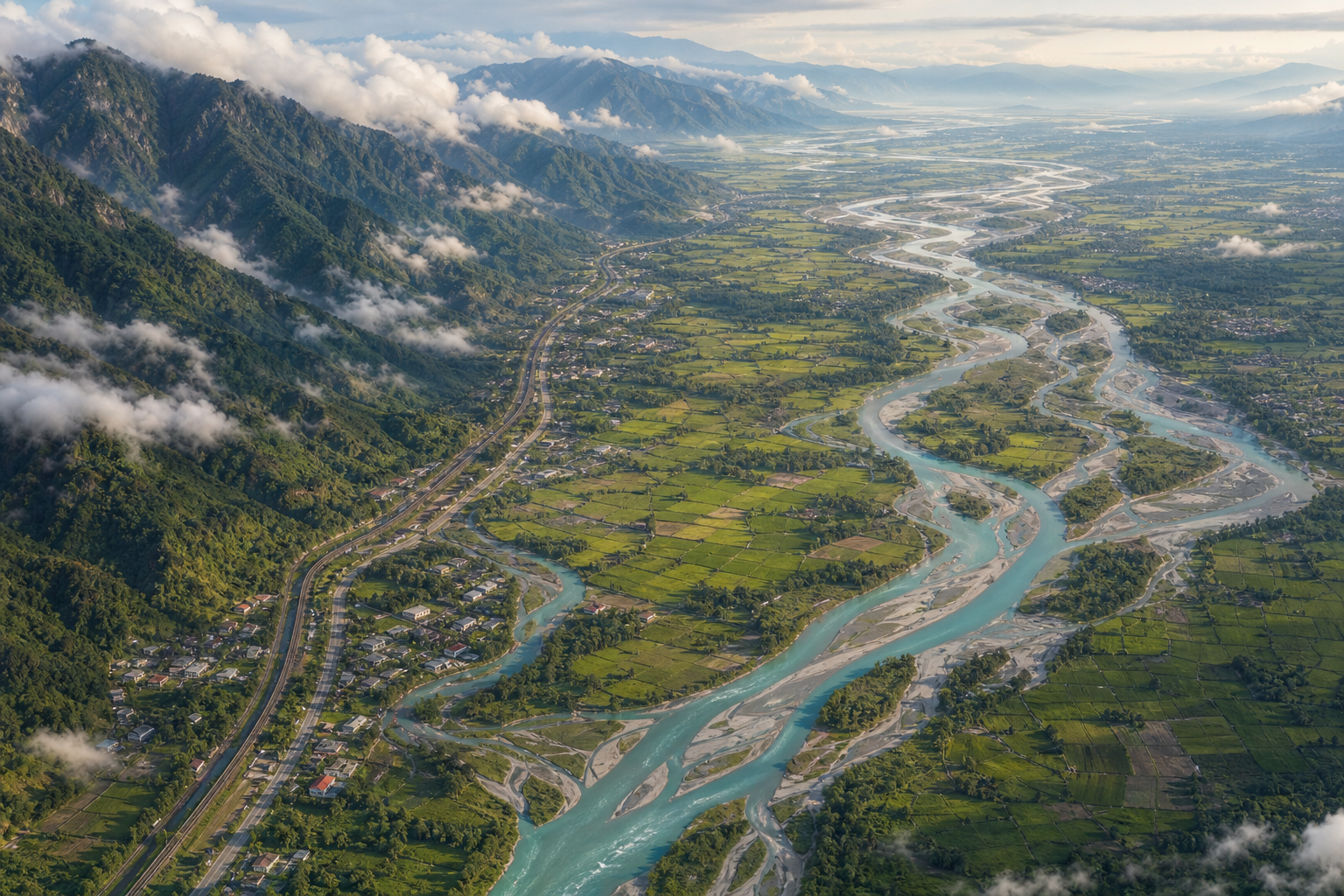
If you are trying to decide whether a Teesta agreement would make Bharat safer—or whether concern about the Siliguri Corridor is being used to justify any water compromise—you need a cleaner frame. The river and the corridor belong in the same strategic discussion, but they are not interchangeable bargaining chips.
A Teesta settlement cannot widen the Chicken’s Neck, and anxiety about the corridor cannot determine a fair water arrangement. The connection is political: the way Bharat and Bangladesh manage a shared river affects the trust surrounding Bharat’s most concentrated land connection to the Northeast. You should read the two issues together without collapsing them into a single transaction.
The connection runs through trust, not geography

The Siliguri Corridor is only about 20–22 kilometres wide at its narrowest point. It is the sole land bridge between the Indian mainland and the eight northeastern states. Land-based military movement, railway freight and ordinary commerce must all pass through this concentrated space.
The Teesta presents a different kind of dependence. Its flows affect irrigation in Bangladesh’s Rangpur region and water availability in North Bengal. That makes water-sharing a question of livelihoods before it becomes a question of diplomatic leverage. Treating it only as a security file would erase the people whose fields and local economies depend on predictable water.
The strategic connection appears in three stages. A workable river arrangement creates predictable conduct. Predictable conduct supports wider bilateral trust. That trust improves the political environment around a geographic bottleneck that Bharat cannot relocate. An unresolved or poorly implemented arrangement can move the same chain in the opposite direction.
This does not mean Bangladesh controls the Siliguri Corridor. Nor does it mean that signing a water agreement would guarantee Bangladesh’s alignment during a future crisis. The corridor lies inside Bharat; the Teesta is a shared river. Their legal and physical realities remain distinct even when their political consequences overlap.
Use a two-question test whenever a proposal joins the two subjects. First, is the water arrangement fair, seasonal and workable for the affected regions? Second, does the wider diplomacy make bilateral conduct more predictable without turning Bharat’s security into a promise another government must keep? If either answer is unclear, the strategic case is incomplete.
Key takeaways
- The Siliguri Corridor is a fixed geographic vulnerability; the political environment around it can still be improved.
- The Teesta dispute concerns seasonal water and livelihoods in Rangpur and North Bengal, not merely an abstract bilateral allocation.
- A sound water settlement can build trust, but it cannot purchase permanent strategic alignment.
- Bharat must strengthen corridor resilience regardless of how friendly bilateral relations appear at a particular moment.
- Judge any announced breakthrough by its measurement rules, shortage procedures, review mechanism and implementation duties—not by the warmth of the communiqué.
History separates permanent geography from changeable politics
Four historical moments explain the present problem. Partition left Bharat with the narrow Siliguri land bridge. The 1962 war with China exposed the military significance of that concentration. Bangladesh’s liberation in 1971 replaced an openly hostile eastern frontier with a friendly neighbour. The 2015 Land Boundary Agreement then showed that two governments could settle an exceptionally complicated inherited border problem through negotiation.
The useful lesson is not that history has removed the corridor’s vulnerability. It has not. The lesson is that geography and the strategic environment do not change in the same way. The corridor’s width is fixed; relations with Bangladesh can become cooperative, indifferent or hostile. Institutions can make those political changes less abrupt and less damaging, but they cannot abolish them.
Keep three separate ledgers when you assess Bharat-Bangladesh policy:
- Fixed geography: the corridor remains narrow and essential regardless of who governs either country.
- Negotiated institutions: border arrangements, water procedures and crisis contacts can reduce uncertainty if they contain enforceable duties.
- Political signals: speeches, visits and friendly declarations can indicate intent, but they are easier to reverse than institutions.
This separation catches a common error. A diplomatic success may improve the institutional or political ledger without changing the geographic one. When someone claims that a single deal has solved the Chicken’s Neck problem, ask which ledger actually changed. If the answer is only political sentiment, the claim is too large.
What a credible Teesta settlement must contain
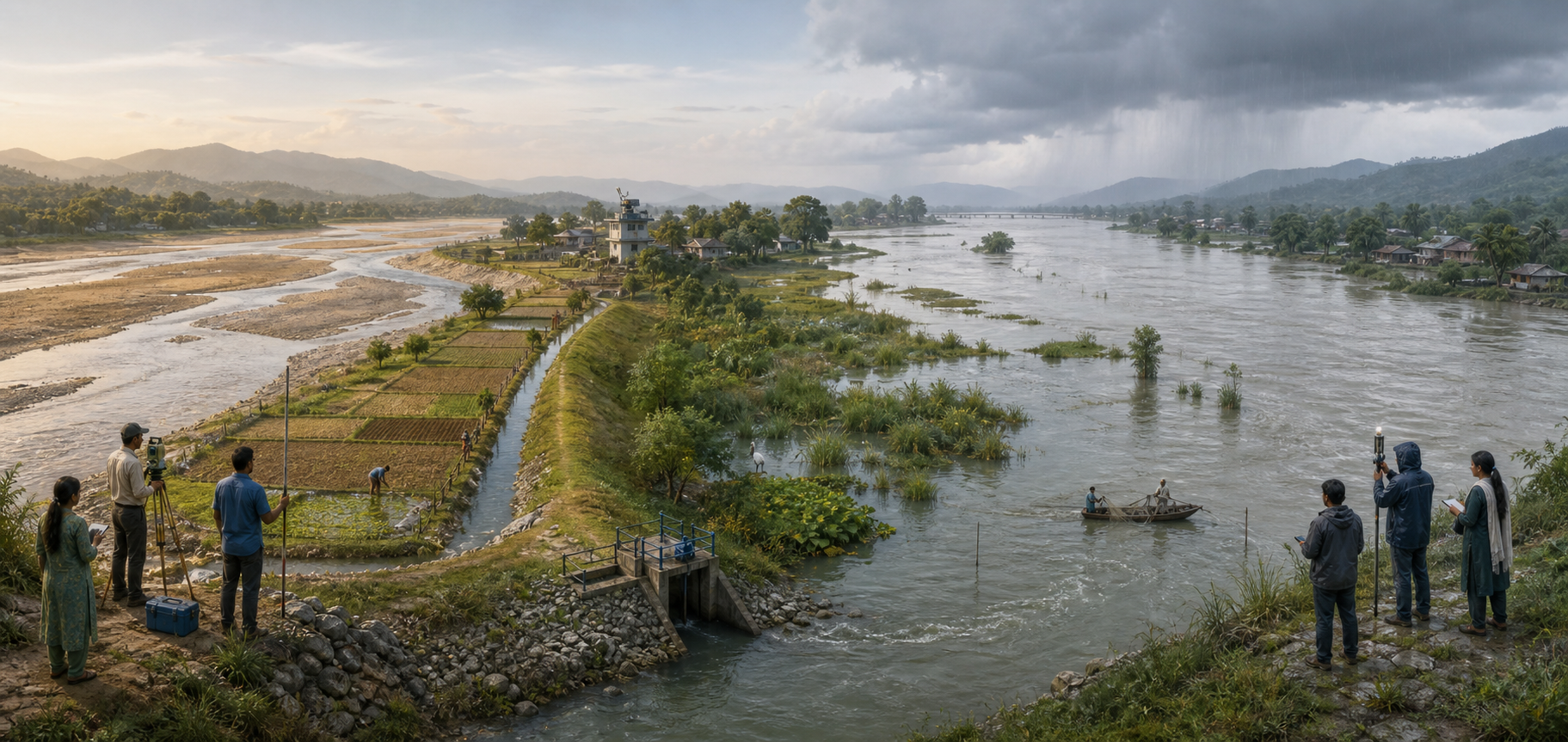
A headline percentage is not enough to judge a river settlement. Annual numbers can hide the period when water is scarcest and competition is most severe. Because the dispute concerns seasonal flows into North Bengal and irrigation needs in Rangpur, the operating rules matter as much as the announced share.
Before treating any future Teesta announcement as a breakthrough, look for six elements:
- Season-specific obligations. The arrangement should distinguish periods of relative abundance from periods of scarcity. An annual average cannot tell farmers what will happen during a low-flow period.
- A shared measurement system. The parties need to know where flow is measured, how often readings are exchanged, who can verify them and how an error is corrected. Without common facts, every shortage can become a political accusation.
- A low-flow protocol. The difficult test is not normal operation but a season in which the expected water is unavailable. The response should be agreed before that moment arrives.
- Visible treatment of both affected regions. Rangpur’s irrigation needs and North Bengal’s seasonal concerns should appear as real operating constraints. A formula that makes one side politically invisible will remain vulnerable even if diplomats sign it.
- An implementation and review mechanism. The agreement should identify who meets, what information must be supplied, how disagreements escalate and when operating rules may be reviewed. A promise without a process merely postpones the dispute.
- A firewall against crude strategic barter. Water rules should rest on hydrology, fairness and reciprocal obligations. Security cooperation should rest on its own reciprocal commitments. Political linkage is unavoidable, but a literal exchange of water for strategic reassurance would be brittle and difficult to defend in either country.
When you read a communiqué, ignore adjectives such as historic, comprehensive or transformative until you find the operating verbs. Who measures? Who shares the data? Who acts when flows fall? Who reviews the rules? If those duties are absent, the announcement may improve the atmosphere without resolving the practical dispute.
This standard also protects Bharat from a false choice. Fair treatment of Bangladesh is not strategic weakness, and protection of North Bengal is not obstruction. A durable settlement must be credible to constituencies on both sides because compliance ultimately depends on more than the two delegations that sign it.
Judge corridor policy by resilience, not alarmist language
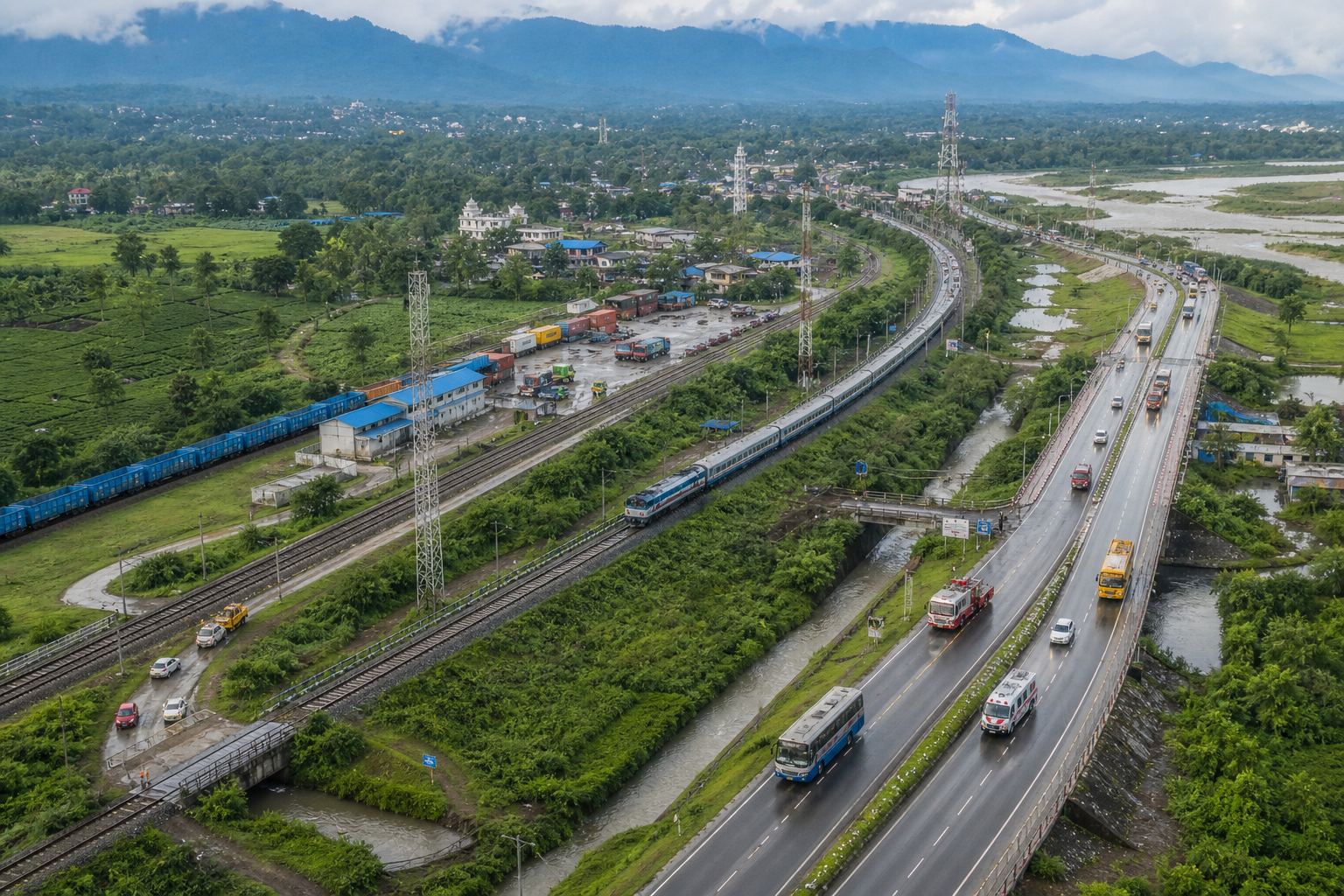
The corridor’s role as the only land bridge to the Northeast makes complacency irrational. It also makes theatrical panic unhelpful. Calling every disagreement with Bangladesh an immediate threat confuses political friction with an attack. Assuming that a friendly government has permanently neutralised the vulnerability makes the opposite mistake.
A serious corridor policy has more than one layer. It protects the existing connection, reduces the consequences of disruption, sustains essential transport and communications, and builds dependable diplomatic routines with neighbouring Bangladesh. The practical measure is simple: if the corridor were constrained, how many essential functions would fail at once, and how quickly could they continue through prepared alternatives?
Diplomacy belongs inside that resilience plan, but it cannot substitute for domestic preparation. Bangladesh can make Bharat’s eastern strategic environment more cooperative. It cannot relieve New Delhi of the duty to plan for changes in government, public mood or regional pressure. Bharat should therefore deepen cooperation when interests align while maintaining capabilities that do not depend on permanent goodwill.
A Dharmic approach to statecraft is useful here precisely because it joins duty with restraint. Rajadharma requires the state to protect its people and territorial continuity. It does not require the dismissal of a neighbour’s legitimate needs. Reciprocity without humiliation, fairness without strategic naivety, and preparation without manufactured hostility form a firmer basis for relations than either appeasement or permanent suspicion.
Apply five questions to the next major statement on Teesta or the Siliguri Corridor:
- Does it state separately what Bharat seeks on water, corridor resilience and bilateral stability?
- Which commitments can be measured or verified after the announcement?
- What part of the plan still works if the political mood between the two capitals deteriorates?
- Does it recognise Bangladesh’s legitimate interests without outsourcing Bharat’s security to Bangladeshi goodwill?
- Does it improve life and continuity for people in North Bengal and the Northeast, or does it mainly produce reassuring language in the capitals?
Watch especially for two forms of manipulation. The first turns every Bangladeshi water demand into a security threat. The second treats goodwill as a permanent guarantee. One makes negotiation needlessly hostile; the other mistakes a favourable moment for a settled strategic condition.
Your most useful discipline is to reject the demand for a single pro- or anti-Bangladesh verdict. Ask whether the water rules are fair and operable, whether implementation can be verified, and whether corridor risk is being reduced on its own merits. Bharat should negotiate the Teesta with fairness and firmness while strengthening Siliguri resilience regardless of the diplomatic weather. That is how goodwill becomes an advantage without becoming a dependency.
References
