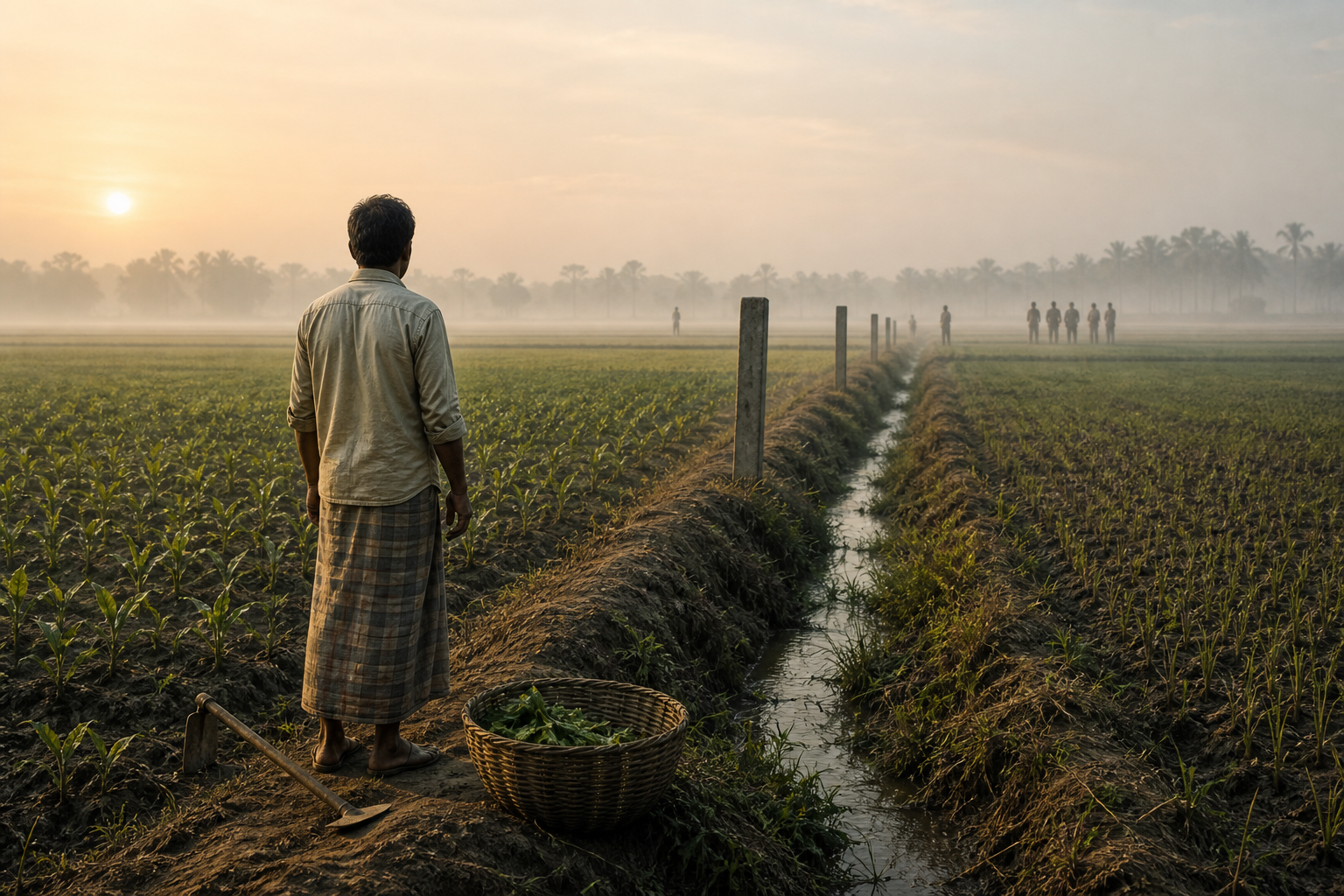
If you are trying to judge Dipankar Gope’s detention through competing national claims, start with the question that official paperwork can obscure: did he cross the border voluntarily, or was he taken across by force? That fact separates an ordinary illegal-entry case from the detention of a civilian who was allegedly abducted from his own country.
The answer matters beyond one family. Indian farmers cultivate land close to a frontier where a field, a fence and the legal boundary are not always understood as the same thing. If a civilian can be seized and used to influence an unrelated detention, every farmer working there becomes a potential instrument of pressure.
The sequence must be kept clear
Confusion benefits coercion. Gope’s case and the detention of Bangladeshi national Tamiz Uddin involve different people, different alleged acts and different legal questions. They should not be collapsed into a single negotiation.
| Point in the sequence | What reportedly happened | The question that must be answered |
|---|---|---|
| 4 August | The BSF detained Tamiz Uddin after he allegedly entered India by cutting through the border fence. He was also suspected of links to cross-border smuggling. | What evidence supports his detention, and how should his case proceed under Indian law? |
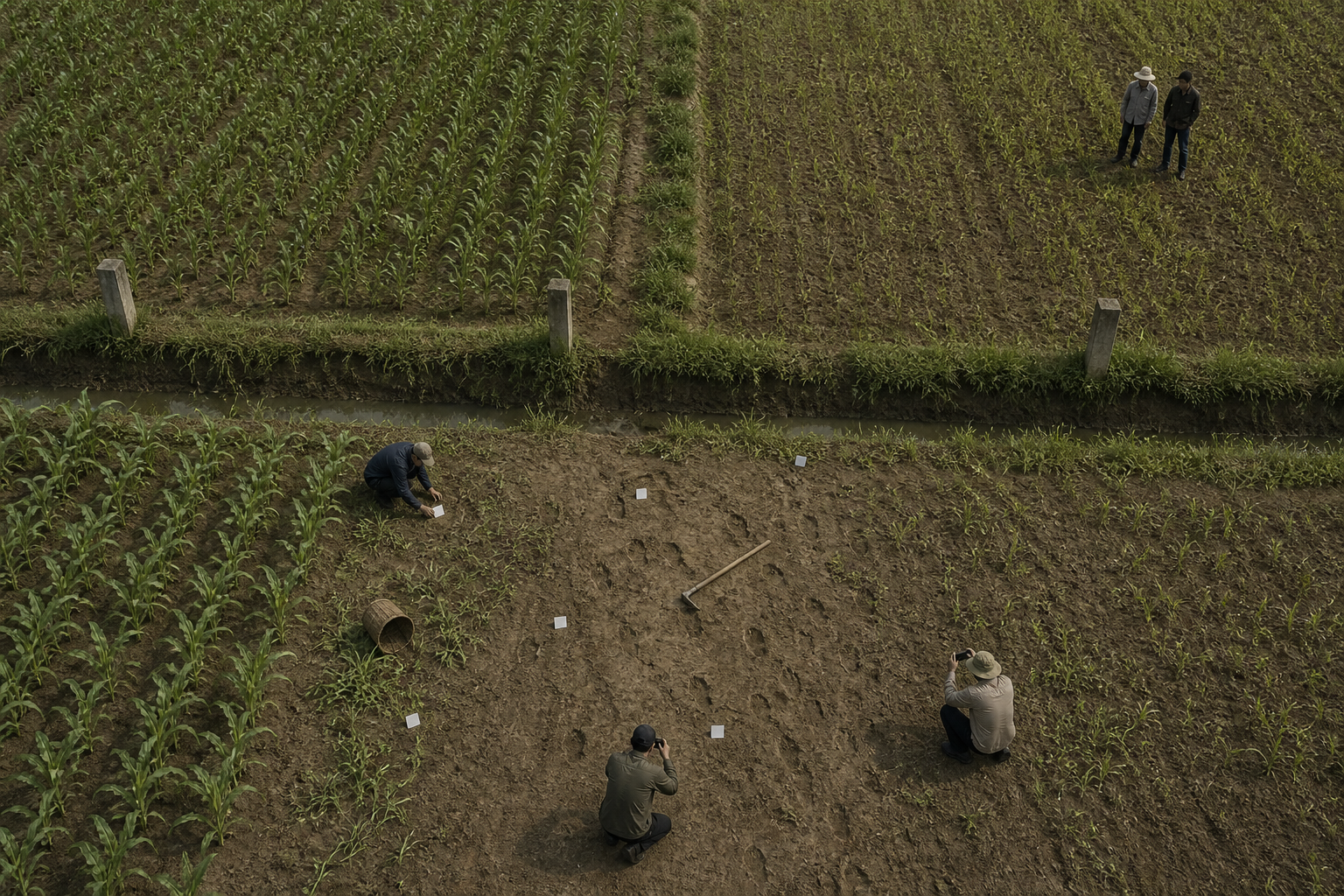
| 7 August | Gope, a 35-year-old tea farmer, was working near Gate No. 30 of the Chaulhati Border Outpost in Jalpaiguri district. A group of roughly 15-20 men reportedly crossed into Indian territory, overpowered him and took him into Bangladesh’s Panchagarh district. | Where exactly was Gope seized, and what evidence records how he crossed the boundary? |
| 8 August | Gope’s father appealed for his safe return. | What assistance and information were provided to the family? |
| After the seizure | Gope was handed to Bangladeshi police and charged with illegal entry. Three BSF-BGB flag meetings reportedly ended without a resolution. | Can an illegal-entry charge stand without first determining whether the accused was carried across by force? |
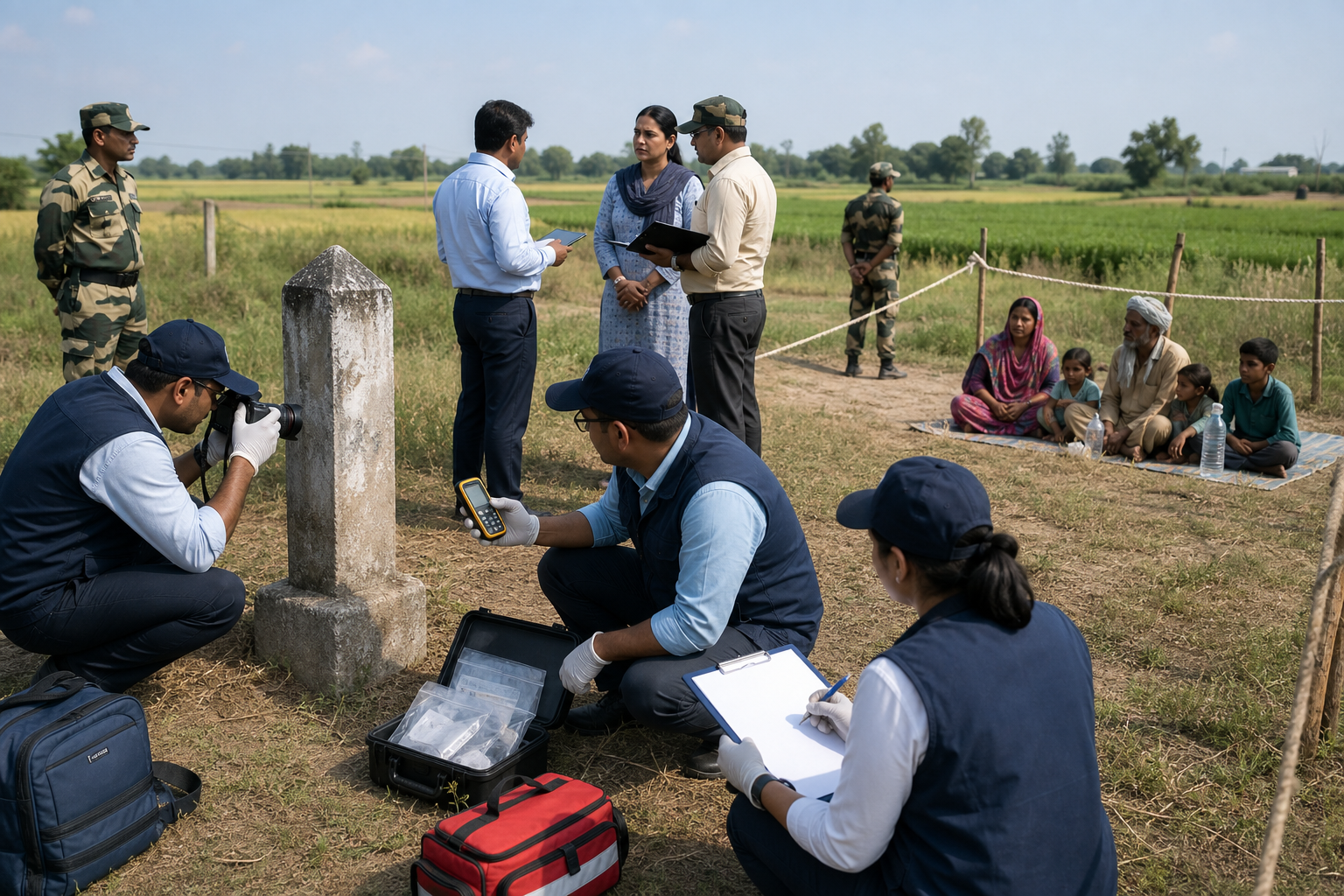
The BSF’s position is that Gope was taken from Indian territory. A conclusive finding should be built from boundary surveys, patrol records, witness statements, available video and its metadata, and the location of the field where he was working. A strong Indian case is made stronger, not weaker, by a precise evidentiary record.
The known video requires the same discipline. Gope is seen stating that his release depends on India releasing Tamiz Uddin, while BGB personnel and local villagers are visible. Their presence in the footage does not by itself prove that BGB personnel participated in the original seizure. It does, however, make the treatment and protection of the Indian civilian a matter that Bangladeshi authorities cannot dismiss as a purely private village dispute.
Why the alleged exchange condition changes the case
Governments routinely disagree over boundary incidents, evidence and the handling of detainees. The dangerous step comes when the freedom of one person is made conditional on the release of another person from a separate proceeding.
If Gope’s return was conditioned on Tamiz Uddin’s release, the mechanism is hostage-style coercion regardless of the label later placed on Gope’s custody. The defining feature is substitution: a civilian who is not accused of Tamiz Uddin’s alleged act becomes leverage in Tamiz Uddin’s case.
- Tamiz Uddin’s detention should be reviewed on the evidence against Tamiz Uddin, under Indian law.
- Gope’s case should turn on where he was seized, whether he crossed voluntarily and how Bangladeshi authorities handled him after gaining custody.
- Neither decision should be traded for the other. An exchange would reward the very conduct India needs to deter.
This concern is not entirely hypothetical. Sachin Das and Narottam Biswas were reportedly taken by Bangladeshi villagers while harvesting jute on the Indian side in another episode linked to a demand for the release of Bangladeshi detainee Abdul Mannan. Two reported episodes do not establish the full frequency or scale of the practice. They are enough to justify an urgent effort to prevent repetition.
Precision also matters morally. Responsibility belongs to the people who carried out an abduction, if the allegation is substantiated, and to any authority that enabled, ignored or failed to correct it. It does not belong collectively to Bangladeshis. A Dharmic public voice should be firm without abandoning truth, proportion or the distinction between culpable actors and an entire population.
Rajadharma requires law without bargaining
Rajadharma in this setting is not loud rhetoric. It is the disciplined duty of the state to protect an innocent citizen, preserve the integrity of lawful proceedings and prevent frontier communities from becoming expendable.
India’s first demand should be Gope’s safe and unconditional return, independent of the disposition of Tamiz Uddin’s case. Releasing one detainee as the price of recovering another citizen would weaken Indian law and announce that taking civilians can produce results. Tamiz Uddin must receive whatever process Indian law requires, but that process should not be negotiated through pressure on an unrelated farmer.
The failure of three flag meetings indicates that the routine border mechanism did not produce a breakthrough. That is the point at which diplomatic escalation, legal assistance and direct engagement with Dhaka become necessary. Gope’s family and the Confederation of Indian Small Tea Growers’ Associations sought central intervention by writing to Union Home Minister Amit Shah.
If you contact an elected representative or the Union government through an official channel, ask for answers that can be checked rather than a general assurance. Five questions matter:
<!– wp:list {