

If you are trying to decide whether a Tibetan Buddhist homecoming is a religious event or a geopolitical signal, do not choose between those labels. In the Himalayas, spiritual authority, physical access and state power can operate through the same ceremony while still remaining distinct.
That distinction is essential to understanding the Karmapa question. Bharat has a legitimate security interest in what happens around an influential Tibetan lineage, but it will lose ground if it treats that lineage merely as a strategic asset. The practical objective should be to preserve religious agency, make lawful access predictable and prevent political control from becoming the default route to institutional continuity.
Why succession begins long before a successor is chosen
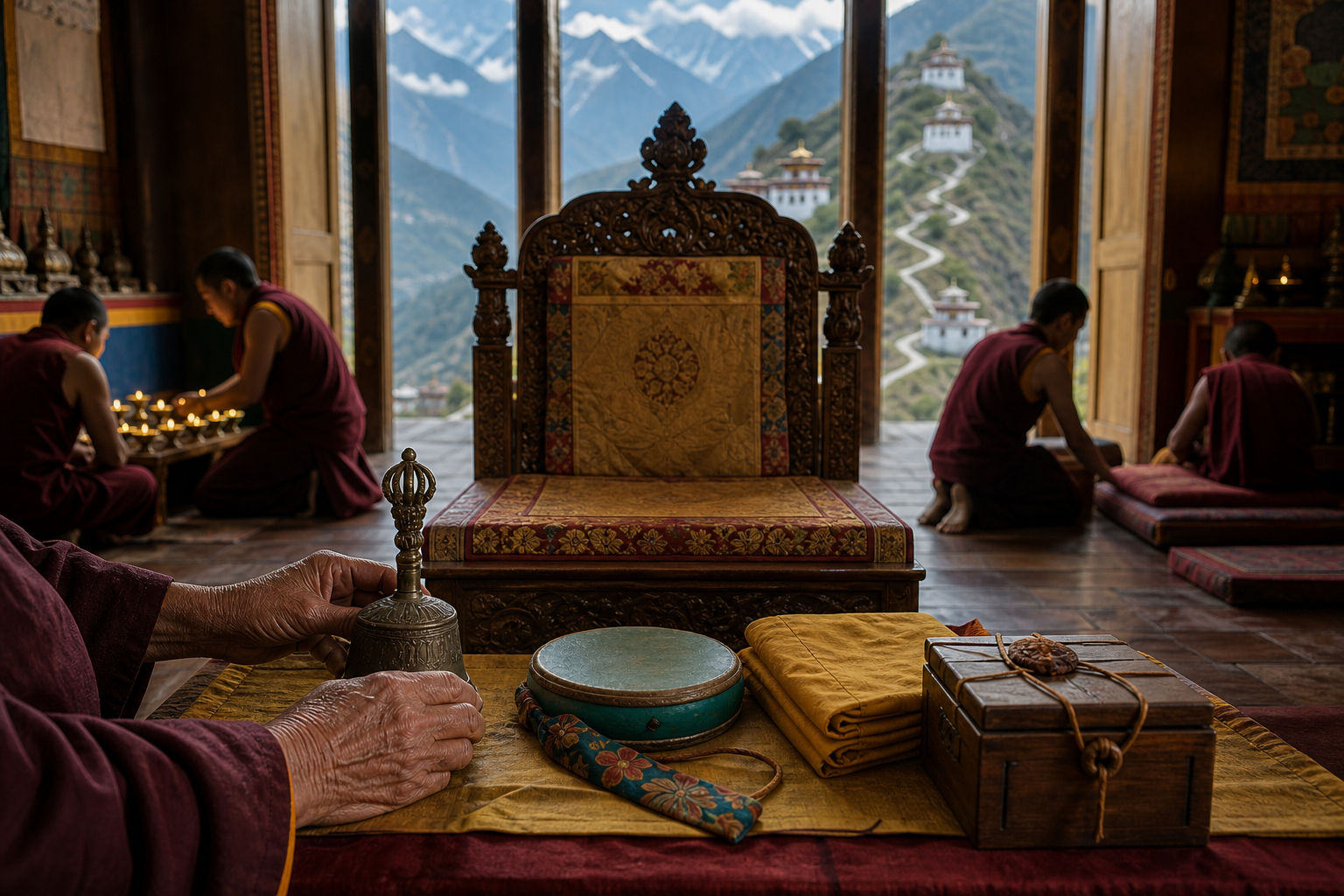
The Karmapa is a leading office of the Karma Kagyu tradition of Tibetan Buddhism. A reincarnate lineage does not pass from one officeholder to another through a government appointment. Its continuity depends on recognition by respected religious figures, acceptance within monastic institutions, confidence among practitioners and the ability of the recognised figure to teach and maintain relationships.
A state can influence nearly every practical condition around that process. It can permit or deny travel, determine who may enter a monastery, regulate public gatherings, shape media visibility and decide which religious figures can meet one another. What it cannot manufacture by decree is durable spiritual legitimacy. That belongs to the religious community.
This gives you a better way to understand succession. Do not look only for a formal announcement made after the death of a lineage holder. Look at the preceding environment: who can travel, who can teach, which senior masters retain contact with one another, where young monks are educated, which institutions remain active and whose public presence becomes normal. Those conditions shape the field in which a future recognition will be received.
Nothing in the visible developments around the Karmapa establishes that another recognition process is imminent. Treating every monastery visit as the beginning of an immediate succession would be reckless. The strategic issue is the ecosystem being built before any decisive moment arrives.
What Tai Situ Rinpoche’s Dege reception does and does not prove
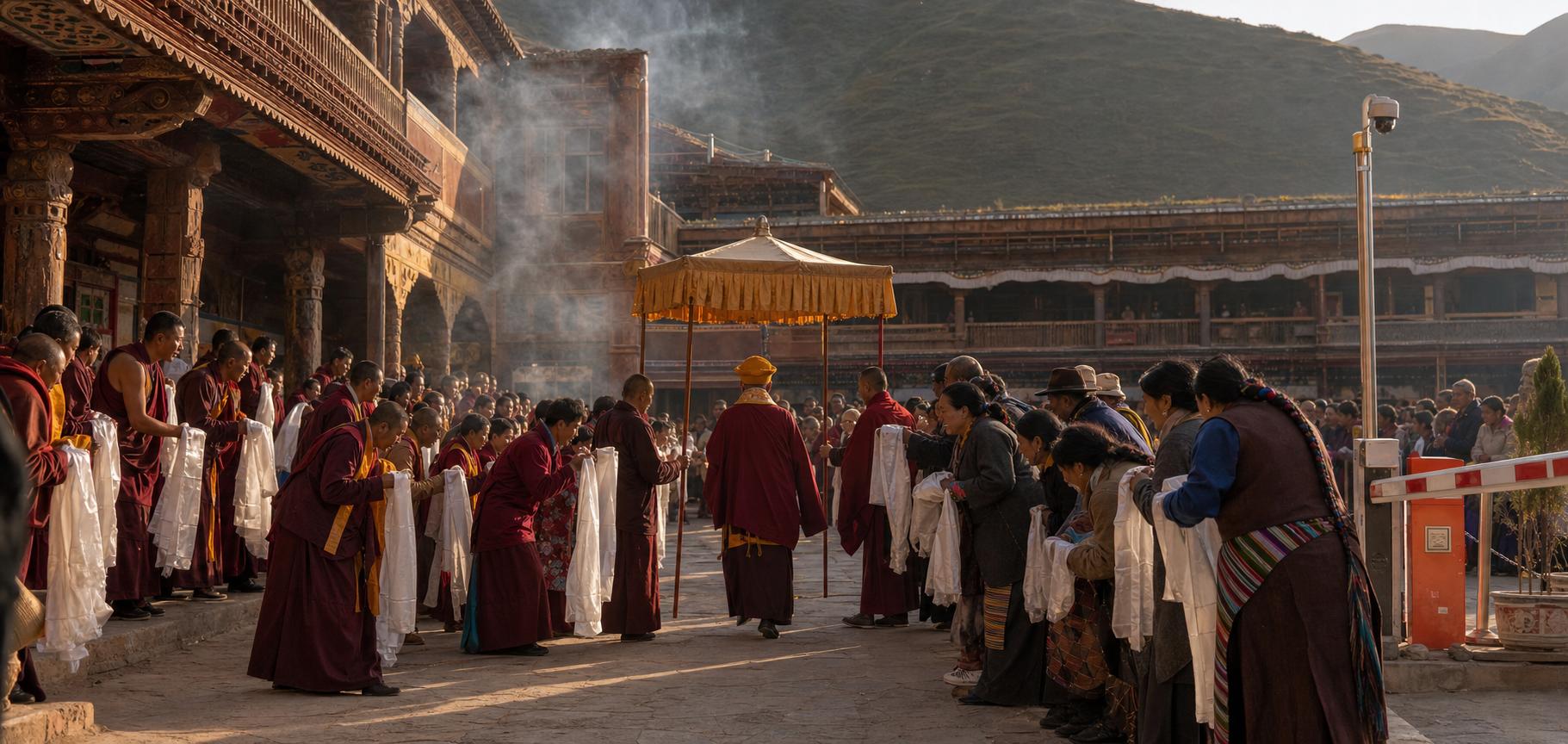
Tai Situ Rinpoche recently returned to his hometown in Dege County in eastern Tibet, where thousands of Tibetans reportedly welcomed him and images of the reception circulated widely across Tibet and China. The high-level airport treatment makes official permission and facilitation a reasonable inference. A public reception of this scale could not be read as an ordinary private visit.
His identity makes the event especially consequential. Tai Situ Rinpoche holds immense authority in the Karma Kagyu tradition, is close to the 14th Dalai Lama and has been a principal teacher and spiritual mentor of Ogyen Trinley Dorje, recognised by his followers as the 17th Karmapa. He also played a pivotal role in that recognition. Access granted to a religious figure with this standing is therefore more significant than access granted to a ceremonial visitor.
Yet the images do not prove that Tai Situ Rinpoche has adopted Beijing’s political objectives. They do not tell you what conditions surrounded the visit, which choices were freely available or how senior Karma Kagyu figures interpret its long-term meaning. Respect from Tibetan devotees is not evidence of support for Chinese state policy. Official hospitality is not evidence that the guest has transferred religious allegiance to the host government.
| Visible signal | What it reasonably indicates | What it does not establish |
|---|---|---|
| Large Tibetan crowds | Tai Situ Rinpoche retains substantial devotional standing | Uniform political opinion among Tibetan Buddhists |
| VIP airport treatment | Authorities permitted or facilitated a high-profile reception | Religious endorsement of Chinese policy |
| Wide online circulation | The homecoming gained strong narrative visibility | Whether circulation was wholly organic, encouraged or selectively amplified |
| Access to his homeland | Beijing can grant a form of access that matters personally and institutionally | Ownership of Karma Kagyu doctrine or succession authority |
The disciplined reading is therefore neither naive nor alarmist. Beijing has demonstrated that it can combine administrative permission, public spectacle and Tibetan devotion in one powerful image. That creates strategic optionality. It does not settle the religious question.
Three layers that Bharat must keep separate
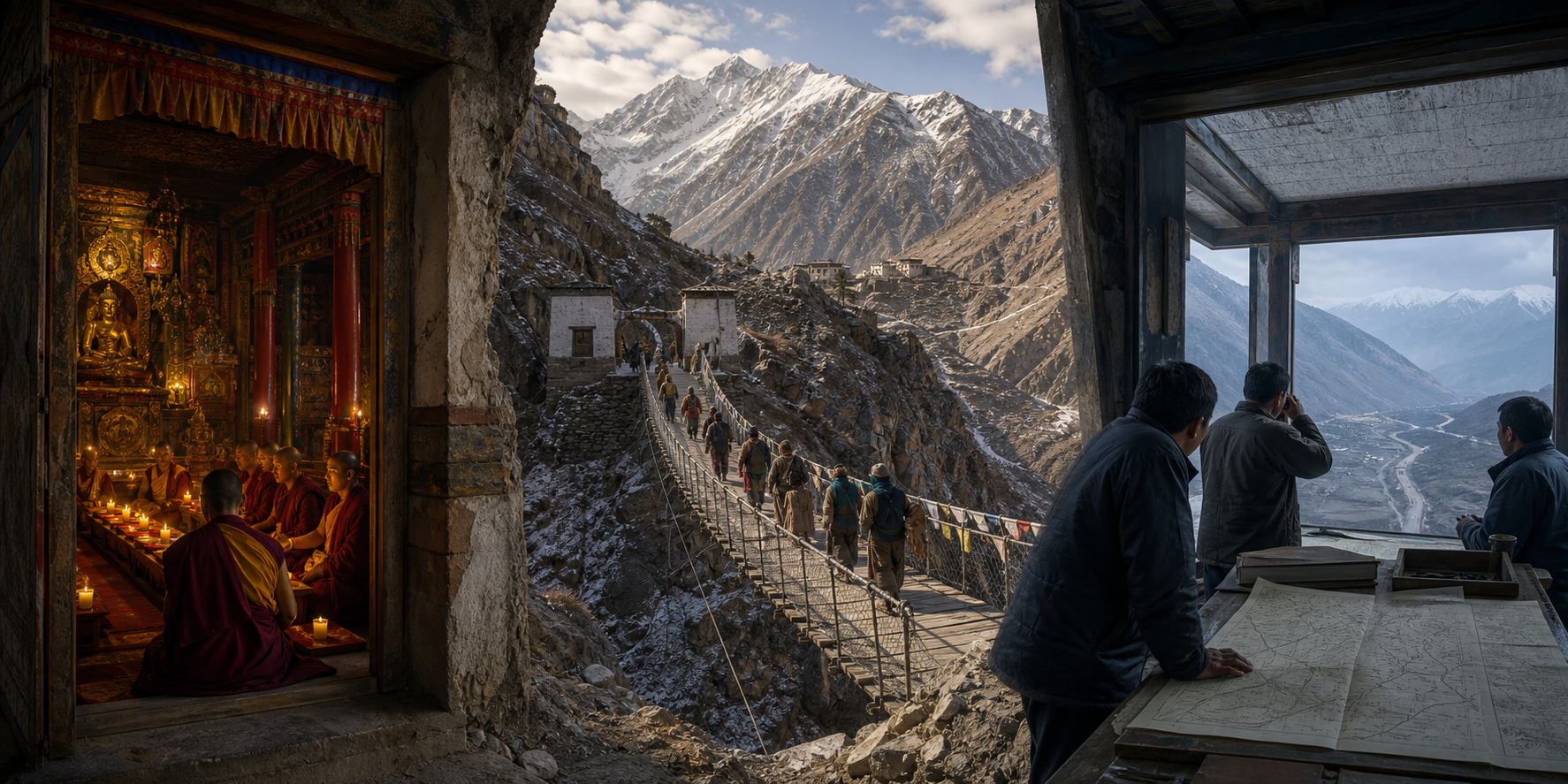
The greatest policy error would be to compress the entire Karmapa question into a contest over which government controls a prominent lama. Three different forms of power are involved, and each requires a different response.
- Religious legitimacy. This arises from lineage relationships, teachings, recognition practices, monastic acceptance and the confidence of devotees. Bharat should protect the freedom in which those judgments can be made. It should not try to manufacture the judgment itself.
- Institutional continuity. A lineage needs functioning monasteries, teachers, students, archives, rituals, communication and lawful movement. Governments can either protect this infrastructure or slowly make it unusable. Administrative uncertainty can therefore have strategic consequences even when no dramatic prohibition is announced.
- Political narrative. States use images of access, harmony and public welcome to demonstrate influence. A photograph may not alter doctrine, but repeated images can shape assumptions about which state is confident, which one is indispensable and where Tibetan religious life has a viable future.
Ogyen Trinley Dorje has remained outside India while repeatedly expressing a desire to return to his monasteries and followers there. Whatever security or legal considerations Bharat must examine, unresolved access carries its own cost. It weakens routine contact, creates uncertainty for institutions and allows others to present themselves as the side capable of enabling religious continuity.
This does not mean that India should suspend scrutiny or grant automatic freedom of movement to every religious dignitary. Security review is legitimate. Indefinite opacity is not a strategy. When a person’s status remains unclear without a visible process, delay stops looking temporary and begins to shape the balance of influence.
Bharat’s comparative strength should be different from China’s. China can offer controlled access inside territory it governs. India can offer rule-bound freedom, institutional pluralism and space for religious authorities to reach their own decisions. If Bharat copies a model of political management, it abandons the very advantage that makes India a credible home for Dharmic traditions.
A practical Indian strategy before the next crisis
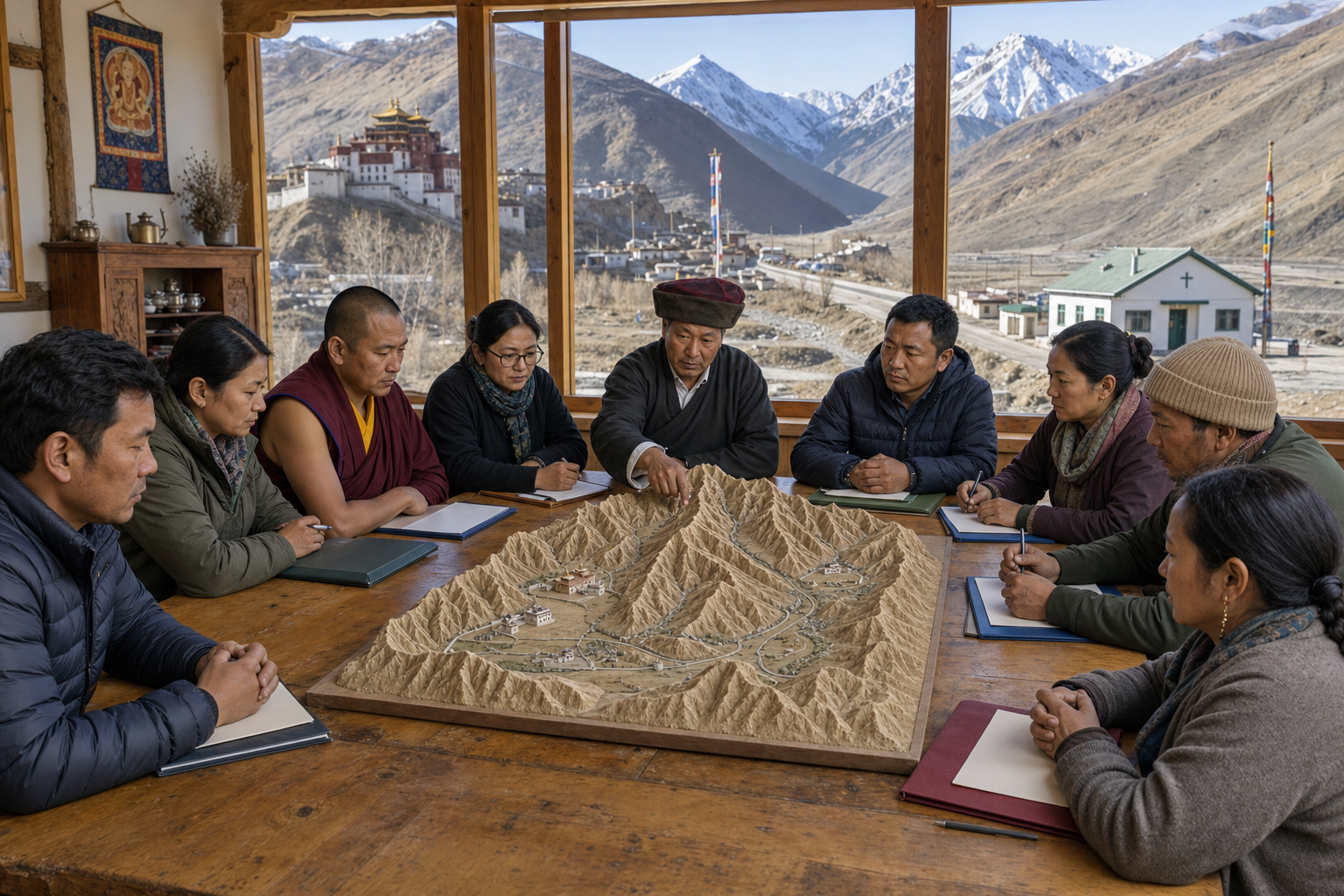
India does not need to predict the timing or outcome of a future Karmapa recognition. It needs a durable framework that works under several possible outcomes. That framework should contain the following measures.
- Create a written pathway for entry, residence and religious travel. The relevant authorities should specify the documents, security conditions, review stages and decision channel governing a return to India. If an application is refused or delayed, the reasons should be recorded and a route for reconsideration should exist. Predictability reduces the strategic cost of informal uncertainty without eliminating security scrutiny.
- Separate religious judgment from security judgment. The state may decide whether a person can cross a border or enter a restricted area. It should not decide which reincarnate teacher believers must recognise. Officials should state this distinction publicly and follow it in practice.
- Maintain relationships across the institution, not only with one personality. Lawful engagement should include senior teachers, monasteries, educators, administrators and lay communities. A policy centred on a single lama becomes brittle when travel, health, internal disagreement or succession changes the personal landscape.
- Protect the infrastructure of continuity. Monasteries and teaching centres need dependable rules for visits, study, communication, preservation and public events. Small administrative barriers can accumulate until a formally free institution is unable to function. A regular review of unresolved permissions would reveal that erosion before it becomes a crisis.
- Prepare a verification protocol for future recognition claims. Officials and journalists should distinguish a religious statement by a lineage authority from a government announcement, an unsigned online claim or a staged public endorsement. India should document who made each claim, in what setting, with what access to other senior figures and whether independent communication remains possible.
- Communicate without turning the Karmapa into an Indian asset. Public language should defend religious freedom and institutional autonomy rather than demand political loyalty. A lama presented as a geopolitical instrument loses room to act as a spiritual authority, while followers are forced into a false choice between devotion and state allegiance.
This framework also clarifies what India should not do. It should not answer every Chinese ceremony with a rival spectacle. It should not assume that a respected Tibetan teacher who visits Tibet has become an agent of Beijing. It should not wait for an eventual recognition dispute before deciding how religious travel, monastery access and official communication will work.
Scenario planning can remain modest and concrete. Officials should be ready for ordinary return travel, prolonged absence from India, pressure on senior teachers, conflicting public claims and sudden restrictions on communication. The response in every case should rest on the same foundation: verify the facts, keep lawful channels open, protect institutional freedom and avoid speaking on behalf of the lineage.
Key takeaways for reading the next development
- A large religious reception can be both sincere devotion and a strategic image. One does not cancel the other.
- Official access demonstrates state capacity, not ownership of spiritual legitimacy.
- Tai Situ Rinpoche’s standing makes his movements consequential, but hospitality alone does not reveal his political intentions.
- The Karmapa question is not evidence of an imminent succession. The immediate contest concerns mobility, institutions, relationships and narrative space.
- India should replace indefinite ambiguity with transparent, reviewable security and travel procedures.
- Bharat’s strongest Himalayan position comes from protecting Dharmic agency, not attempting to control it.
When the next photograph, recognition claim or official reception appears, do not ask only which country has won. Ask which layer actually changed: religious legitimacy, institutional access or political visibility. That question will help you distinguish a durable strategic shift from a dramatic image, and it should guide Bharat’s policy before events force hurried decisions.
References
