

If you are deciding whether to perform a Chaturdashi observance in the morning or begin Purnima worship later in the day, August 27 needs to be treated as a transition date. The Hindu tithi changes during the morning; it does not wait for the civil date to end at midnight.
In most regions, Shukla Paksha Chaturdashi continues until 8:33 AM on Thursday, August 27, 2026, and Purnima follows. Use that changeover to organize your observance, but verify the clock time against a panchang prepared for your location before making a formal sankalpa.
August 27 panchang at a glance
| Calendar detail | August 27, 2026 |
|---|---|
| Weekday | Thursday |
| Paksha | Shukla Paksha, the waxing or light half of the lunar month |
| Until 8:33 AM | Chaturdashi, the fourteenth tithi |
| After 8:33 AM | Purnima, the full-moon tithi |
The practical point is simple: August 27 cannot be labelled only as Chaturdashi or only as Purnima. Which designation applies to your act depends on when you perform it and on the rule governing that particular vrata, puja or temple observance.
Key takeaways
- Shukla Paksha Chaturdashi remains in effect until 8:33 AM; Purnima begins afterward.
- Treat 8:33 AM as a tithi boundary, not as a general-purpose auspicious muhurta.
- Check whether your observance is determined by sunrise, moonrise, pradosha or another prescribed ritual point.
- Confirm the timing in a city-specific panchang, especially if you live outside the region for which your usual calendar was prepared.
- For a formal sankalpa, use the tithi prevailing at the actual time of worship according to your local calendar.
Use the ritual’s governing time, not midnight

A tithi is a lunar-calendar division, so it can begin or end at any time of day. That is why a Gregorian date may contain portions of two tithis. Midnight changes the date on your phone, but it does not determine the lunar transition.
The more important question is not merely, “Which tithi appears on August 27?” Ask, “Which tithi must prevail at the ritual point required by my tradition?” Different observances may be assigned by the tithi at sunrise, during an evening period, at moonrise or at another specified time. A morning transition can therefore affect two practices differently.
- Name the exact vrata, puja, fast or temple ceremony you intend to observe.
- Check the rule followed by your family, sampradaya or temple for assigning its day.
- Identify the required ritual point, such as sunrise or moonrise, instead of assuming that any hour on the civil date will do.
- Compare that point with the 8:33 AM tithi transition in a local panchang.
- Prepare the necessary items the previous evening if a Chaturdashi-specific act must be completed during the morning window.
If the rule only requires an act to occur while Chaturdashi is present, the relevant window falls before the transition. If it requires Purnima to be present, the relevant part of the day begins after the transition. Do not apply that simple test when your tradition prescribes a more specific anchor; the prescribed rule takes priority.
What the 8:33 AM boundary does not establish
The tithi boundary tells you when Chaturdashi gives way to Purnima. It does not, by itself, declare 8:33 AM auspicious, inauspicious or suitable for every undertaking. A muhurta decision may also require location-specific sunrise information and other panchang factors, depending on the ceremony.
Do not use this one time to schedule a wedding, griha pravesha, major purchase or another consequential samskara. The available date information does not establish a complete muhurta and does not provide the necessary ceremony-specific judgement. For such a decision, obtain the full local panchang and follow a qualified priest or acharya familiar with your tradition.
Location matters as well. Even when two people refer to the same lunar transition, their printed clock times can differ because they use different time zones. Sunrise and moonrise also vary by place. If you are in Toronto, London, Singapore or another city outside the calendar’s intended region, copying 8:33 AM directly into your schedule may put the observance on the wrong side of the transition.
A practical devotional plan for the day
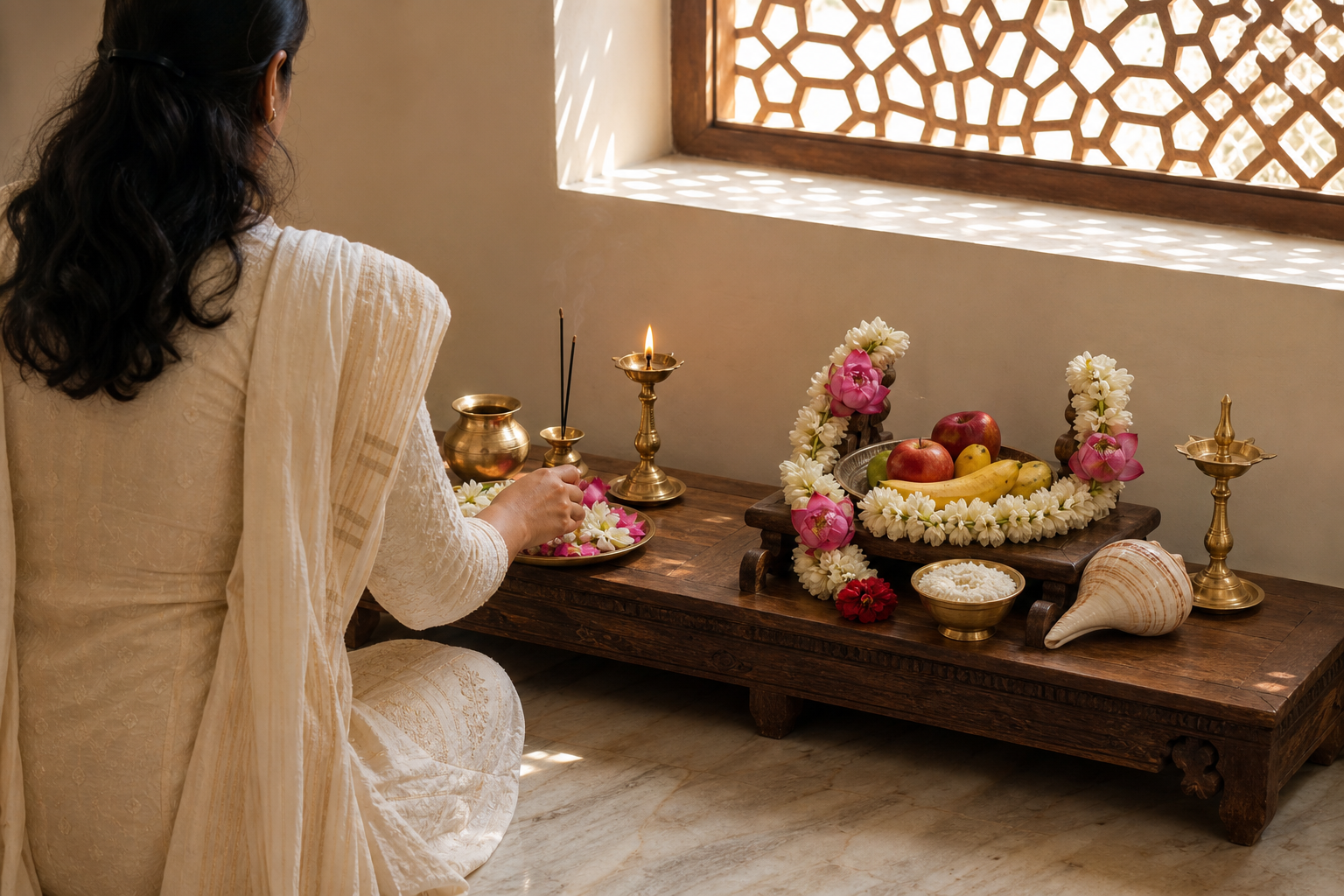
If your household has a prescribed Chaturdashi practice, confirm its rule and complete any time-sensitive portion before the local transition when required. Leave enough margin that the puja is finished, rather than merely started, within the relevant tithi if that is what your tradition expects.
After the transition, you may begin the Purnima observance followed in your home or temple. That might include a vrata, japa, dana, scriptural reading or a customary puja, but the details should come from your own sampradaya rather than from a generic calendar entry. If you do not keep a formal vrata, regular nitya puja and quiet remembrance remain more appropriate than inventing a ritual rule from the date alone.
When making a sankalpa, do not recite both tithis simply because both occur on August 27. Use the tithi that prevails at the time and place of the actual worship. If a temple notice differs from a general online calendar, ask which location and observance rule the temple is using; for participation in that temple’s ceremony, its local determination should guide you.
Before you finalize the day, write three things beside the date: your location, the exact observance and its governing ritual point. Then verify where that point falls relative to the local Chaturdashi-Purnima transition. That small check turns a general calendar time into a usable dharmic plan.
References
