
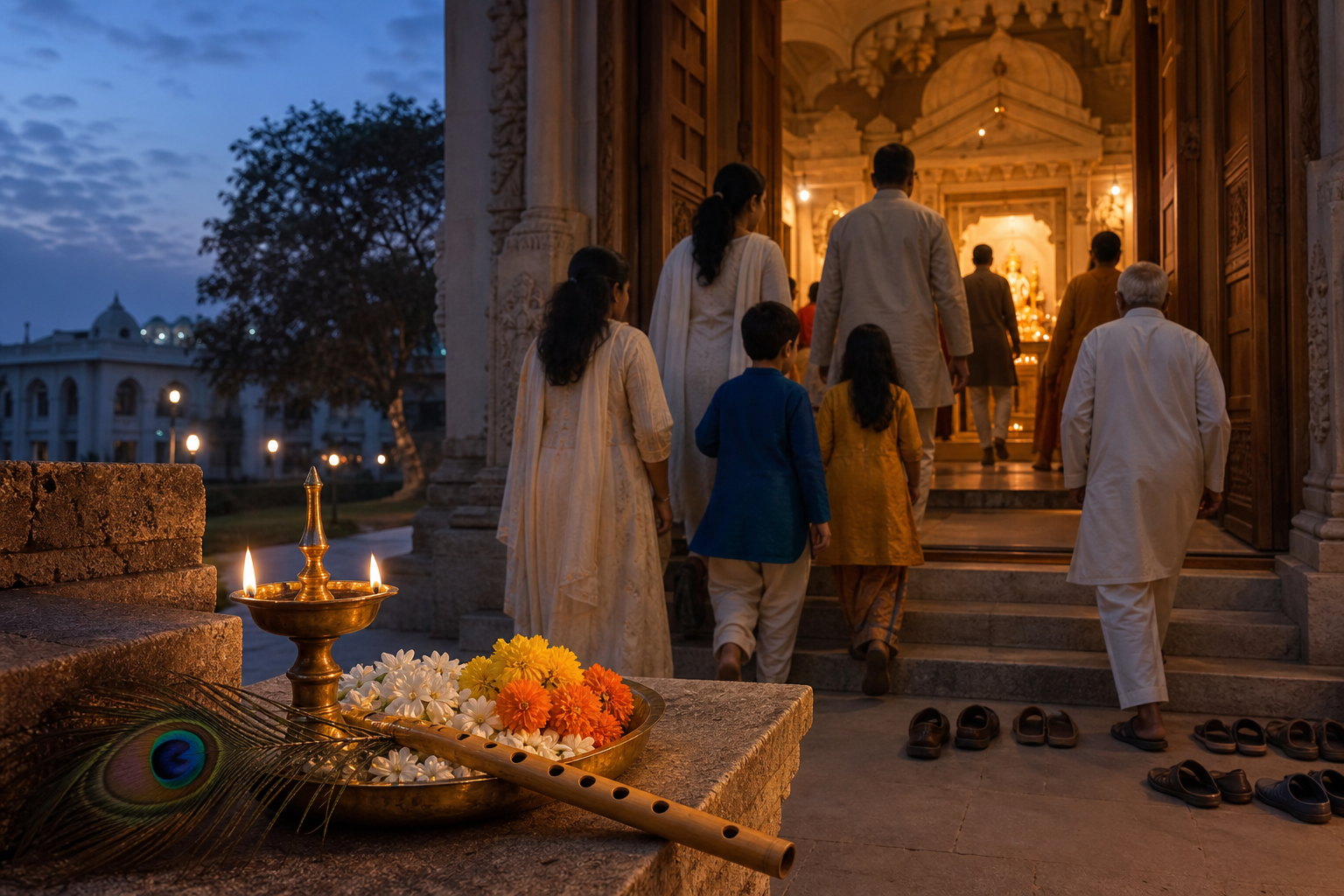
If Janmashtami is on your mind but you are unsure whether you know enough to join, take this as your invitation. Come with reverence, curiosity, and enough time to be present. You do not have to perform belonging; you only have to make room for the remembrance of Sri Krishna.
Use this invitation to decide how you will participate, what you should confirm before leaving home, and how you can keep the observance from becoming one crowded evening that changes nothing afterward.
What accepting a Janmashtami invitation means
Janmashtami celebrates the appearance of Sri Krishna. Communities observe it through forms that may include kirtan, Krishna-katha, darshan, aarti, offerings, fasting, seva, and prasad. The precise sequence and discipline vary among temples, sampradayas, regions, and families. Do not mistake every difference for an error. Look for the centre of the observance: attentive remembrance of Krishna expressed through devotion and conduct.
A special invitation to observe Janmashtami asks for more than your physical presence at a programme. It asks you to step out of the ordinary rhythm of consumption, distraction, and self-importance. You are being invited to listen, chant, serve, offer respect, and place Krishna at the centre of your attention.
If you are new to a temple or Vaishnava gathering, you do not need to know every response, melody, or gesture in advance. Follow the congregation without pretending to understand what you do not yet understand. Listen carefully, ask a considerate question when the moment is suitable, and let your first visit be a beginning rather than a test.
Make a clear plan before you leave home

A sincere intention can still be defeated by preventable confusion. Before travelling, confirm the practical details directly with the organiser. Do not infer the venue, arrival time, programme order, or fasting expectations from another temple’s celebration.
Confirm the details that affect your participation
- Exact address and entrance: Ask whether the gathering is in a temple, hall, private home, or another space, and whether parking or public-transit directions are available.
- Arrival time: Distinguish between the time doors open and the time worship begins. Arriving early enough to remove shoes, settle children, and find the worship space prevents a rushed entrance.
- Programme sequence: Ask which parts you can attend if work, caregiving, disability, or travel prevents you from staying for the full observance.
- Registration and capacity: Confirm whether advance registration is required rather than assuming that every gathering can accommodate walk-ins.
- What to bring: Find out whether flowers, fruit, or another offering is welcome. Do not bring an item merely because it is accepted at a different temple.
- Accessibility: Ask about stairs, seating, washrooms, crowd conditions, and any support you need before arriving.
- Children and photography: Confirm whether there is a family area and whether photographs or recordings are permitted during worship.
If an important detail is missing, ask the organiser rather than filling the gap with an assumption. That small act protects both your journey and the dignity of the gathering.
Choose your vrata without copying someone else’s body
Fasting disciplines are not identical across all Hindu and Vaishnava communities. Follow the practice of your own sampradaya, temple, or family where you have one. If you do not, ask the host what is customary and what participation looks like for a newcomer.
Do not turn fasting into a display or copy a demanding discipline that conflicts with your health, medication, pregnancy, age, or caregiving responsibilities. When food restriction may be unsafe, follow appropriate clinical advice and ask a trusted spiritual teacher how to observe the vrata responsibly. Restraint can also include guarding your speech, reducing entertainment, avoiding quarrels, and giving more time to nama, reading, worship, and seva.
Decide your discipline before the day begins. A clear decision is easier to honour than a vague promise made while tired, hungry, or surrounded by competing expectations.
Enter the gathering as a participant, not a spectator
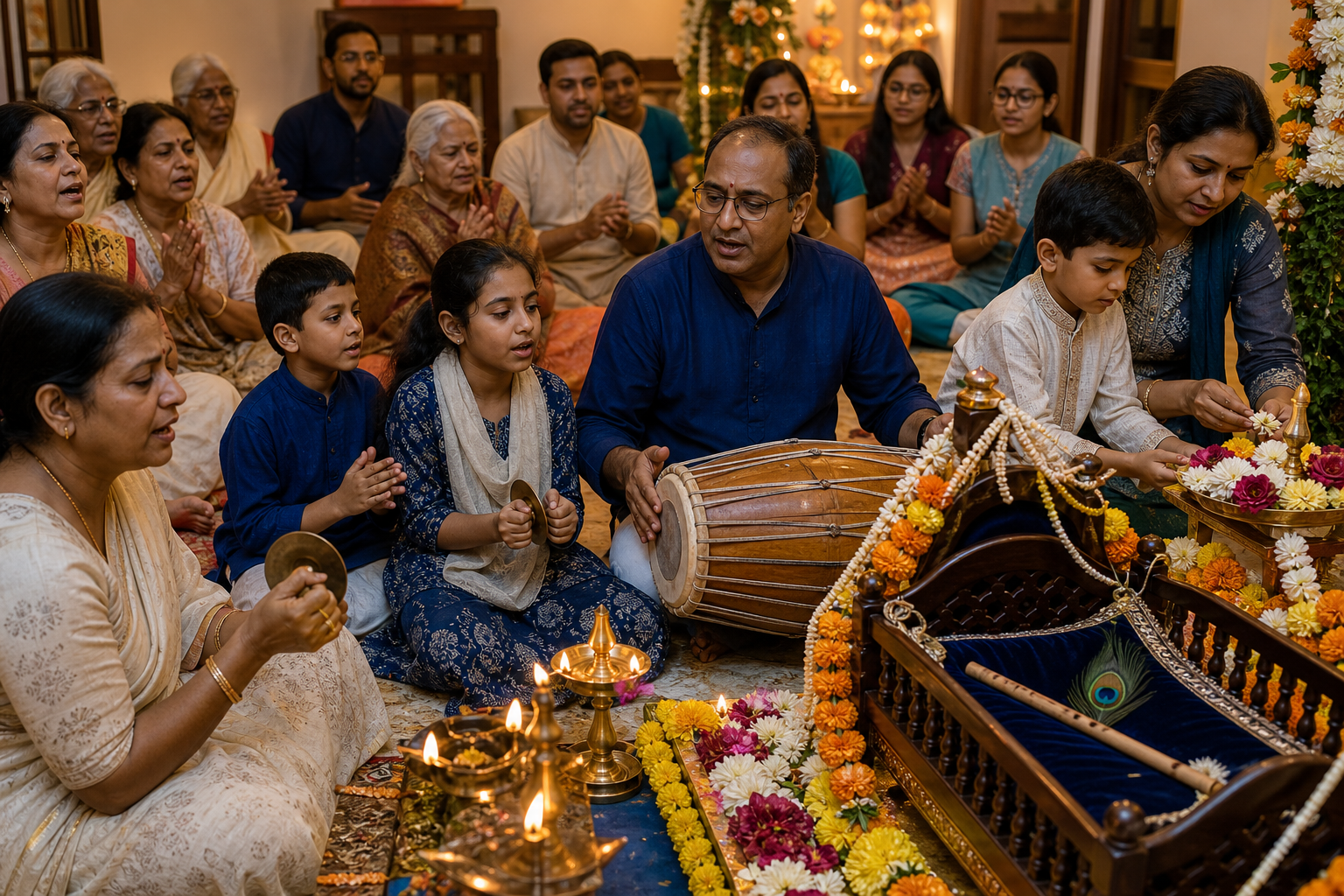
A Janmashtami gathering may be beautiful, energetic, and visually striking, but it is first a space of worship. The practical difference is attention. A spectator asks what is happening next; a participant asks how to offer attention and service in what is happening now.
- Dress cleanly and modestly in a way suited to the host community. If you are uncertain, ask rather than turning clothing into a source of anxiety.
- Silence your phone before worship begins. Use it only where the organiser permits, and never let recording displace darshan or disturb another person’s prayer.
- Observe local practice for shoes, seating, movement near the altar, and receiving prasad. Temple etiquette is learned most gracefully by watching before acting.
- Join kirtan at the level you can. You may sing the response, listen attentively, or follow quietly until the words become familiar.
- Offer seva when useful work is available. Setting out footwear neatly, helping with seating, serving water, assisting an elder, or cleaning afterward can be as meaningful as occupying a prominent place in the hall.
- Receive prasad respectfully. If you have an allergy or dietary restriction, ask what is in the food before accepting it; do not assume that every preparation suits every medical need.
If you are bringing a child, explain the occasion before arriving in simple terms: this is Krishna’s sacred celebration, people will sing and pray, and some portions may require quiet attention. Choose a place from which you can step outside without disrupting worship if the child becomes overwhelmed. A child’s sincere question is not a failure of devotion; preparation and considerate supervision allow the whole family to participate.
If you are welcoming someone else, do not measure their sincerity by their fluency. Show them where to leave shoes, explain the next part of the programme in one sentence, and let them observe without pressure. Hospitality is part of how a community makes Dharma visible.
Key takeaways
- Accept the invitation as a call to remember and serve Sri Krishna, not merely to attend a cultural event.
- Confirm the venue, arrival time, registration, accessibility, offerings, and programme sequence with the organiser.
- Follow the fasting discipline of your tradition and your actual health circumstances; do not imitate another person’s austerity.
- Enter worship with your phone silent, your attention available, and a willingness to help.
- Prepare children and newcomers before arrival so that they can participate without embarrassment or unnecessary confusion.
- Choose one small devotional practice to continue after Janmashtami.
Let the observance shape the following day
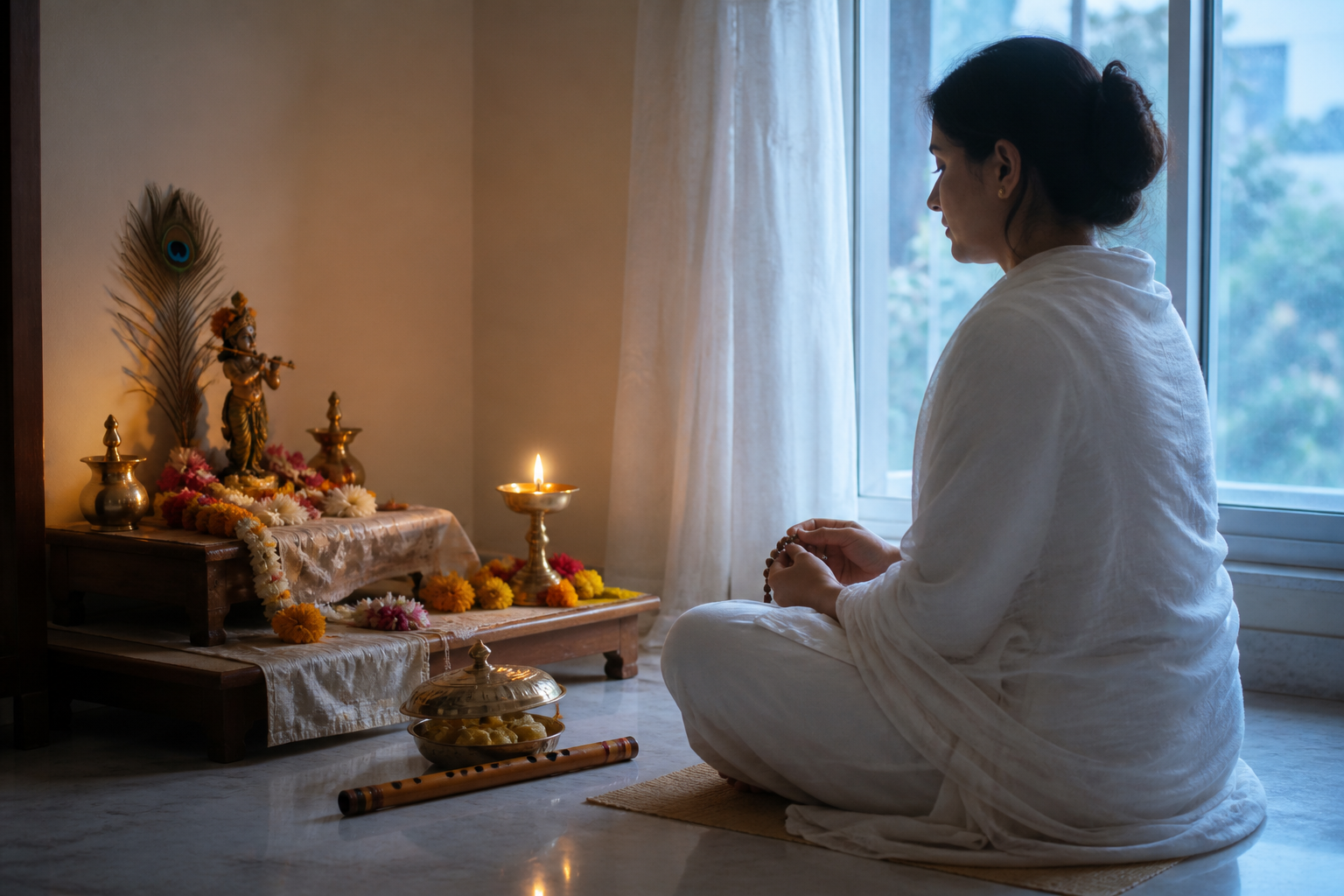
The easiest way to reduce Janmashtami to an annual occasion is to make no decision about what follows it. Before you sleep, choose one practice small enough to keep: chant Krishna’s names at a regular time, read a short passage of Krishna-katha, offer the first portion of a meal, return for community worship, or take responsibility for a recurring act of seva.
Choose one practice, attach it to a time or existing routine, and begin the next day. Come to Janmashtami as you are, but do not assume you must leave exactly as you came.
References
