
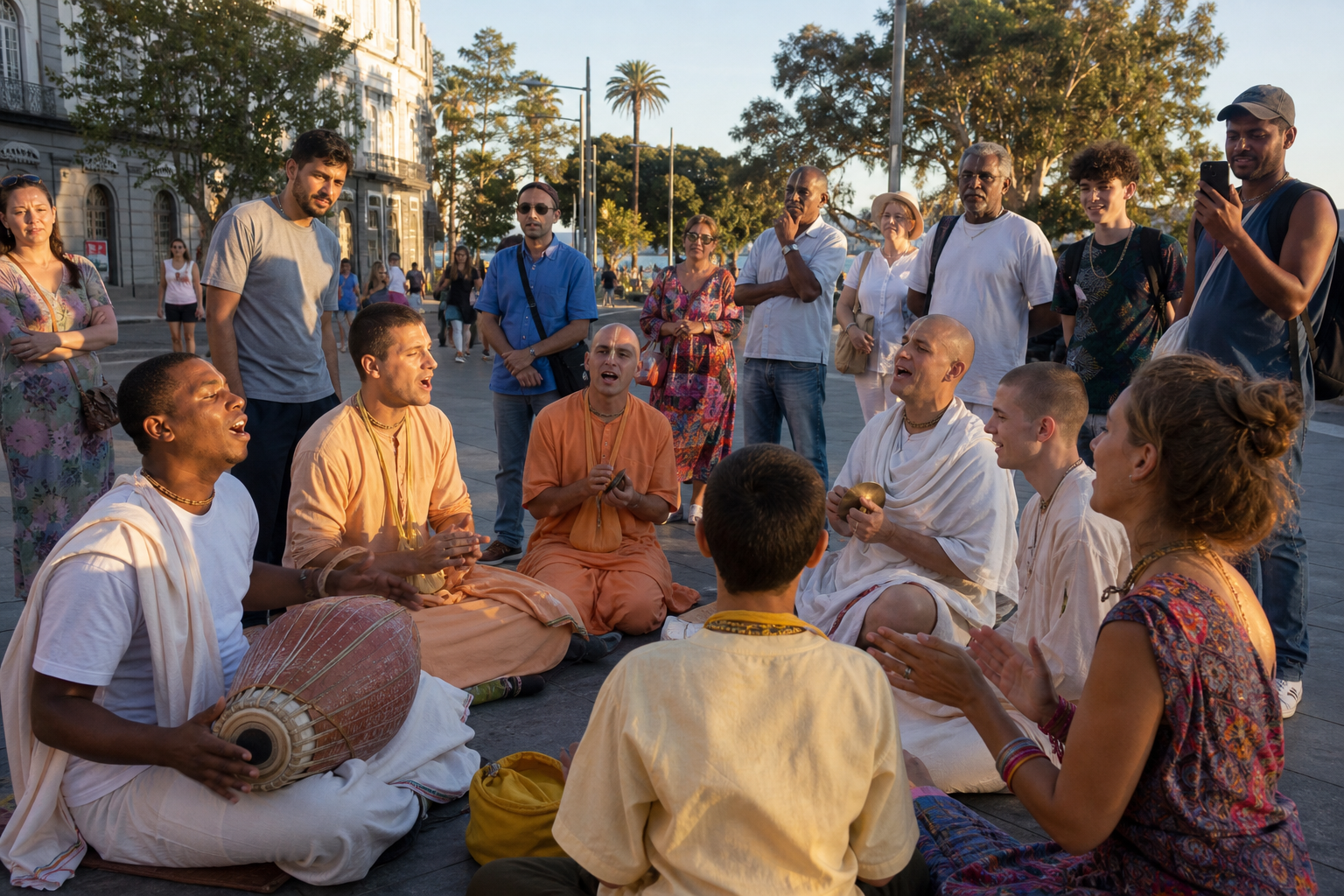
You may know how to lead a strong Harinam among experienced devotees and still feel uncertain when the setting is a foreign city, an interfaith venue, or an online room full of strangers. The central question is not whether you can reproduce the program you know. It is whether a newcomer can enter the chanting without confusion, pressure, or a sense that the sacred name has been reduced to a performance.
Good international outreach holds two duties together: fidelity to the tradition and hospitality toward the person encountering it for the first time. You do not have to dilute Harinam to make it accessible. You do have to remove avoidable barriers between the newcomer and the practice.
Plan for the person who has never chanted
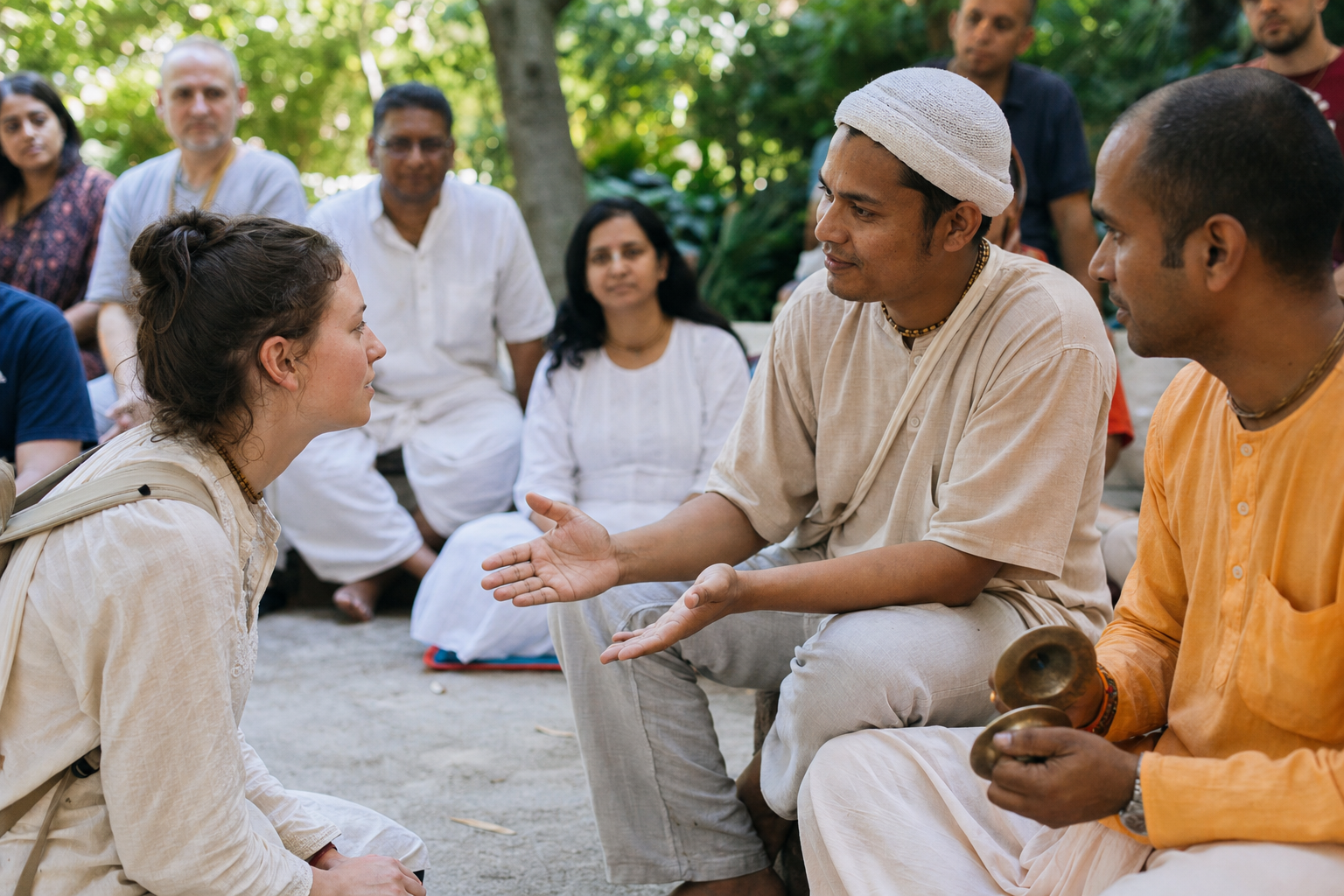
Devotees hear a familiar mantra and immediately understand the rhythm, response, mood, and purpose. A first-time guest may understand none of those things. They may be wondering whether they are expected to sing, what the words mean, whether the gathering is a concert, and whether participation signals conversion or membership.
Answer those questions before they become obstacles. A useful welcome can be brief: explain that Harinam is the congregational chanting of divine names, that the leader sings a phrase and everyone may respond, and that listening is also a valid way to begin. Then start. A long theological preface often makes an experiential practice feel like a lecture.
Accessibility does not mean presenting the mantra as a generic wellness technique. Name the tradition honestly. If you explain the divine names, use the understanding taught by your lineage and distinguish explanation from demand: guests are being invited to hear and participate, not asked to pretend that they already hold convictions they have not examined.
Before announcing the program, write a short event brief that answers these questions:
- Who is most likely to attend: devotees, spiritually curious residents, tourists, students, families, or an interfaith audience?
- What will they see and hear in the opening moments?
- How will someone who does not know the mantra learn the response?
- Who will explain the practice in the local language or in clear, non-technical language?
- What can an interested guest do after the chanting ends?
If you cannot answer the final question, the outreach is not yet complete. A public chant can create a memorable encounter, but community begins when the newcomer knows where to return.
Match the form of Harinam to the local setting
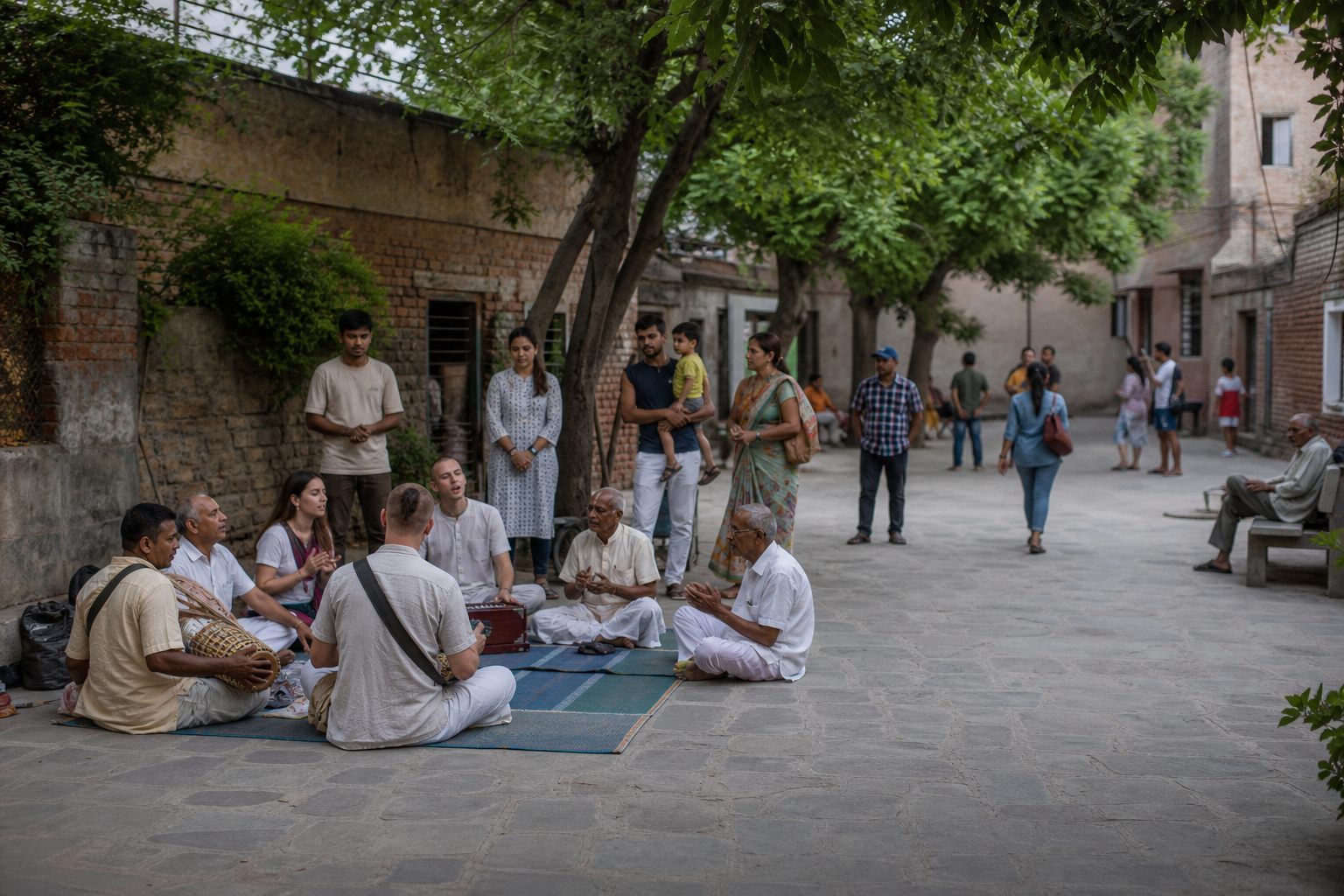
International Harinam is not one format exported to many countries. It is one sacred practice given an appropriate local doorway. The mantra remains central, while the venue, length, instrumentation, language, and balance between chanting and discussion can change.
A public procession makes the chanting visible and allows people to encounter it without committing to an event. An indoor circle makes conversation easier and can feel less intimidating to someone who would not approach a street party. An online gathering reaches people who are distant, housebound, cautious about public participation, or simply more comfortable observing before attending in person.
The indoor model can be remarkably simple. In Saint John, a mixed gathering of at least 25 people used cozy chairs arranged in a circle at a Catholic community centre. The physical setting was plain; the invitation, chanting, discussion, and human scale gave it shape. That is useful evidence for an organizer with no temple hall or elaborate stage: a suitable room and a thoughtful host may serve the purpose better than impressive production.
Digital Harinam should be treated as a real mode of outreach, not merely a recording of something happening elsewhere. An online Harinam was held in Lviv on 18 August 2026, illustrating that the chant can be carried through a networked gathering as well as a physical assembly. Online participation changes the practical work, however. The host must make the response easy to find, keep the lead voice intelligible, explain whether participants should remain muted, and provide a clear way to ask questions.
Choose the format by working outward from the person and the place:
- Use a street format when visibility, spontaneous listening, and public participation are the main goals.
- Use a seated circle when the audience is small, unfamiliar with chanting, or likely to value dialogue.
- Use an online format when distance or access is the main barrier, and design it for remote participation from the beginning.
- Use a hybrid format only when someone can actively care for the remote participants. A camera pointed at a room does not by itself create an online gathering.
Build an event arc that lets newcomers enter gradually
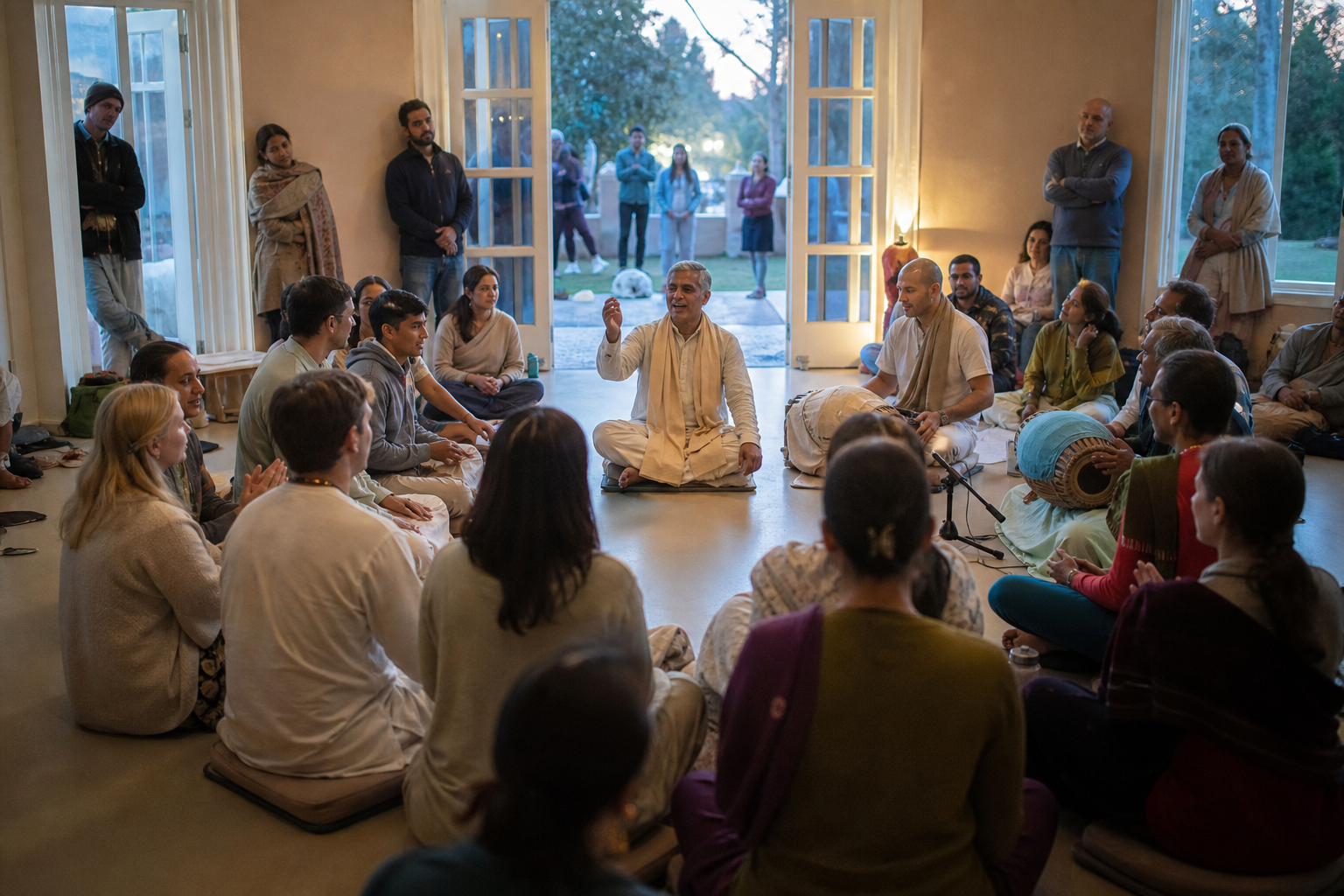
A Harinam program needs movement, not complexity. The guest should be able to progress from uncertainty to listening, from listening to response, and from response to a clearer understanding of what they have experienced.
- Welcome people in ordinary language. Tell them what will happen and make participation invitational.
- Introduce the call-and-response pattern. If the audience needs help, display or print the mantra in a readable script and transliteration.
- Begin with a clear, steady melody that the group can follow. The opening is not the moment to test musical sophistication.
- Allow the chanting to develop after the response becomes confident. Watch the participants rather than assuming that louder or faster always means deeper engagement.
- Offer a concise explanation of the practice. Connect the experience to divine remembrance, disciplined attention, gratitude, service, or the theological emphasis appropriate to your lineage.
- Invite questions without turning the exchange into a debate. A sincere basic question deserves a basic answer.
- End with a specific next step: another gathering, a local contact, an online chanting room, or a place where the guest can learn more.
Music supports this arc when it carries the voices instead of overpowering them. A Saint John gathering combined mrdanga with accordion, a pairing that shows how a traditional rhythmic instrument and a locally familiar melodic instrument can share the same room. The lesson is not that every international Harinam needs fusion instrumentation. It is that accompaniment can adapt while the mantra and participatory structure remain recognizable.
Ask the lead singer and instrumentalists to listen for congregational response. If guests cannot hear the words, find the pulse, or tell when to answer, musical energy has stopped serving outreach. Reduce the instrumental density, return to a simpler melody, and let the collective voice become audible again.
A short talk works best when it illuminates what the participants have just done. The Saint John program connected chanting with mantra practice and a candid description of monastic life. That gave spiritually curious guests both an experience and a human context. Your own speaker should choose a similarly coherent bridge rather than attempting a compressed survey of every doctrine associated with the tradition.
Protect sacred integrity and the guest’s dignity
Cross-cultural outreach becomes trustworthy when the organizers are clear about what is sacred, careful about what is local, and honest about what they do not yet understand. A foreign team should not assume that enthusiasm compensates for unfamiliarity with the neighbourhood, language, venue, or public expectations.
Work through a local host wherever possible. The host does more than reserve a room. They can tell you how the invitation will be understood, which language is appropriate, whether amplified sound will create friction, what accessibility needs must be considered, and how guests usually receive information after an event. Ask for that judgement early enough to change the plan.
Use this dignity check before the program:
- Confirm the venue’s rules, local permissions, sound limits, and practical boundaries instead of assuming that public chanting is handled the same way everywhere.
- Describe the gathering accurately. Do not advertise a concert and then deliver a religious appeal, or advertise a discussion and leave no room for questions.
- Make listening permissible. Do not pressure a guest to sing, dance, accept literature, disclose contact information, or publicly affirm a belief.
- Ask before photographing or filming identifiable participants. Attendance is not automatic consent to become promotional material.
- Give visitors a graceful way to enter late, sit quietly, or leave early without becoming the centre of attention.
- Explain unfamiliar Sanskrit or Bengali terms when they matter. Jargon should not function as a test of belonging.
- Keep hospitality separate from manipulation. Food, seating, conversation, and kindness should be offered without an unspoken obligation.
An interfaith or community venue requires particular care. Entering such a space does not require concealing the Vaishnava identity of Harinam. It requires honouring the agreement under which the space was offered, speaking about other traditions without caricature, and allowing the chant to stand on its own spiritual integrity.
This distinction matters for a wider Dharmic audience. Hindu, Buddhist, Jain, and Sikh traditions share civilizational relationships and some ethical vocabulary, but they are not interchangeable versions of one practice. Present Harinam confidently as a Vaishnava offering. Respect for Dharma grows through truthful encounter, not by blurring every lineage into a vague spiritual product.
Turn a successful encounter into a living relationship
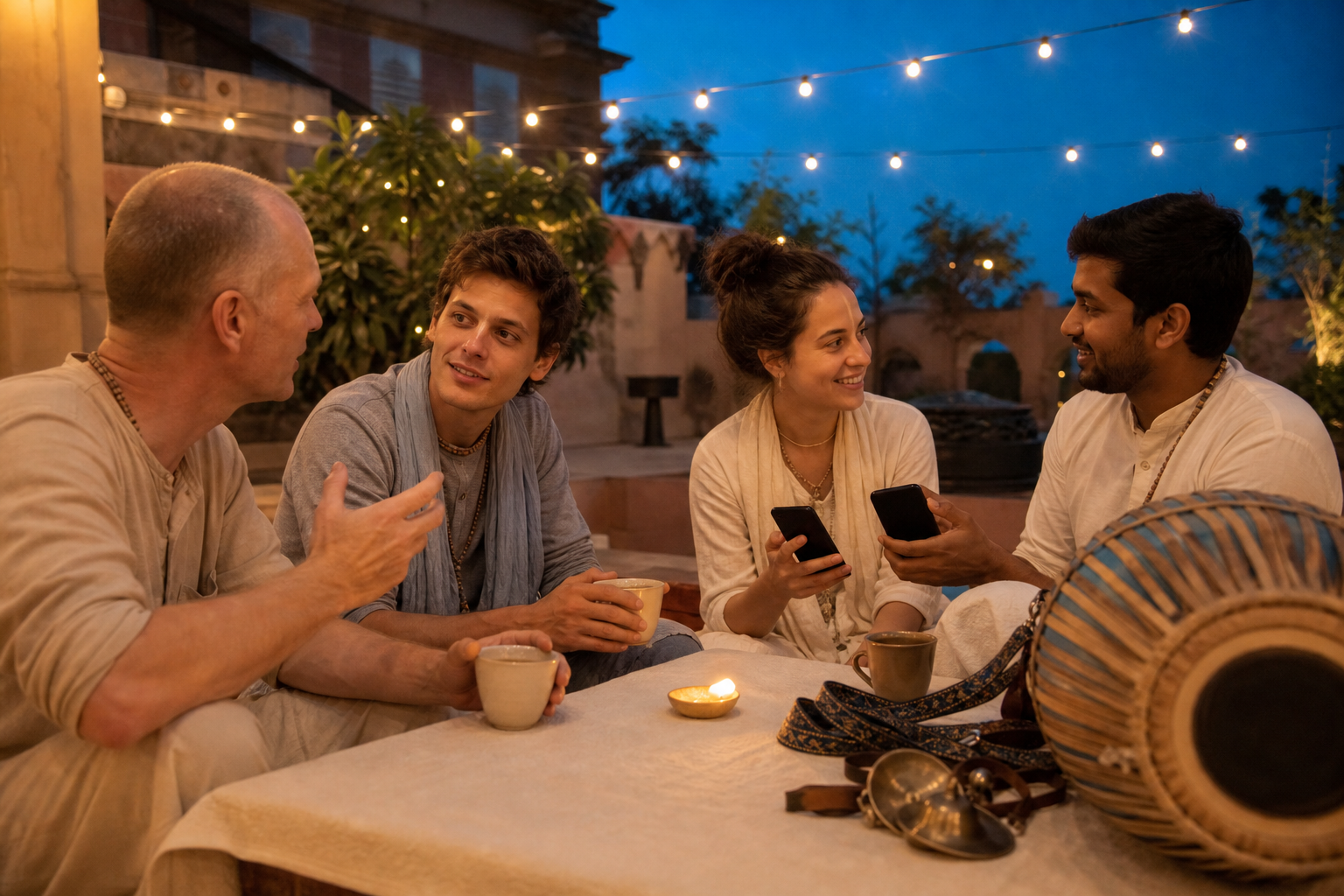
Applause, a crowded photograph, or a widely viewed clip can tell you that an event attracted attention. They cannot tell you whether a newcomer understood the invitation or found a path into practice. Measure outreach by the quality of the bridge you built.
Notice whether newcomers remain for questions, ask where the mantra comes from, request another opportunity to chant, introduce friends, or return to a local gathering. These signs do not prove spiritual transformation, and they should not be turned into inflated claims. They do show whether the event created enough clarity and trust for a relationship to continue.
Follow-up should be proportionate and voluntary. Put the next event’s details where guests can take them without surrendering personal information. If you collect contact details, state what messages they will receive and make declining easy. Online participants need the same care: provide a stable link or contact point, not a flood of unrelated promotion.
After the program, hold a short organizer review while memories are fresh. Ask where newcomers hesitated, which explanation unlocked participation, whether the music left room for the response, what the local host would change, and whether the promised next step actually exists. Record those answers for the next event in that place. International outreach becomes durable when local knowledge accumulates instead of disappearing with the travelling party.
Key takeaways
- Keep the divine name and the lineage’s meaning central, but adapt the venue, language, instrumentation, and program structure to the people present.
- Explain the call-and-response pattern before chanting and make listening a legitimate form of participation.
- Choose street, indoor, online, or hybrid outreach according to the barrier you are trying to remove.
- Let the collective voice lead. Musical complexity is useful only when newcomers can still hear, follow, and respond.
- Use a local host to check language, permissions, accessibility, venue expectations, and follow-up.
- Treat consent, honest event descriptions, and freedom from pressure as part of Dharmic conduct rather than administrative details.
- Plan the next point of contact before the Harinam begins.
For your next international Harinam, begin with one real place and one real newcomer. Confirm the local host, choose the format that removes the main barrier, rehearse a simple opening, prepare a concise explanation, and publish a genuine next gathering. A global movement is sustained through local encounters in which the sacred name is offered clearly and the person hearing it is treated with care.
References
