
If you are trying to decide whether the Haldwani shuddhikaran was caste humiliation or a Hindu response to conduct at a culturally significant venue, do not begin with the most emotionally charged label. Begin with the order of events. Once the full sequence is restored, the dispute becomes much easier to examine.
The decisive question is not whether Mallikarjun Kharge felt insulted. He was entitled to say that he did. The question is whether his caste caused the ritual. That is a claim about motive, and motive has to be tested against the reason the organisers reportedly gave.
The chronology you need before taking a side

Four steps make up the Haldwani controversy. Removing any one of them changes the story:
- On August 8, 2026, Kharge addressed a Congress Vijay Shankhnaad rally at Haldwani’s Ramlila Ground.
- During that event, ‘Allah Hu Akbar’ slogans were reportedly raised from the Congress rally stage.
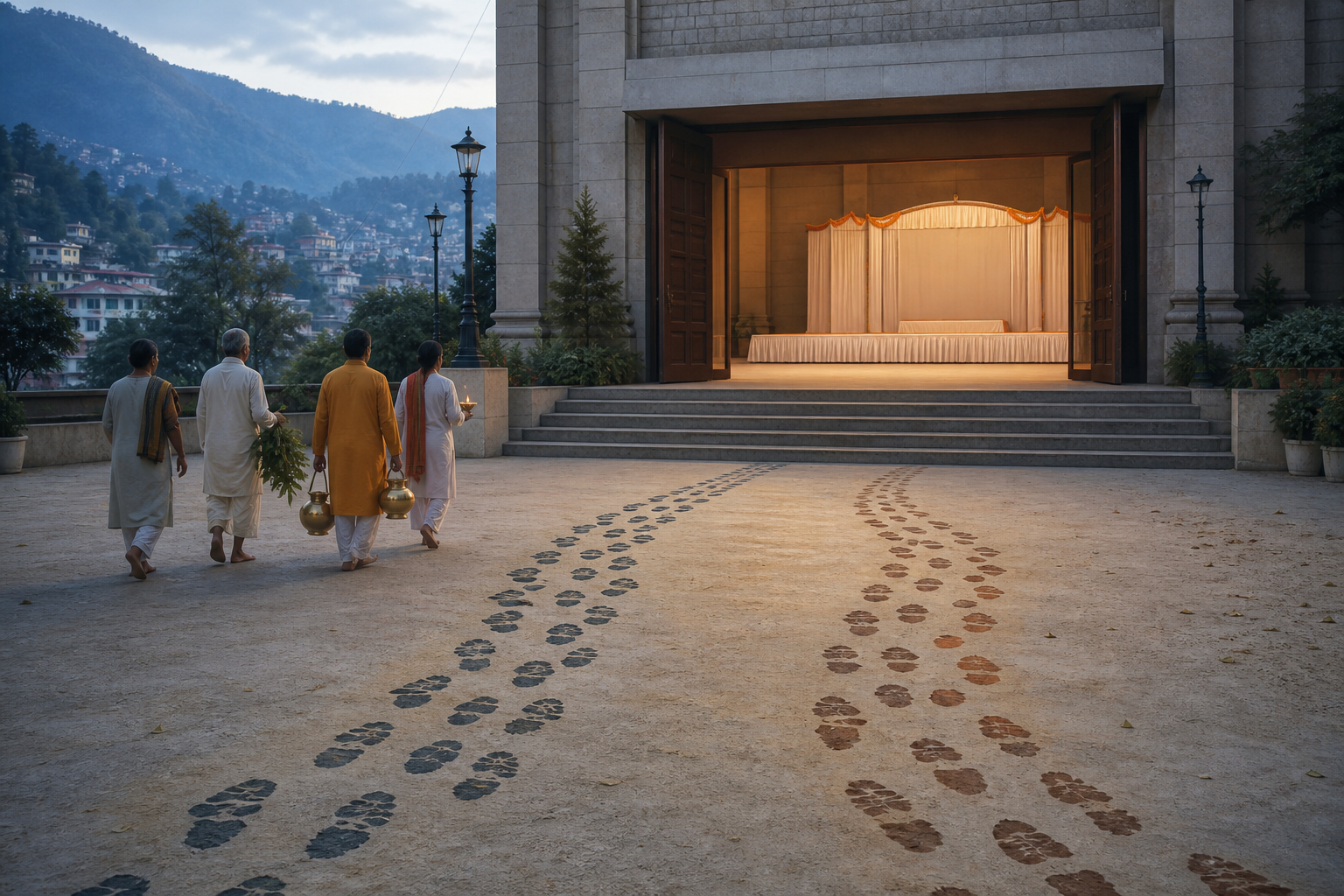
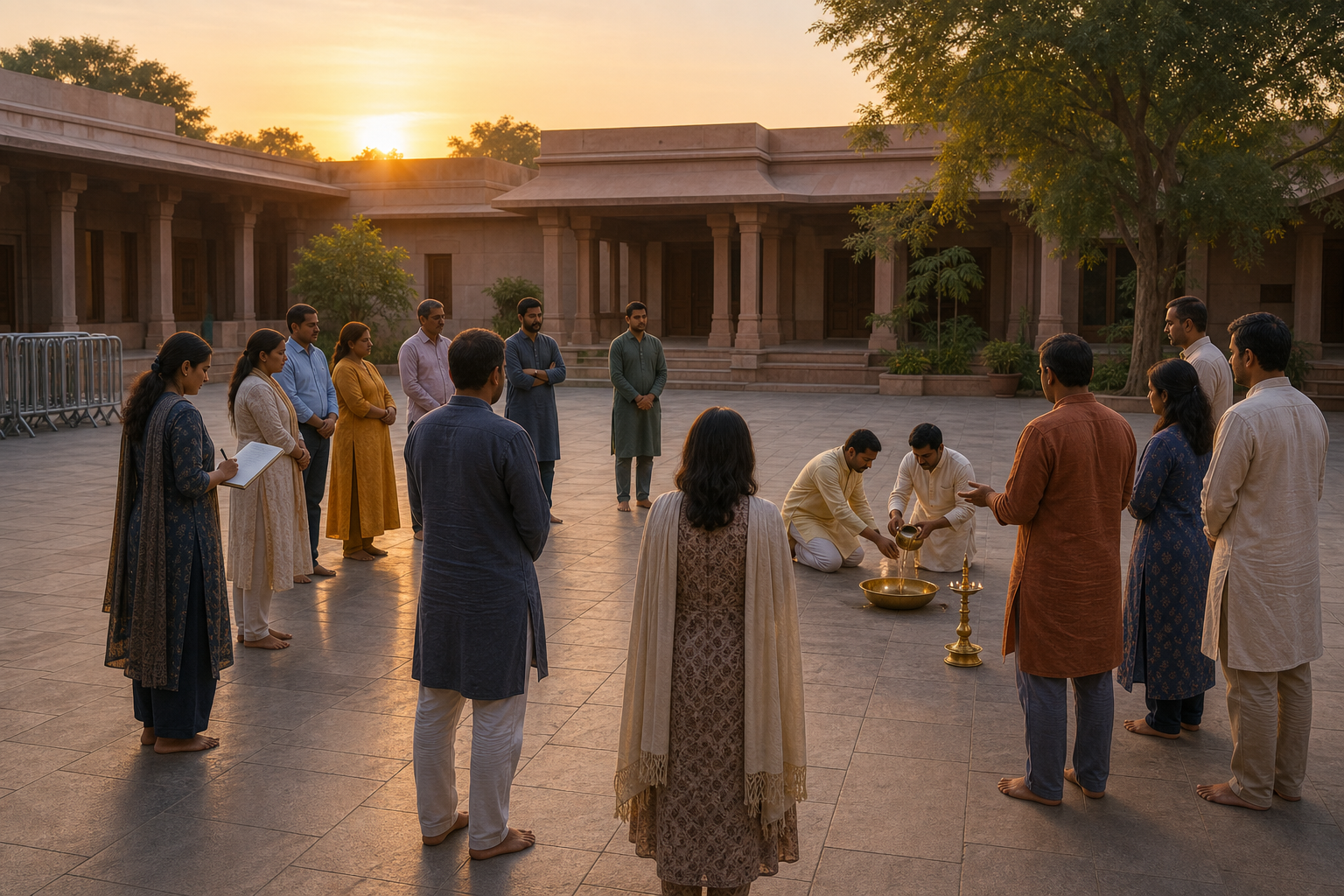
- Two days later, members of the Shri Ram Sena Dharmarth Seva Nyas Sangathan conducted a havan and purification ritual at the venue. The reported rationale included an objection to the slogans.
- Kharge subsequently raised the ritual in the Rajya Sabha, presenting it as an insult to him and placing it within a narrative of caste discrimination. His account did not address the reported slogans that preceded the ritual.
This sequence does not automatically settle every factual dispute. BJP IT-cell chief Amit Malviya circulated a video and alleged that the slogans came from the rally stage, but the facts supplied here do not independently establish the provenance, completeness or full surrounding context of that recording. That is why the careful formulation is still “reportedly raised,” not “conclusively authenticated.”
That evidentiary limit does not make the slogan allegation irrelevant. It means Congress should answer it directly. Was the slogan raised from the stage? Who initiated it? Was it authorised by the rally organisers? What occurred immediately before and after it? A political response that speaks only about the later ritual leaves those necessary questions unanswered.
The missing context changes the inference, not every fact
If you hear only that a purification ritual followed a speech by a leader from a historically disadvantaged caste, caste hostility may appear to be the obvious explanation. Add the reported stage slogans and the organisers’ stated objection, and another explanation becomes immediately plausible: the ritual was a response to what they regarded as an affront to the Hindu character of the Ramlila Ground.
That distinction matters. An alternative explanation does not prove that every participant had the same motive. It does, however, prevent anyone from treating caste motive as self-evident. Kharge’s interpretation must account for the reported proximate trigger rather than proceeding as if no trigger had been identified.
The identity of the venue is relevant without being absolute. A Ramlila Ground is marked by Hindu cultural memory and public performance. It is therefore reasonable for Hindus to expect political organisers using such a place to act with awareness of that association. You do not have to argue that only Hindu speech may occur there. The narrower and more defensible principle is that those using a culturally marked venue should not disregard the sentiments connected with it.
Intent remains a separate issue. The reported slogan may have been devotional, performative, political or provocative; the presently supplied facts do not establish which. Anyone claiming deliberate provocation has another proposition to prove. The sound case for Hindu cultural respect does not need an unsupported claim about another person’s inner intention.
How to test Kharge’s caste claim fairly

Caste discrimination is serious precisely because the charge should be examined with discipline. If every unwelcome act involving a Dalit leader is classified by identity alone, the label replaces the work of establishing causation. Use five tests before accepting or rejecting the Haldwani narrative:
- Look for a direct caste connection. Did the ritual organisers use caste language, refer to Kharge’s social identity or say that his presence made the ground impure? No such statement is identified in the facts presently before us.
- Identify the stated cause. The reported objection concerned ‘Allah Hu Akbar’ slogans at the Congress rally. That explanation has to be assessed even if you ultimately consider it inadequate.
- Check the evidence for the triggering event. A short circulating clip can raise a legitimate question, but full-length footage, continuous audio, visible stage context and a clearly identified speaker would make the conclusion stronger.
- Separate insult from discrimination. Kharge could regard the ritual as personally insulting without that reaction establishing a caste-based motive. An effect on one person and the cause of another person’s act are different questions.
- Ask what would change your conclusion. Direct caste remarks would strengthen Kharge’s case. Authenticated footage and an unambiguous organiser statement tying the ritual only to the slogans would strengthen the competing explanation. A conclusion that cannot respond to new evidence is allegiance, not analysis.
On these tests, the caste narrative is not established by the ritual alone. The reported rationale supplies a concrete, event-specific alternative, while the public framing attributed to Kharge does not confront it. His description may communicate how he experienced the incident, but it cannot by itself prove why the organisers acted.
It is also unnecessary to claim that the omission conclusively reveals Kharge’s private intention. What can be judged is its public effect: the debate moves away from conduct at the rally and toward the identity of the politician who addressed it. Whether that shift was strategic or incomplete for some other reason, it leaves the central factual dispute unresolved.
A Dharmic response should be precise, peaceful and consistent
Hindus do not need to choose between cultural self-respect and evidentiary honesty. In fact, combining them makes the case harder to dismiss. If you discuss or share the Haldwani incident, use the following standard:
- Lead with the sequence. State the rally, the reported slogans, the later havan and Kharge’s parliamentary framing in that order. Do not circulate the final episode as if it arose without a preceding dispute.
- Preserve the qualification. Say that the slogans were “reportedly raised” unless you have authenticated, continuous footage. Precision protects a valid criticism from being discredited by a larger claim than the evidence can bear.
- Ask Congress a narrow question. If it disputes the slogan allegation, it should provide fuller footage or another direct account. If it accepts that the slogan came from its stage, it should explain why it was raised at that venue and whether rally officials approved it.
- Ask the ritual organisers to remove ambiguity. A direct statement that the havan concerned conduct at the venue, not Kharge’s caste or the presence of any caste community, would place their rationale on a clear public record.
- Defend the ritual conditionally. A peaceful, non-coercive havan conducted in response to a perceived cultural affront can be defended as religious expression. Threats, violence or caste exclusion would be different matters and should not be smuggled into that defence.
- Apply the same rule across communities. If religiously or culturally significant venues deserve considerate use, the principle should not depend on which community owns the sentiment. Consistency turns a partisan complaint into a credible civic standard.
- Keep collective blame out of it. The disputed conduct concerns a rally stage, its organisers and particular participants. It does not justify treating Muslims as a single political actor or using hostility against ordinary people as a substitute for answering Congress.
This approach also avoids a trap frequently set in polarised debates. If Hindus exaggerate uncertain evidence, attention shifts from the unanswered question to the exaggeration. If they remain silent because caste has been invoked, the original question disappears. The better course is to keep asking for the full record in exact language.
Congress, for its part, should not expect a caste allegation to cancel scrutiny of what occurred on its own platform. Respect for Dalit dignity and respect for Hindu cultural spaces are not mutually exclusive duties. A serious political account must be capable of addressing both.
Key takeaways
- The Haldwani shuddhikaran followed a Congress rally at which ‘Allah Hu Akbar’ slogans were reportedly raised; that sequence is essential context.
- The slogan allegation is central but should remain qualified until the recording’s full provenance and context are established.
- The organisers’ reported objection supplies an alternative to caste motive, so discrimination cannot fairly be inferred from the ritual alone.
- The Ramlila Ground’s Hindu cultural character makes respectful use a legitimate public concern, but it does not prove that any slogan was intentionally provocative.
- A strong Dharmic response defends peaceful religious expression, demands the complete chronology and refuses both caste prejudice and collective blame.
When you next encounter the Haldwani claim, do not share a verdict stripped of its evidentiary status. State what happened, mark what remains reported, and ask what connects the ritual to caste. If fuller footage or a direct statement changes the record, change your conclusion with it. Cultural confidence is most persuasive when it neither retreats from a legitimate Hindu concern nor claims more than the facts can carry.
References
