

If you are trying to decide whether government grazing land in Hupari has already been committed to an Islamic Centre, the honest answer is that no final allocation is established by the facts presently available. Hold onto one crucial distinction: a representation asks an authority to act; it is not the authority’s allotment order.
The confirmed civic action is narrower. Sakal Hindu Samaj submitted a representation to the Ichalkaranji administration asking that the land be reserved for police personnel facilities instead of an Islamic Centre. That demand deserves a clear administrative response, but it does not settle the parcel’s legal status, either proposal’s readiness, or the eventual decision.
The only established action is a representation
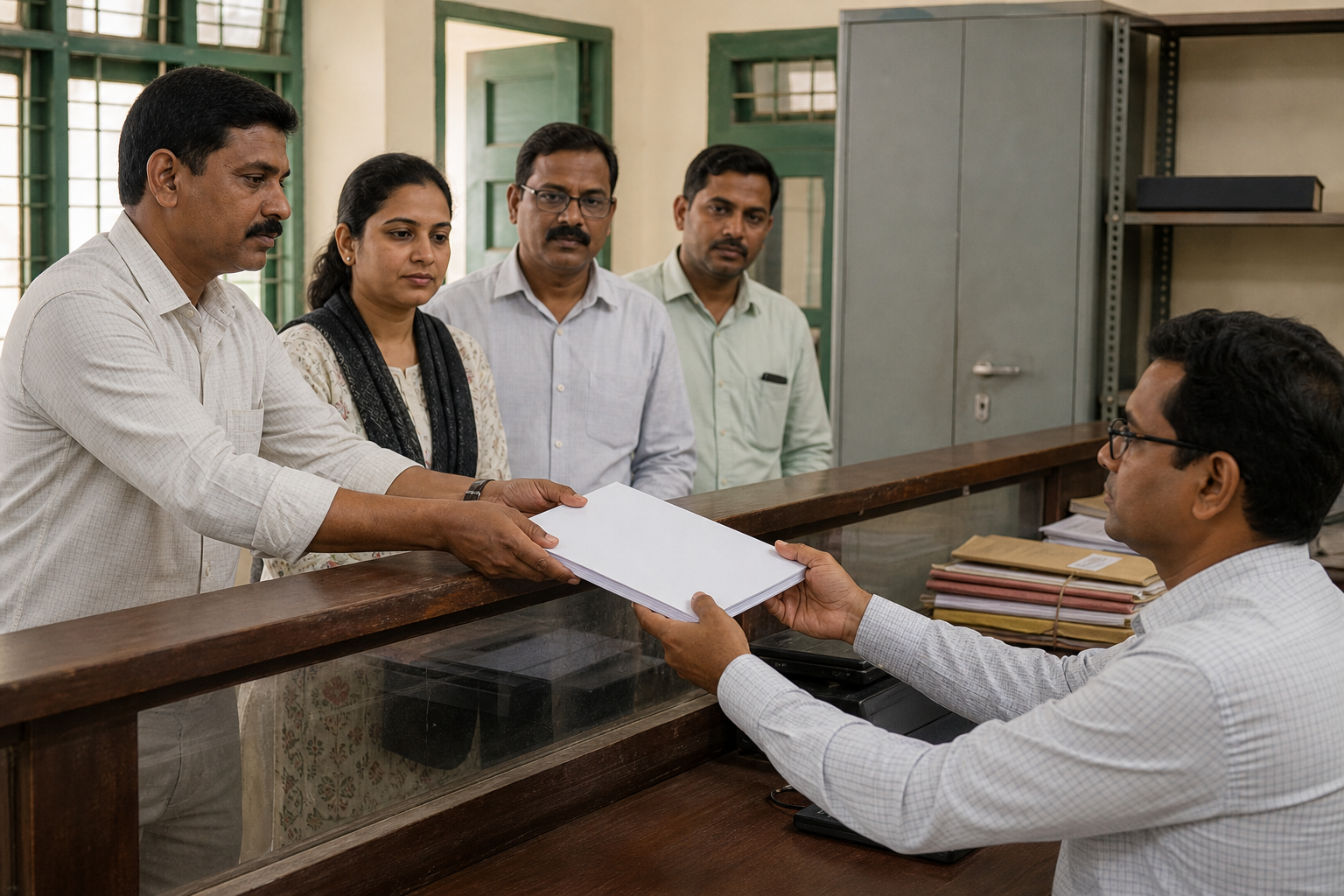
You can separate what is established from what remains unverified without weakening legitimate Hindu concerns. Doing so prevents an advocacy demand from being repeated as though it were a completed government action.
What can presently be stated
- Sakal Hindu Samaj has approached the Ichalkaranji administration.
- The land at issue has been described as government grazing land in Hupari.
- The organisation wants it reserved for facilities serving police personnel.
- The requested police use has been presented as an alternative to an Islamic Centre.
What has not yet been established
The known facts do not identify the precise parcel number, its area, the proposed Islamic Centre’s applicant, the functions planned for it, or any signed allotment order. They also do not establish that the police department requested this land, that police facilities received administrative approval, or that construction for either use is imminent.
Until those matters are documented, do not tell people that the administration has handed over the land, rejected a police proposal, or authorised construction. Each formulation goes beyond what is presently established. Accurate vocabulary is not a concession to either side; it is the foundation of a case that can withstand official and legal scrutiny.
The records that can resolve the dispute

A public-land controversy becomes much easier to evaluate once everyone is discussing the same identified parcel and the same administrative file. Ask the Ichalkaranji administration for copies of the records below, or for a written statement that a particular record does not exist:
- Parcel identification: the official survey, property, or other land-record number; boundaries; area; recorded owner; classification; and present recorded use.
- The Islamic Centre proposal: the application or representation, the applicant’s identity, the proposed functions, the area requested, any site plan, and the present decision status.
- The police requirement: correspondence showing whether the relevant police authority has asked for land in Hupari, what kind of facility it needs, how much land it needs, and whether this parcel has been assessed.
- The administrative trail: agenda papers, file notes, recommendations, resolutions, meeting minutes, objections, and interdepartmental correspondence concerning either proposed use.
- The operative decision: any signed order identifying the competent authority, the exact parcel, the beneficiary, the permitted use, conditions, and effective status.
- The physical plan: a map or demarcation showing the requested footprint, access, adjoining uses, and the part of the grazing land that would remain.
Ask for records by parcel number as soon as you obtain it. Searching only by labels such as Islamic Centre or police facility can miss files recorded under an applicant’s name, a department, or a land identifier. When you receive a document, preserve its full title, number, date, issuing authority, signature page, annexures, and receipt details. A cropped screenshot without those features is weak evidence.
A useful written request would ask the administration to publish the parcel identity, current classification, all pending proposals, and the status of any decision. It should also request that no irreversible work begin before the governing record is made available for public examination. If access to a material record is refused, obtain the refusal in writing and consider a formal information request or advice from a local lawyer familiar with land and administrative matters.
Judge all proposed uses by one public-interest test
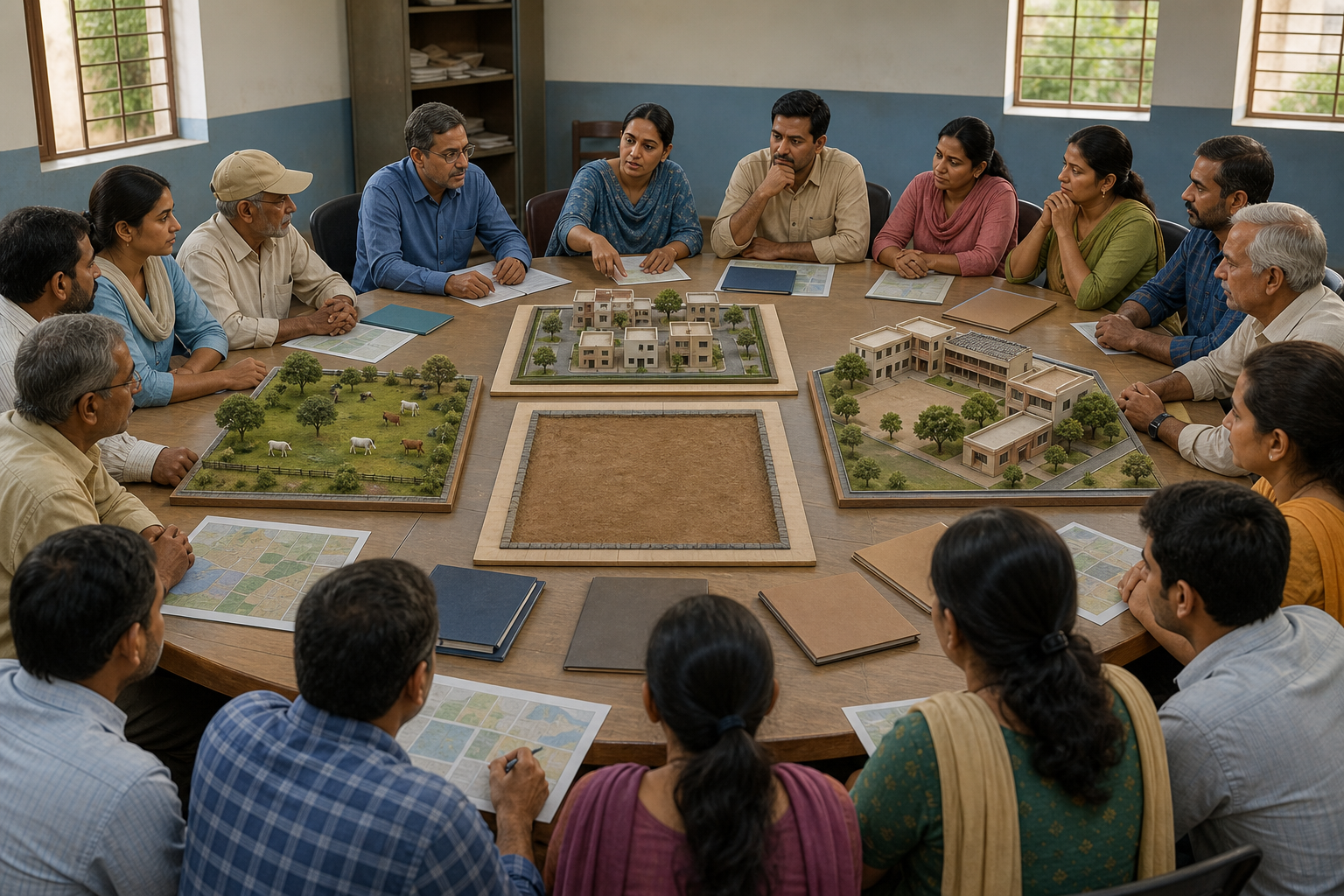
Grazing land is not simply an unclaimed blank plot. Its recorded designation already represents a land use. Before choosing between new proposals, the administration should establish whether that use remains active, who depends on it, whether a change is legally permissible, and what would be lost if the land were converted.
You can test every proposed use with the same questions:
- Authority: Which body can lawfully approve the use or change the land classification? Is the person signing the decision empowered to do so?
- Demonstrated need: Is there a documented operational need, or only a general preference for acquiring public land?
- Parcel suitability: Does the proposal require this particular location and area? What access, safety, servicing, or surrounding-use constraints apply?
- Effect on the existing use: Would the proposal eliminate or materially reduce grazing access? Have actual users and local residents been identified and heard?
- Public reach: Who would use the proposed facility, under what access rules, and what measurable public function would it perform?
- Alternatives: Are government buildings, institutional properties, private parcels, or other suitable sites available with less disruption?
- Cost and responsibility: Who would pay for construction, utilities, maintenance, security, and restoration if the use later ends?
- Equal treatment: Has the same evidentiary and procedural standard been applied to Hindu, Muslim, and other religious or community institutions seeking comparable public land?
The phrase police personnel facilities is too broad to establish need or land suitability. Supporters should ask the relevant police authority to identify the specific facility, intended users, required area, funding status, and preferred location. The phrase Islamic Centre is similarly incomplete. The administration should disclose the applicant, proposed activities, requested footprint, access arrangements, and the authority under which public grazing land is being considered.
Neither a government label nor a religious label answers these questions automatically. If the police use offers a stronger public case, the documents should show why. If an Islamic Centre has been proposed, it should face the same test that would apply to a Hindu temple, dharmashala, community hall, or educational institution. One transparent standard protects citizens from selective patronage more effectively than an exception created for whichever group currently has greater influence.
How to make a disciplined pro-Hindu civic case
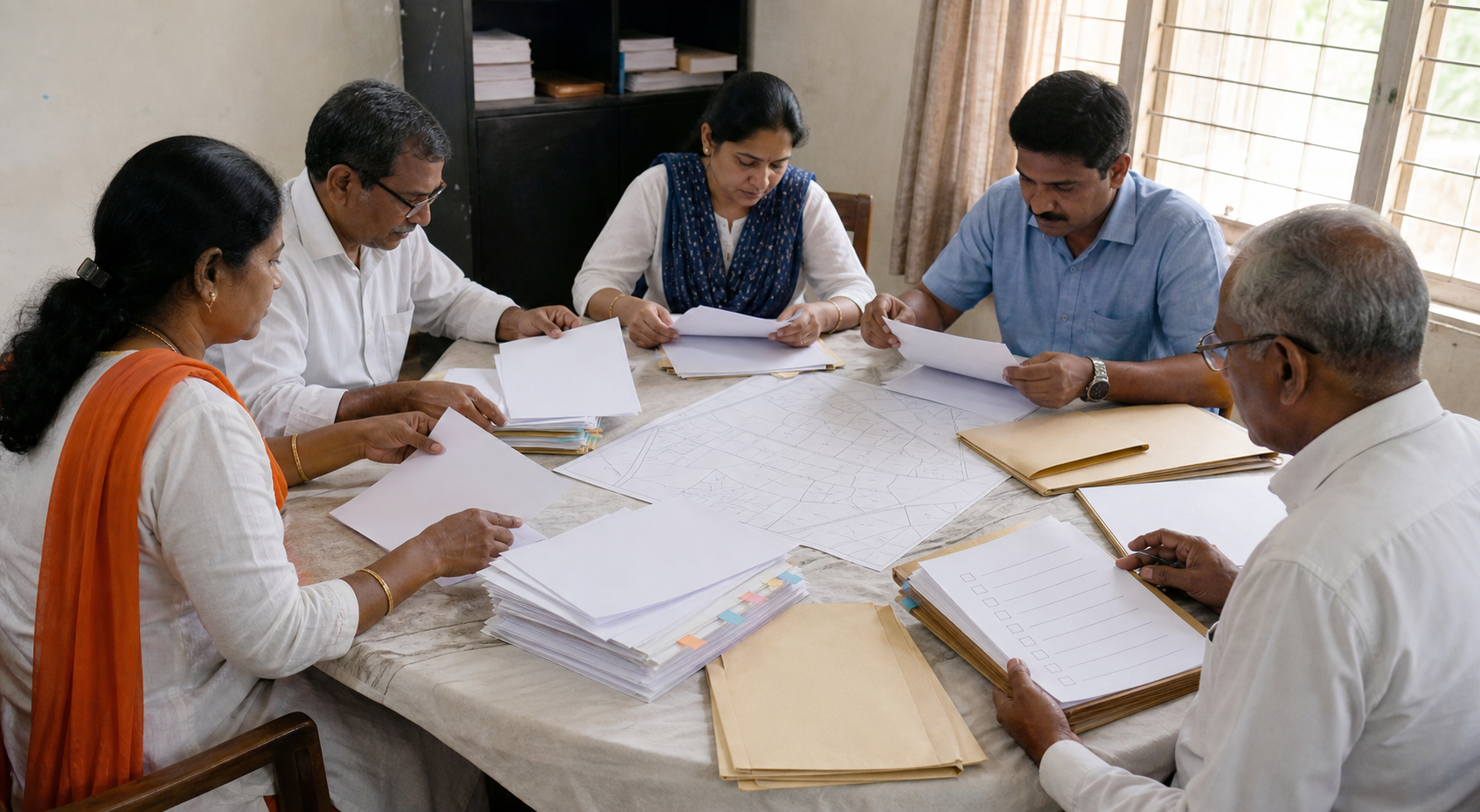
If you support Sakal Hindu Samaj’s demand, the next task is to turn a statement of preference into an evidence-backed public-interest case. Religious identity may explain why citizens are alert, but it cannot substitute for the parcel record, a documented police requirement, or a lawful administrative decision.
- Use precise language. Say that a representation has been submitted and that the competing proposals require disclosure. Do not describe an allotment as complete unless you possess the signed order.
- Create a shared document file. Keep the land record, applications, maps, correspondence, receipts, replies, minutes, and orders together. Label every item by date and issuing office so that supporters do not circulate conflicting versions.
- Ask the police authority directly. Request written confirmation of whether it needs a facility in Hupari, whether this parcel is suitable, and whether funds or departmental approval exist. A police-use argument becomes materially stronger when it comes with an operational requirement rather than an outside assumption.
- Request comparable allocation records. Ask how the same authority has treated earlier applications for religious, community, and government facilities on grazing or other public land. Comparable cases can reveal whether the rule is being applied consistently.
- Demand a reasoned written decision. The administration should identify the parcel, competing claims, legal authority, existing use, objections, alternatives, and reasons for its conclusion. An unexplained announcement will only prolong the controversy.
- Keep public action peaceful and record-based. Submit representations, attend lawful hearings, correct false claims, and preserve acknowledgements. Trespass, intimidation, or obstruction can expose participants to legal consequences, endanger people, and divert attention from the merits of the land question.
A pro-Hindu position is strongest when it insists on institutional fairness without assigning collective guilt to ordinary Muslims or presuming facts about an unnamed applicant. Dharma in public life requires courage, but it also requires restraint, truthfulness, and accountability from public power. Those principles allow you to oppose preferential treatment without asking for preferential treatment of your own.
Hupari land dispute FAQ
Has the grazing land been allotted to an Islamic Centre?
No final allotment is established by the presently known facts. What is established is that Sakal Hindu Samaj submitted a representation asking for the land to be reserved for police personnel facilities instead.
What single document would most clearly establish an allotment?
Look for the operative signed order from the competent authority. It should identify the exact parcel, beneficiary, approved use, conditions, and status. A public statement, petition, meeting reference, or unsigned page is not an adequate substitute.
What should concerned citizens do next?
Obtain the parcel number, request the full administrative file, seek written confirmation of the police requirement, and ask for a reasoned decision applying the same standard to every proposed beneficiary. Share verified documents rather than conclusions that the documents do not support.
If you are participating in the Hupari campaign, make your next public communication a precise request for records and a uniform public-land rule. That gives the administration questions it must answer and gives the community a case that remains credible after the slogans have faded.
References
