

If you are arranging Jyeshta Gauri Puja around work, travel, guests, or a shared family home, block all three dates before you make any other plans. The observance does not begin and end with the main puja: Avahan comes first, and Visarjan or Udwasan completes it.
In 2026, the sequence runs from September 17 through September 19. You can use the plan below to organize those days without replacing your household’s kulachar, inherited ritual method, or locally applicable muhurat.
Jyeshta Gauri Puja 2026 dates at a glance
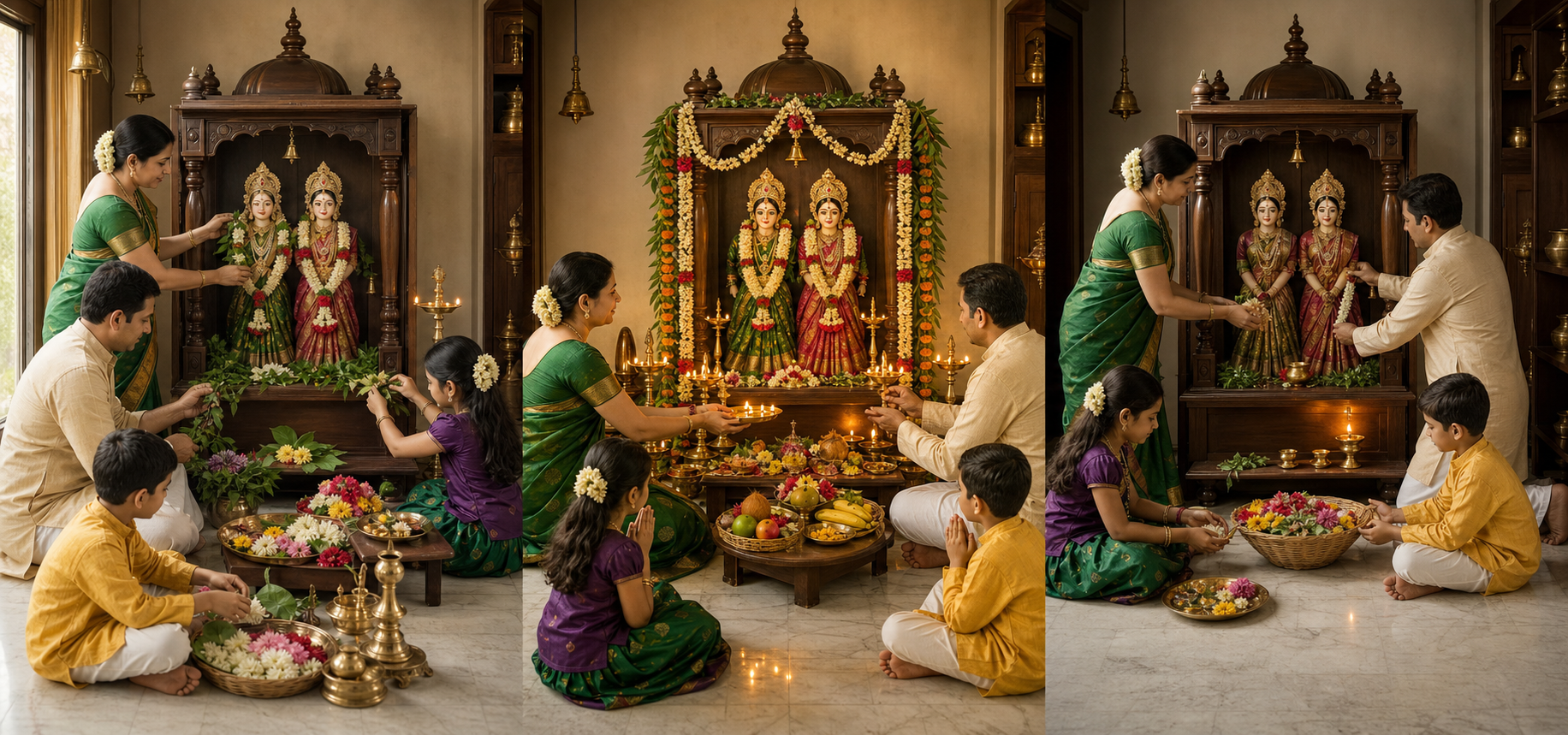
Jyeshta Gauri Pujan, also written as Gowri Puja, is observed during Bhadrapad in Maharashtra. In 2026, the three-day observance begins on September 17 and concludes on September 19.
| Date | Stage | What you need to plan |
|---|---|---|
| September 17, 2026 | Gauri Avahan | Prepare the worship space and conduct the welcoming or invocation according to your family tradition. |
| September 18, 2026 | Gauri Pujan | Keep the main worship period free and coordinate the participation of family members and guests. |
| September 19, 2026 | Gauri Visarjan or Udwasan | Complete the observance according to household custom and make the necessary concluding arrangements in advance. |
If a guest asks for the main puja date, September 18 is the useful answer. If you are responsible for the observance, however, mark September 17-19. Treating only the middle date as important can leave Avahan hurried and the conclusion improvised.
There is another easy calendar mistake to avoid: the observance falls during Bhadrapad. Do not try to derive its 2026 dates from the word “Jyeshta” alone; use the three-date sequence above.
Confirm the local muhurat before fixing your timetable
The dates establish the ritual sequence, but they do not by themselves supply the exact clock time for your home. Panchang timings can depend on location and the calendrical method being followed. Confirm the applicable Avahan, Pujan, and Visarjan windows with the panchang, priest, temple, or knowledgeable family elder your household normally trusts.
When you ask for guidance, give the city where the puja will actually take place. Then request all three timings together:
- The Gauri Avahan window for September 17.
- The expected Gauri Pujan period for September 18.
- The Gauri Visarjan or Udwasan window for September 19.
- Any household-specific rule that affects when preparations, offerings, or the conclusion must occur.
Do not circulate a bare time in the family group. Write the stage, date, city, and authority used beside it. A message such as “Avahan: September 17, local time confirmed from our usual panchang” is much harder to misunderstand than an unexplained screenshot.
Avoid assembling the schedule from unrelated calendars. Taking Avahan from one panchang and Visarjan from another can create a sequence that neither calendar intended. Choose the authority your family follows, record its timings, and use it consistently across the three days.
Build one practical plan for all three days
Before September 17, create a single planning note rather than three disconnected checklists. Put the confirmed timings at the top, followed by the household custom, the materials your family actually uses, and the person responsible for each stage.
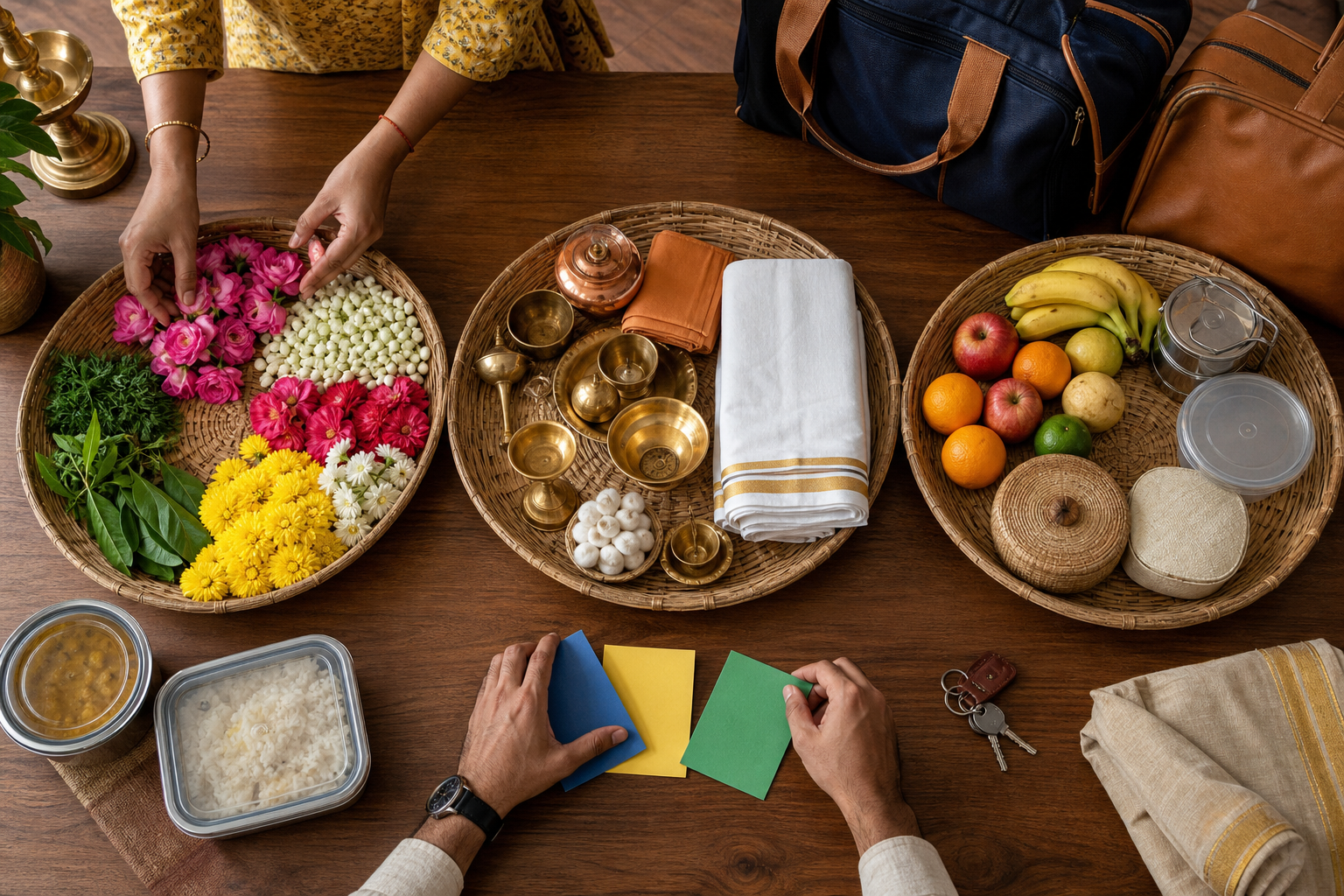
- Prepare for Avahan before its window begins. Ready the designated space, the form of Gauri used in your home, the worship articles, lamps, flowers, offerings, and any traditional decorations. Separate essential puja items from optional decoration so that presentation work cannot delay the invocation.
- Protect the Pujan period on September 18. Keep the central worship time clear of errands, travel, and elaborate hosting. Tell relatives whether they are being invited for the puja itself or for a meal or visit around it; otherwise, guest logistics can overtake the observance.
- Plan Visarjan or Udwasan before Avahan. Decide who will conduct or assist with the concluding observance and what must happen to the materials afterward under your custom. If your practice involves immersion or another location-dependent arrangement, confirm the permissible local option ahead of time.
This is also the point to account for anyone whose presence matters to the family tradition. Check work schedules, school hours, travel, and accessibility before announcing the final timetable. Until the precise muhurat is confirmed, keep all three dates provisionally protected rather than promising that a ritual will fit around another commitment.
Let kulachar decide the ritual details
A calendar can tell you when the three-day arc falls. It cannot determine every ritual choice for every household. The form in which Gauri is welcomed, the arrangement of the worship space, the offerings, the recitations, and the manner of Udwasan may be governed by kulachar and regional or family practice.
When instructions conflict, use a clear order of authority:
- Your household’s established kulachar and inherited practice.
- Guidance from the elder, priest, or temple that knows that practice.
- The locally applicable panchang for the ritual timings.
- Generic online checklists as organizational reminders, not as replacements for the first three.
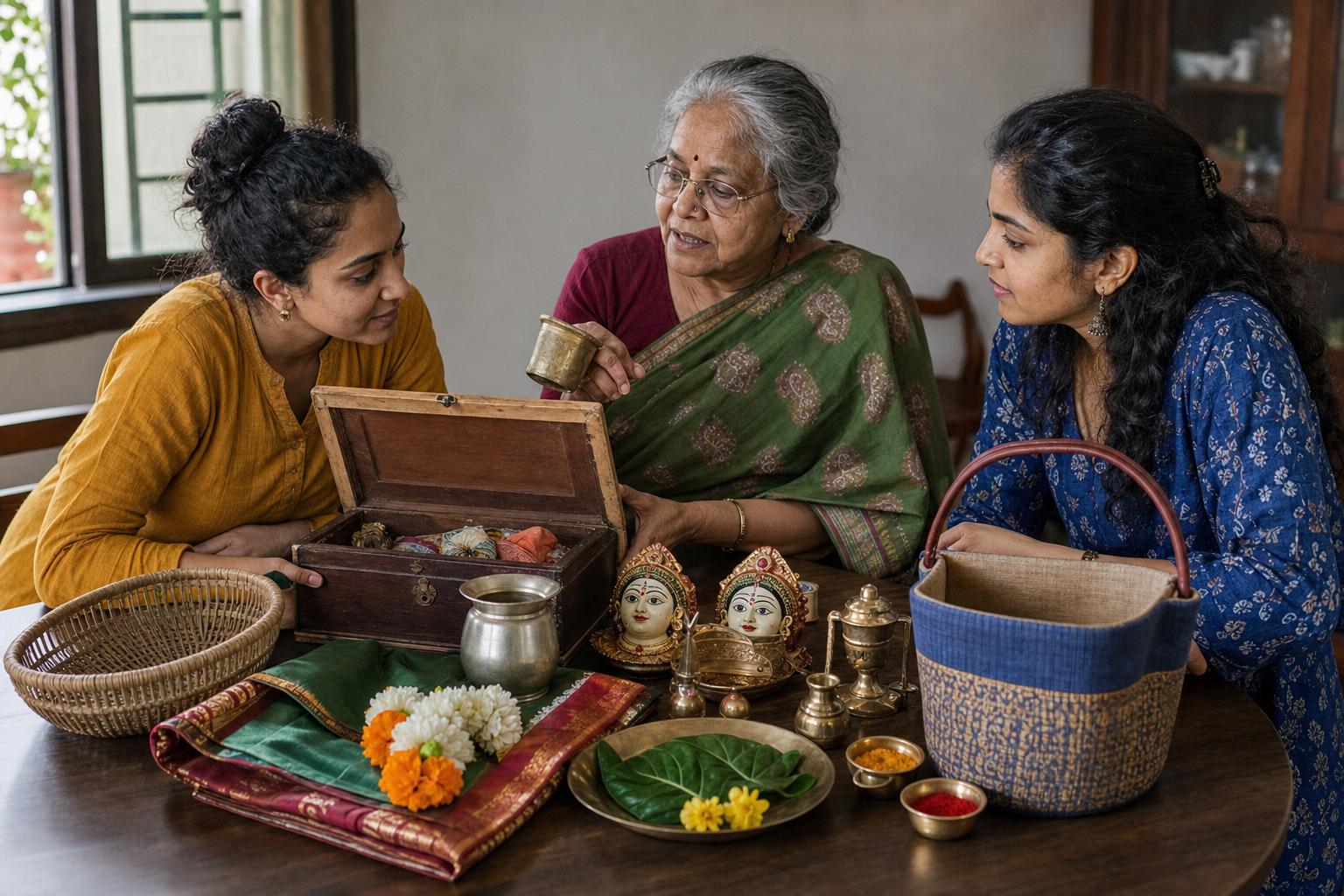
If this is your first year taking responsibility, do not wait until Avahan to discover what the family considers essential. Ask the person who previously organized the puja to walk through the sequence from arrival and setup to Udwasan. Write down which parts are fixed, which are optional, and who normally performs them. That conversation is more useful than accumulating a longer shopping list from unrelated traditions.
Key takeaways for Jyeshta Gauri Puja 2026
- Gauri Avahan falls on September 17, Gauri Pujan on September 18, and Gauri Visarjan or Udwasan on September 19, 2026.
- If you are hosting or conducting the observance, protect all three dates rather than planning only for the main puja day.
- Confirm exact clock times for the place where the puja will occur; do not treat a date as a complete muhurat.
- Use one trusted panchang or customary authority consistently across Avahan, Pujan, and Visarjan.
- Let kulachar determine the ritual details, materials, offerings, and method of conclusion.
- Arrange the third day’s conclusion before the first day’s Avahan so that the observance ends with the same care with which it begins.
Create three linked calendar entries now: Avahan on September 17, Pujan on September 18, and Visarjan or Udwasan on September 19. Leave the clock times marked “to be confirmed” until your local guidance is settled, then share one final schedule with everyone involved.
References
