

You do not have to choose between embarrassment about Bharat and applause for every patriotic claim that crosses your screen. If exaggeration makes you cautious but constant cynicism feels equally false, your instinct is sound: national pride should be strong enough to celebrate and disciplined enough to check its facts.
The useful question is not simply, “Should you feel proud?” Ask what happened, who made it possible, what remains unfinished, and what the achievement now requires from you. That turns civic pride from a mood into a habit of citizenship.
Key takeaways
- Celebrate the exact achievement. Do not enlarge a real success into a claim the facts cannot carry.
- Distinguish a completed result, an official designation, and an announced plan. Each can matter, but they are not interchangeable.
- Look behind the headline for the people, institutions, infrastructure, and sustained work that produced the result.
- Turn admiration into participation: learn the names, preserve the record, support the relevant field, and share the claim accurately.
- Reject the false choice between pride and scrutiny. Scrutiny protects credible pride from propaganda.
Put truth, proportion and duty at the centre
Patriotism is an attachment to a country. Civic pride is what you do with that attachment. It affects how carefully you speak about national success, whether you give credit fairly, how you treat public institutions, and whether you help preserve what previous generations built.
A Dharmic civic ethic does not require us to pretend that Hindu, Buddhist, Jain and Sikh traditions are identical. It can still insist on a common discipline: affection does not cancel truthfulness, and honour brings responsibility with it. Pride without restraint becomes vanity. Criticism without belonging becomes sterile. The healthier position holds belonging, truth and duty together.
You can test any patriotic claim through three questions:
- Truth: Can you state exactly what happened, when it happened, and whether it was completed, designated or merely proposed?
- Proportion: Are you celebrating the achievement itself, or turning it into proof that every problem in the field has been solved?
- Duty: What conduct should follow from this success: better public understanding, support for participants, protection of an institution, or more responsible use of a shared resource?
These questions do not diminish an achievement. They keep it believable. A precise success can inspire people for years; an inflated one often collapses after the first challenge.
Read each national success as the work of a system

A medal, launch or international designation gives you a visible moment to celebrate. The deeper civic lesson lies in the system behind it. When you learn to see that system, national achievement stops looking like a procession of isolated miracles.
Private space achievement rests on public capability too
Skyroot Aerospace launched Vikram-1 from ISRO’s Satish Dhawan Space Centre at Sriharikota on 18 July 2026. The mission was identified as the first orbital launch by a private Bharatiya space company, making Bharat the third country with a domestic private firm to reach that milestone. Skyroot was also credited with reaching space on its first attempt.
There are several layers of achievement here. Pawan Kumar Chandana and Naga Bharath Daka started the company in 2018, but the result also belongs to the scientists and engineers whose names will rarely lead a headline. The launch site points to another layer: private enterprise did not appear in an institutional vacuum. Public scientific capacity and newer entrepreneurial capacity met in the same mission.
So do not reduce the event to “a start-up succeeded,” or enlarge it into “Bharat now leads every part of the global space industry.” Say what was accomplished, name the founders without erasing the team, and notice the public-private chain that enabled the launch. If you are discussing it with a student, move past the spectacle of the rocket. Ask them to identify the engineering, testing, launch infrastructure and organisational discipline that had to converge before lift-off.
A medal table is the beginning of the sporting story
Bharat placed fourth at the 2026 Glasgow Commonwealth Games with 39 medals: 13 gold, 17 silver and 9 bronze. The aggregate matters, but the individual results reveal dimensions that a national total cannot.
Mirabai Chanu became the first Bharatiya woman weightlifter to win three consecutive Commonwealth Games gold medals. Gulveer Singh won silver in the men’s 10,000-metre track race. Bharatiya para-athletes also delivered an impressive performance. One competition therefore offers several different reasons for attention: consistency across successive Games, progress in an event where a Bharatiya medal is rare, and achievement by para-athletes who should not be treated as a ceremonial footnote.
When you share a sporting success, name the athlete and event before reaching for a generic declaration that “India won.” Follow the sport outside the medal ceremony. Learn what kind of preparation the event demands, and include para-sport in the same sporting conversation rather than placing it in a separate category of sympathy. Accurate attention is a form of respect.
Conservation requires both technology and restraint
Maharashtra’s initiative at Thane Creek Flamingo Sanctuary illustrates why the status of a claim matters. A Rs 45-crore Eco-Nature Park is planned as the country’s first AI-powered bird sanctuary. AI-enabled cameras, acoustic sensors and data analysis are intended to monitor species, migration, nesting and behaviour in real time. Nature trails and birdwatching facilities are also planned around the Ramsar-designated wetland.
This is a proposal to watch, not a finished result to describe in the past tense. Its civic value will depend on implementation: whether monitoring improves conservation and research, whether visitor facilities respect nesting and migration, and whether technology serves the wetland rather than becoming an attraction detached from it. You can welcome the ambition while keeping those questions open.
A separate conservation milestone has already occurred. Arunachal Pradesh’s Glaw Lake was added to the Ramsar list of Wetlands of International Importance on 3 August 2026. It was the state’s first such recognition and brought Bharat’s total number of Ramsar sites to 101.
The practical distinction is simple. Celebrate Glaw Lake as a completed designation. Describe the Thane Creek park as planned, then watch how it is delivered. Civic pride becomes more credible when it remembers the difference between recognition, announcement and implementation.
Use a verification routine before you share a claim

Patriotic misinformation often begins with a genuine achievement. A qualification disappears, an announcement becomes a completed project, or a narrow first becomes a claim of universal leadership. The safest response is not to stop sharing good news. It is to make the wording fit the evidence.
Before forwarding an achievement, rewrite it in a single sentence containing these elements:
- Actor: Name the athlete, company, institution, state or team that did the work.
- Action: Use the exact verb: launched, won, designated, announced, proposed or began.
- Date or event: Attach the claim to the relevant date, competition or decision.
- Scope: Preserve qualifiers such as private, domestic, Bharatiya woman, Commonwealth Games, state first or Ramsar designation.
- Status: Make clear whether the result is complete, still being developed or intended for the future.
- Traceability: Keep a working link with the claim so another person can inspect its basis.
Then check for category errors. A company milestone is not automatically dominance by an entire national industry. A fourth-place finish at a particular Games is not a permanent world ranking. An international wetland designation is not proof that every conservation challenge has been resolved. A planned sanctuary is not yet an operating sanctuary.
World-first and country-first claims deserve extra care because a missing qualifier can change their meaning. If the material available to you does not let you verify the broad version, make the sentence smaller. Precision is not timid writing. It is the difference between a claim that survives scrutiny and one that teaches readers to distrust even genuine success.
Keep criticism proportionate as well. A project can be incomplete without being worthless. A medal tally can be encouraging without proving that the whole sporting system is healthy. The honest civic position recognises the achievement, marks its limits, and keeps attention on what happens next.
Turn admiration into a repeatable civic practice
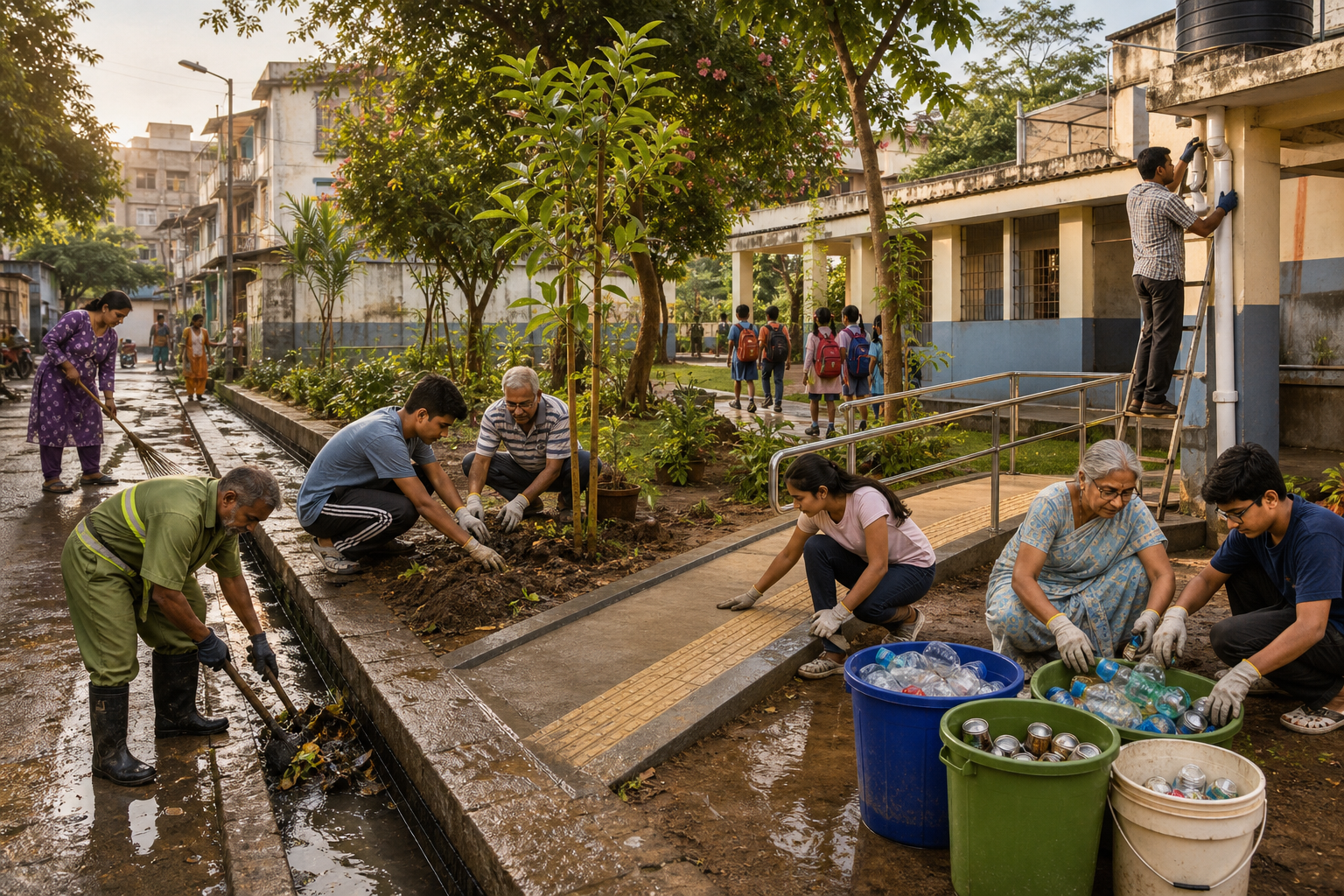
National pride changes public culture only when it influences conduct. You do not need a grand campaign. Build a small achievement record for your family, classroom, temple community, gurdwara community, study circle or cultural organisation. For every entry, note the field, date, people involved, exact milestone, present status, enabling institution, working link and an unanswered question.
That record immediately improves the quality of conversation. It prevents founders from swallowing the work of teams. It prevents a final score from erasing the athlete’s event. It prevents an announcement from quietly turning into a finished project. It also gives younger readers a map of living Bharat: not only rulers and wars from the past, but engineers, weightlifters, runners, para-athletes, conservation workers and local institutions at work now.
Pair each kind of achievement with an appropriate response:
- For science and technology: learn the chain of capability behind the visible result, share the names of builders, and help a young person investigate the relevant discipline.
- For sport: follow the athlete and event beyond the podium, include para-sport in ordinary coverage, and support credible local sporting opportunities within your means.
- For conservation: distinguish international recognition from protection on the ground, respect access restrictions at sensitive habitats, and judge technology by whether it improves ecological stewardship.
- For every field: preserve the exact wording of the achievement and correct exaggeration even when the exaggeration flatters Bharat.
This approach also helps you disagree without contempt. You can ask whether a claim is accurate without treating national affection as foolish. You can celebrate a result without demanding political conformity. You can criticise implementation without taking pleasure in failure. Civic pride belongs to the nation and its people; it should not be reduced to loyalty toward a party, personality or online faction.
Begin with the next Bharatiya achievement that reaches your feed. Pause before forwarding it. Write the exact claim, name the people and system behind it, check whether it is completed or planned, and choose a fitting act of participation. If the claim survives that process, share it confidently. That is how affection for Bharat becomes a trustworthy public culture.
References
