
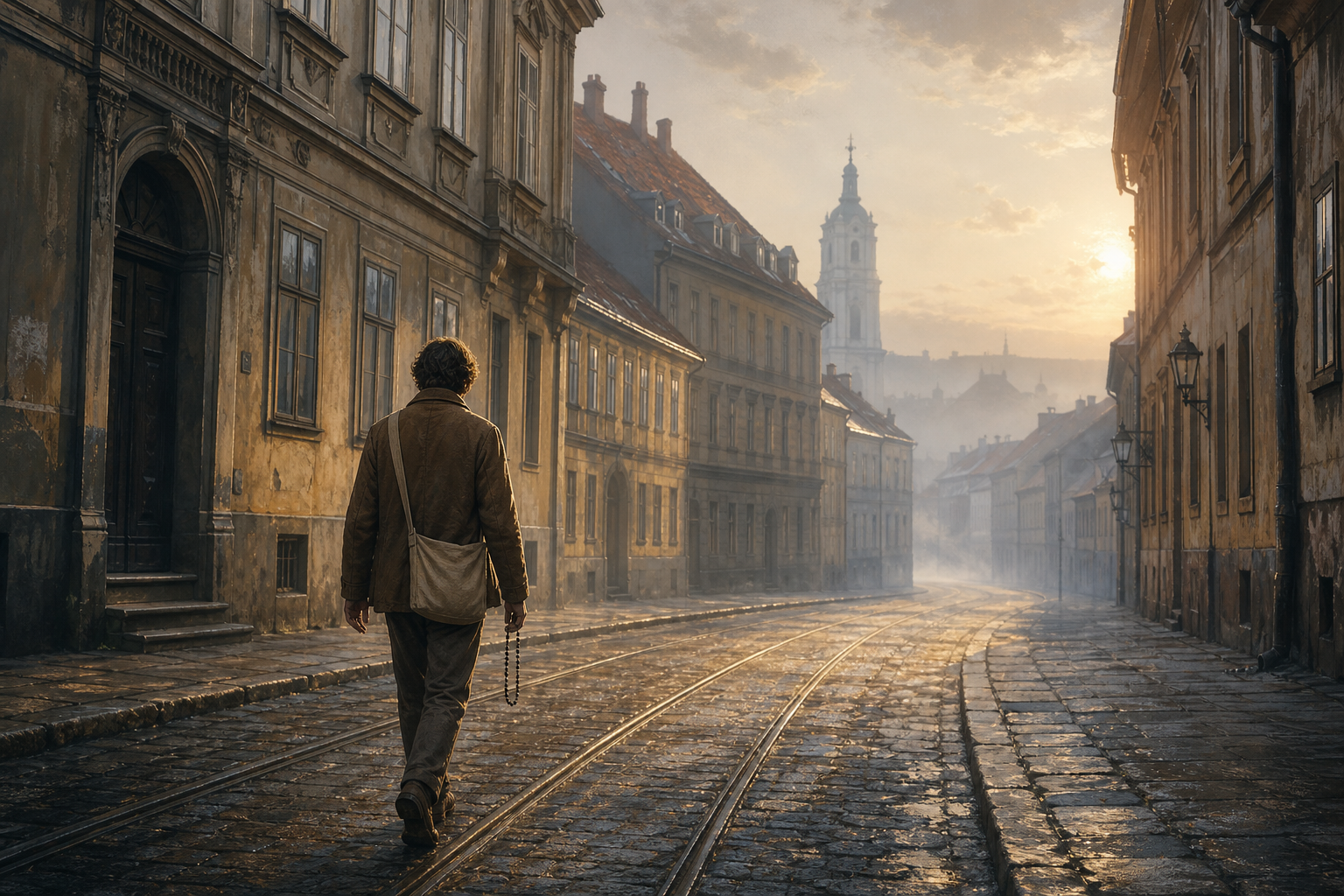
If you have just heard that Gopikantha Prabhu has passed away and want to understand why devotees are remembering him, begin with one fact: he was Srila Prabhupada’s first disciple from the former Yugoslavia. His significance, however, lies not merely in being the first. It lies in what he did after receiving the path of bhakti.
His known journey moves through three decisive moments: meeting devotees in 1974, entering temple life in Geneva that same year, and returning to Zagreb in 1977 to share Krishna consciousness under a communist regime. That sequence reveals the shape of his life: spiritual recognition followed by commitment, and commitment followed by responsibility.
Why being the first disciple from Yugoslavia mattered
Calling Gopikantha Prabhu the first disciple of Srila Prabhupada from Yugoslavia can sound like a ceremonial distinction. It was more consequential than that. It marked the point at which Srila Prabhupada’s mission had reached someone from that society who was prepared to reorganize his life around its teachings.
A pioneer is not simply the earliest person on a list. A pioneer carries a teaching across a boundary and helps it take root in a new place. Gopikantha Prabhu did not remain near the community through which he had discovered bhakti. He eventually returned to his own region and accepted the harder work of communicating what he had received.
This is the distinction worth preserving when you speak about him. His place in history was geographic, but his contribution was practical. He connected Srila Prabhupada’s international mission with local service in Zagreb. The honor of being first became meaningful because he treated it as an obligation to open a path for others.
The joy that redirected his life in 1974
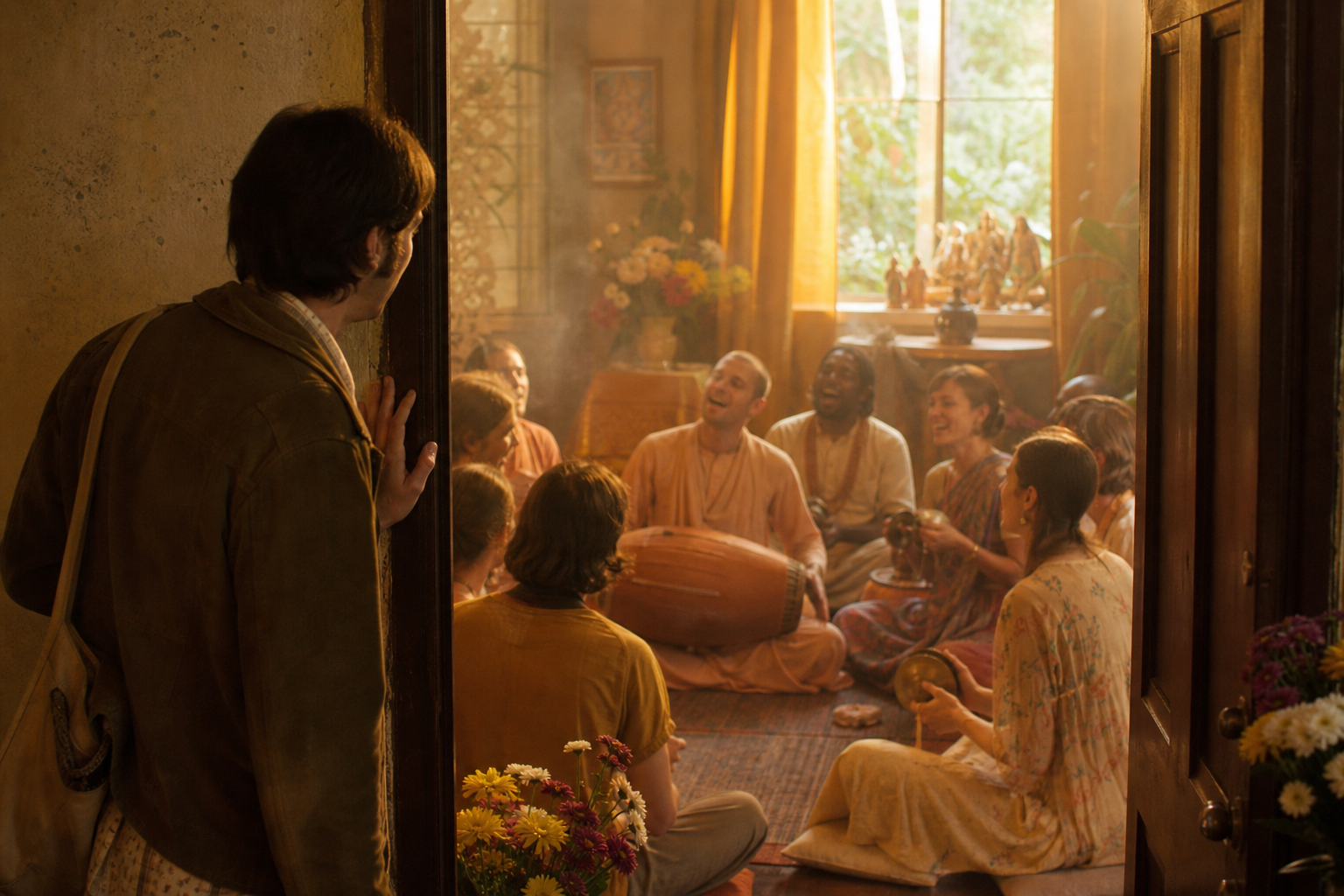
Gopikantha Prabhu’s change of direction began when he met Srila Prabhupada’s disciples in 1974. He gave up his previous way of life and moved into the ISKCON temple in Geneva during the same year. Soon afterward, he met Srila Prabhupada, whose personality deeply affected him.
What first drew him was not an institutional claim or a political argument. It was the quality he perceived in the devotees themselves.
They radiated such profound joy, something I had never encountered in anyone else.
Gopikantha Prabhu
He interpreted that joy as the outward sign of a higher inner state. His response was correspondingly serious: he did not stop at admiration but entered a disciplined devotional life.
There is a practical lesson here for anyone trying to share dharma. Philosophy matters, but another person often encounters the philosophy first through your conduct. Steadiness, generosity and spiritual joy do not prove every doctrinal claim, yet they can make someone willing to listen. If practice leaves no discernible mark on the practitioner, eloquent explanations will struggle to carry conviction.
Gopikantha Prabhu’s account also guards against mistaking attraction for commitment. He was moved by what he saw, but the enduring part of his story is what followed: temple life, acceptance of a spiritual master and years of service directed toward other people.
Returning to Zagreb under communist rule
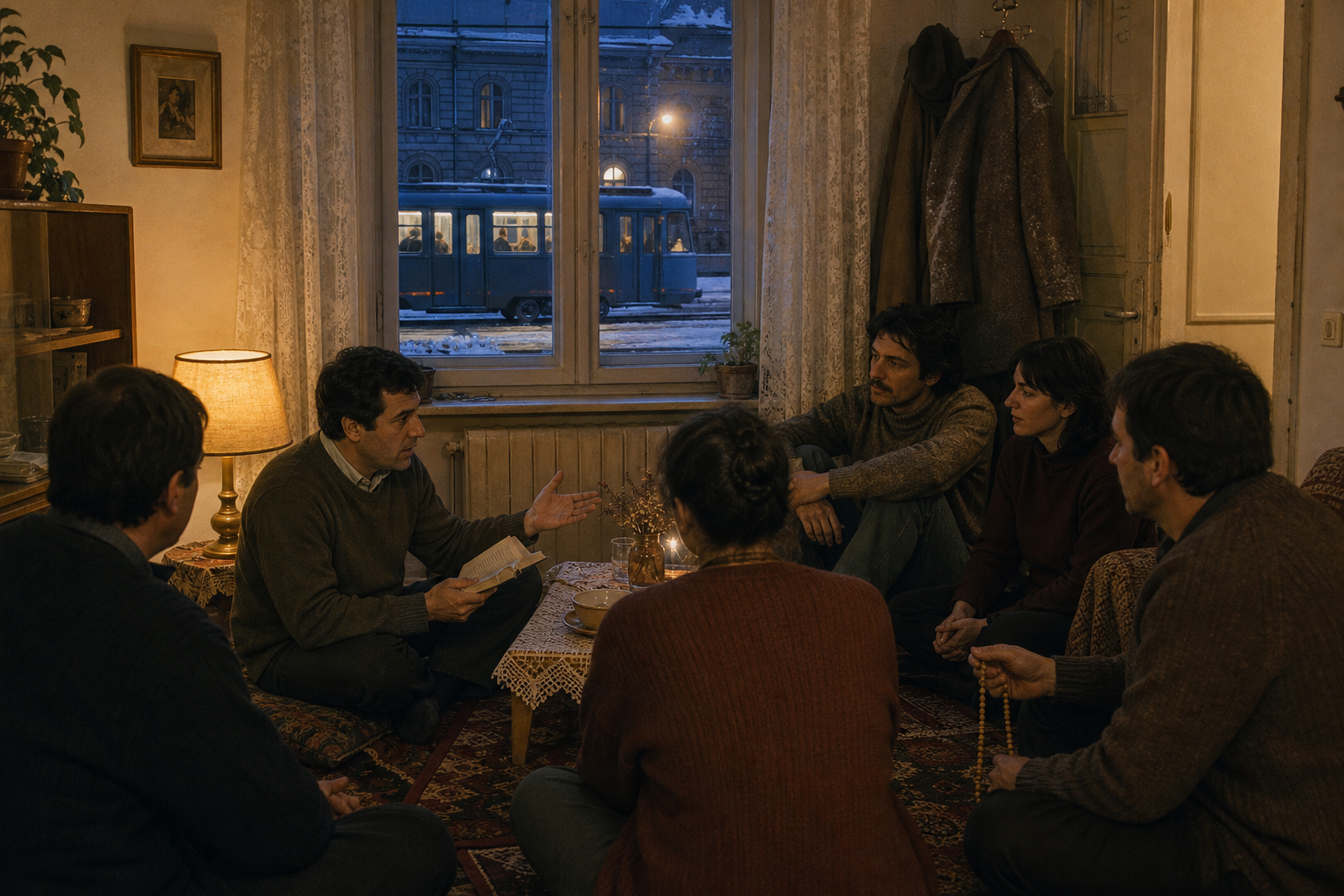
In 1977, Gopikantha Prabhu returned to Croatia and began preaching in Zagreb. The communist political environment made open religious outreach difficult, but he proceeded with determination. His service included printing and distributing books that explained the principles of bhakti-yoga.
The method matters. Books allow a teaching to travel beyond a single meeting. A reader can encounter an idea privately, revisit it and pass it to someone else. In a restrictive environment, printing and distribution are therefore not secondary administrative tasks. They preserve the vocabulary of a tradition and place it where future conversations can begin.
Gopikantha Prabhu understood this work through the instruction of his spiritual master. Srila Prabhupada wanted Krishna consciousness carried into communist countries and had promised ten times more mercy to those who preached there. That promise belongs within the devotional relationship between guru and disciple; it is not a reward that can be measured externally. It shows the spiritual weight Srila Prabhupada placed on difficult service.
Honest remembrance should stop where the confirmed record stops. We know that Gopikantha Prabhu printed and distributed books under communist rule. We do not have verified print runs, operational details or a documented account of arrests or punishment. His courage does not need invented drama. Returning to Zagreb and accepting the work itself is enough to establish the seriousness of his commitment.
How to speak accurately about his passing

The Vaishnava expression “left his body” reflects the Dharmic distinction between the enduring self and the temporary physical body. Within a devotional community, it is an appropriate way to announce a devotee’s departure. When writing for a broader audience, you can pair it once with “passed away” so that reverence does not come at the expense of clarity.
No precise date, place, cause of death or account of Gopikantha Prabhu’s final moments can be established from the record cited here. Do not fill those gaps with assumptions, even in a well-intentioned tribute. A faithful remembrance distinguishes a confirmed fact from a devotional interpretation and both from a personal memory.
Key takeaways
- Gopikantha Prabhu was the first disciple of Srila Prabhupada from the former Yugoslavia.
- He encountered Srila Prabhupada’s disciples in 1974, entered the ISKCON temple in Geneva that year and soon met Srila Prabhupada.
- He returned to Zagreb in 1977 and shared bhakti-yoga by printing and distributing books under communist rule.
- He saw this difficult outreach as a direct response to Srila Prabhupada’s desire to bring Krishna consciousness into communist countries.
- Details about the date and circumstances of his passing should not be added unless they are independently confirmed.
Turn remembrance into a fitting act of service
If you knew Gopikantha Prabhu, the most useful tribute you can offer may be a carefully documented memory. Record what you personally witnessed, where it happened and, if you can establish it, when. Mark anything you heard from someone else as second-hand. Photographs, correspondence and surviving publications become far more valuable when the people, location and approximate date are identified.
If you did not know him, you can still honor the form his service took. Read a work of Srila Prabhupada with sustained attention, place a book on bhakti-yoga in the hands of a receptive reader, or support responsible translation and distribution where access to Dharmic teachings remains limited. Choose an act of transmission rather than embellishing the story of his death.
Before you close this page, decide whether your remembrance will preserve a verified memory, continue the circulation of a teaching, or do both. That turns respect for Gopikantha Prabhu into the patient, person-to-person service by which he chose to honor his own spiritual master.
References
