
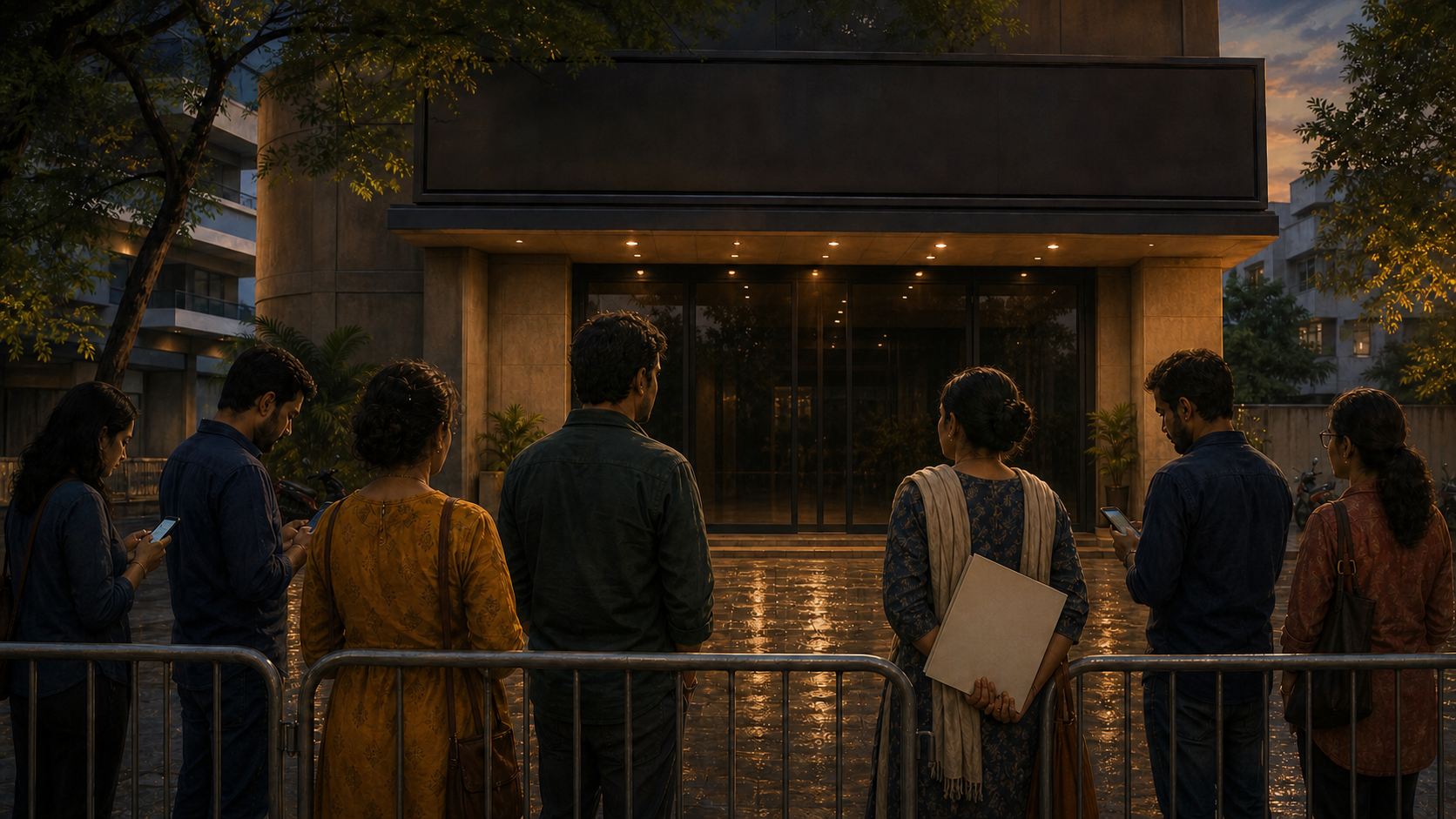
If you have seen a message saying Nasif Akhtar’s Bengaluru show was canceled, you probably want two answers: is the claim confirmed, and what should a Hindu who objects to the material do next? The careful answer is that Hindu organizations made formal objections while a public ticketing page continued to show Bengaluru dates. The advocacy is documented; the final event status still needs authoritative confirmation.
That distinction is not pedantry. When you defend Hindu Dharma, exactness is part of the work. A precise complaint is harder to dismiss. An exaggerated victory claim gives critics an opening to change the subject from the alleged insult to the accuracy of the people objecting.
Key takeaways
- The dispute concerns Nasif Akhtar’s stand-up show ‘Disrupted,’ proposed for The Comedy Theatre on Church Street in Bengaluru.
- Hindu Janajagruti Samiti submitted a formal representation to Bengaluru City Police, while Hindu Rashtra Samanvay Samiti also approached police authorities.
- The objections concerned remarks attributed to the comedian about Bharat, Hindu beliefs, Bhagwan Shri Ram, and the slogan ‘Jai Shri Ram.’
- Hindu Janajagruti Samiti has described the performance as canceled, but ticketing information continued to display Bengaluru dates from August 15 to September 12, 2026.
- Until the organizer, venue, ticketing platform, or police provides a dated confirmation tied to the specific performance, call it a reported cancellation rather than an independently confirmed one.
- If you object, use complete evidence, peaceful representations, a specific requested remedy, and prompt corrections when the facts change.
What is established and what remains unconfirmed

The program at issue was Nasif Akhtar’s ‘Disrupted,’ associated with The Comedy Theatre on Church Street. Hindu Janajagruti Samiti asked Bengaluru City Police to withhold permission, citing public order and communal peace. Hindu Rashtra Samanvay Samiti separately urged the authorities to ensure that the program did not insult or denigrate Hindu Dharma.
Those representations are the firmest part of the account. They establish that organized objections were made through formal channels. They do not, by themselves, establish that the police prohibited the show, that the organizer withdrew it, or that every Bengaluru date in a longer run was canceled.
Hindu Janajagruti Samiti has characterized the cancellation as a success and has connected it with another Bengaluru cancellation involving the same comedian that it reported in March 2026. That is a claim by a participant in the campaign, so it should be attributed as such unless an independent notice confirms the outcome.
The remaining ticketing information matters because it displayed ‘Disrupted Ft. Nasif Akhtar’ for Bengaluru across August 15 to September 12, 2026. A date range can cover several performances, and the cancellation of one venue or date does not necessarily remove the entire listing. Conversely, an unchanged ticket page does not prove that a performance will proceed; event pages can remain visible while organizers process a change. Neither inference is strong enough on its own.
If you are checking the claim before sharing it, use this sequence:
- Match the event exactly. Record the performer, show title, venue, city, and performance date. Do not treat a city-wide listing as proof about one Church Street performance.
- Look for the party that can confirm the decision. A dated message from the organizer, venue, ticketing platform, or police carries more weight than a campaign graphic or forwarded message.
- Check the practical status. A cancellation notice, disabled booking, refund communication, or explicit rescheduling message is stronger than the disappearance of a promotional post.
- Preserve the time of your check. Save the page address and a timestamped screenshot. Event status can change, and your wording should describe what was visible when you checked.
- Update the same audience. If you shared an unconfirmed claim and later receive a definitive notice, post the correction or confirmation in the same group or channel.
Before official confirmation, the accurate sentence is: ‘Hindu Janajagruti Samiti says the Bengaluru performance was canceled after objections; a dated confirmation from the organizer, venue, ticketing platform, or police is still awaited.’ If confirmation appears, identify the exact date and venue instead of expanding the claim to every Bengaluru performance.
Judge the exact expression, not merely the label ‘comedy’
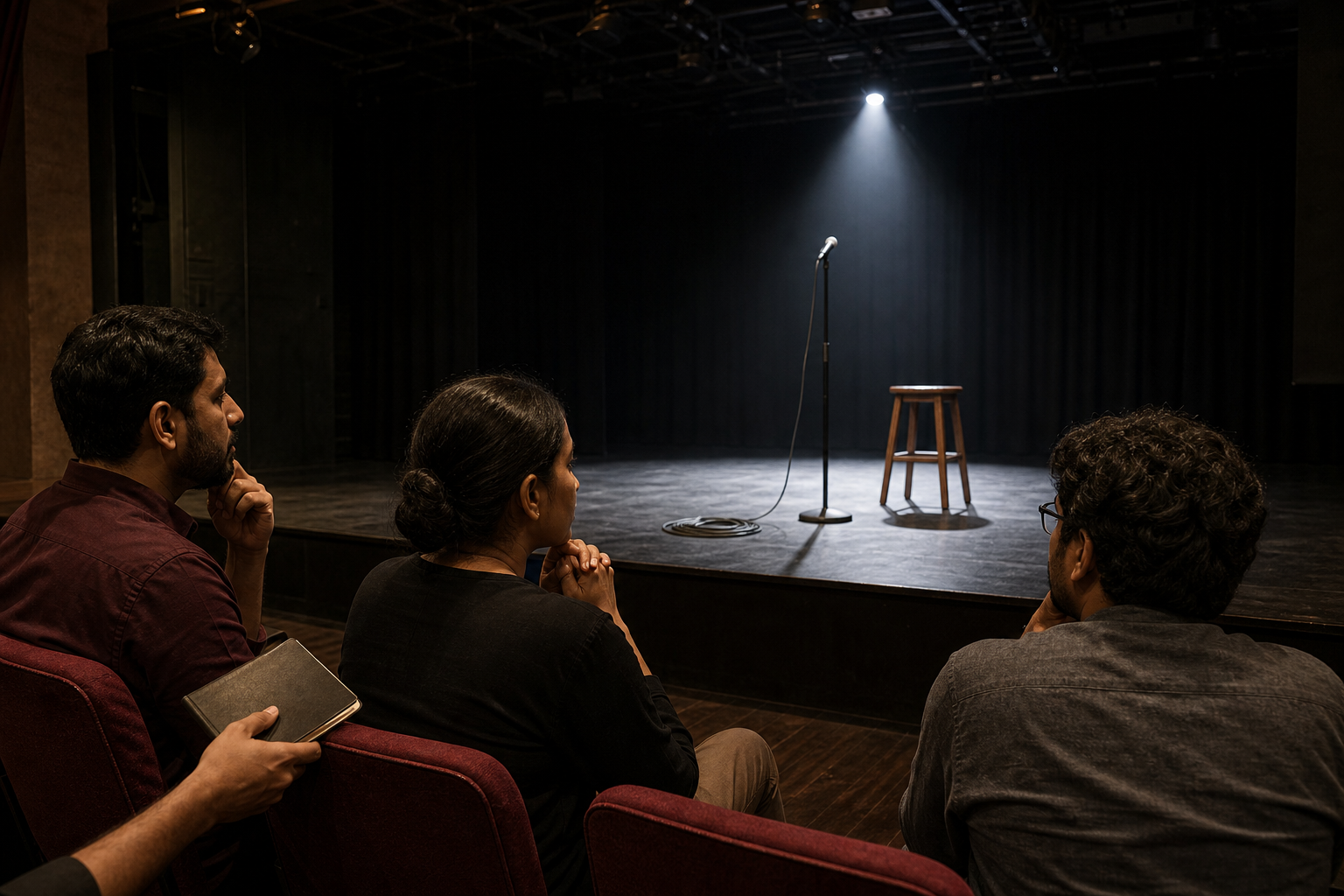
The objections focused on remarks attributed to the performer concerning Bharat, Hindu beliefs, Bhagwan Shri Ram, and ‘Jai Shri Ram.’ No complete transcript or full performance is available in the facts surrounding this dispute. You can therefore state what the organizations objected to, but you should not invent wording, motive, or context that has not been established.
This is also where the familiar argument about comedy and freedom of expression becomes too crude. Calling something comedy does not place it beyond criticism. At the same time, calling something offensive does not tell you exactly what was said, whether a clipped passage changes meaning in context, or what remedy is proportionate. A responsible Hindu objection should survive those questions rather than avoid them.
Use four tests when evaluating disputed material:
- What are the exact words or images? Work from the complete segment whenever possible. A paraphrase of a paraphrase is a weak foundation for a formal complaint.
- What is being targeted? Criticism of a political party, public campaign, or person’s conduct is not automatically an attack on Hindu Dharma. Direct use of a deity, sacred practice, or revered invocation as an object of contempt presents a different ethical issue.
- What does the surrounding context do? Check whether the disputed line is the performer’s assertion, a quoted view being challenged, a character’s speech, or part of a longer argument. Context can aggravate an insult as well as mitigate it.
- What can you honestly establish? You may describe material as insulting or demeaning in your judgment. Do not declare it illegal, inciting, or prohibited unless the available evidence and a competent authority support that conclusion.
The distinction between satire and denigration will not always produce universal agreement. The practical response is to make the object of your complaint unmistakable. Instead of saying only that ‘Hindu sentiments were hurt,’ identify the sacred figure, phrase, or belief involved; reproduce no more of the disputed expression than necessary; and explain how it was used. Specificity turns a general expression of anger into a representation that an organizer or authority can evaluate.
Freedom of expression also belongs to the audience. You may criticize a performance, decline to buy a ticket, ask a venue to review its programming, or submit a peaceful representation. Those actions do not require you to threaten the performer, intimidate attendees, or prevent others from speaking. The strength of the case should come from evidence and consistent standards, not fear.
Make a representation that can survive scrutiny

The Bengaluru episode shows the practical value of organized representation. If you face a similar situation, do not begin with a mass-forwarded accusation. Build a short file that another person can inspect without relying on your conclusion.
- Preserve the primary material. Save the complete video, audio, poster, event description, or publicly accessible page. Record the address, date, and relevant time code. Do not edit clips in a way that removes context.
- Separate observation from attribution. Write ‘the recording contains these words’ only when you have verified the recording. Otherwise write ‘these remarks have been attributed to the performer’ and identify the evidence you possess.
- Name the affected sacred object. If the concern is the treatment of Bhagwan Shri Ram or ‘Jai Shri Ram,’ say so directly. Do not bury a precise religious concern under broad claims about everything the performer has ever said.
- Identify the event precisely. Include the show title, venue, city, scheduled date, organizer, and ticketing page where known. This prevents action against an unrelated performance or an obsolete listing.
- Contact the responsible party. Ask the organizer and venue for review and written clarification. If there is a genuine public-order concern, a factual representation to the local police may be appropriate. Never manufacture a threat of disorder to create that concern.
- Request a defined remedy. Depending on the verified material, that could be clarification, removal of the disputed segment, an apology, a content advisory, cancellation of a specific performance, or a refund. A decision-maker can respond to a concrete request more readily than to generalized anger.
- Keep supporters within lawful boundaries. State explicitly that threats, doxxing, harassment, property damage, and intimidation are unacceptable. A campaign seeking respect for Dharma should not rely on conduct that violates another person’s dignity or safety.
- Close the loop. Publish the response you receive, subject to legitimate privacy concerns, and correct any earlier claim that proves inaccurate. Accountability includes accountability for your own campaign.
Sample wording: Subject: Request for review of ‘Disrupted’ performance at The Comedy Theatre, Bengaluru. I request a review of material attributed to the performer concerning [identify the deity, belief, or sacred phrase]. The relevant material appears at [link and time code]. I believe this usage demeans a sacred element of Hindu Dharma because [one or two factual sentences]. Please confirm whether the material is part of the scheduled performance and what action, if any, the organizer intends to take. This is a request for peaceful review and written clarification; it does not endorse threats or disruption.
Do not insert an exact quotation into that template unless you can verify it. If your only evidence is a second-hand description, say that plainly and ask for clarification before demanding a final remedy. Verification may slow a campaign by a few hours, but it protects the case from collapsing over a misquotation.
What a principled Hindu outcome should protect

The first principle is equal civic respect. Hindus are entitled to object when Bhagwan Shri Ram, Hindu beliefs, or a sacred invocation are treated with contempt. Their concerns should not be waved away merely because the disputed material appears in a comedy program. The same seriousness should apply when the sacred symbols of any community are deliberately demeaned.
The second principle is proportionality. Not every criticism of Hindu conduct is an insult to Hindu Dharma, and not every offensive statement requires the same response. Ask whether the disputed material is incidental or central, whether it can be corrected, and whether the organizer has engaged honestly with the concern. Cancellation is one possible outcome, not the only evidence that a representation succeeded.
The third principle is democratic discipline. Formal complaints, peaceful boycotts, requests for clarification, and public criticism give Hindu society lawful ways to defend its dignity. Threats and forced disruption weaken that position. They also make it easier for the original question of religious denigration to disappear behind a separate controversy about intimidation.
The final principle is truth. If an official cancellation notice emerges, publish it with the exact date and venue. If the show proceeds, do not conceal that fact; evaluate the actual performance and decide what further peaceful response is warranted. A movement becomes credible when its corrections travel as quickly as its claims.
Before you forward the next cancellation message, ask for one dated confirmation tied to the specific performance. If none is available, add ‘reported by Hindu Janajagruti Samiti; official confirmation pending.’ If you are filing an objection, attach the exact material and request one defined remedy. That combination of firmness and factual restraint protects both Hindu dignity and the public credibility needed to defend it.
References
