
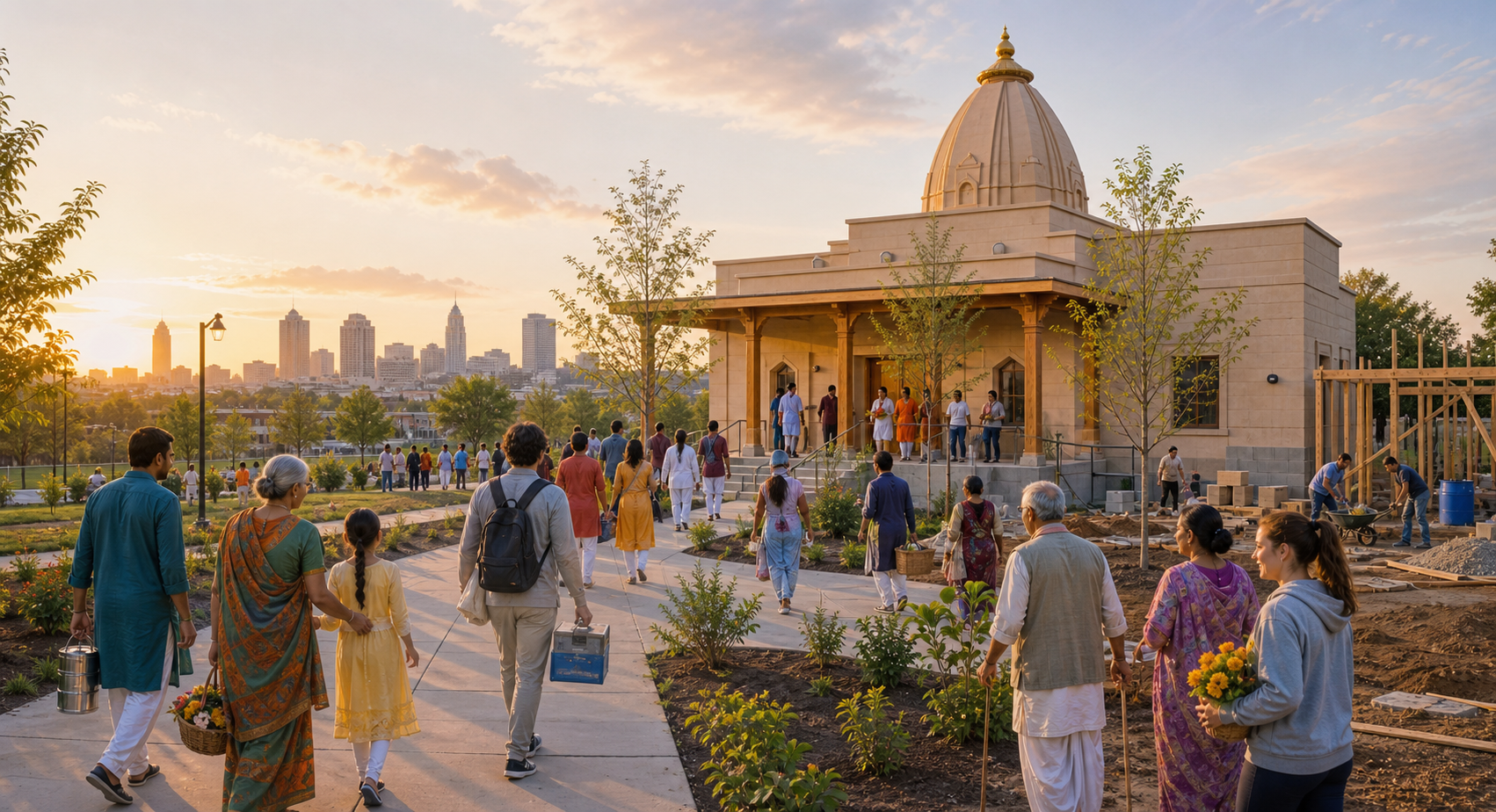
If you are trying to understand what is happening with the ISKCON Columbus temple development, you probably want more than an inspiring announcement. You want to know what is confirmed, what remains conditional, and whether your donation, time, professional skill, or encouragement would be useful now.
The responsible approach is to support the vision without turning hopes into facts. A new temple can deepen Krishna-bhakti in Columbus, but its lasting value will depend on the devotional community, operating capacity, accessibility, and financial discipline built alongside the physical space.
What the August 2026 framing does and does not settle
The clearest confirmed point is that ISKCON Columbus has presented its new-temple development through an August 2026 account of the project’s present and future. That framing matters because it places current conditions and future aspirations in the same conversation.
It should not, by itself, be read as proof of a particular construction phase, approved design, budget, permit, fundraising total, or completion date. Those are separate claims and require separate confirmation. If you are making plans around the development, extract six distinct answers rather than relying on the general impression that the project is moving forward:
- Current phase: Is the work at the level of vision, site preparation, design, approvals, fundraising, contracting, construction, or preparation for use?
- Completed milestone: What has actually been finished, accepted, acquired, or approved?
- Next milestone: What is the next result the community is working toward?
- Dependencies: Does that result depend on funding, professional review, government approval, contractor availability, or another decision?
- Requested help: Is the immediate need money, recurring volunteers, specialist expertise, materials, outreach, or patient attention?
- Next update point: What event will show that the project has moved from one phase to the next?
This separation protects the project as well as the devotee. It allows leaders to speak honestly about an evolving effort, and it keeps supporters from repeating a possibility as though it were a promise.
A temple must be ready as a building and as a community
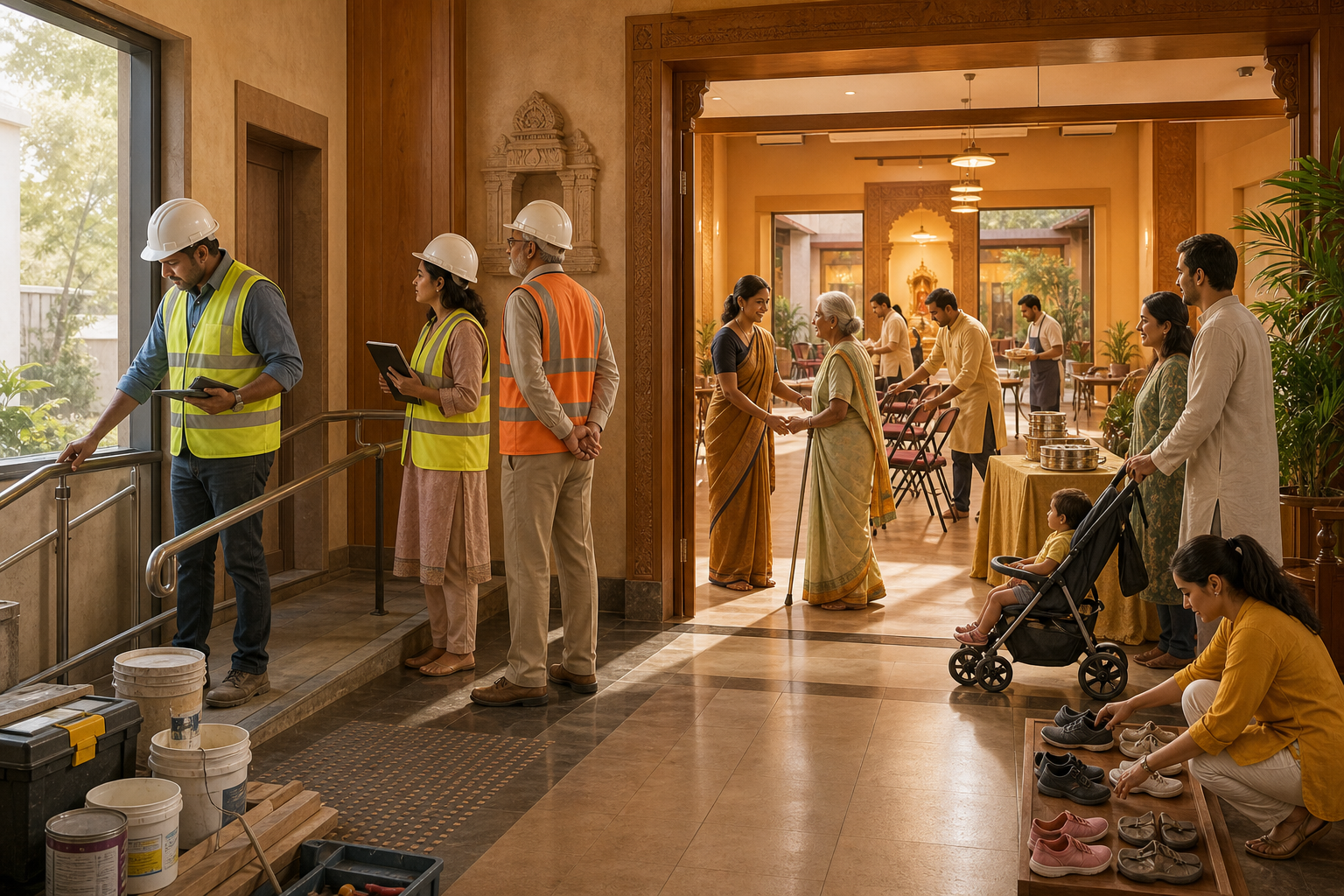
A temple is not merely completed when walls, utilities, and sacred spaces are ready. It must also be capable of sustaining seva. Deity worship, kirtan, scriptural study, prasada, festivals, pastoral care, children’s participation, hospitality, maintenance, and administration all place continuing demands on people and resources.
This gives you a better way to judge development. Ask whether the physical plan and the service plan are advancing together. A larger facility can create new opportunities, but it can also create a larger cleaning schedule, higher operating costs, more complex event logistics, and a need for dependable volunteers. These are not arguments against growth. They are the conditions that allow growth to become durable.
- Continuity of worship: The transition should protect regular devotional service rather than treating it as something to rebuild after construction.
- Program fit: Rooms should correspond to actual forms of worship, teaching, community meals, administration, storage, and care.
- Accessibility: Elders, families with young children, first-time visitors, and people with disabilities should be able to enter, move through, and understand the space without avoidable barriers.
- Volunteer capacity: Every recurring program needs people who can prepare, serve, clean, coordinate, and return the following week.
- Financial endurance: Capital fundraising and ongoing operations are different responsibilities. Completing a building does not complete its financial story.
- Welcoming practice: Signage, orientation, prasada arrangements, and clear explanations can determine whether a curious visitor feels able to return.
If you are attending community meetings or speaking with project leaders, ask about both forms of readiness. The most useful question may not be “When will it open?” but “What must be true for the temple to serve well after it opens?”
Use a milestone test before relying on any date
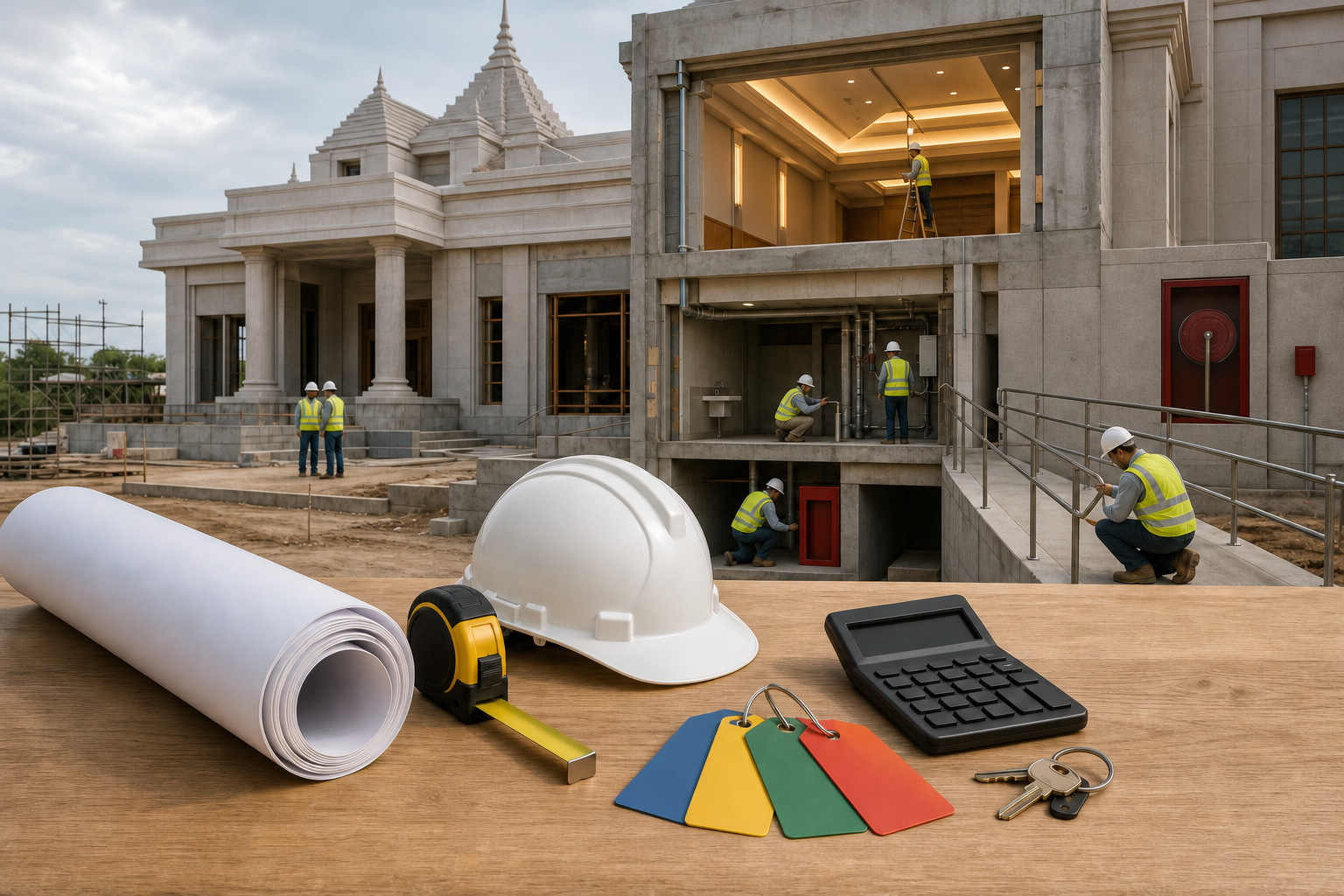
Temple developments often contain several kinds of statements that sound more definite than they are. A design image demonstrates an idea; it does not necessarily demonstrate approval. A fundraising target describes a need; it does not show how much unrestricted cash is available. A religious ceremony marks a sacred occasion; it does not automatically establish that a building is ready for public use.
Before relying on a projected date, apply a simple milestone test:
- Name the deliverable. “Design completed” is more useful than “planning is going well.”
- Name the dependency. Identify what must happen first, whether that is a decision, approval, contract, payment, or completed task.
- Name the evidence. Ask what observable result will show that the milestone has been reached.
- Distinguish target from commitment. A target expresses intention; a commitment normally rests on firmer dependencies and responsible parties.
- Look for the next checkpoint. A credible update should make it possible to recognize progress without waiting for the entire temple to be completed.
This test does not require every contract or sensitive negotiation to be published. It asks for a clear status at the right level: completed, in progress, awaiting a dependency, or proposed. That vocabulary is far more informative than confident language without a defined milestone.
Offer support that reduces the project’s burden
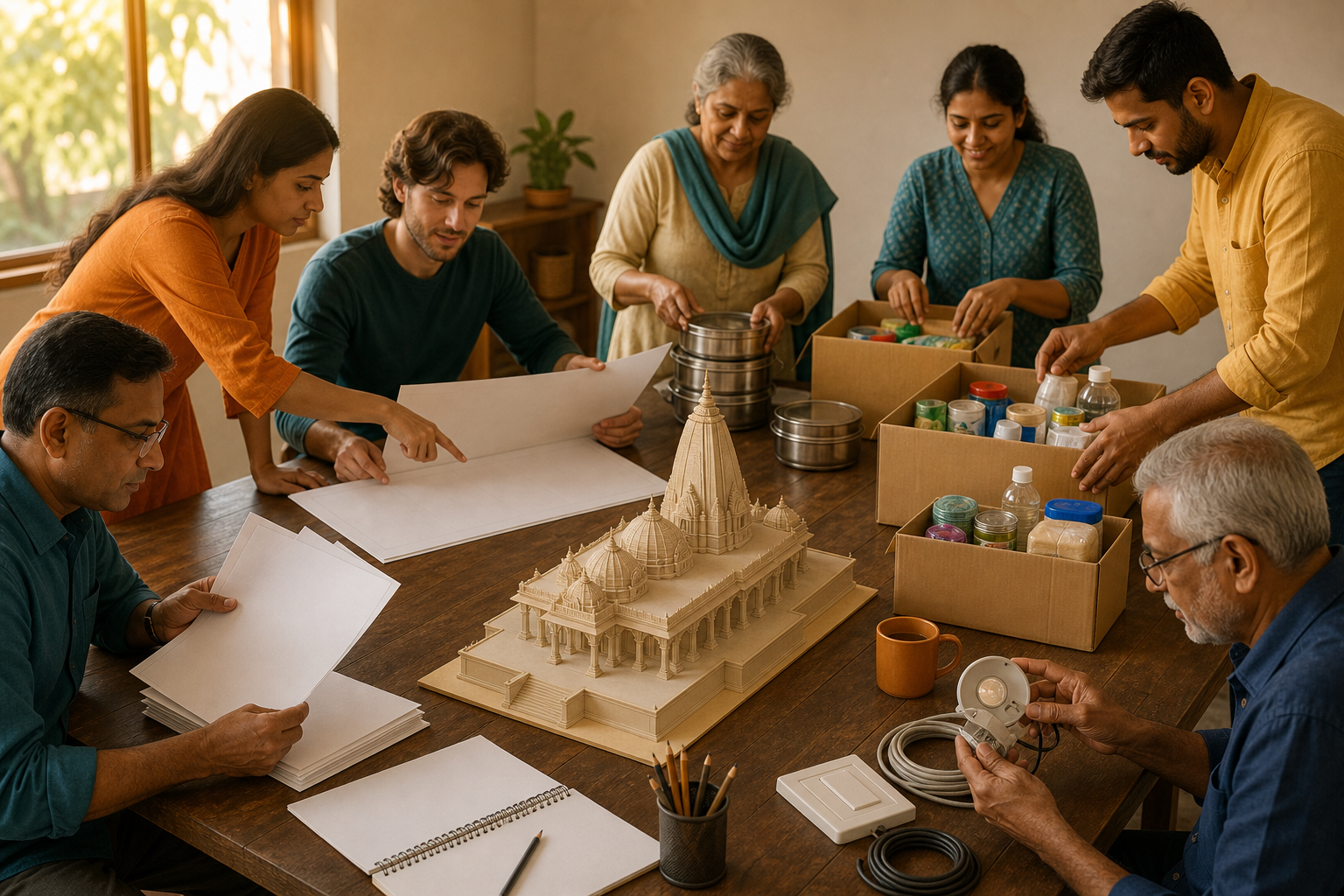
The easiest offer to make is “Let me know how I can help.” The easier offer to use is specific. Match your support to a confirmed need, state the time or resource you can actually provide, and let the relevant coordinator decide whether it fits.
- If you want to donate: Ask whether the contribution is for a designated capital purpose or for general temple needs, what milestone it is intended to support, and what happens if plans or timing change. Before making a substantial gift or relying on any tax treatment, verify the recipient, designation, documentation, and terms that apply to your circumstances.
- If you can volunteer regularly: Offer a defined commitment, such as a particular recurring day, task, or number of hours. A modest commitment that can be scheduled is more useful than an open-ended promise that may disappear when work begins.
- If you have professional expertise: Identify your discipline and the exact kind of review you can provide. Do not begin design, engineering, legal, fundraising, or procurement work independently; uncoordinated professional work can create conflicting assumptions or unusable deliverables.
- If you want to give materials or equipment: Wait for an accepted specification and a named recipient. An unsolicited item can impose storage, compatibility, insurance, installation, or disposal costs.
- If you communicate online: Share the current wording and its date. Do not add an opening date, budget figure, construction phase, or promise unless it has been explicitly confirmed.
- If you live nearby: Continue supporting existing worship and programs while the new-temple vision develops. The community that will animate a future space is being formed through present-day service.
Support also includes disciplined questions. Asking who owns a task, what unlocks the next milestone, or whether a need is recurring is not a sign of mistrust. When asked respectfully, those questions help convert enthusiasm into accountable seva.
Key takeaways and your next action
- The August 2026 framing confirms a public focus on both the present and future of the ISKCON Columbus new-temple development.
- Do not infer an approved design, construction stage, budget, or completion date from the existence of an update alone.
- Evaluate physical readiness and devotional-service readiness together.
- Before acting, identify the current phase, completed milestone, next dependency, requested help, and next checkpoint.
- Make donations and volunteer offers specific enough to coordinate, and verify material financial details before committing substantial resources.
- Preserve trust by sharing confirmed facts with their dates and leaving conditional plans conditional.
Your practical next step is simple: read the current update and write down four things in separate lines—the present phase, the next milestone, the condition that unlocks it, and the help being requested. If one is unclear, ask that precise question through an appropriate ISKCON Columbus contact. Then choose one form of support you can sustain. A temple’s future is served best when devotion, truthfulness, and dependable action remain together.
References
