
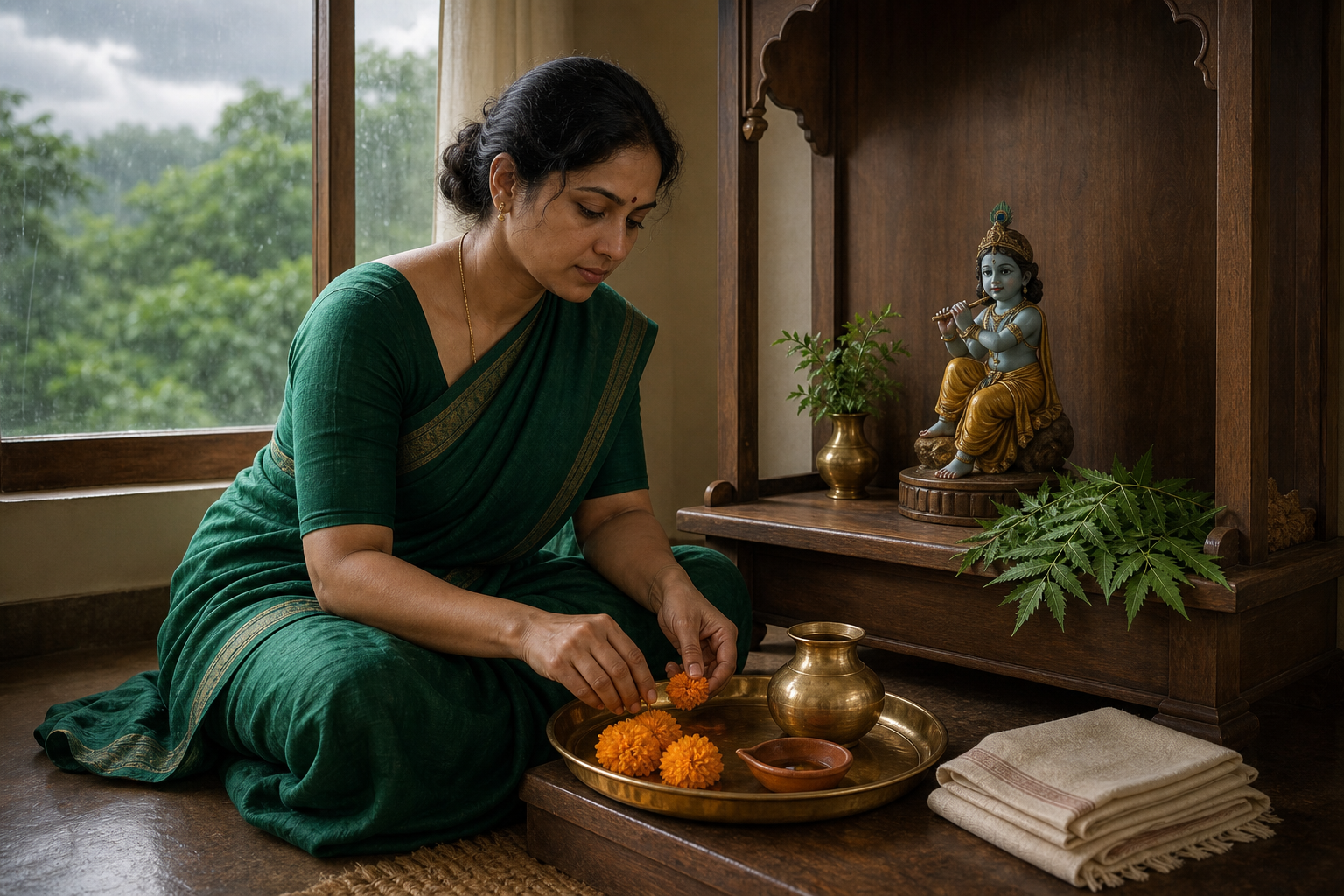
If you are arranging Kajari Teej Vrat for 2026, the first task is not buying puja items. It is making sure that the date and the method followed by your family or temple match. Mark August 31, then confirm the local ritual sequence before you prepare.
The central acts identified with the day are Sri Krishna puja and neem puja. That common core gives you a firm starting point without turning one household’s fasting rules, offerings, or order of worship into a universal prescription.
Mark both the civil date and the lunar tithi
In 2026, Kajari Teej falls on August 31. Its lunar-calendar marker is Krishna Paksha Tritiya in the month of Bhadrapada under the North Indian calendar. It can also be located as the third lunar day after Shravan Purnima.
Write down both forms: “August 31, 2026” for your household calendar and “Bhadrapada Krishna Paksha Tritiya” when speaking to a priest or checking a panchang. The date helps you plan; the tithi helps you verify that you have found Kajari Teej rather than another Teej observance.
This distinction matters because a search for “Teej 2026” can lead you to instructions for a different festival. When checking a temple notice or calendar entry, look for the full name Kajari Teej and the Krishna Paksha Tritiya marker. If a local temple outside the North Indian calendar tradition announces something different, ask which location and tithi convention it is following before changing your plan.
Build your preparation around Sri Krishna and neem puja
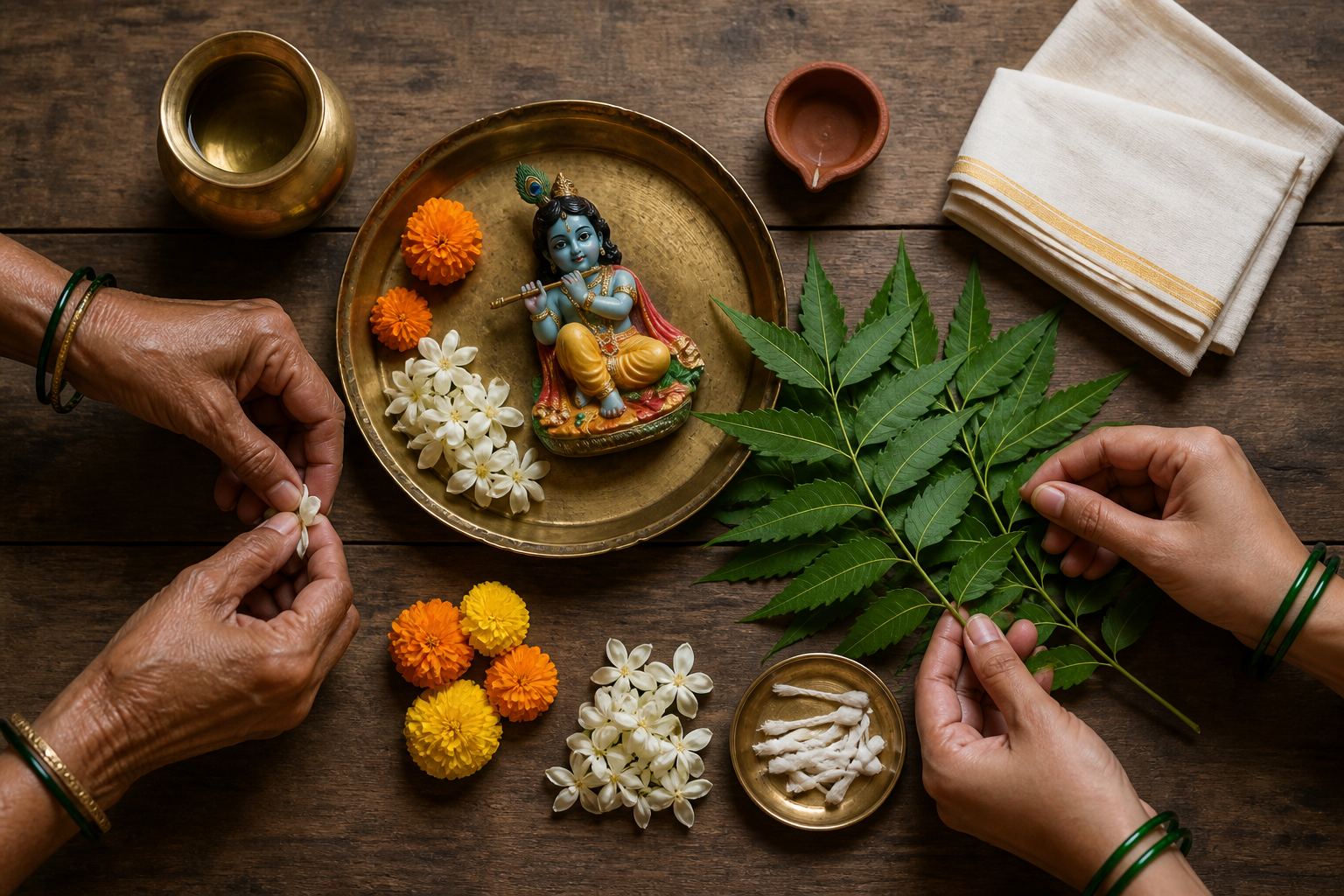
Women perform Sri Krishna puja and neem puja on Kajari Teej. These are the two elements you should preserve when sorting reliable instructions from unrelated festival material. The exact mantras, offerings, arrangement, and order may follow a family, community, or temple tradition, so they should be confirmed within that tradition rather than reconstructed from fragments found online.
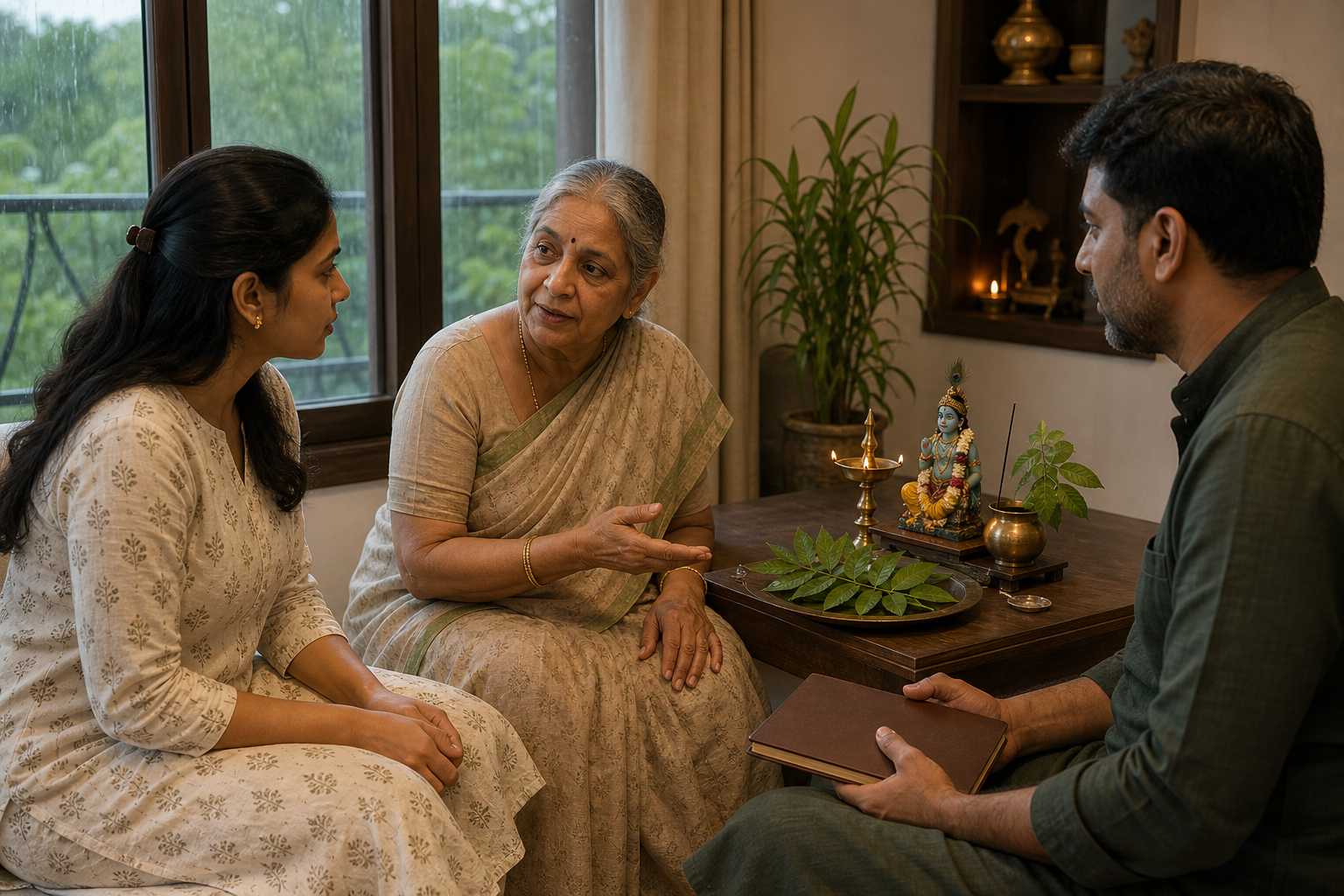
Before purchasing anything, ask the person who guides worship in your household or temple five concrete questions: who leads the observance; how and where the neem puja is performed; which puja materials are needed; what order the two acts follow; and how the vrat begins and concludes. Ask for the fasting rule separately instead of assuming that the word “vrat” supplies every practical detail.
This short conversation prevents two common forms of confusion. You will not prepare for Sri Krishna puja while overlooking neem puja, and you will not accidentally import the procedure of another Teej festival. Record the answers in the terms your family uses, especially if an elder is passing down the method. That turns preparation into preservation of a living tradition rather than a last-minute search for a generic ritual script.
Do not reduce the vrat to an unverified food rule
A vrat is a religious vow or discipline, not merely a menu. The name Kajari Teej Vrat does not by itself establish whether every family observes complete abstinence, a modified fast, or another discipline. A rule followed in one home should not be presented as binding on all women or all regions.
If you have an inherited method, follow it with understanding. If you do not, seek a clear instruction from a local priest or a knowledgeable elder before the festival. Ask when the observance starts, what is permitted, how it is completed, and whether any part is adapted for personal circumstances. Do not wait until the morning of August 31 to resolve these questions.
Food or water restriction also requires ordinary medical judgment. If fasting could affect your health or interfere with medication, obtain guidance from a qualified clinician and ask your priest how the vow can be observed safely. Do not skip medicine or medically necessary fluids simply to copy another person’s schedule. Ritual discipline and responsible care should not be placed in artificial conflict.
Keep Kajari Teej distinct from the other Teej festivals
Kajari Teej is regarded as the largest of the three Teej festivals celebrated in northern India. Its prominence explains why many households may possess a strongly inherited way of observing it. Prominence, however, does not make every regional procedure identical.
Use three checks before accepting or forwarding ritual instructions. The instructions should identify Kajari Teej by name, place it on Bhadrapada Krishna Paksha Tritiya, and retain both Sri Krishna puja and neem puja. If they fail those checks, they may concern another Teej or a different local observance. If they pass, you can then compare their details with the practice of your own family or temple.
Key takeaways for Kajari Teej Vrat 2026
- Kajari Teej Vrat falls on August 31 in 2026.
- Its lunar marker is Bhadrapada Krishna Paksha Tritiya under the North Indian calendar, the third lunar day after Shravan Purnima.
- Women perform Sri Krishna puja and neem puja; preserve both when planning the observance.
- Confirm the materials, ritual order, timing, fasting discipline, and method of completion with your family or temple tradition.
- Do not borrow instructions from another Teej merely because the festival names appear together online.
- If fasting could affect your health or medication, seek medical guidance and arrange a safe form of observance with your priest.
Put August 31 on your household calendar now. Your next useful step is to send the full tithi and the five preparation questions to the elder or temple you trust. Once those answers are settled, you can gather only what your tradition requires and approach the vrat with clarity rather than guesswork.
References
