

When your child is expected to correct a classroom account of Hinduism, your temple is managing a threat, or an allegation against a Hindu institution is circulating as established fact, the instinct may be to stay silent or answer with maximum force. Neither response is reliable. Silence leaves the public record uncorrected; an indiscriminate counterattack can outrun the evidence and weaken a legitimate case.
You need a third approach: protect people first, document precisely, make a remedy-sized request, and keep Hindu cultural life visible. That is the practical core of cultural safety in North America. The objective is not merely permission to worship, celebrate, teach, screen a film, or speak. It is the confidence to do those things without treating Hindu identity as a preventable hazard.
Measure safety by whether people can still participate
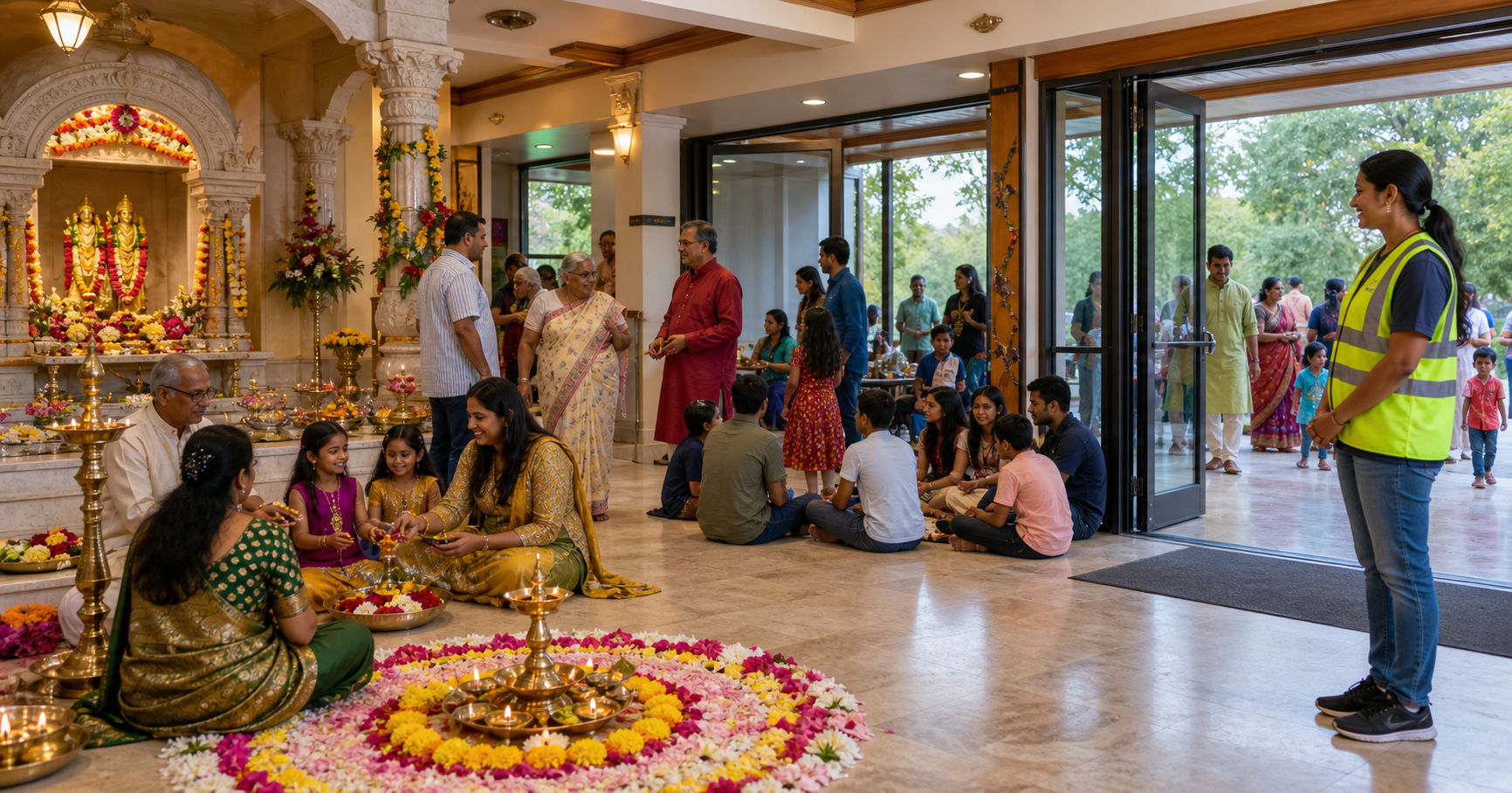
An event can remain officially open while becoming functionally inaccessible. A family that no longer feels safe entering a temple has lost meaningful access even if no authority ordered the doors closed. The same is true when a festival proceeds but parents keep children home, or when a cinema is technically free to show an Indian-language film but decides that the possible disruption is not worth the risk.
This is why attendance and confidence matter alongside legal status. Temples sustain worship and community ties. Festivals let children practice traditions in public rather than encounter them only as family memories. Indian-language films carry language, music, and cultural reference points into an ordinary commercial setting. When intimidation pushes these activities out of public life, the loss accumulates beyond the affected event.
In Canada, sections 2(a) and 2(b) of the Charter identify freedom of religion and freedom of expression, while section 27 marks the importance of multiculturalism. Those principles clarify the civic stakes. They do not, by themselves, prove that a particular disruption is a Charter violation or establish who caused it. Constitutional language should frame the value being protected, not replace an incident-level investigation.
For a temple, festival, or cultural venue, review the attendee’s entire journey rather than concentrating only on the stage or sanctuary:
- Before arrival, publish one reliable contact for reporting a credible concern. Tell attendees where official updates will appear so rumors do not become the emergency channel.
- At entry, decide who communicates with venue security or police, who can pause the program, and who helps families move to a safer location.
- During the activity, keep exits usable and make instructions understandable to elders, children, volunteers, and visitors who may not know the building.
- At departure, consider whether an incident has shifted risk to parking areas, transit stops, or people leaving in identifiable religious clothing.
- Afterward, communicate what is confirmed, what remains unverified, and whether normal programming will continue. Do not fill an information gap with a theory of motive.
If there is immediate danger, leave the danger area, follow the venue’s emergency instructions, and contact emergency services when it is safe to do so. Recording evidence is useful only when it does not keep you in harm’s way. Security succeeds when people can return with confidence, not when precautions become a permanent reason for cultural retreat.
Build an incident record before building a public narrative
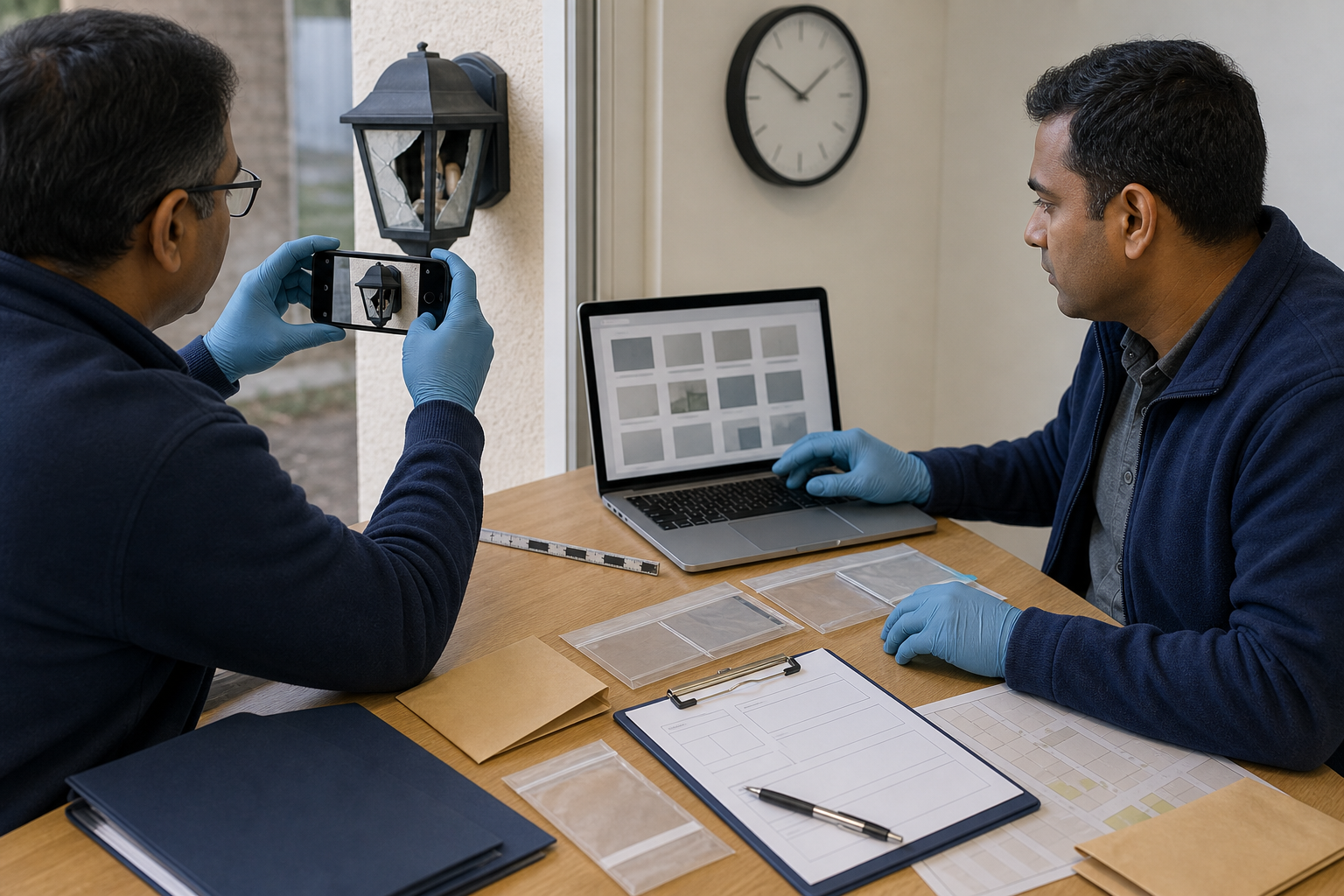
Hindu advocacy becomes more credible when it distinguishes four questions that are often collapsed into one: What happened? Who was responsible? What was the motive? Are separate incidents connected? Evidence for the first question does not automatically answer the other three.
Use an evidence ladder in that order:
- Confirm the event itself. Record the date, time, place, exact words or conduct, damage, injuries, and immediate operational effect.
- Identify the responsible person or group only when witness accounts, original footage, official findings, admissions, or comparable evidence support that identification.
- State a motive only when evidence connects the conduct to that motive. A target’s identity may justify investigation, but it is not conclusive proof.
- Connect separate incidents only after responsibility, methods, communications, or investigative findings establish the connection. Similar targets and close timing can raise a question without answering it.
This distinction matters when protest activity appears near alleged criminal conduct. A public demand to ban a film can be assessed for its own language and likely effects. It does not establish responsibility for arson, gunfire, vandalism, or an assault that occurred nearby in time. Criminal attribution requires evidence tied to the offence.
Maintain a private incident file even if you also publish a short statement. Preserve original photographs, video files, messages, emails, and voicemails rather than keeping only edited social-media copies. Note who obtained each item and when. Save venue, police, school, employer, or platform reference numbers if you receive them. Record practical effects such as a cancelled program, reduced attendance, added security cost, or a child avoiding class.
Label each assertion as confirmed, reported, disputed, or unverified. Record who confirmed it. A statement such as police confirmed damage but have not announced a motive is far stronger than a dramatic claim that cannot survive the next factual update.
Do not publish children’s identities, home addresses, access codes, private contact details, or unredacted footage that could expose attendees. Give originals to the relevant authority or qualified local counsel when appropriate. Reporting systems and legal remedies differ across states, provinces, institutions, and types of incident. If a threat, discrimination complaint, or public allegation could create serious safety or legal exposure, obtain advice from a lawyer qualified in the relevant jurisdiction rather than trying the matter through social media.
Ask each institution for a specific, verifiable remedy

A general demand for respect is easy to acknowledge and easy to ignore. An effective request identifies the exact problem, gives the decision-maker enough evidence to verify it, and names an action that falls within that person’s authority.
| Situation | What to document | What to request |
|---|---|---|
| Classroom misrepresentation | The exact slide, page, assignment, quotation, lesson date, and relevant context | A corrected statement, review of the cited material, and a meeting with the teacher or curriculum decision-maker |
| Media or institutional allegation | The precise claim, its original publication, and the current investigative or legal status | A visible correction or update that distinguishes allegation, evidence, procedural outcome, and adjudicated finding |
| Employer, university, or legislative policy | The actual policy text, definitions, affected conduct, and evidence offered for the measure | Clear definitions, viewpoint-neutral enforcement, safeguards against presuming Hindu culpability, and a documented review process |
| Temple or cultural-event risk | Credible threats, prior incident records, venue vulnerabilities, and expected attendee needs | A named liaison, proportionate protective measures, an incident protocol, and a plan for restoring normal access |
In disputes about caste, do not answer a sweeping accusation with a sweeping denial. Ask what conduct is alleged, what evidence supports it, which institution has authority to decide it, and what remedy is being proposed. You can oppose discrimination unequivocally while also opposing the assumption that Hindu identity is evidence of discriminatory conduct. Those positions are compatible.
Procedural outcomes must also be described accurately. The U.S. Department of Justice closed its investigation involving the BAPS temple in Robbinsville after allegations dating from 2021. In a separate matter, the State of California withdrew its case against two Cisco engineers in 2023 for insufficient evidence. These developments justify corrections wherever allegations or charges were presented as proven facts. They do not, standing alone, prove that every critic acted maliciously or that discrimination can never occur.
When requesting a correction, send a compact packet: the original wording, the verified development that makes it incomplete or inaccurate, replacement wording, and the person who can answer follow-up questions. Ask for both the underlying record and any prominent public summary to be updated. A correction buried in a file does little if the headline, training material, classroom slide, or policy memo that shaped opinion remains unchanged.
Give young Hindus support, not the burden of representing millions

A Hindu student who sees a distorted description of the tradition may feel compelled to correct it immediately. That child should not have to become a theologian, historian, spokesperson, and conflict manager in the middle of a lesson. Speaking up can be valuable, but it should be a choice supported by adults rather than an identity tax imposed on the student.
Give students a simple response they can use without entering a prolonged debate: identify the disputed statement, say that it does not fairly represent what they have been taught or practice, and ask for time to provide a considered correction. The student can then write down the exact wording and context. A parent, community educator, or advocacy organization can handle the institutional follow-through.
Adults should cover these functions before a problem arises:
- A family contact who listens to the student, preserves the student’s account in their own words, and obtains consent before sharing it.
- A subject-matter contact who can separate a factual error from a legitimate difference among Hindu traditions, sects, texts, and practices.
- An institutional liaison who knows whether the next step is the teacher, principal, department chair, school board, university office, or another decision-maker.
- An evidence custodian who keeps the original material and a dated record of requests, responses, and promised changes.
Do not turn a child into the public face of a dispute without informed family agreement. Public attention can outlast the original classroom problem. When the student does choose to lead, adults should still manage logistics, privacy, documentation, and escalation.
The same intergenerational structure strengthens community advocacy outside schools. A Las Vegas gathering marking CoHNA’s fifth anniversary brought students, parents, professionals, community leaders, and a representative from Senator Jacky Rosen’s office into the same room. That mix is useful because cultural knowledge, lived experience, institutional access, and civic confidence rarely sit in one person. Build a local network around those functions before the next controversy, not in the middle of it.
Key takeaways
- Cultural safety means confident participation, not merely an unlocked door or an uncancelled event.
- Protect people first. Document only when doing so does not prolong exposure to danger.
- Separate the incident, the responsible party, the motive, and any claimed connection to other events. Each conclusion needs its own evidence.
- Ask schools, media outlets, employers, universities, lawmakers, and venues for a concrete remedy within their authority.
- Describe legal and investigative outcomes precisely. Closure or withdrawal can require a correction without proving every broader claim on either side.
- Let young Hindus speak when they choose, but make adults responsible for evidence, privacy, institutional follow-through, and escalation.
Choose one institution your family or community already relies on: a school, temple, festival venue, cinema, university, or employer. Find its real reporting contact, prepare a blank incident record, and decide who will preserve evidence and request a remedy. Doing that before a crisis turns advocacy from improvised outrage into a durable form of cultural confidence.
References
- DharmaRenaissance Blog — Breakthrough: DOJ Ends BAPS Temple Investigation
- DharmaRenaissance Blog — Discover the Impact of Hindu Advocacy in Las Vegas
- DharmaRenaissance Blog — Keeping Hindu Cultural Life Safely Accessible in Canada
