

If you approach S.L. Bhyrappa through reverence or controversy, his reputation reaches you before his fiction. It is easy to inherit somebody else’s verdict – cultural guardian, philosophical novelist, ideological opponent – without discovering what the novels actually ask you to confront.
You need a method that neither turns admiration into worship nor treats disagreement as refutation. Bhyrappa’s importance lies in the way personal experience, philosophical inquiry, and Indian cultural roots enter the same dramatic world. The right question is not simply whether you agree with him. It is whether the fiction tests its people, duties, and ideas honestly.
Read the novels as arguments staged through human lives
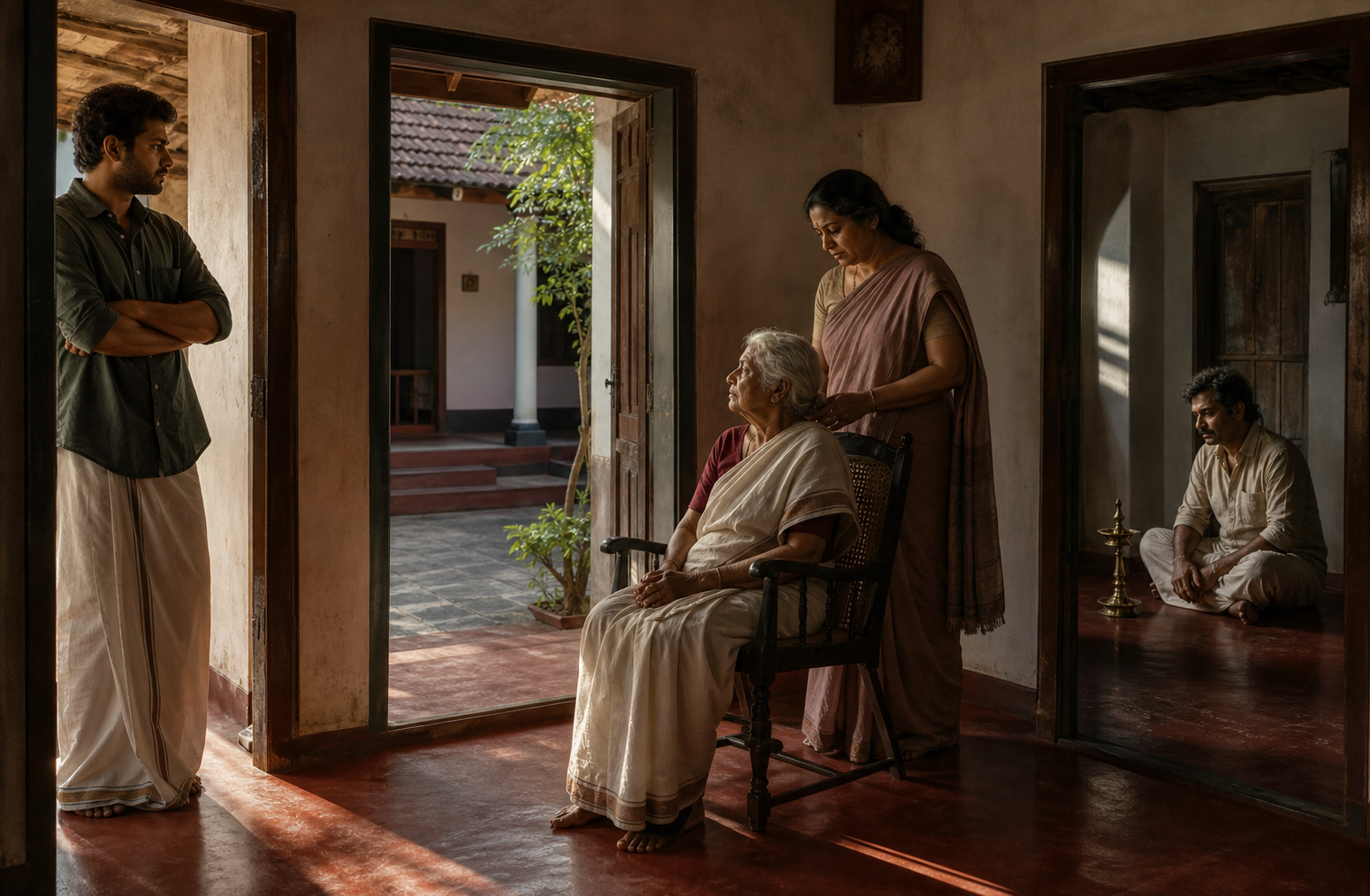
A philosophical novel is not a treatise with invented names added to it. Its argument happens through choices, relationships, losses, reversals, and consequences. A character may speak with great conviction and still be mistaken. Another may express an unattractive position yet expose a truth that the more sympathetic characters would rather avoid.
This distinction matters especially with Bhyrappa. If you lift one speech from its narrative setting and call it the author’s doctrine, you flatten the novel into a pamphlet. Look instead at who receives a serious hearing, what each person fails to understand, where the narrative places sympathy, and what every major choice costs.
Use four passes when you read:
- Name the conflict without choosing a winner. Frame it as a collision between claims that possess some force on both sides: inherited continuity and personal freedom, social responsibility and private desire, fidelity and self-preservation.
- Record each character’s best reason. Do not reduce one side to selfishness, ignorance, or oppression before the novel has made its case. Write down the duty, fear, desire, or experience that makes the position intelligible.
- Track the price of action. Note what is lost when a duty is obeyed as carefully as what is lost when it is rejected. Bhyrappa’s philosophical force is easier to see in consequences than in declarations.
- Preserve what remains unresolved. An ending can settle a plot without settling the moral conflict. The residue – grief, ambiguity, broken continuity, or an obligation that survives the decision – may contain the deepest question.
For a Dharmic reader, this is a necessary discipline. Dharma cannot be discovered by assigning every person a fixed label and then rewarding the label we already favour. You have to examine competing obligations under pressure. Only after doing that should you ask which interpretation the whole narrative supports.
Follow the movement from private choice to cultural memory

Bhyrappa’s fiction is described as epic not merely because of scale, but because an intimate decision can open onto kinship, inheritance, social order, spiritual responsibility, and civilisational memory. A person remains a person, yet that person’s predicament may also reveal a conflict larger than one household.
Read those two levels separately before joining them. In one margin, write the personal question: What does this individual want, fear, owe, or refuse? In the other, write the cultural question: What understanding of family, lineage, authority, sacrifice, or spiritual life becomes visible through that choice? A symbolic reading is persuasive only when it grows from the character’s particular circumstances.
This prevents a common mistake. A culturally rooted character is not automatically a mouthpiece for tradition, just as a character who challenges a norm is not automatically the voice of modernity. Symbols become meaningful through dramatic pressure. If you decide what a figure represents before attending to that figure’s motives and costs, you will find your own ideology rather than the novel.
The wider imaginative inheritance includes the Ramayana, Mahabharata, Vedanta, Hindustani music, and Indian aesthetics. Notice how these inheritances enlarge a conflict, but do not turn reading into a hunt for references. Ask what a remembered form, value, or image does inside the immediate scene. Does it offer continuity, intensify an obligation, expose a rupture, or give a private loss a larger meaning?
Cultural rootedness and ideological closure are not the same thing. A novel may draw its moral vocabulary from Indian civilisation while still placing an inherited expectation under severe scrutiny. That capacity to keep roots and examination together is central to Bhyrappa’s legacy.
Use Vamsa-Vruksha as a test of tradition under pressure
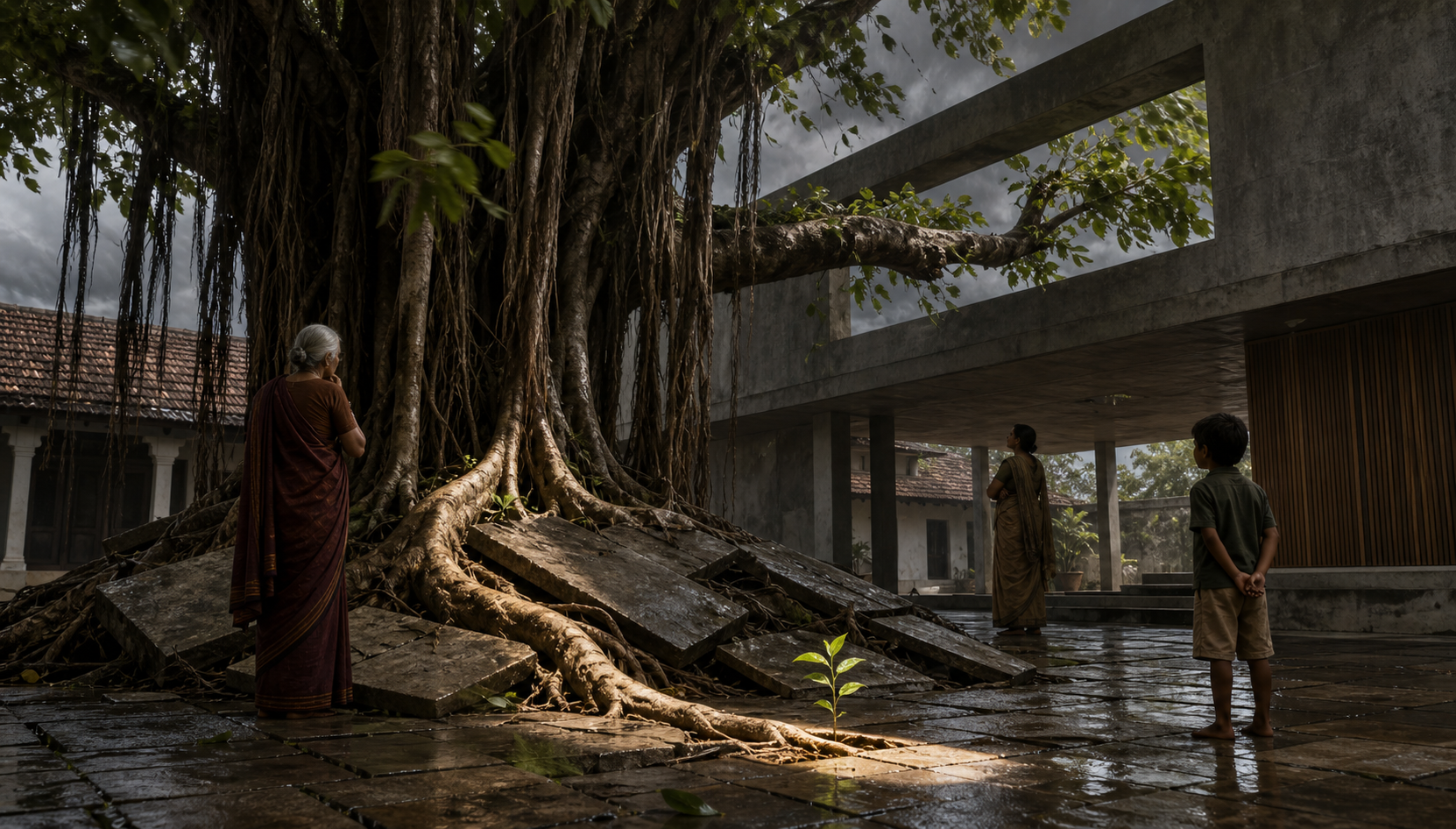
If your immediate question is whether Bhyrappa merely defends tradition, begin with Vamsa-Vruksha. Its value as a starting point lies in the double pressure it creates. Inheritance can provide identity, continuity, and belonging; inherited expectations can also impose obligations whose human cost must be examined.
Do not begin with the verdict that tradition is either sacred protection or social confinement. Both conclusions are too easy. Read once for the human action. Then revisit the decisive moments with five questions:
- What exactly is being inherited: affection, memory, duty, authority, status, or a way of understanding the self?
- Who benefits from continuity, and who bears its heaviest demand?
- What is lost when an inherited obligation is preserved?
- What is lost when that obligation is broken or remade?
- Does the ending reconcile personal freedom and continuity, or does it leave a remainder that neither side can absorb?
After the final page, write the strongest case for preserving the inherited order and the strongest case for changing it. Give each case the same space. Then identify the scene or consequence that most seriously weakens each position. This exercise will tell you far more about the novel’s philosophical structure than a label such as conservative, progressive, orthodox, or rebellious.
Do not make Vamsa-Vruksha stand as a verdict on the entire body of work. Use it as a controlled first test: Can Bhyrappa make inherited continuity emotionally real without making it immune to criticism? Can he represent change without pretending that change carries no loss? Your answers should come from the narrative’s distribution of reasons and consequences.
Judge the contested reputation by four different standards

Popularity, critical approval, cultural importance, and philosophical truth are not interchangeable. A widely read novel has demonstrated an ability to hold readers; it has not proved every position within it. Hostile criticism establishes disagreement; it does not by itself establish either artistic failure or intellectual courage.
Keep four questions separate when judging Bhyrappa’s legacy:
- Does the fiction work as fiction? Examine character credibility, emotional consequence, narrative pressure, and the relation between ideas and action.
- Is the philosophical contest fair? Ask whether opposing positions receive their strongest reasons or whether one is reduced to a convenient caricature.
- Does the cultural symbolism deepen the human story? A character should not become a civilisational emblem at the expense of psychological particularity.
- Can claims about reception be documented? Look for named critics, exact arguments, the works under discussion, and the passages offered as evidence.
Admiring assessments describe opposition from leftist critics alongside critical and commercial success. That claim belongs in the history of his reception, but it cannot settle the dispute on its own. Without identified critics and arguments, neither the alleged pigeonholing nor the weakness of the criticism has been demonstrated. If you encounter a sweeping accusation from either admirers or detractors, ask for the critic, the claim, the novel, and the textual evidence.
The commemorative expression Ghana-Sattva presents Bhyrappa as a writer of unusual substance and inner force. Its exact meaning is not defined in this context, so it is safer to receive it as a tribute than to treat it as a technical philosophical category. Memorial language can tell you what readers value, but close reading must show how that value is achieved.
This evidence-based approach does not diminish reverence. It protects Bhyrappa from being reduced to a mascot for one camp or a warning label for another. A serious legacy should be strong enough to generate inquiry, disagreement, and return visits to the text.
Key takeaways and your next reading step
- Treat each novel as a dramatic investigation, not a catalogue of the author’s approved opinions.
- Separate a character’s speech from the narrative’s larger pattern of sympathy, consequence, and unresolved tension.
- Read every major character first as a particular person and only then as a possible cultural symbol.
- Use Vamsa-Vruksha to test how inherited continuity and social change impose costs on one another.
- Judge claims about Bhyrappa’s critics only after locating named arguments and textual evidence.
Open Vamsa-Vruksha with one sheet of paper beside you. Write the central conflict at the top without choosing a side. After every major turning point, add what each choice preserves and what it destroys. When you finish, state the strongest unresolved question in one sentence. That question – not the reputation you brought to the book – is where your encounter with Bhyrappa’s legacy begins.
References
- DharmaRenaissance Blog – Discover the Transformative Legacy of S.L. Bhyrappa
- DharmaRenaissance Blog – A Reader’s Framework for Understanding S.L. Bhyrappa’s Legacy
