
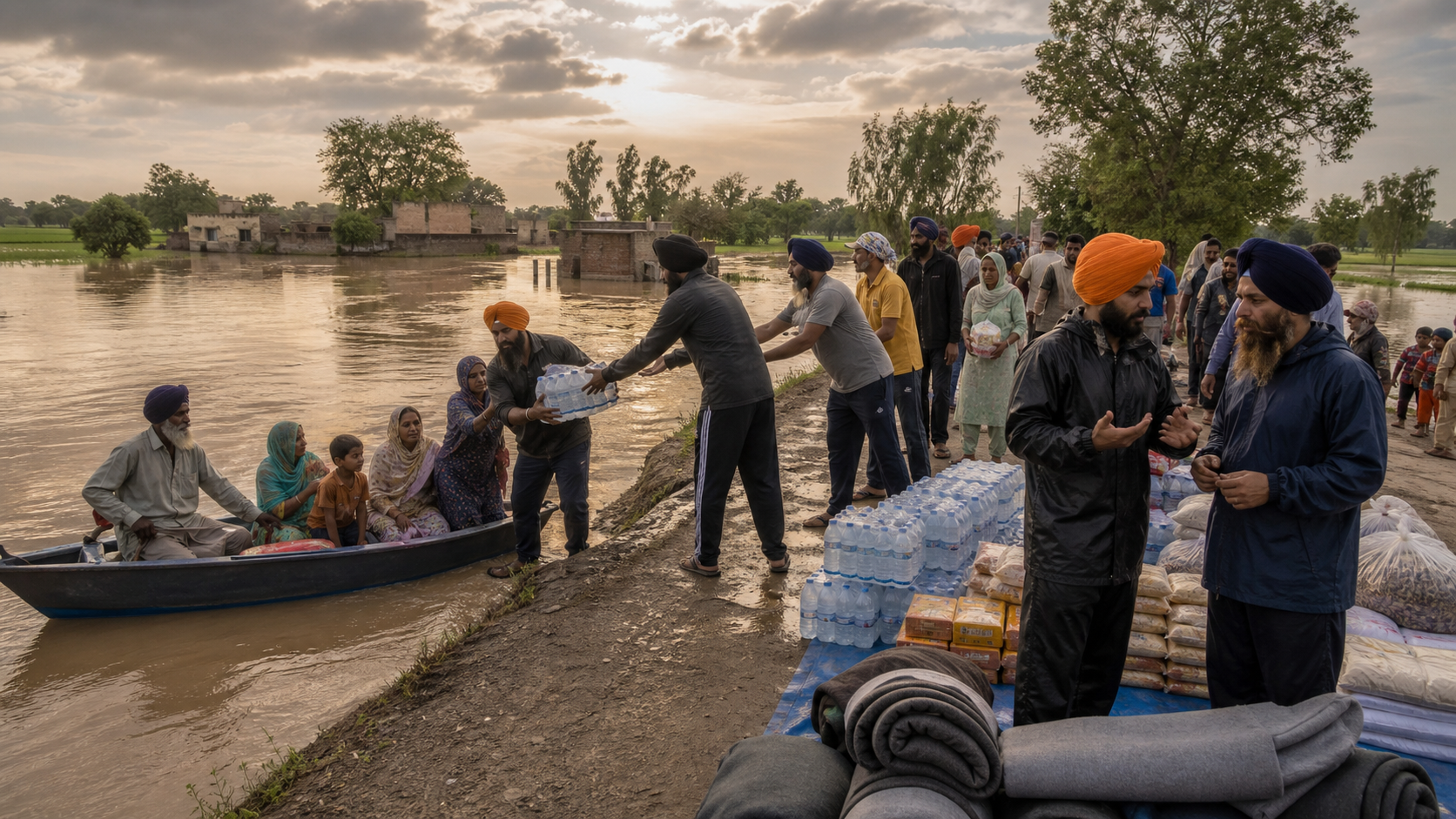
If you are deciding how to help during a Punjab flood, the central question is not whether to act. It is how to make your seva useful after the first burst of generosity has passed. Supplies can accumulate beside an accessible road while a cut-off village still lacks drinking water. Volunteers can gather at a visible distribution point while elders and people unable to travel alone remain unaccounted for.
The most dependable response begins with local leadership, verified needs and shared infrastructure. It also begins planning recovery before the water has receded. Punjab already has much of the civic framework required: gurdwaras, mandirs, panchayats, community associations, volunteer groups and extended families. The immediate task is to connect those institutions without duplicating work or sacrificing anyone’s dignity.
In the first hours, build a local picture before moving supplies
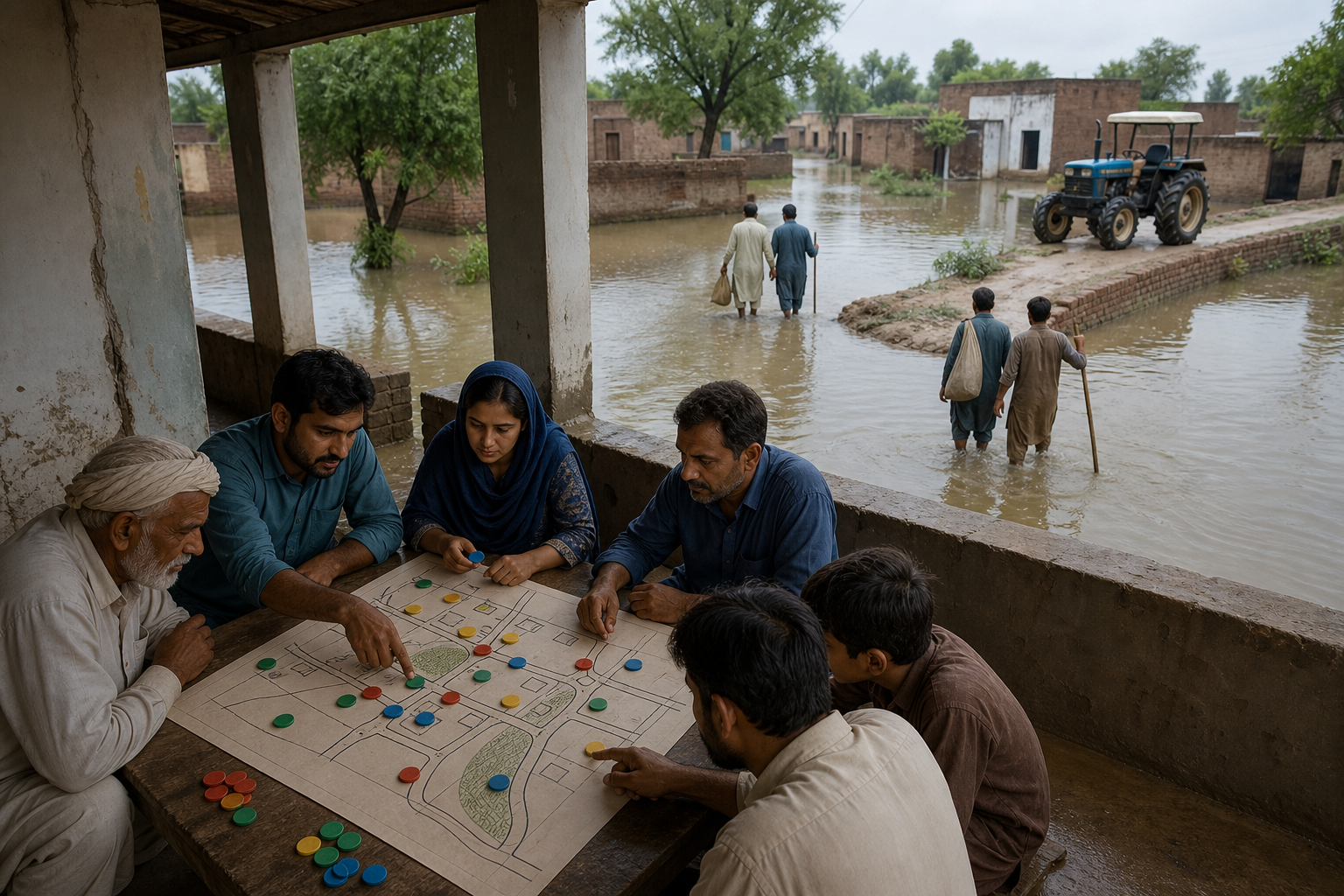
A relief vehicle is useful only when someone knows where it should go, whether the route is open and who will receive its load. Local boat operators, volunteer teams and panchayat networks can bridge the critical period before outside assistance reaches full capacity. Their knowledge should shape the response rather than being treated as an informal addition to it.
If you are organising volunteers, donations or institutional support, use this order:
- Set a safety boundary. Floodwater is unpredictable. Do not send untrained volunteers into water or improvised rescue operations. Put rescue under people who know the route, the equipment and the local conditions; direct everyone else to logistics, kitchens, registration, shelter or communications.
- Create one verified location register. For each settlement, record a local contact, current access route, people awaiting assistance, urgent requirements and the time of the latest verification. A need without a time stamp can remain online long after it has been met.
- Identify people, not just population totals. Ask local teams to name households requiring assisted evacuation or doorstep delivery. Elders and residents with limited mobility should not have to compete with a crowd at a distribution point.
- Separate the work into clear functions. Rescue, food, drinking water, sanitation, shelter, medical coordination, transport and communications require different people. A volunteer should know the role, the coordinator and the next handoff before beginning a shift.
- Publish operational updates without exposing families. Share which routes are open, which needs remain unmet and where supplies are being received. Do not circulate unnecessary personal details or images of people in distress.
A short, accurate needs list is more valuable than a long appeal copied across social media. Verified resource lists and inclusive distribution reduce duplication and help relief reach the people for whom it was intended. If you are donating from outside Punjab, ask when the list was last checked, who verified it and how delivery will be confirmed.
Treat every religious institution as part of a relief network
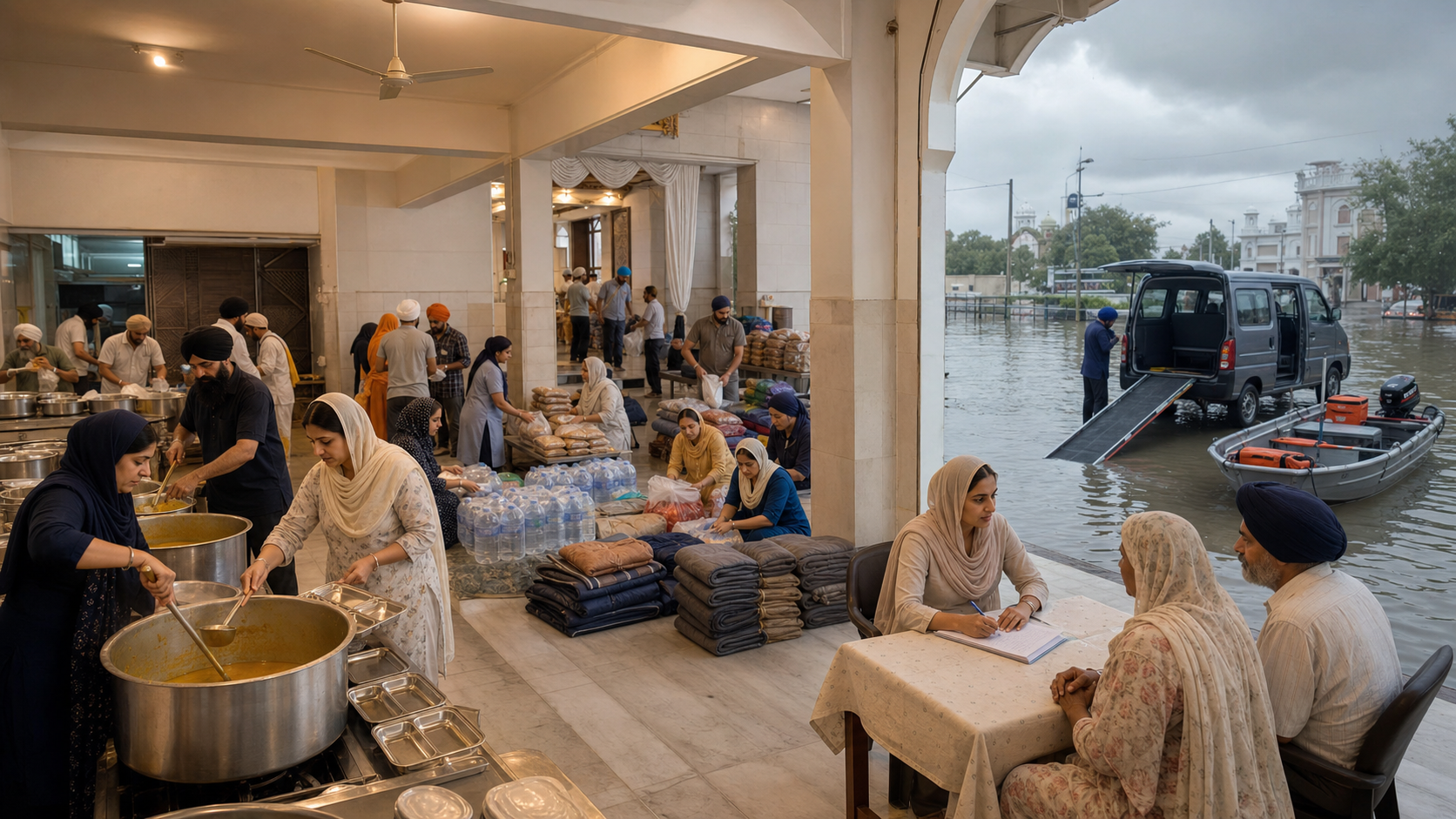
Punjab’s Dharmic institutions are more than collection points. During inundation, gurdwaras have operated langar, temples have opened shelter space, Jain sanghas have organised medical camps, and Buddhist groups have supported trauma-sensitive listening. Each institution can serve the function for which its space, volunteers and relationships are best suited.
That does not mean every centre should attempt every task. One gurdwara may have the kitchen, another site may have dry storage, a mandir hall may be better suited to temporary shelter, and a medical group may be able to rotate trained personnel among several villages. Coordination turns separate acts of generosity into coverage.
At each relief hub, maintain a visible status board with five items:
- What the hub can currently provide.
- What it urgently needs, in specific quantities or functional terms.
- What supplies are already on the way.
- When and where the next distribution will occur.
- Who is responsible for confirming changes.
Pair equipment with the person and plan needed to operate it. A boat without a capable crew, a purification unit without an operator, or solar backup without a communications plan may look impressive in an inventory while doing little in practice. Pre-positioned tools become useful when responsibility for maintenance, deployment and handover is explicit.
Distribution also needs safeguards. Form women-led safety committees at shelters and supply points. Provide a clear way to report exclusion, harassment or diversion of aid. Do not make assistance conditional on caste, creed, political allegiance or participation in religious activity. Ask before photographing a recipient. Seva protects dignity; it does not purchase access to another person’s suffering.
Make Chardhikala a discipline, not a slogan
Chardhikala is sometimes reduced to cheerfulness in adversity. That misses its demanding side. In a flood, an ever-rising spirit means seeing loss clearly while refusing paralysis, vanity and fatalism. It permits grief, but directs the next available measure of energy toward useful action.
The wider Dharmic vocabulary gives volunteers a practical ethical test:
- Seva: Take the necessary role, including cleaning, record-keeping, loading and night coordination. The least visible task may be the one holding the operation together.
- Karuna and maitri: Ask people what they need instead of deciding that gratitude requires them to accept whatever was donated.
- Ahimsa: Do not turn courage into pressure. No volunteer or resident should be shamed into an unsafe crossing, rescue or journey.
- Aparigraha: Do not hoard scarce supplies at one centre or send unwanted material merely to clear a donor’s storeroom. Release resources according to verified need.
- Chardhikala: Speak honestly about damage and gaps while preserving confidence that organised work can improve the situation.
Shabad kirtan, paath, bhajans, metta meditation and pratikraman can give a distressed community rhythm, attention and companionship. They should not be used to silence grief or replace emergency rescue, medical care or qualified psychological support when those are needed. Spiritual practice serves relief best when it steadies people for responsibility.
The same discipline should govern public language. Avoid both catastrophe theatre and premature victory. State which villages are inaccessible, which requirements have been met and which recovery problems remain. Honest updates preserve trust; triumphant images can conceal unmet needs once public attention moves elsewhere.
Begin recovery early and convert relief hubs into preparedness hubs
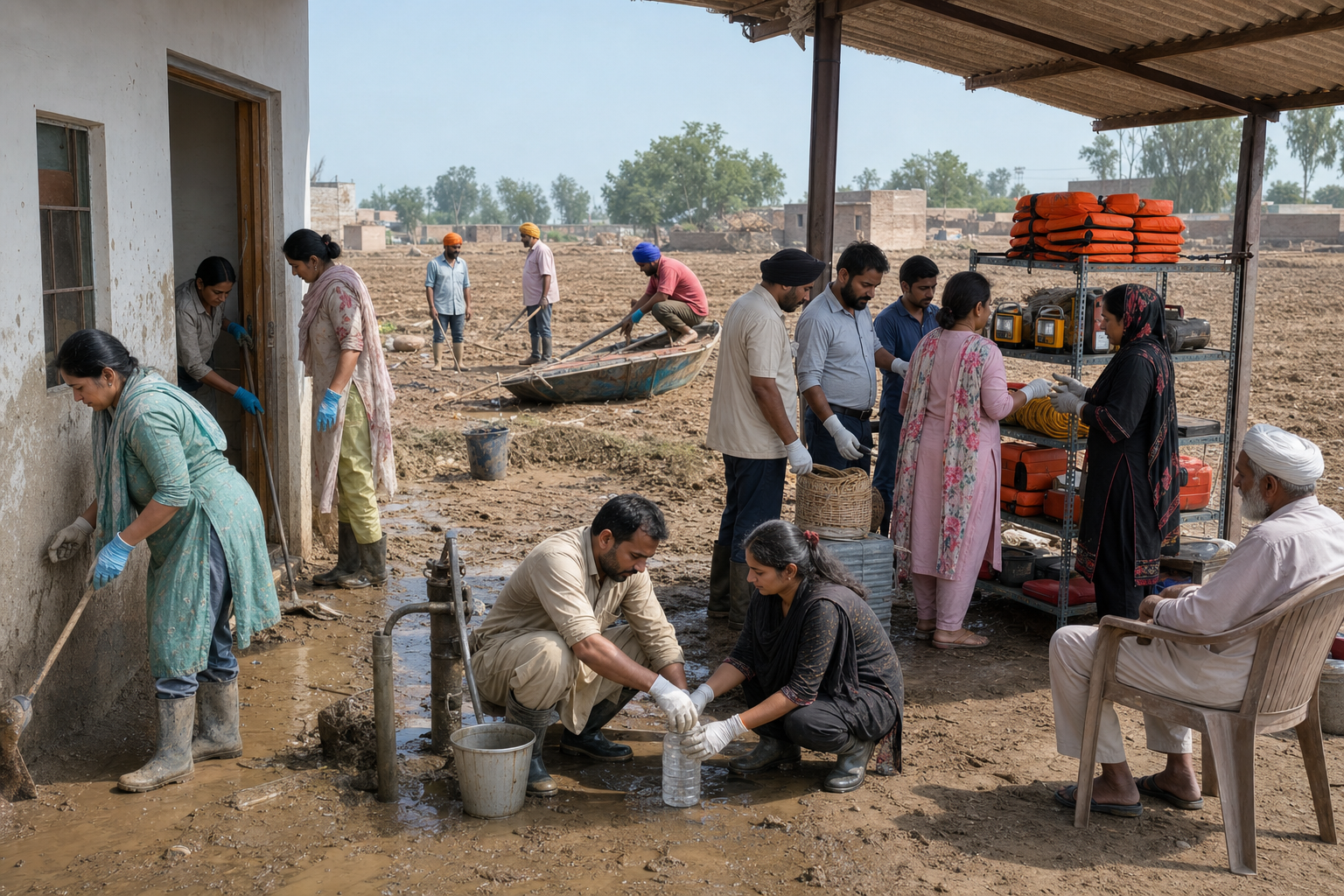
Protect the parts of life that do not return with the water
Relief is not finished when meals have been served or a family has reached dry ground. Documents, seed stock, schoolbooks, tools and business records can determine whether displacement becomes a prolonged livelihood crisis. Ask about those assets during registration so that recovery support does not begin from a blank page.
Organise recovery into three visible lanes:
- Households: Help families identify missing documents and essential possessions, record damage and establish a dependable contact for follow-up.
- Livelihoods: Maintain separate records for standing crops, seed requirements, farm equipment and small enterprises. Micro-insurance or flexible credit may have a role, but affected families should not be pushed into unfamiliar products or new debt during a crisis. Terms need to be explained by qualified providers and assessed against the household’s circumstances.
- Education: Use school and religious-institution hubs for mobile libraries, shared digital devices and tutoring circles. Restoring a predictable learning routine protects more than coursework; it gives children continuity while adults address housing and livelihoods.
Donors should therefore ask two questions before closing an appeal: What work begins after the final food distribution, and who remains responsible for it? A relief campaign without a recovery owner can leave families navigating documents, schooling and livelihood claims alone.
Prepare the same neighbourhood before the next warning
Every relief hub gains knowledge that should be retained. Volunteers learn which lane floods first, which household needs help moving, where a boat can launch, which phone tree works and which supplies were repeatedly missing. Convert that knowledge into a ward- or village-level plan instead of allowing it to disappear when the emergency team disperses.
- Map low-lying areas, old drainage paths, safe assembly points and evacuation routes with residents who know the terrain.
- Keep first-aid kits and suitable rescue equipment at agreed gurdwaras, temples or community centres, with named custodians and trained users.
- Train youth brigades for first aid, water, sanitation, hygiene, logistics and communications rather than treating enthusiasm as sufficient preparation.
- Practise the warning chain through schools, panchayats and religious institutions so that a message reaches households that do not rely on the same device or platform.
- Use solar backup where it can keep pumps or essential communications functioning, and assign responsibility for checking it before the monsoon.
- Review the plan after each flood or drill. Record the failed route, delayed handoff or missing resource while memories are still precise.
Some measures remain the responsibility of public authorities: real-time hydrological monitoring, reservoir coordination, embankment maintenance, drainage upgrades, scientifically informed silt management, wetland restoration, riverine buffers and responsible floodplain zoning. Planning with dynamic river systems is more durable than relying only on barriers after settlement patterns and drainage have already increased exposure.
Community courage cannot substitute for sound governance. Panchayats, institutions and residents can ask for locally intelligible warning procedures, written maintenance responsibilities and coordination across the river basin. The aim is not to oppose the rivers that gave Punjab its identity, but to stop avoidable exposure from being treated as fate.
Key takeaways for anyone helping Punjab
- Work through a verified local contact and check when each need was last confirmed.
- Leave water rescue to capable local or professional teams; place other volunteers in clearly defined support roles.
- Coordinate gurdwaras, mandirs, sanghas, schools and panchayats by function so that supplies and services cover gaps instead of clustering at visible sites.
- Apply seva with dignity: no exclusion, unsafe pressure, unnecessary photography or donation dumping.
- Register recovery needs while relief is active, especially documents, agriculture, small livelihoods and education.
- Turn the knowledge gained during response into maps, drills, trained teams, maintained equipment and public accountability.
If you want to help now, choose one trusted local hub, ask for its most recently verified list and take responsibility for one unmet line rather than sending an assorted load. Then ask which recovery or preparedness task will continue after distribution ends. That is how an immediate act of seva becomes durable protection.
References
- DharmaRenaissance Blog — Discover Punjab’s Floods: A Complete, Proven Portrait of Pain, Resilience, and Chardhikala
- DharmaRenaissance Blog — Punjab’s Five Rivers in Deluge: Discover Essential Insights, Proven Resilience, and Unity in Action
