
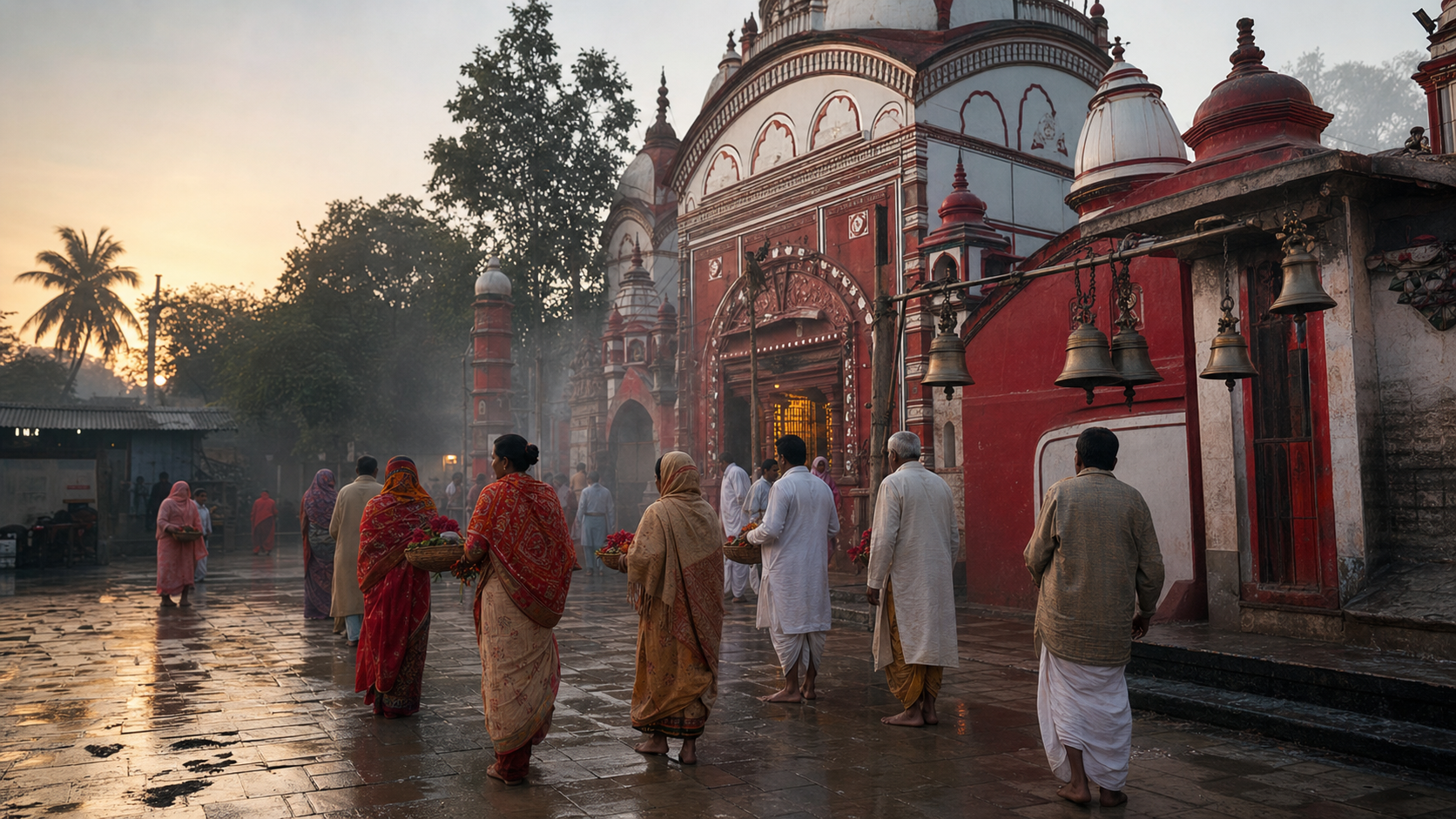
You may be planning your first Tarapith darshan and wondering whether you are entering an ordinary temple, a tantric centre, or a place meant only for advanced practitioners. Tarapith is a temple of public devotion and a demanding landscape of sadhana, but those are not the same mode of engagement. You don’t need to imitate esoteric rites to approach Ma Tara sincerely.
The soundest first step is simple: go for darshan, understand the relationship between the temple and the Mahasmashan, and let ethical discipline determine what comes next. This approach protects you from two common mistakes – reducing Tarapith to a tourist attraction or treating unfamiliar tantric practices as techniques to be collected.
Understand Tarapith’s two sacred spaces before you arrive
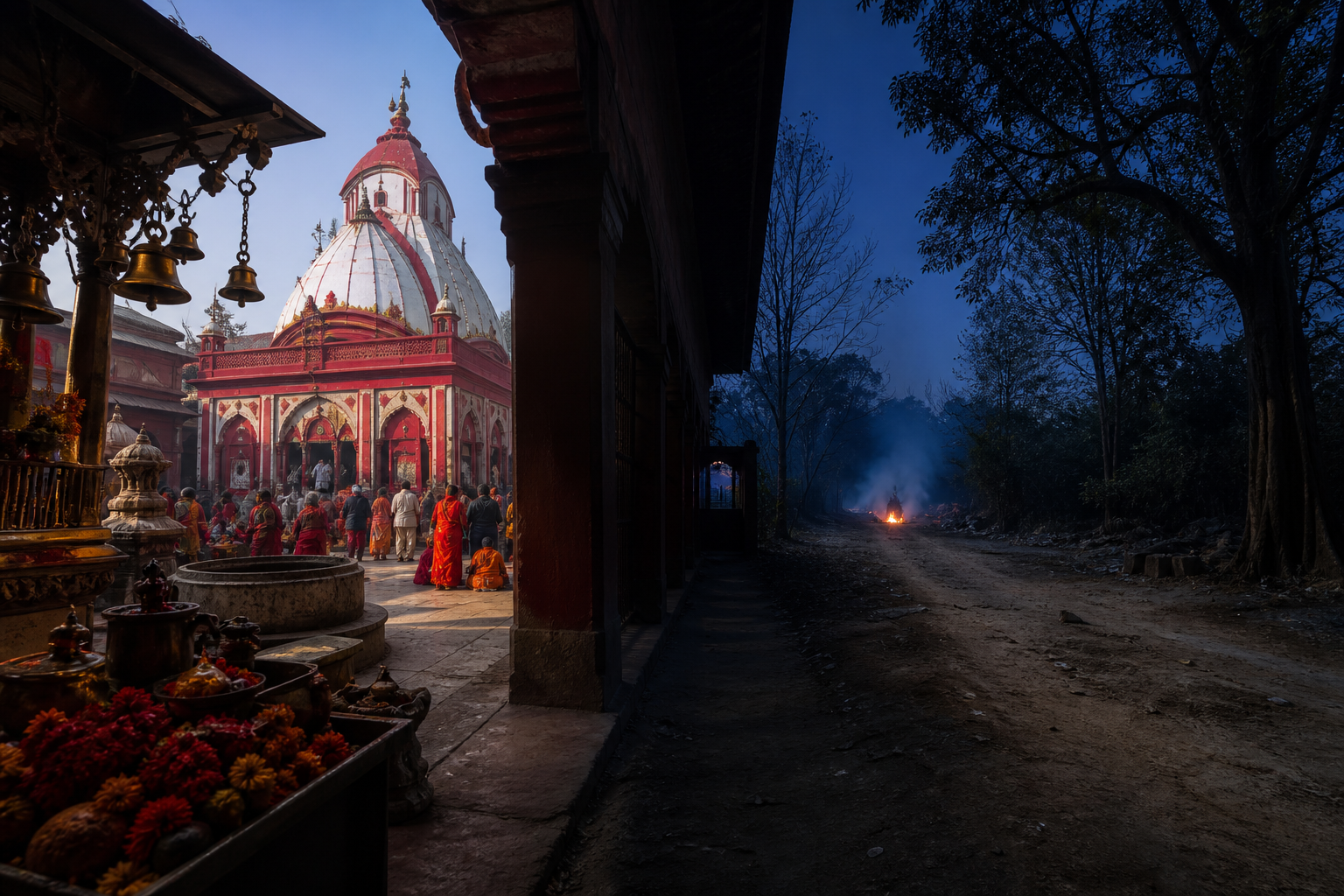
Tarapith stands near Rampurhat in Birbhum, West Bengal, on the banks of the Dwarka River, with the Mahasmashan beside the temple. That closeness is central to the character of the pilgrimage. The sanctum presents Tara through image, offering, prayer, and relationship. The cremation ground confronts the pilgrim with impermanence, attachment, and the fact that every embodied life ends.
Tradition reveres Tarapith as a Shakti Peetha connected with the sacred account of Sati. Tara is also honoured within the Mahavidya current as a form of saving wisdom, protection, and fierce compassion. “Fierce” here should not be mistaken for cruelty. It points to a compassion willing to cut through fear, delusion, and the habits that keep a person bound.
| Sacred space | What it places before you | How to approach it |
|---|---|---|
| Temple and sanctum | Tara’s presence through murti, puja, offering, and arati | Seek darshan without demanding a dramatic experience. Let attention, prayer, and gratitude be enough. |
| Mahasmashan | Death, impermanence, fear, and the limits of worldly identity | Keep your distance from rites, remain quiet, and treat mourners and practitioners as people rather than spectacles. |
| The complete pilgrimage | Compassion in the presence of mortality | Carry what you receive into truthful conduct, restraint, and service after you leave. |
Daily puja, evening arati, and offerings of red hibiscus belong to Tarapith’s devotional life. These practices make the temple accessible to an ordinary pilgrim. The Mahasmashan has a different gravity. Amavasya can bring intensified tantric observances there, but their visibility does not make them public instructions.
Treat the cremation ground as a living sacred space, not as a backdrop for photographs or a test of courage. Don’t record a rite, approach a grieving family, question a practitioner in the middle of worship, or imitate something because it looks powerful. If you are unsure where a visitor may stand, ask an appropriate local authority and accept the boundary given.
Choose your purpose before choosing a ritual
Tarapith can meet several kinds of seeker, but confusion begins when you pretend one kind of visit is another. Decide which of these descriptions honestly fits you.
- You are going for darshan. Your purpose is to bow before Ma Tara, participate respectfully in temple worship, and return with a clearer mind. This is a complete pilgrimage. It is not an inferior version of tantric sadhana.
- You are renewing a devotional discipline. You want the pilgrimage to strengthen prayer, self-restraint, compassion, or a commitment you already understand. Build the visit around that commitment rather than accumulating rituals.
- You are seeking formal tantric instruction. General information about Tarapith cannot substitute for a competent teacher, a lineage, and instructions suited to the practitioner. Don’t improvise mantras, cremation-ground rites, or promises to a deity from fragments found online.
Before leaving home, write your intention in one sentence. “May Ma Tara remove every problem” is too broad to guide conduct. A more useful sankalpa names the inner work: “May I meet this fear truthfully,” “May I stop using anger as protection,” or “May I gain the clarity to fulfil this duty.” The wording is yours; it need not imitate a Sanskrit formula you have not received.
Then test that intention with four questions:
- What am I actually asking Tara to help me see or change?
- What responsibility will remain mine even if I receive the blessing I seek?
- Which practice has been taught to me, and which one have I merely read about?
- Am I willing to leave an impressive-looking ritual alone when I don’t understand it?
This distinction keeps devotion from becoming spiritual bargaining. Tara’s grace is not a device for escaping consequences, avoiding honest decisions, or acquiring power over other people. If a proposed practice feeds secrecy, vanity, coercion, or contempt, its exotic appearance does not make it dharmic.
Choose the occasion according to your purpose. Dawn is valued for a quieter darshan, evening brings arati, and Tuesdays, Saturdays, Navaratri, Kali Puja, and Amavasya carry particular devotional or ritual significance. An auspicious day does not automatically produce a deeper pilgrimage. For a first visit, dawn darshan or evening arati gives you a clear devotional centre. Choose Amavasya because you understand its solemn character, not because the word “tantric” promises a stronger experience.
Give one visit a simple and disciplined rhythm
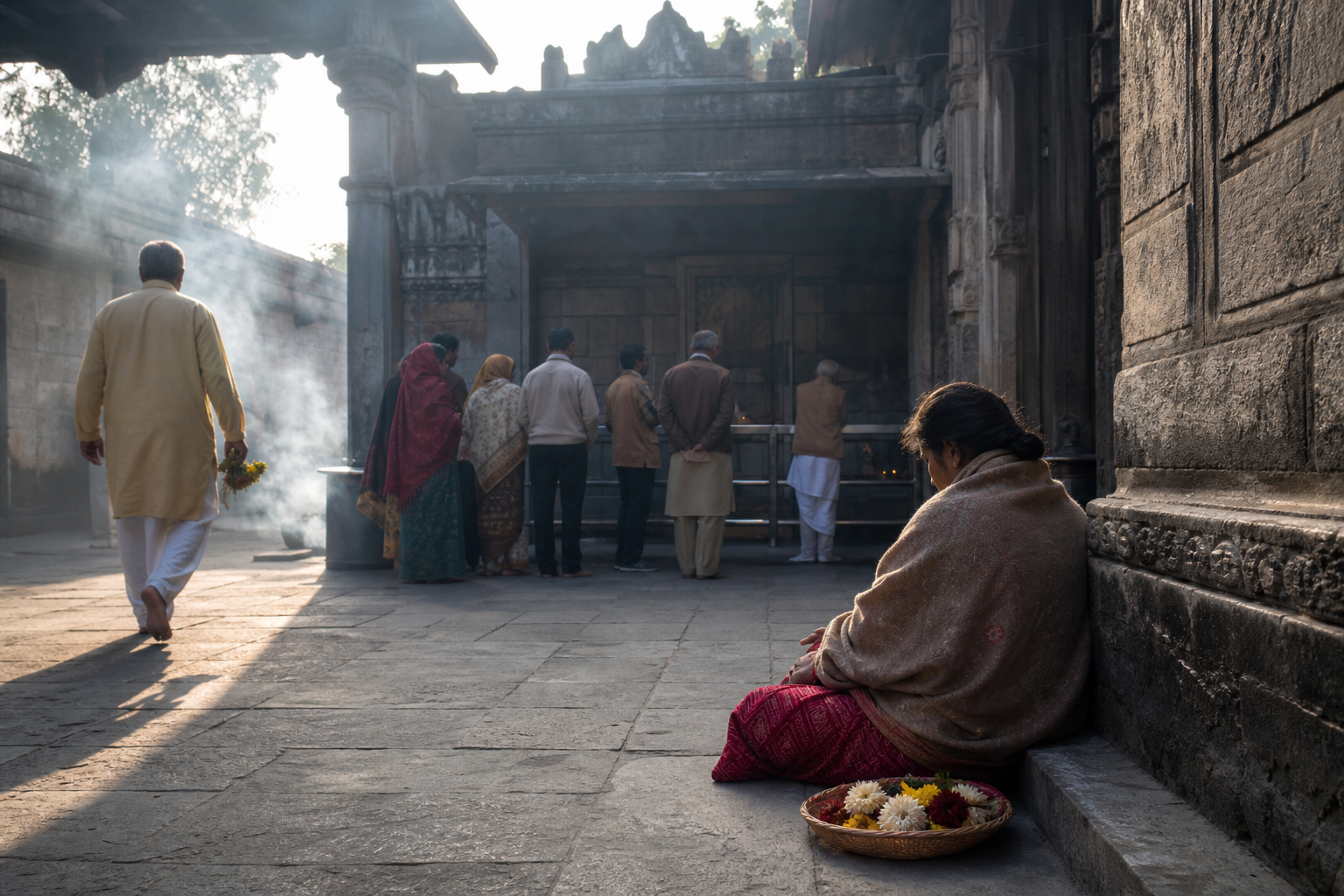
A crowded checklist works against the attention Tarapith asks from you. One darshan received carefully can matter more than several activities performed in haste. Use this sequence as a framework, adapting it to the temple’s current arrangements and instructions.
- Begin with your sankalpa. Read the sentence you prepared before entering the sacred area. It gives your mind something steadier than excitement, anxiety, or curiosity.
- Let darshan come before analysis. Enter the temple as a devotee rather than a collector of unusual details. Notice the murti, prayer, bells, and movement of worship without trying to turn each feature into a theory.
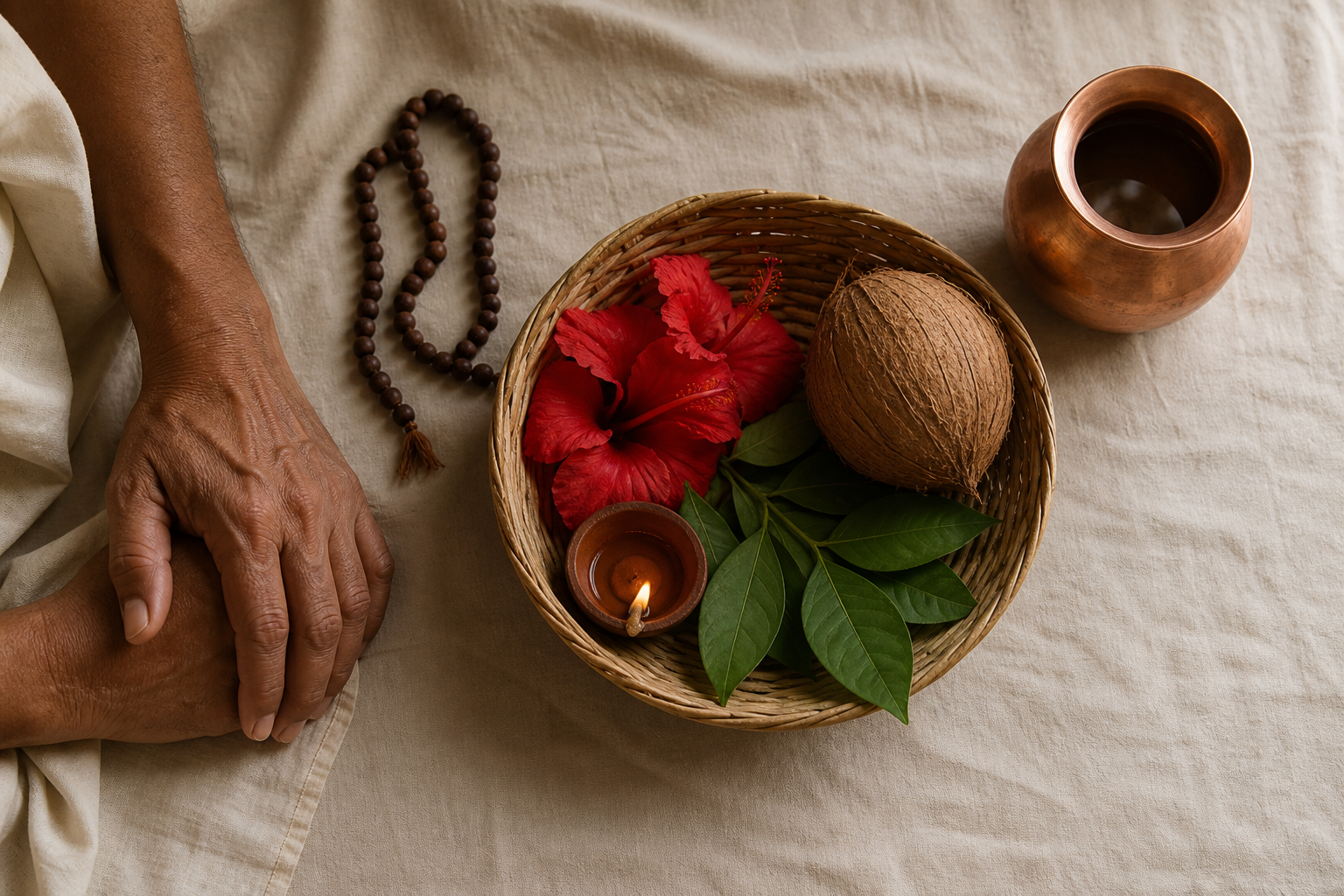
- Keep the offering sincere and manageable. Red hibiscus is closely associated with Tarapith’s worship of Shakti. If local arrangements permit the offering, give it without treating its acceptance or placement as an omen about your future.
- Make your prayer brief enough to mean it. Ask for wisdom, protection, courage, or freedom from a binding habit in words you understand. Don’t measure the darshan by whether you feel a sudden sensation.
- Pause after leaving the sanctum. Where permitted and without obstructing other pilgrims, allow the prayer to settle. Ask what part of your sankalpa requires action rather than further petition.
- Attend arati if it belongs to your plan. Evening arati offers a communal devotional experience distinct from private contemplation. Participate without making photography or documentation the centre of the moment.
- Approach the Mahasmashan as the second movement of the pilgrimage. The temple brings you before the Mother; the cremation ground asks what remains of pride, status, and possession in the presence of death. Observe the place without intruding on anyone’s grief or practice.
When you return from the Mahasmashan, don’t rush to convert the experience into a supernatural story. A sober response is more useful: name one attachment you saw more clearly and one corresponding action. That action might be keeping a neglected promise, speaking a truth without cruelty, ending a dishonest convenience, or serving someone without seeking recognition.
You may experience stillness, awe, discomfort, reassurance, or nothing you can name. None of these responses proves spiritual attainment. The more dependable measure appears later: whether you become less evasive, less ruled by fear, and more capable of compassionate responsibility.
Build Tara sadhana around transformation, not spectacle
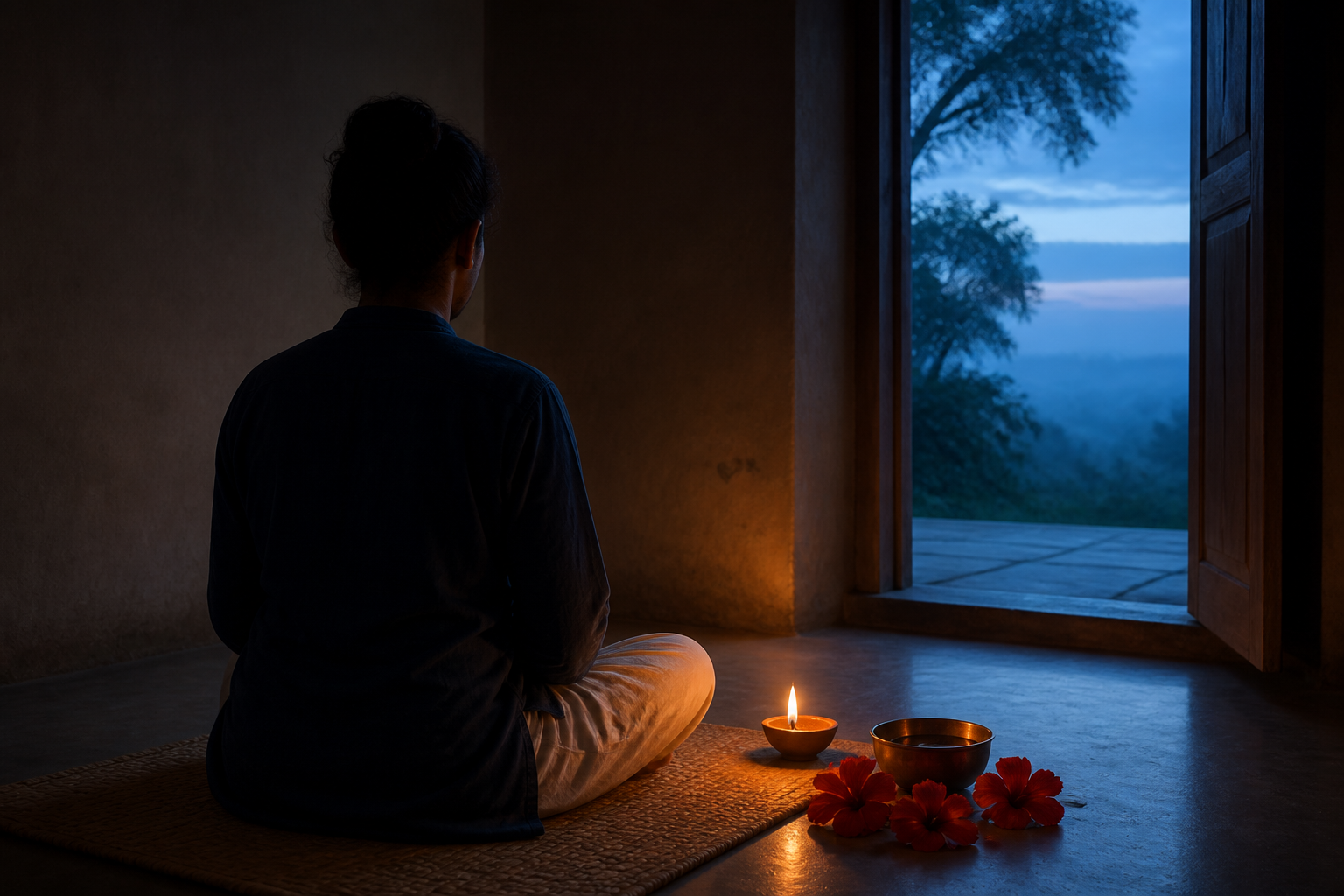
Sadhana is sustained discipline directed toward realization. At Tarapith, it cannot be reduced to nocturnal imagery, secret mantras, or stories of siddhis. The governing question is whether the practice is weakening ignorance and selfish attachment while strengthening wisdom, courage, and compassion.
A simple devotional form when you have no tantric initiation
You can honour Tara without pretending to possess instructions you have not received. Keep the form transparent and devotional:
- Choose a clean, quiet place where you can sit without interruption.
- Bring your attention to Ma Tara and state your sankalpa in plain language.
- Offer a red hibiscus when it is available and appropriate. Don’t turn the absence of a particular flower into anxiety.
- Repeat Tara’s name with attention. If a teacher has given you a mantra, follow that teacher’s instructions; otherwise, don’t assemble an esoteric mantra from unrelated fragments.
- Sit silently with the fear, attachment, or duty named in your sankalpa. Notice the mind’s attempts to escape, dramatize, or bargain.
- Close by resolving to perform a concrete act of truthfulness, restraint, or compassion.
This form does not claim to reproduce a formal tantric rite. Its value lies in making devotion answerable to conduct. It also gives you a stable practice while you determine whether you are genuinely called to seek qualified instruction.
Keep jnana ahead of siddhi
Tarapith’s tantric landscape includes sadhana associated with jnana, siddhi, and liberation from ignorance. Those aims require discrimination. Jnana concerns liberating knowledge; a siddhi is an attainment or capacity associated with practice. Fascination with attainment can strengthen the very ego that sadhana is meant to expose.
Use an ethical test before accepting any claim of advanced practice. Does it make the practitioner more truthful, compassionate, restrained, and responsible? Or does it depend on intimidation, promises of control, demands for blind obedience, or displays of superiority? Extraordinary language never cancels ordinary dharma.
Learn from Bamakhepa without copying an outer persona
Bamakhepa, remembered as a saint of the late 19th and early 20th centuries, remains closely associated with ecstatic devotion to Tara, humility, fearlessness, meditation, and service. For a contemporary pilgrim, the useful lesson is not to imitate a saint’s outward behaviour. It is to notice the totality of devotion: love of the deity joined to surrender, courage, and service.
If your attraction to Tarapith is mostly an attraction to transgression, secrecy, or spiritual status, pause. Bamakhepa’s legacy directs attention back to Ma Tara, not toward manufacturing an identity as an unconventional practitioner.
Respect the Hindu and Buddhist contexts of Tara
Tara is deeply honoured in Hindu tantra and in Vajrayana Buddhism. That shared reverence is meaningful, but it does not make every theology, mantra, visualization, initiation, or ritual interchangeable. Learn a practice within the tradition and lineage that carries it rather than mixing elements because they share a divine name.
The wider dharmic resonance lies in values such as compassion, disciplined conduct, truthfulness, and liberation from ignorance. Hindu, Buddhist, Jain, and Sikh seekers can recognize those values without claiming that their doctrines and forms of worship are identical. Unity becomes stronger when it preserves real distinctions.
Questions first-time pilgrims commonly bring
Is Tarapith only for tantric practitioners?
No. Tarapith has an accessible devotional life centred on darshan, daily puja, offerings, and evening arati. Formal tantric sadhana is one dimension of the sacred landscape, not a requirement every pilgrim must attempt.
What is the best time for a first darshan?
Choose according to the experience you can approach responsibly. Dawn suits a quieter devotional visit, while evening arati emphasizes communal worship. Tuesdays, Saturdays, Navaratri, Kali Puja, and Amavasya have particular significance. Amavasya is associated with intensified tantric observance, so it should not be chosen merely as a more exciting version of an ordinary visit.
Can you practise Tara sadhana without initiation?
You can offer ordinary devotion, repeat Tara’s name, pray in words you understand, sit in contemplation, and align your conduct with compassion and truthfulness. Formal tantric methods, specialized mantras, and cremation-ground rites call for qualified instruction. Being honest about that boundary is itself part of disciplined practice.
How should you know whether the pilgrimage changed anything?
Don’t rely on visions, sensations, or coincidences as your measure. Look at conduct. If the visit helps you face a fear more honestly, keep a duty you were avoiding, restrain a harmful impulse, or act with greater compassion, the pilgrimage has begun to enter your life.
Go to Tarapith with one clear intention and enough humility to leave advanced practices alone until they are properly taught. Receive darshan, honour the Mahasmashan without intrusion, and take one dharmic responsibility home with you. Tara sadhana becomes real when the prayer made before the Mother changes the person who returns.
References
