
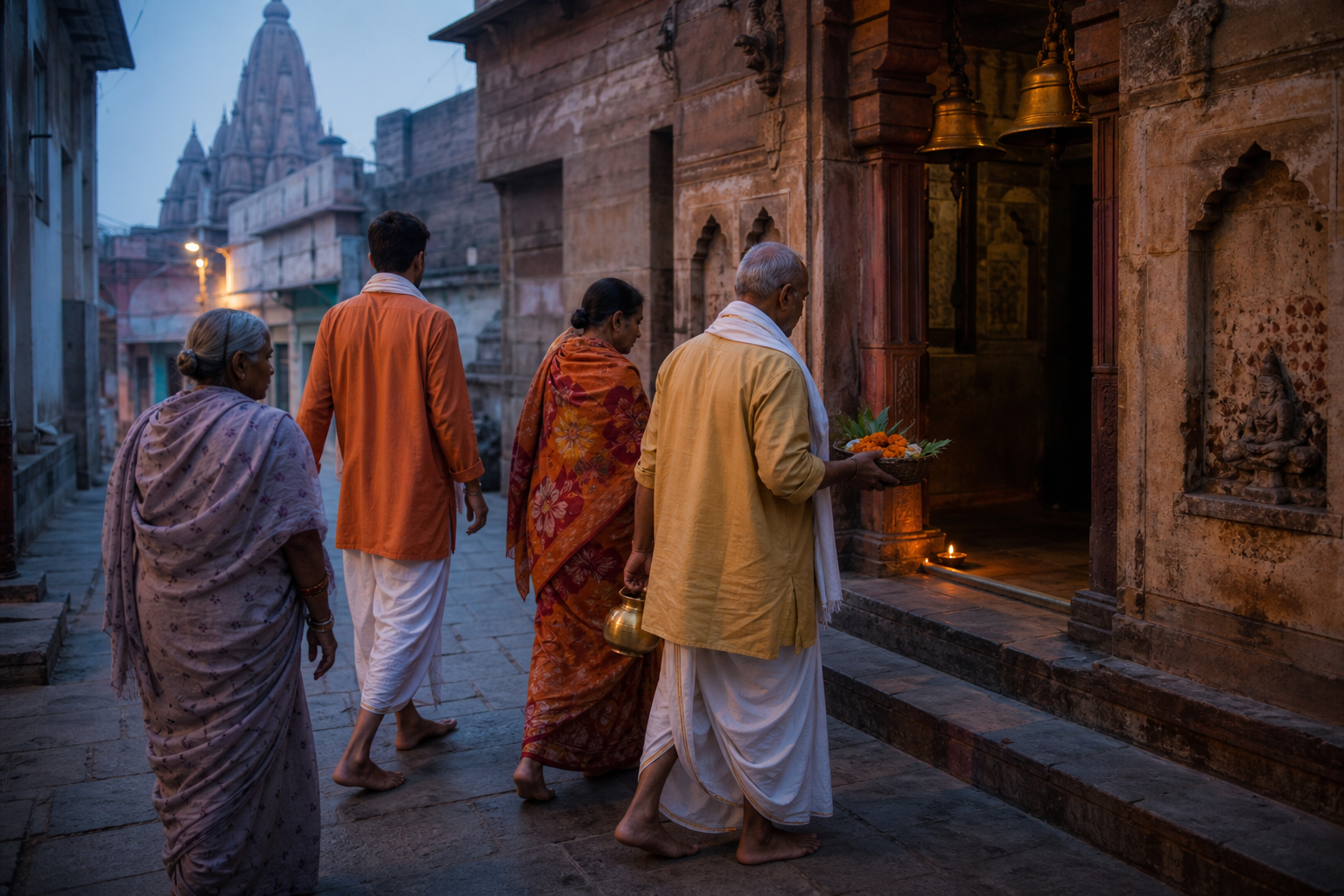
You can visit many temples in Varanasi and still miss the tradition that gives them meaning. The usual problem is not a lack of information. It is treating darshan as a collection of stops instead of a sequence of relationships: with Shiva, Shakti, nourishment, protection, sacred speech, service, and the wider geography of Dharma.
If you are planning a Kashi yatra, choose fewer temples and give each one a clear place in the pilgrimage. That change will help you decide where to go, when to pause, and how to participate without turning a living sacred city into a sightseeing itinerary.
Start with a sankalpa, not a temple count
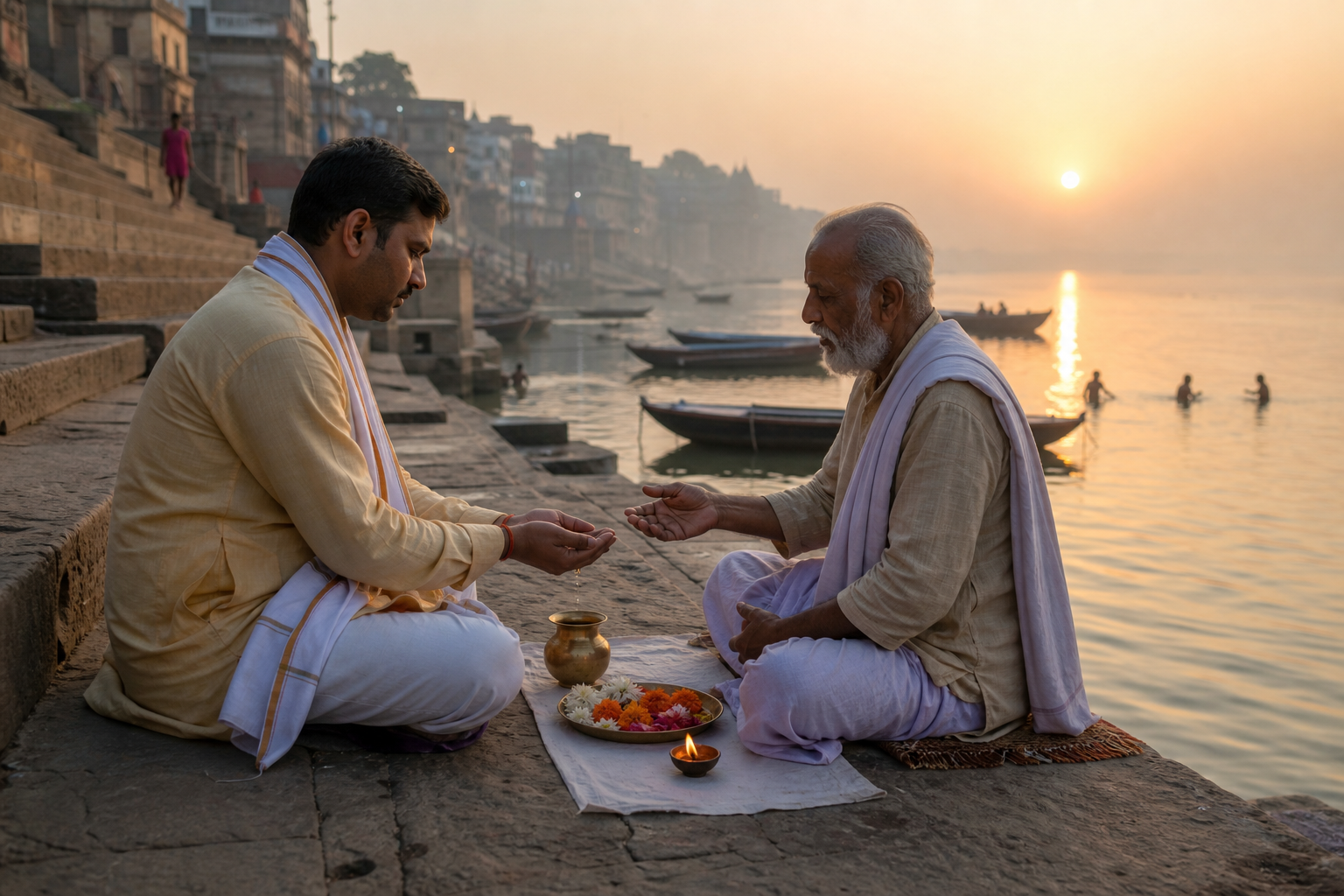
Before arranging your route, write one sentence explaining why you are going. You may be seeking steadiness after a difficult period, offering gratitude, remembering an ancestor, deepening a family practice, or introducing your children to Kashi. This is your sankalpa: the intention that determines what deserves your time.
There is no need to manufacture an elaborate vow. A simple intention is enough. What matters is that it changes your choices. A pilgrim seeking courage may give greater attention to Kal Bhairav and Sankat Mochan. Someone contemplating nourishment and responsibility may spend more time at Annapurna Devi. A devotee centered on Shiva will naturally place Kashi Vishwanath at the heart of the journey.
A workable sequence can begin with Kashi Vishwanath as the spiritual axis, Annapurna as the embodiment of nourishment, and Kal Bhairav as the guardian of Kashi. This is not a claim that every pilgrim must follow one fixed order. It is a way to prevent the day from becoming random. If your family, sampradaya, or guru has given you a particular sequence, follow that tradition instead.
You can also build the pilgrimage around a devotional current:
- For a Shiva-centered yatra: make Kashi Vishwanath the anchor and approach Kal Bhairav through the themes of discipline, protection, and accountability.
- For a Shakti-centered yatra: connect Annapurna Devi, Vishalakshi, and Durga Kund through nourishment, intimate darshan, strength, and maternal care.
- For Rama and Hanuman bhakti: pair Sankat Mochan with Tulsi Manas Mandir, allowing devotional worship and the ethical world of the Ramcharitmanas to illuminate one another.
- For sacred art and civilizational memory: place the Nepali Temple, the New Vishwanath Temple, and Bharat Mata Mandir in conversation with one another. Their pagoda woodwork, marble complex, and relief map of Bharat show that sacred form can carry regional, scholarly, and national memory.
This method gives you permission to leave some places for another visit. In Kashi, incompleteness is often more honest than haste.
Recognize the different ways a temple teaches
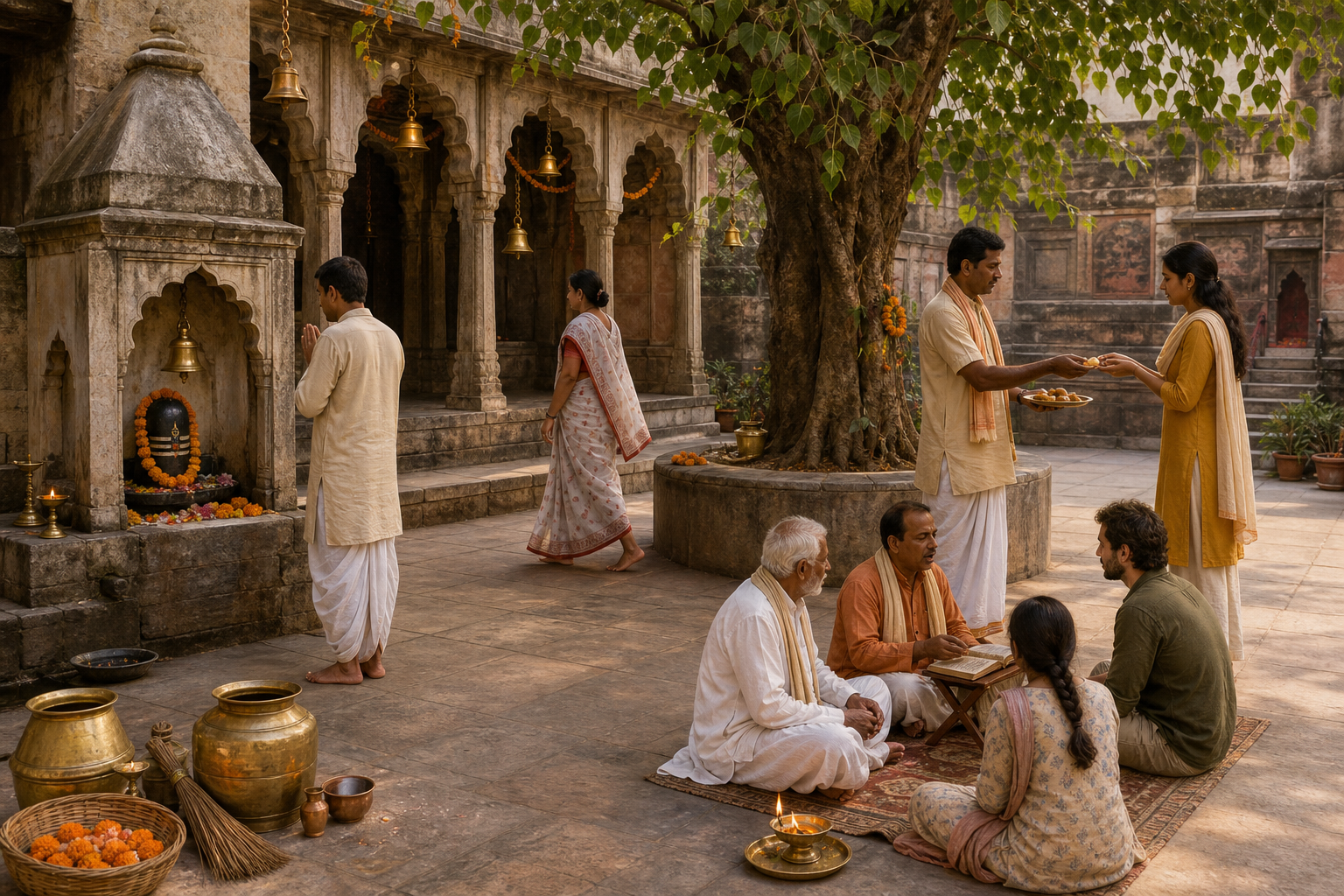
Varanasi’s temples do not all ask the same thing of you. One invites concentrated darshan. Another joins worship to feeding. Another preserves sacred literature. Another becomes especially intense during a festival. If you expect the same experience everywhere, you will overlook the character of each shrine.
Darshan asks for attention
At Kashi Vishwanath, the significance of the Jyotirlinga and the temple’s rigorous ritual rhythm make it natural to arrive with one prayer rather than a long mental list. Decide before entering what you are offering inwardly. Once you reach the sanctum, let the encounter be brief if the movement of devotees requires it, but do not make it casual.
The smaller scale of Vishalakshi Temple creates a different kind of attention. Its identity as a Shakti Peetha makes it a fitting place for a focused prayer to the Divine Mother. Small does not mean secondary. Let the intimacy of the space determine your pace instead of judging its importance by monumental architecture.
Seva turns devotion toward another person
Annapurna represents nourishment, and the tradition of annadan makes the ethical movement especially clear: grace received becomes care given. Do not reduce this principle to obtaining an offering for yourself. Carry it into one concrete act. Feed someone, support a food offering, share a meal without distinction, or make sure an elderly companion in your group has eaten and rested.
This is one of Kashi’s most practical teachings. A pilgrimage that leaves you more attentive to ritual but less attentive to hungry, tired, or vulnerable people has lost part of its dharmic purpose.
Sound and sacred language require listening
Sankat Mochan is associated with Goswami Tulsidas and is known for devotional singing as well as a classical music festival. Tulsi Manas Mandir takes another approach: verses of the Ramcharitmanas are engraved within its marble setting. One tradition teaches through collective bhakti and music; the other invites you to slow down before sacred words.
Choose a response appropriate to the space. When devotional singing is underway, listen before trying to document it. At Tulsi Manas Mandir, select one passage or ethical theme for contemplation instead of attempting to inspect every inscription. The point is not to consume more material. It is to let one teaching accompany you beyond the temple.
Guardianship and festival energy call for discipline
Kal Bhairav is revered as the Kotwal, or guardian, of Kashi. Approach that title as a moral instruction as well as a request for protection. Ask what in your conduct needs firmer boundaries, greater courage, or more accountability. Sacred threads and protective offerings should not become substitutes for the discipline they signify.
Durga Kund becomes especially vibrant during Navaratri. That heightened atmosphere is not the only valid way to encounter the temple, however. A festival visit offers collective energy, while a quieter visit may give you more room for contemplation. Decide which experience serves your sankalpa rather than assuming that the busiest occasion must be the most meaningful.
Plan by neighborhood and ritual rhythm, not prestige
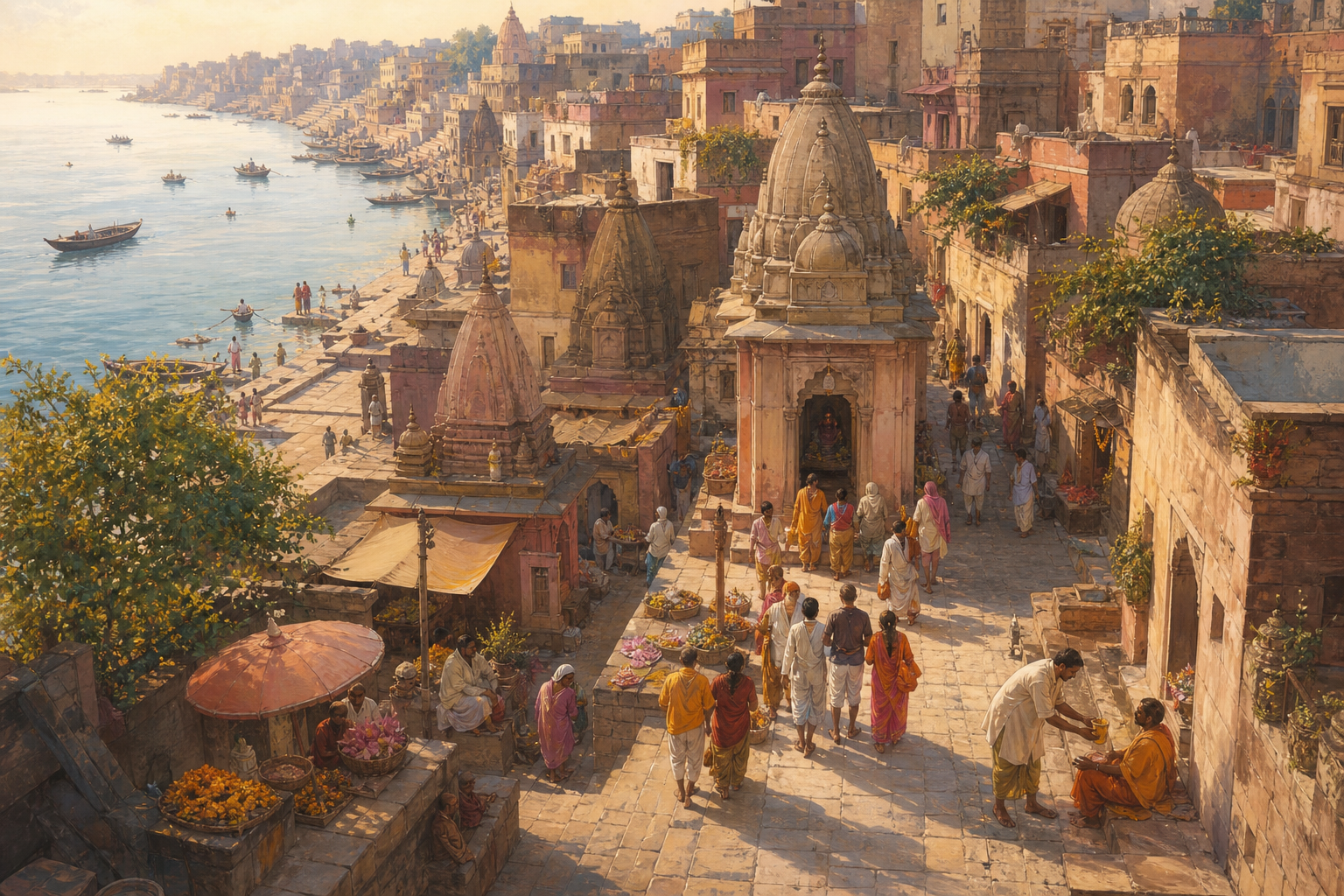
A list of famous temples tempts you to cross the city repeatedly in pursuit of names. A better plan groups compatible places while preserving time to stand, listen, and recover. Use the following structure as a planning framework, not as a compulsory ritual order.
- Give old Kashi its own period. Place Kashi Vishwanath, nearby Annapurna Devi, Kal Bhairav in Visheshwarganj, Vishalakshi near Mir Ghat, and the Nepali Temple at Lalita Ghat within the same broad part of your planning. Do not promise yourself that you must complete every stop.
- Keep the southern devotional and literary sites together. Sankat Mochan in the Lanka area, Durga Kund, nearby Tulsi Manas Mandir, and the New Vishwanath Temple on the Banaras Hindu University campus form a coherent second group.
- Treat Bharat Mata Mandir as a change of lens. Its relief map of Bharat, rather than a conventional deity image, asks you to consider geography, cultural inheritance, and stewardship as dimensions of sacred belonging.
Timing should follow each temple’s character. Early morning and evening suit the ritual rhythm of Kashi Vishwanath; Tuesdays and Saturdays are important at Sankat Mochan; Navaratri intensifies the atmosphere at Durga Kund. These distinctions matter more than trying to force ten temples into one crowded day.
If you have only one day, choose one anchor temple, one companion shrine, and one practice. For example, you might make Kashi Vishwanath the anchor, Annapurna the companion, and annadan or quiet japa the practice. If you have more time, add a second devotional current on another day. This keeps the pilgrimage intelligible and reduces the urge to rush darshan merely to reach the next location.
Leave part of each period unassigned. Aarti, queues, a moment of stillness, or the needs of an older family member may change your pace. The unassigned time is not wasted space in the itinerary. It is what allows the itinerary to remain a pilgrimage.
Carry reverence through lanes, queues, and thresholds
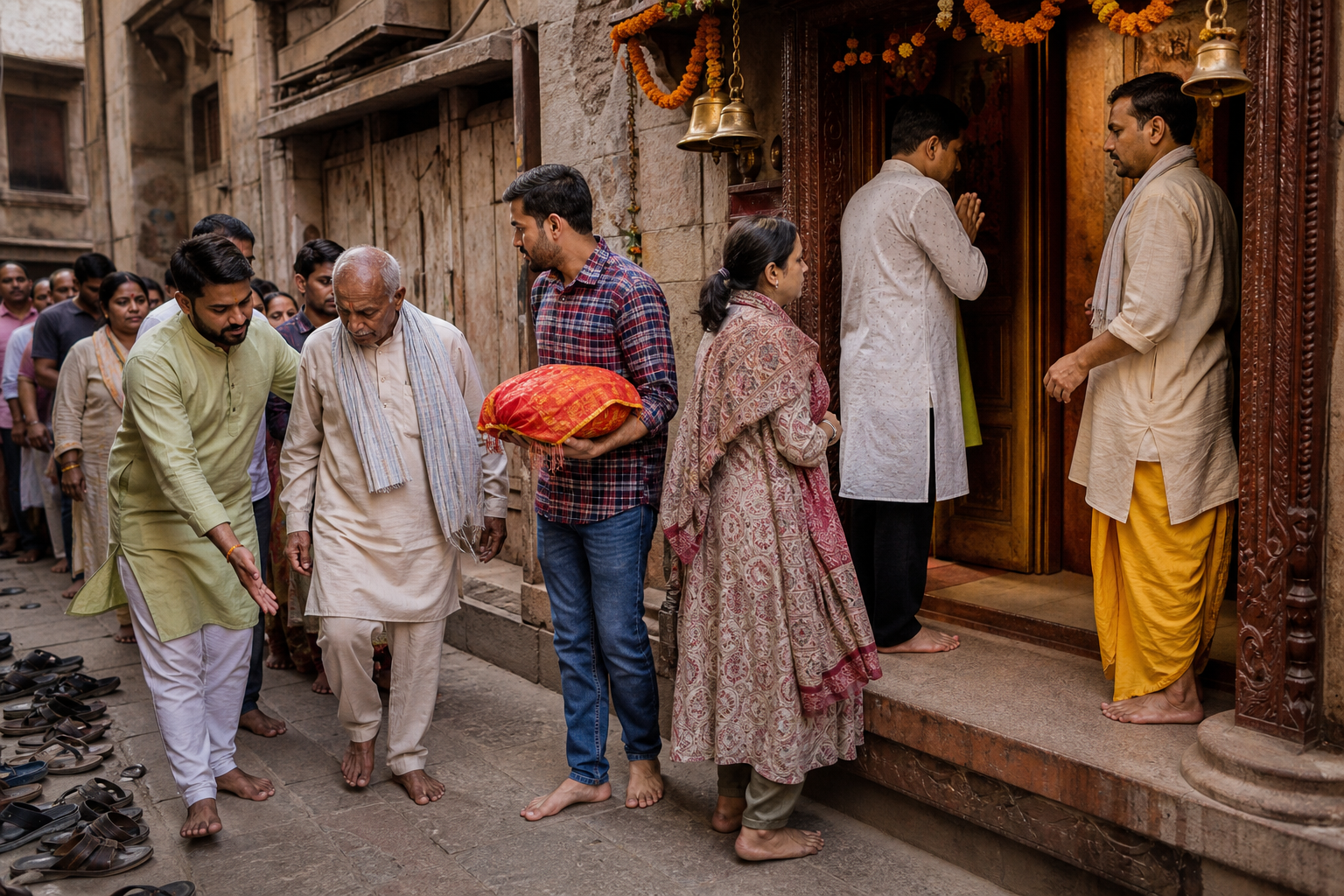
Temple conduct begins before you see the murti. Dress modestly, lower your voice as you approach, and move without obstructing worshippers. These simple disciplines protect both the sanctity of the place and the concentration of the people around you.
- Let local instructions govern. Access, photography, offerings, and movement near a sanctum may differ from one place to another. Treat permission as undecided until a posted notice or an authorized person makes it clear.
- Keep the phone subordinate to the visit. If photography is permitted, take only what you need and then put the device away. A screen can quietly turn darshan into image collection.
- Do not imitate what you do not understand. If a gesture, offering, or line of movement is unfamiliar, observe respectfully or ask a concise question. Sincerity does not require pretending to know a local custom.
- Protect the concentration of others. Avoid loud commentary, repeated group photographs, and conversations at a threshold. Make room for elderly devotees and people carrying children.
- Receive without grasping. If prasad or a sacred thread is offered, accept it respectfully. Do not treat a blessed object as a trophy detached from the responsibility it represents.
The same respect should shape a wider dharmic journey. Nearby Sarnath recalls the Buddha’s first discourse, while Jain traditions preserve historic tirthas in and around the region. Visiting these places alongside Hindu temples can deepen your understanding of shared commitments such as ahimsa, satya, daya, and dharma.
Shared values do not make Hinduism, Buddhism, Jainism, and Sikhism interchangeable. Each has its own disciplines, authorities, and understandings of liberation. Notice the civilizational conversation without erasing those distinctions. Unity is more credible when it does not demand sameness.
Key takeaways
- Write a one-sentence sankalpa before choosing temples; let the intention determine the route.
- Build around one devotional current, such as Shiva, Shakti, Rama-Hanuman bhakti, sacred literature, or civilizational memory.
- Read each temple on its own terms: darshan, seva, music, sacred text, guardianship, architecture, and festival worship are different modes of participation.
- Group temples by area and leave unscheduled time instead of attempting every famous shrine in one day.
- Follow local instructions, keep photography secondary, and treat modest dress, quiet speech, and mindful movement as parts of sadhana.
- Carry one practice home, whether it is japa, study, annadan, greater discipline, or more attentive care for another person.
Before you leave for Varanasi, choose your anchor temple, your companion shrine, and the practice you will continue after returning home. Then allow Kashi to remain larger than your plan. A yatra becomes fruitful not when you have completed the city, but when one of its traditions begins to reshape how you live.
References
