
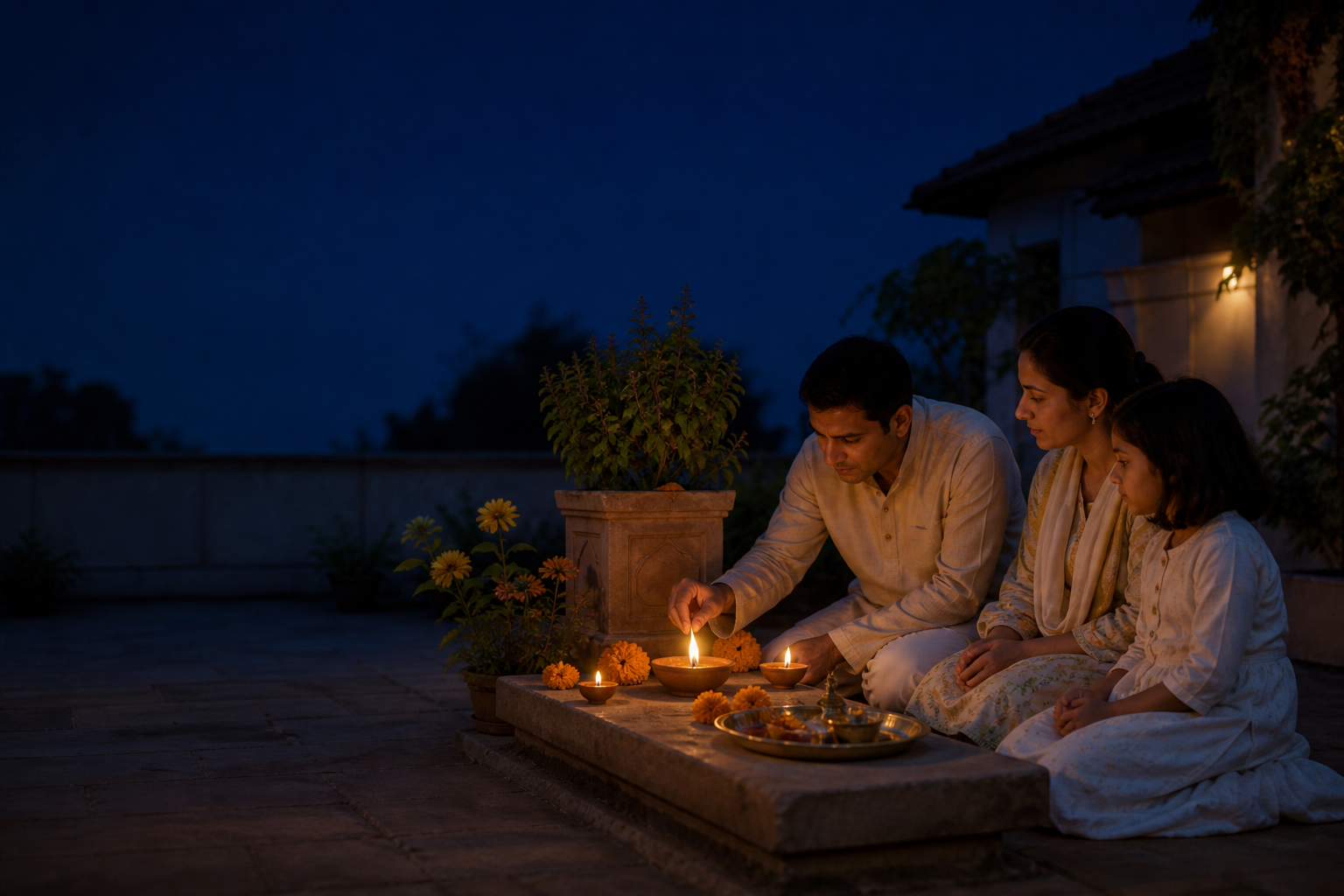
If you are trying to plan an observance and two calendars seem to disagree, do not assume that one of them is wrong. Kartik Amavasya can mean the Deepavali new moon in one regional reckoning and the following new moon at the end of Kartik in another.
The solution is to separate three things that are often bundled together: Amavasya is a lunar tithi, Kartik is a lunar month whose boundaries depend on the calendar system, and Deep Daan is the act of offering a lamp. Once you identify each one, you can choose the right local timing and keep the observance without confusion.
Key takeaways
- Amavasya is a tithi, not a fixed midnight-to-midnight date. Its local start and end times can cross two civil dates.
- Kartik is named differently under amanta and purnimanta calendar systems. The same new moon may therefore have different month names in different regions.
- Deep Daan is not restricted to Amavasya. Many devotees offer lamps on Kartik evenings throughout the month.
- Pitru tarpan, Deep Daan and Deepavali puja are distinct observances. Choose the practice you intend to keep instead of combining every associated rite.
- Use a Panchang calculated for your city, then follow your household, sampradaya or temple method where it gives more specific instructions.
First identify the tithi, the month system and the occasion
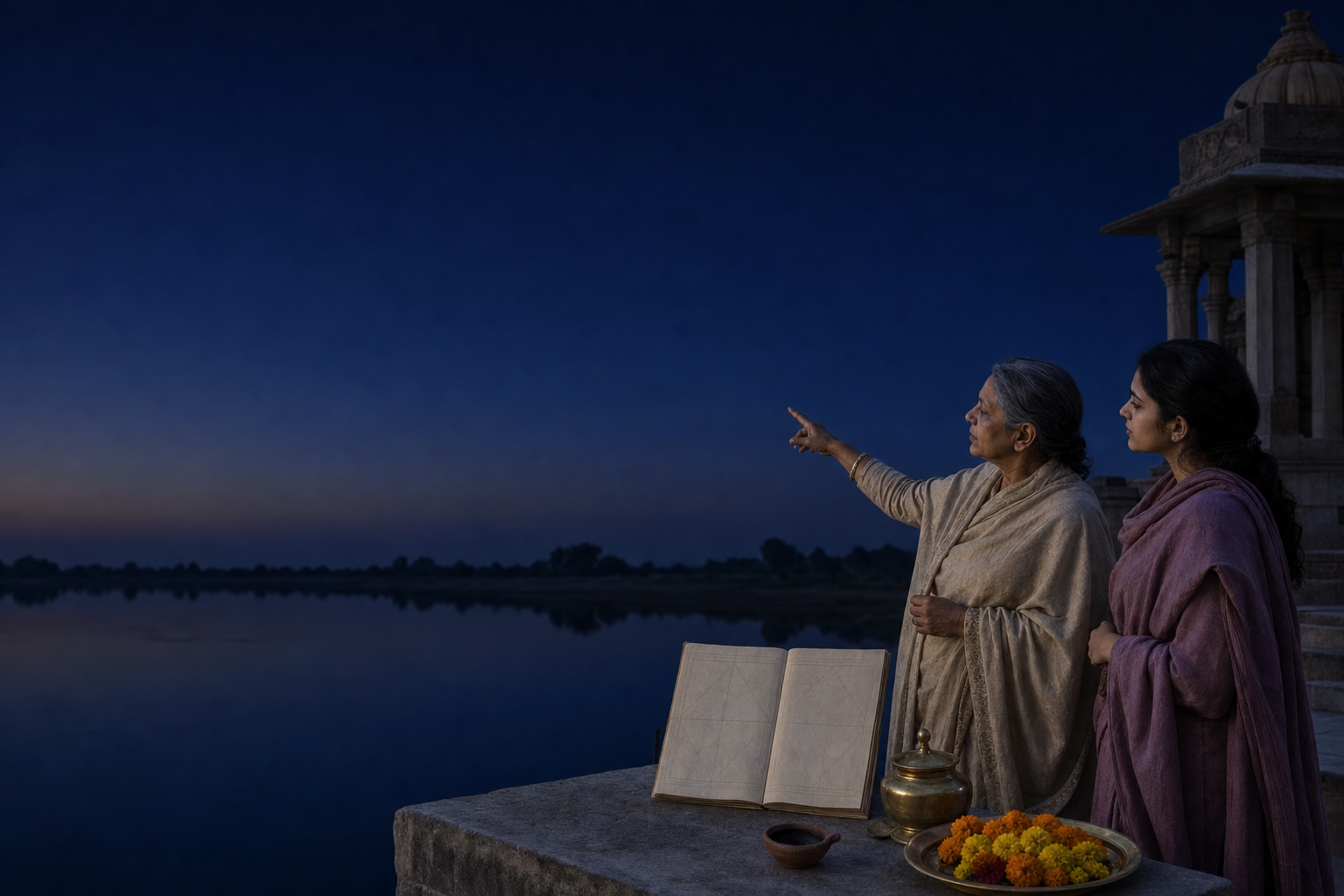
A civil date begins at midnight. A tithi does not. Amavasya may begin during one civil day and end during the next, and its exact interval varies with location and time zone. That is why a date printed for Bharat cannot automatically be used in Toronto, London, Singapore or another city.
The calendar also needs a rule for deciding which civil day receives the observance. Some rites follow a sunrise-based convention. Evening festival worship may depend on whether Amavasya prevails during Pradosh Kaal, and a household may also use a prescribed lagna. For Deepavali worship, check the local tithi, Pradosh period and temple schedule rather than choosing a date from the month name alone.
The second source of confusion is the boundary of Kartik. In an amanta calendar, the lunar month changes after Amavasya. In a purnimanta calendar, it changes after Purnima. Consequently, the Deepavali new moon is called Ashwayuja Amavasya in several Telugu, Kannada, Marathi and Gujarati calendars but Kartik Amavasya in the North Indian purnimanta tradition. The following new moon may then be called Kartika Amavasya in those amanta regions and Margashirsha Amavasya in the North. These are different regional names produced by different month boundaries, not different phases of the moon.
| Term | What it identifies | What you need to verify |
|---|---|---|
| Amavasya | The new-moon tithi | Its start and end in your location, plus the day-selection rule for your rite |
| Kartik or Kartika | A lunar month | Whether your calendar follows an amanta or purnimanta reckoning |
| Deep Daan | An offering of light | The evening or muhurta followed by your household or temple |
| Pitru tarpan | An ancestral offering | Your lineage method, the local Sankalpam details and the appropriate ritual time |
When planning, write down four pieces of information: your city, the Amavasya tithi interval, the calendar system used by your family, and the rite you intend to perform. If a family message merely says Kartik Amavasya, ask which regional Panchang it follows before booking travel or announcing a community programme.
Choose the observance before you gather the materials
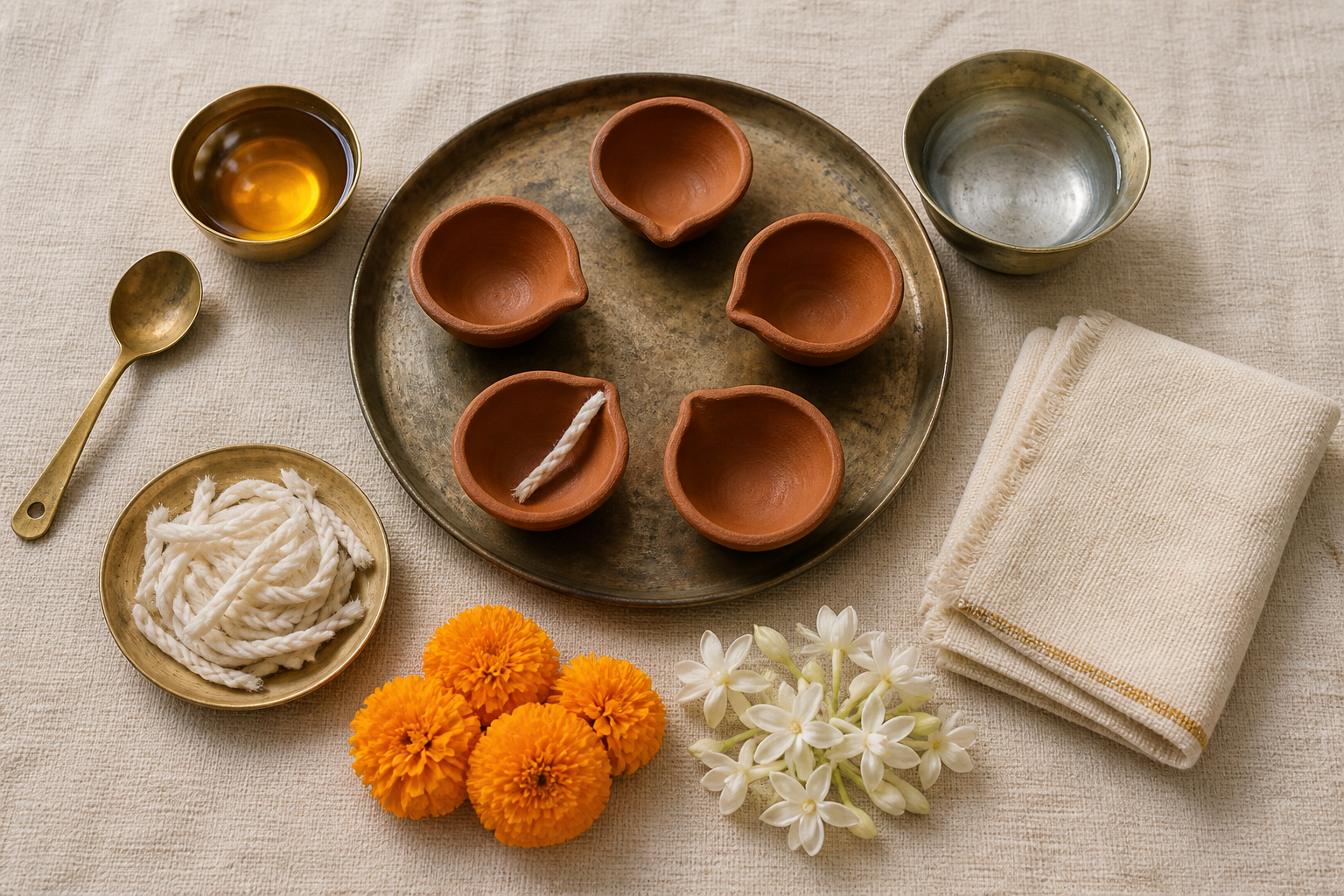
The new-moon setting can hold more than one form of worship, but the forms are not interchangeable. A simple lamp offering does not automatically become tarpan, and tarpan should not be treated as decorative preparation for a festival puja. Decide what you are undertaking and let that intention determine the materials, mantra and timing.
Deep Daan during Kartik
Deep Daan means offering a diya as an act of devotion. It can be observed on Kartik Amavasya, but it is not confined to that night. In devotional settings such as Mayapur, ghee or oil lamps are offered at dusk throughout Kartik, often with japa, kirtan and reflection on sacred teachings. Large communal offerings may culminate around Kartik Purnima, while a household practice can remain simple and regular.
If your question is whether you have missed Deep Daan because Amavasya has passed, the answer is usually no: Kartik lamp offering is a month-long devotional discipline in many communities. Check your own calendar and tradition, choose an evening within Kartik, and offer the lamp with attention rather than waiting for the largest public ceremony.
Amavasya tarpan and ancestral remembrance
Pitru tarpan has a different purpose. It expresses gratitude and duty toward the ancestors through a prescribed offering. Common preparations include water, til, darbha grass and a clean vessel, but the exact procedure and recitation should follow the practitioner’s family or sampradaya.
The Sankalpam locates the rite in time and place. Its traditional markers can include the samvatsara, ayana, ritu, masa, paksha, tithi and vasara. Those details change, so do not copy a Sankalpam written for an earlier year or another region. Obtain the current wording from a reliable local Panchang, a knowledgeable elder, your temple or a learned guide.
If you have not learned your lineage’s formal tarpan procedure, you can still spend the day in grateful remembrance, prayer, charity and care for elders. Seek guidance before presenting an improvised water offering as the hereditary rite. Sincerity matters, but so does respecting a practice whose gestures and mantras carry a specific lineage.
Deepavali and other regional observances
Deepavali Amavasya brings another set of practices. Many Hindu households perform Lakshmi Puja, while Kali Puja is prominent in West Bengal, Assam and Odisha. Jain communities remember the Nirvana of Bhagavan Mahavira around this new moon, and Sikh communities mark Bandi Chhor Divas in close alignment with the Diwali season. These observances share imagery of illumination, freedom and renewal, but they retain distinct histories, theologies and ritual forms.
Unity within the dharmic family does not require turning every tradition into the same ceremony. You can honour the common aspiration toward wisdom and compassion while naming each observance accurately. If you are organising an inter-community gathering, let representatives describe their own practices and use the lamp as a shared motif, not as proof that all paths perform one identical rite.
A simple Deep Daan evening you can keep at home
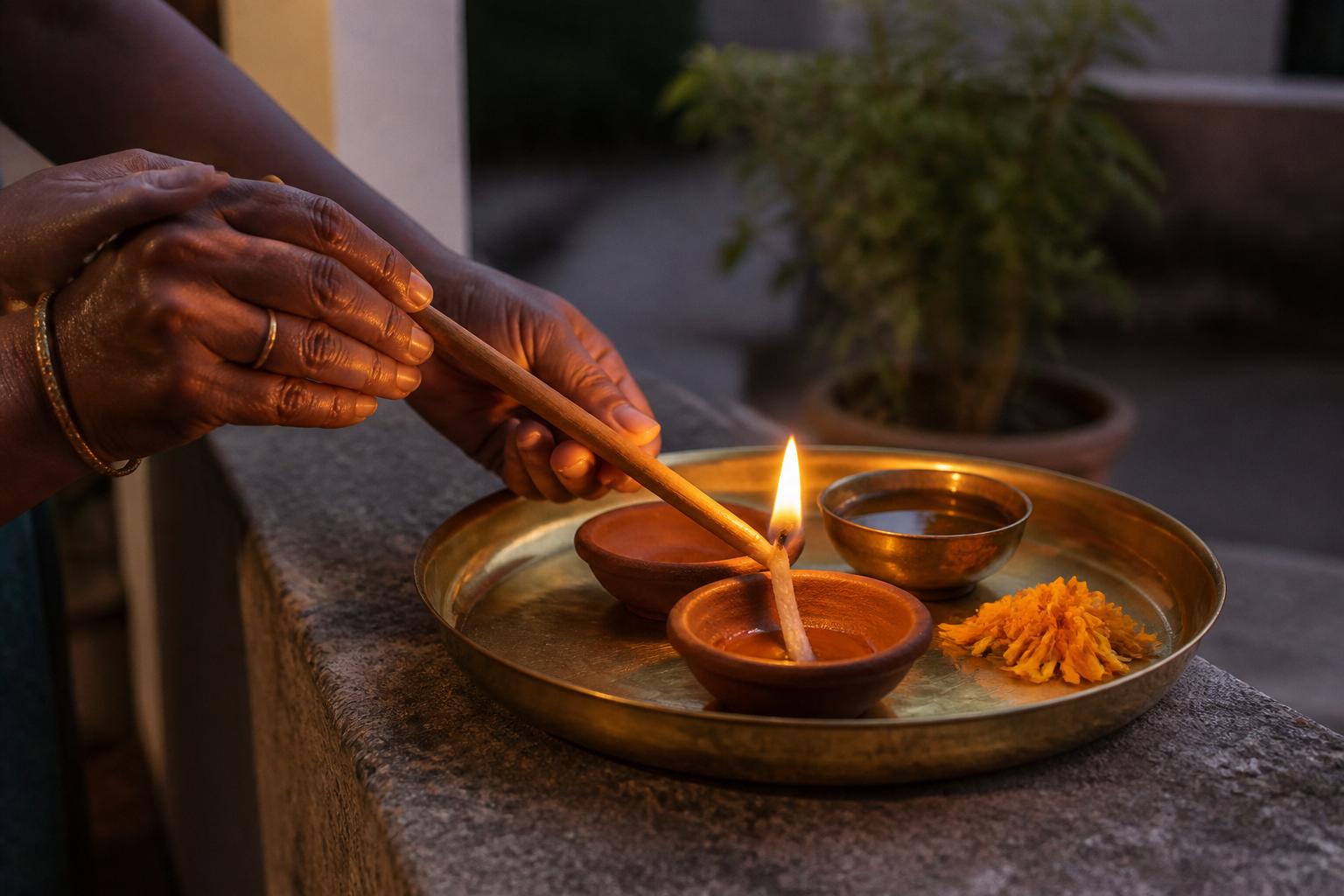
If your household has a prescribed vidhi, follow it. If you want a modest devotional observance without claiming a lineage-specific ritual, the following structure keeps the focus on light, prayer and ethical intention.
- Confirm the evening. Check a Panchang for your city. If this is a Kartik practice rather than a particular Amavasya puja, verify that the evening falls within Kartik under the calendar your household follows.
- Prepare one safe lamp. Use a clean diya with ghee or oil and a suitable wick. Set it on a stable, heat-resistant surface away from cloth, paper, children and pets. Keep the flame attended for as long as it burns.
- Clean the immediate space. A clean shrine or quiet corner is enough. Avoid turning preparation into display or waste; simple, reusable or responsibly disposable materials fit the observance’s emphasis on stewardship.
- State a clear intention. Offer gratitude to the Divine and identify one inner darkness you are prepared to work on, such as careless speech, resentment, dishonesty or indifference to another person’s need.
- Light the diya at dusk or at the local muhurta. Recite the prayer or mantra already used in your home. If you do not have one, maintain reverent silence instead of adopting an unattributed formula from the internet.
- Remain with the offering. Continue with japa, kirtan, scriptural reflection or quiet contemplation. The point is not to accumulate activities but to keep the mind present while the outer light makes the inner intention visible.
- Join worship to dana or seva. Set aside food or another useful contribution, help an elder, support a community need, or perform a concrete act of care. Charity and service prevent the lamp from becoming only an aesthetic object.
- Close with gratitude. Offer a peace prayer for all beings and decide how the intention will shape your conduct the following day. Never leave a burning diya unattended; extinguish it safely if you must leave the space.
For a communal event, assign responsibility for lighting, supervision and cleanup before the first wick is lit. Leave walking routes clear, provide enough spacing between lamps, and explain how used oil, wicks and vessels will be handled. An eco-conscious arrangement and careful flame management protect both the devotional atmosphere and the shared place.
Let the lamp create a duty beyond the evening
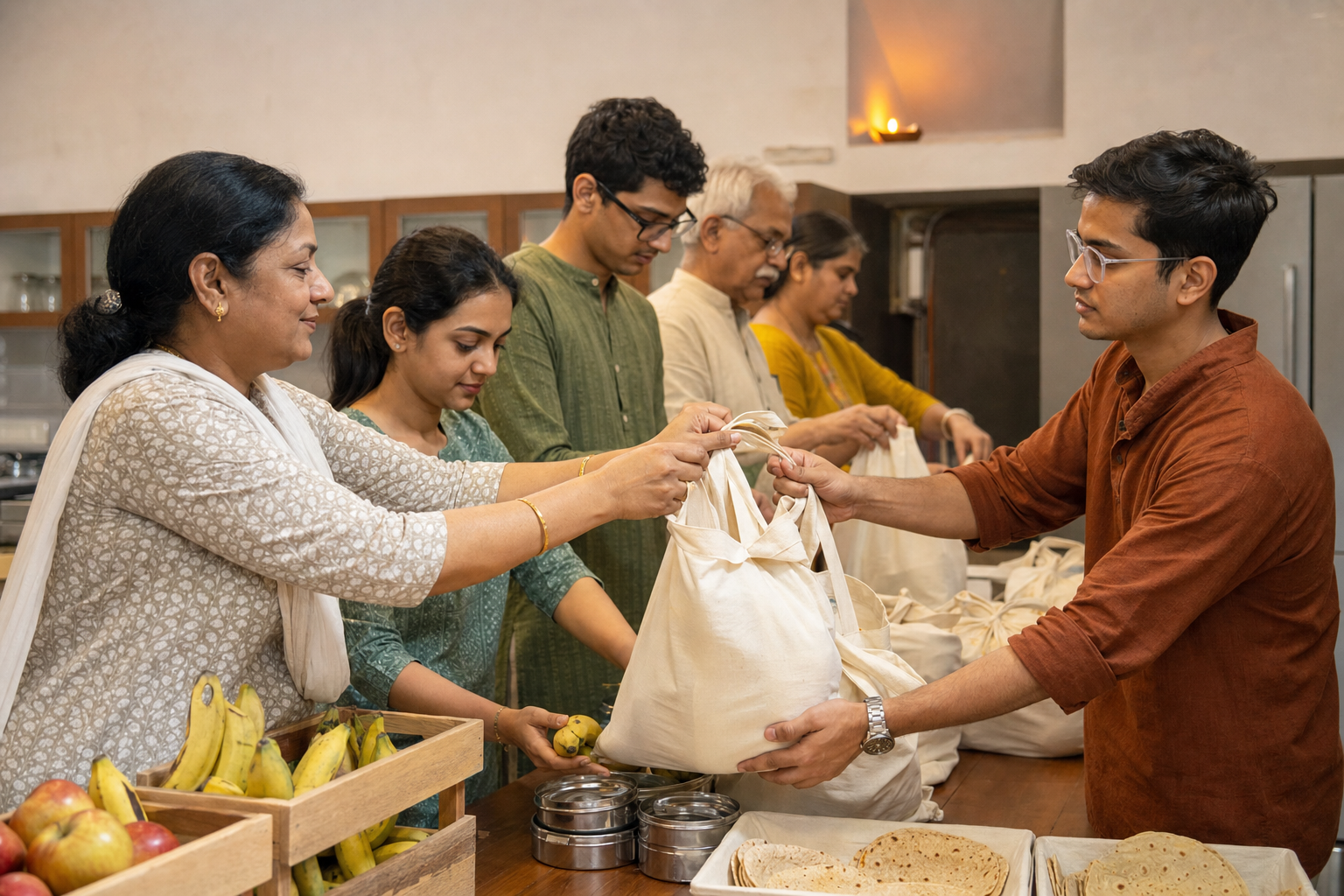
A diya traditionally points beyond its own flame: toward inner clarity, the removal of ignorance and the cultivation of compassion and self-discipline. Kartik Deep Daan becomes more demanding, and more useful, when you connect the symbol to one behaviour that can be observed after the lamp has gone out.
- If the intention is truthfulness, correct one misleading statement instead of merely resolving to be truthful.
- If it is ahimsa, interrupt one habit of harsh speech and make the next response measured.
- If it is gratitude to ancestors, record a family teaching, call an elder or fulfil a neglected family responsibility.
- If it is seva, choose a recipient and complete the act rather than leaving charity as a vague intention.
- If it is stewardship, reduce waste in the next observance and leave the shrine or community space cleaner than you found it.
The wider dharmic world contains related disciplines of light and remembrance: lamp offerings in Hindu and Jain settings, butter-lamp offerings in Buddhist practice, and the themes of freedom and seva surrounding Bandi Chhor Divas. Their shared language of illumination can support mutual respect without erasing the different teachings that give each practice its meaning.
Your next step is small and precise: open a local Panchang, record the tithi interval and calendar system, and name the observance you intend to keep. Then prepare one lamp and one corresponding act of dharma. When the date, practice and intention are aligned, calendar differences stop being an obstacle and become part of understanding Bharat’s living calendrical diversity.
References
- DharmaRenaissance Blog — Essential Guide: Discover Kartik Deep Daan and Mayapur’s Transformative Lamp Offering
- DharmaRenaissance Blog — Complete Guide to Amavasya Tharpanam Sankalpam Mantras (Nov 2025): Master Ritual and Meaning
- DharmaRenaissance Blog — Ultimate Guide to Amavasya October 2025: Discover the Date, Names, and Diwali Significance
- DharmaRenaissance Blog — Amavasya November 2025: Essential Guide to Kartika/Margashirsha Date, Tithi Timings, and Rituals
