

If a horoscope reading has told you that you possess Mahabhagya Yoga, the useful question is not simply whether the name sounds auspicious. You need to know whether the combination is actually present, how strongly it can operate, and when its promise might become visible.
Those are three separate judgments. Formation is a strict yes-or-no test. Strength depends on the rest of the birth chart. Timing depends on planetary periods and transits. Keeping those layers separate will protect you from both inflated predictions and unnecessary disappointment.
First verify the exact formation rule
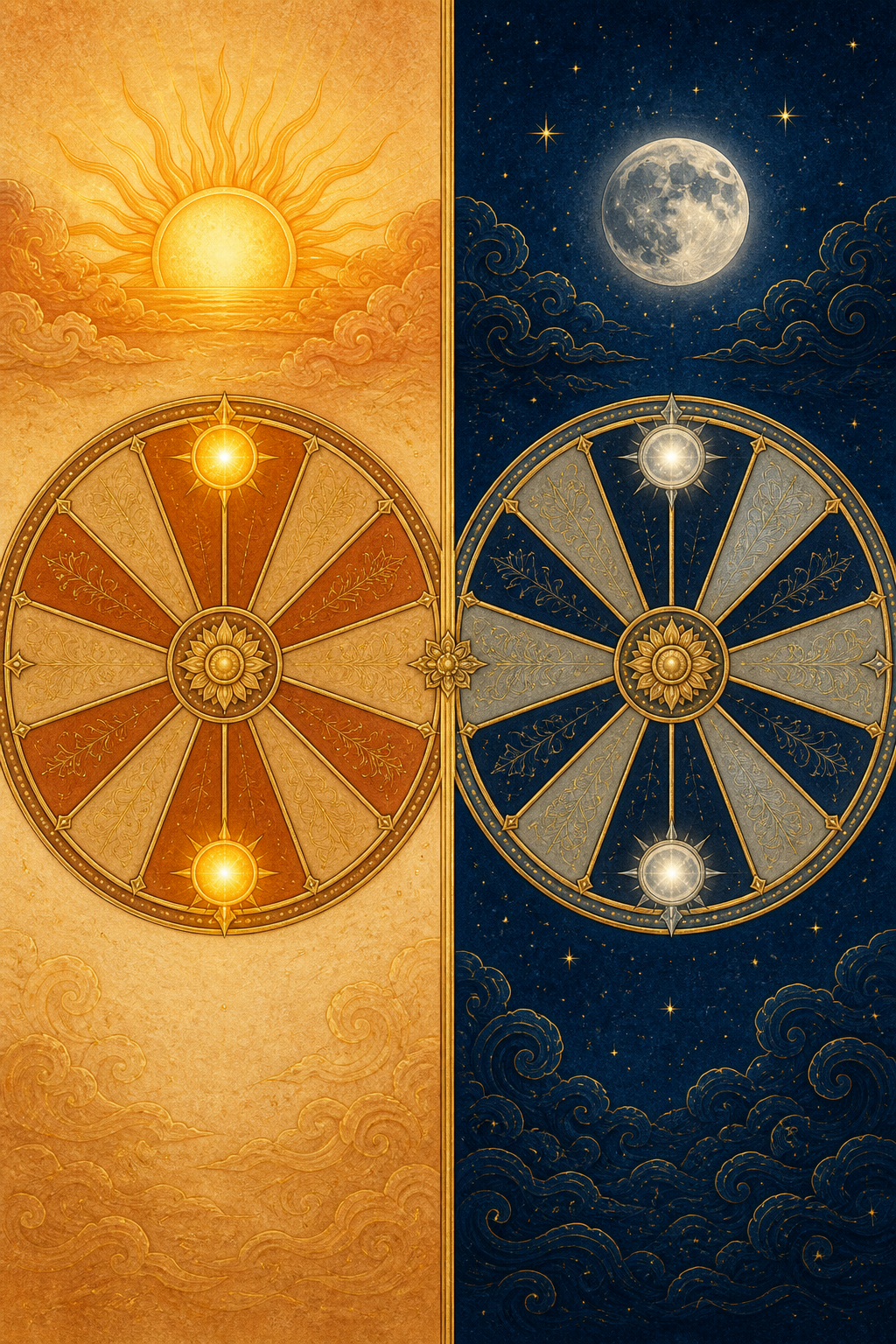
The traditional test for Mahabhagya Yoga depends on the person’s sex, whether the birth occurred during the day or night, and whether the Lagna, Sun, and Moon occupy signs of the required parity. All the conditions in the relevant row must be satisfied.
| Traditional rule | Birth period | Required signs | Complete condition |
|---|---|---|---|
| For a man | Daytime | Odd signs | Lagna, Sun, and Moon must all be in odd signs |
| For a woman | Nighttime | Even signs | Lagna, Sun, and Moon must all be in even signs |
The odd signs are Aries, Gemini, Leo, Libra, Sagittarius, and Aquarius. The even signs are Taurus, Cancer, Virgo, Scorpio, Capricorn, and Pisces. Here, “odd” and “even” refer only to the numerical sequence of the zodiac signs. They are not judgments about the quality of a sign.
Use this sequence to check your horoscope:
- Verify the recorded birth time. A small error can change the Ascendant sign, so do not begin with an approximate time if a reliable record is available.
- Classify the birth as day or night. Daytime means after local sunrise and before local sunset. Nighttime means after sunset and before the next sunrise. A clock label such as “6:00” is not enough without the date, place, and AM or PM designation.
- Identify the three required placements. Record the zodiac signs occupied by the Lagna, Sun, and Moon. Houses alone do not answer this question.
- Classify each sign by parity. Check whether every one of the three signs is odd or every one is even.
- Apply the complete sex-specific rule. Two matching placements out of three do not produce Mahabhagya Yoga. The correct birth period and all three sign placements are required.
For example, a man born during the day with Aries rising, the Sun in Gemini, and the Moon in Libra satisfies the basic rule because all three are odd signs. If the Moon were in Virgo, the yoga would not form, even though the Lagna and Sun still met the condition. Likewise, a woman born at night with Cancer rising, the Sun in Pisces, and the Moon in Taurus satisfies the basic rule because all three are even signs.
If your birth was close to sunrise or sunset, or your recorded time is uncertain, do not force a conclusion from a generic online chart. Have the local solar boundary and Ascendant recalculated from the best available birth information. The traditional formulation is precise, and its day-night condition should not be silently replaced by a looser rule.
Formation does not tell you the yoga’s strength
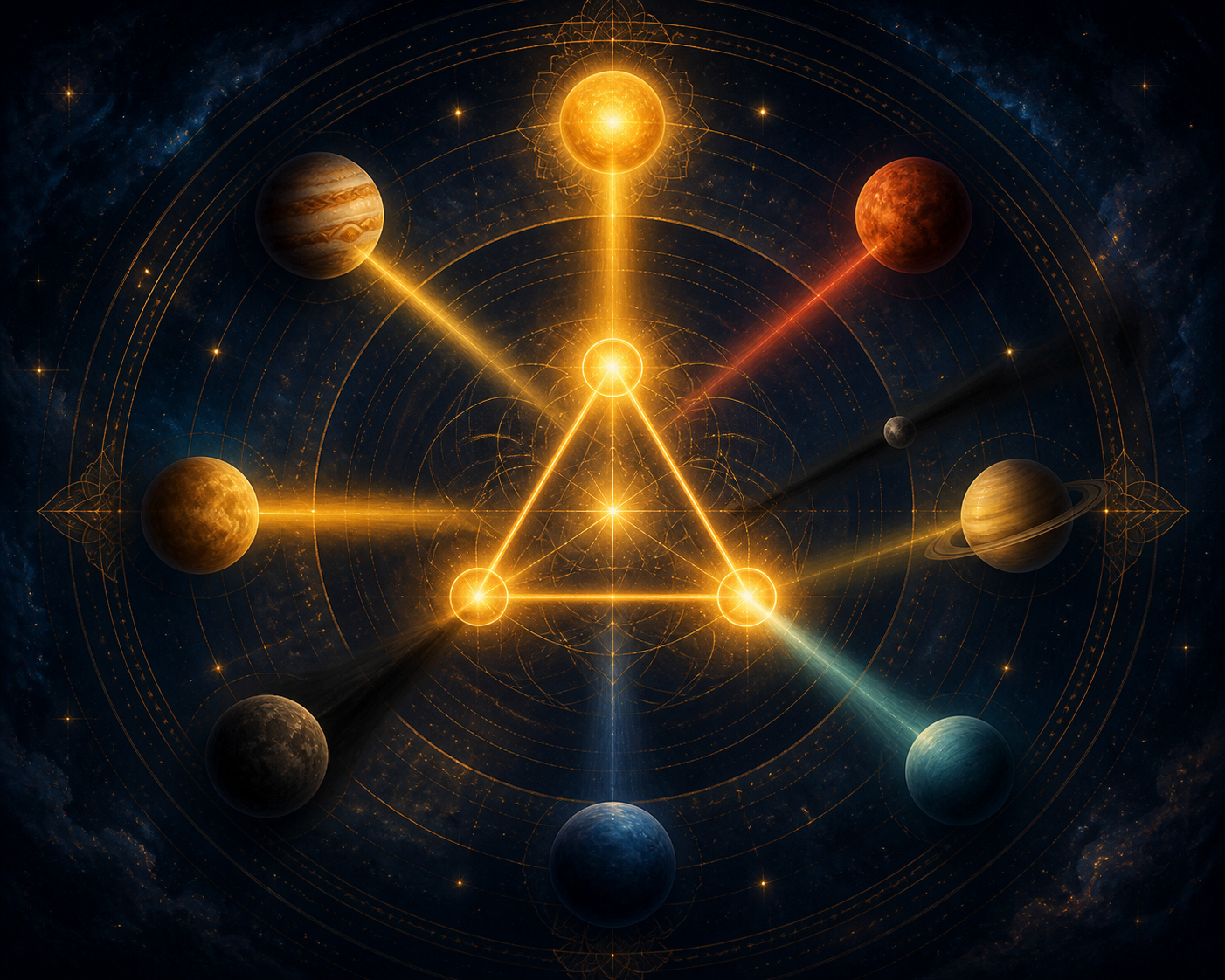
Once the basic combination is confirmed, the more important interpretive work begins. Mahabhagya Yoga is considered auspicious, but its mere presence does not establish how much wealth, recognition, happiness, or support a person will experience. A yoga is a potential within the whole horoscope, not an isolated command that overrides everything else.
Start with the Lagna and its lord
The Lagna represents the embodied person and the direction through which the chart is lived. A strong Ascendant and a well-supported Lagna lord help a person turn opportunity into sustained action. If the Lagna or its lord is weak or heavily afflicted, progress may require more persistence, better routines, or repeated efforts before the promise becomes stable.
Examine the Sun and Moon separately
The Sun concerns vitality, clarity, authority, and the capacity to stand visibly behind one’s work. The Moon concerns the mind, emotional steadiness, responsiveness, and the ability to experience well-being. Their sign dignity, house placement, conjunctions, and aspects determine whether the yoga’s central triad works coherently.
A debilitated or severely afflicted Sun can complicate confidence, vitality, or the handling of authority. A troubled Moon can make outward success difficult to experience as inner contentment. These conditions do not automatically erase Mahabhagya Yoga, but they can redirect its results, delay them, or attach greater personal discipline to their realization.
Look for support, pressure, and confirmation
Benefic influence from Jupiter, Venus, or a well-placed Mercury can make the combination smoother and more sustainable. Strong pressure from Saturn, Mars, or the lunar nodes, especially without balancing support, can indicate that achievement comes through endurance, constraint, competition, or difficult responsibility. Malefic influence is not a reason to announce that the yoga has vanished; it helps explain the route through which its results may emerge.
A complete assessment should cover:
- The strength and condition of the Lagna lord.
- The sign dignity and house placement of the Sun and Moon.
- Conjunctions and aspects affecting the Lagna, Sun, and Moon.
- Whether benefic support balances difficult influences.
- Relevant divisional-chart evidence, especially the Navamsa or D9.
- Whether the same promise is repeated elsewhere in the horoscope.
If you consult a Jyotisha practitioner, ask for these factors explicitly. “You have a rare wealth yoga” is not a complete interpretation. A useful reading should explain which factors strengthen the combination, which factors constrain it, and what form of success the full chart actually supports.
Timing explains why results may appear early or late
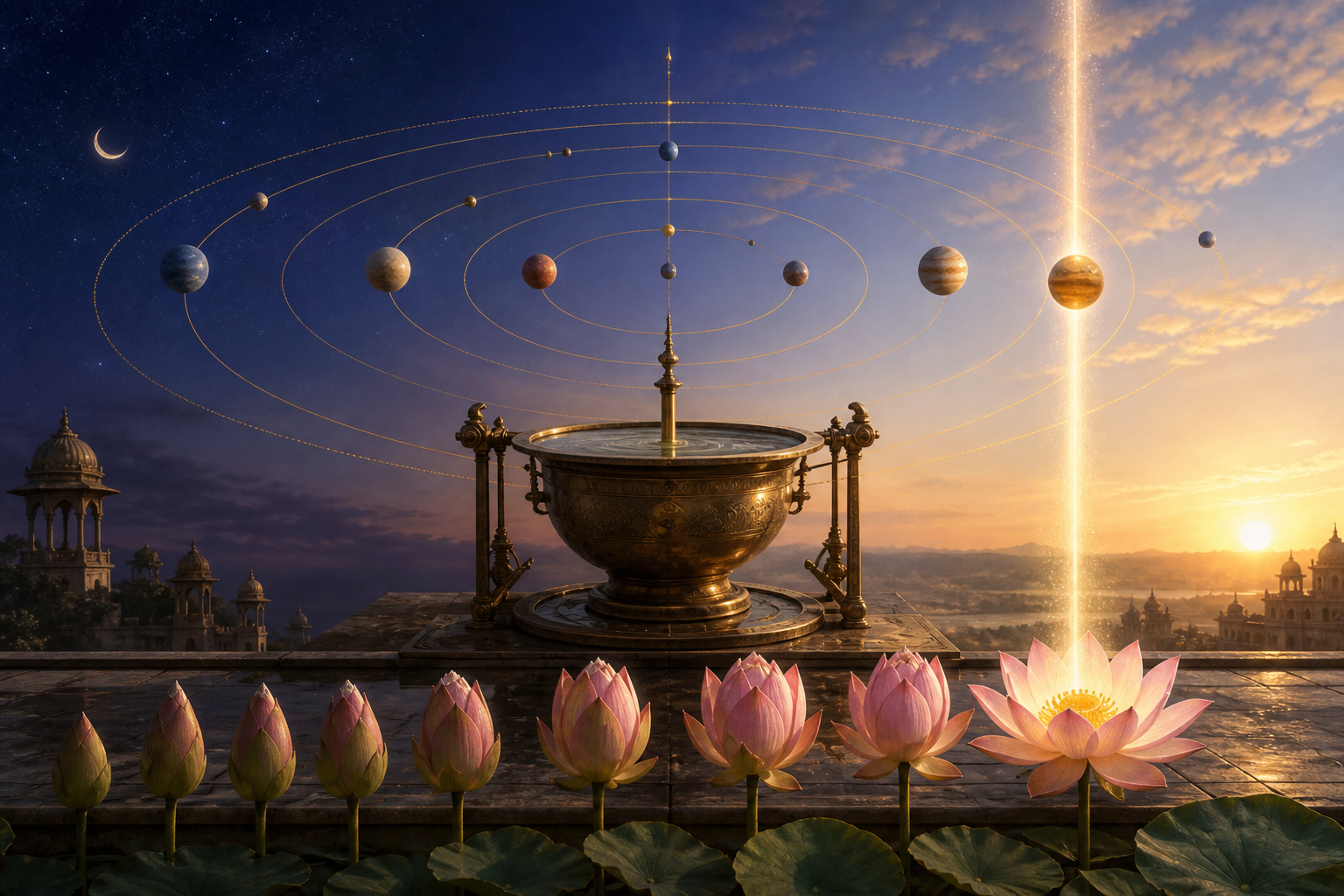
A confirmed and well-supported yoga can remain relatively quiet until the horoscope’s timing activates it. This is why two people with the same named combination may report very different life trajectories. One may receive conspicuous opportunities early, another may consolidate influence in mid-career, and another may become recognized only later in life.
Mahabhagya Yoga is especially worth watching during the planetary period, or dasha, of the Lagna lord, Sun, or Moon. Supportive transits that activate the Ascendant axis can also bring its themes closer to the surface. The exact outcome still depends on the condition, lordship, placement, and relationships of the operating planet; the name of the yoga alone cannot supply a reliable date or event.
Possible expressions include stronger career momentum, advancement into leadership, support from influential networks, a successful venture, greater access to resources, or recognition for constructive public service. The deeper pattern is not merely possession. It is the capacity to receive opportunity, organize support, and occupy a position from which one’s decisions affect other people.
This also clarifies the answer to “Is Mahabhagya Yoga good or bad?” The combination is traditionally auspicious. Difficult chart factors do not turn it into an inherently harmful yoga, but they may make its expression demanding. A person can gain status while carrying heavy obligations, build prosperity after repeated delays, or become influential through work that requires unusual discipline.
Ask an astrologer to identify a timing window only after assessing natal strength. The explanation should connect the operating dasha or transit to the Lagna, Sun, Moon, or their lords. A prediction that jumps directly from the yoga’s name to a guaranteed promotion, marriage, windfall, or public office has skipped the interpretive steps that would make it credible.
Do not borrow money, leave employment, make an investment, or undertake another consequential financial action solely because a favorable dasha or yoga has been identified. Use Jyotisha as a framework for reflection and timing, while applying ordinary due diligence and qualified financial advice to decisions that can produce real loss.
A dharmic reading turns fortune into stewardship
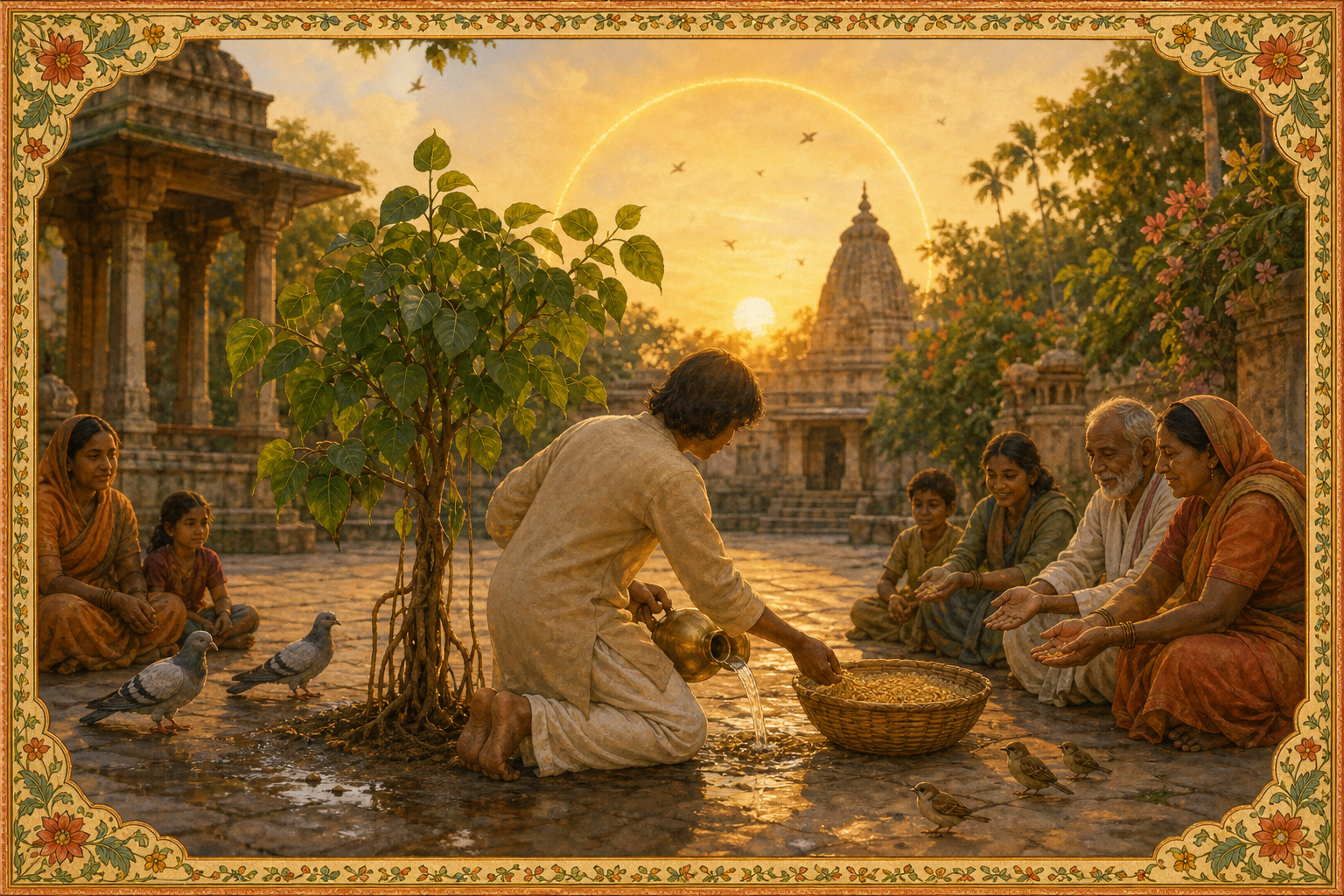
Mahabhagya literally directs attention toward great fortune, but a dharmic interpretation asks a second question: what will you do with favorable conditions if they arrive? Wealth without restraint, visibility without responsibility, or influence without self-knowledge can magnify confusion as easily as it magnifies capacity.
The combination joins three foundational factors: embodied identity through the Lagna, vitality and authority through the Sun, and mind through the Moon. When they are aligned and well supported, the person may have an unusual ability to make inner intention, public action, and available opportunity move in the same direction. That coherence is more useful than the fantasy of effortless luck.
You can cultivate the qualities that allow an auspicious potential to be used well:
- Maintain a dependable routine. Regularity gives opportunity somewhere stable to land, particularly when the Lagna or its lord needs support.
- Practice self-study. Svadhyaya helps you distinguish a genuine calling from the desire to appear fortunate or important.
- Develop mental steadiness. Meditation and mindfulness do not guarantee astrological results, but they help prevent an unsettled mind from wasting favorable circumstances.
- Use authority responsibly. If greater visibility arrives, measure success partly by the quality of your decisions and their effect on people with less power.
- Make service concrete. Seva can mean giving time, competence, mentorship, protection, or resources where they are actually needed.
- Practice responsible stewardship. Treat wealth and social support as entrusted capacities rather than evidence of personal superiority.
These disciplines resonate across Hindu, Buddhist, Jain, and Sikh ethical life through different vocabularies and practices: self-restraint, compassion, service, attentive awareness, and responsibility toward others. That shared dharmic emphasis does not make Jyotisha equally doctrinal in every tradition. It does provide a sound ethical frame for responding to good fortune.
Astrological remedies should follow the actual weakness in the horoscope rather than the attractive name of the yoga. If the difficulty concerns vitality, mental steadiness, or an impaired Lagna lord, the response should be chosen for that condition. Generic gemstones, rituals, or promises of instant activation cannot be justified from the existence of Mahabhagya Yoga alone.
Key takeaways
- For a man, the classical combination requires a daytime birth and the Lagna, Sun, and Moon in odd signs.
- For a woman, it requires a nighttime birth and all three factors in even signs.
- The condition is all-or-nothing at the formation stage; two matching placements are insufficient.
- Its strength depends on the Lagna lord, the condition of the Sun and Moon, aspects, conjunctions, houses, and divisional-chart support.
- Its results are more likely to become prominent during relevant dashas and supportive transits, but timing never converts potential into a guarantee.
- Its highest dharmic expression is not passive luck but the responsible use of opportunity, influence, and resources.
Your next step is simple: verify the birth time, apply the exact formation test, and then ask for a whole-chart assessment before attaching any prediction to the result. If the yoga is present, let it sharpen your sense of responsibility rather than reduce your life to a promise of luck.
References
