
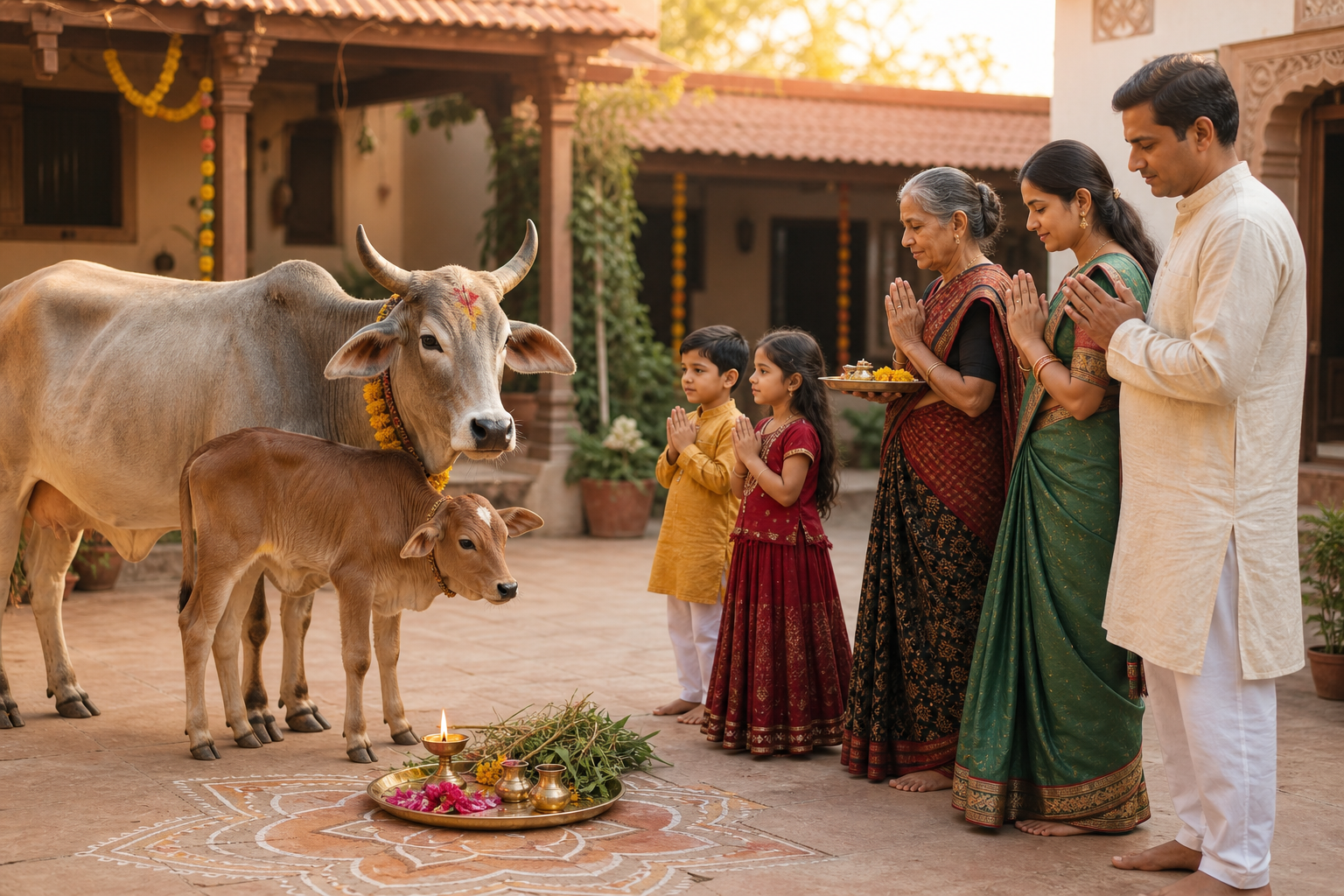
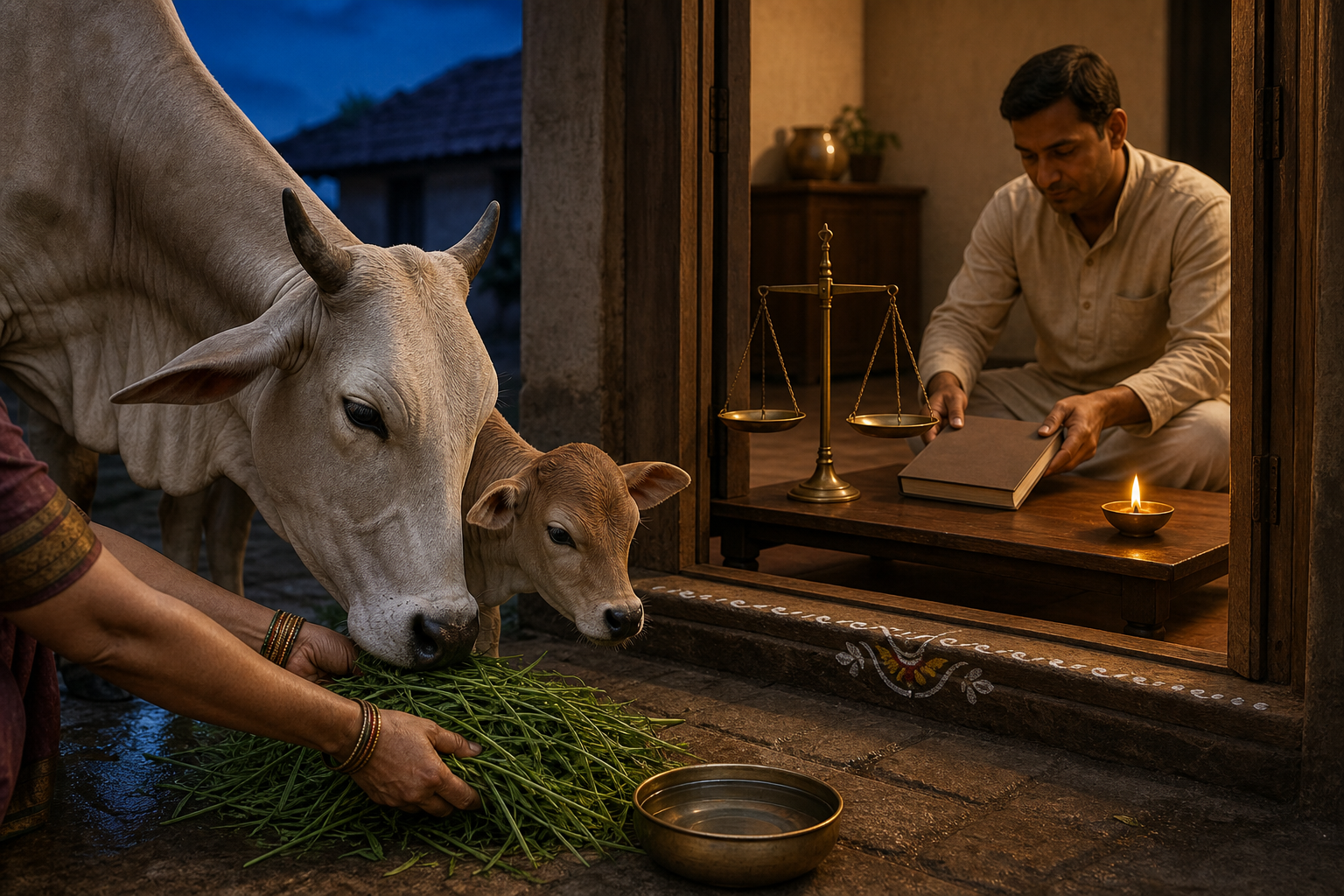
You may know the day as Govatsa Dwadashi, Nandini Vrata, Vasu Baras, or Vagh Baras. The names can make a straightforward observance seem more complicated than it is. If your family is Gujarati, the essential point is simple: Vagh Baras is the Gujarati opening of Diwali, centered on gratitude toward cows and calves and, in many trading households, an honest closing of accounts.
You don’t need an elaborate ceremony to observe it well. You need the correct lunar day, a respectful form of gau-puja, restraint in what you consume, and one concrete act of care or accountability. Here is how to put those elements together without confusing regional customs or turning the vrata into a performance.
First settle the name, date, and regional emphasis
Govatsa Dwadashi is observed on the twelfth lunar day of Krishna Paksha in the month of Ashwin. Gujarat calls it Vagh Baras, while Vasu Baras is the familiar name in Maharashtra. Nandini Vrata describes the devotional vow associated with the day. These are regional expressions of the same cow-and-calf observance, not rival festivals.
| Name | Where or how it is commonly used | Practical emphasis |
|---|---|---|
| Govatsa Dwadashi | North India, Gujarat, Maharashtra, Karnataka, Telangana, and Andhra Pradesh | Worship of a cow and calf, gratitude for nourishment, and compassionate restraint |
| Nandini Vrata | Devotional and scriptural framing | Honoring Nandini and treating abundance as a responsibility governed by dharma |
| Vasu Baras | Maharashtra | The beginning of Diwali observances, with household vows that may emphasize the well-being of children |
| Vagh Baras | Gujarat and parts of Rajasthan | The opening of the Gujarati Diwali cycle, combining animal reverence with the traditional review and closure of business accounts |
The date follows a tithi rather than a fixed Gregorian date. For example, Govatsa Dwadashi fell on October 17 in 2025. Do not reuse that civil date in another year. Check a local panchang for Ashwin Krishna Dwadashi, especially if your household follows a specific regional calendar or temple schedule.
Key takeaways
- Vagh Baras is the Gujarati form of Govatsa Dwadashi and the first observance in the Gujarati Diwali sequence.
- The indispensable idea is gratitude toward the cow and calf; the scale of the ritual is secondary.
- Many observers avoid dairy for the day so that reverence changes their own consumption rather than remaining symbolic.
- Gujarati business families may also review ledgers, settle genuine dues, and bring transactions to a dignified pause.
- If you cannot visit a cow or calf, a home prayer, cow-and-calf rangoli, dairy restraint, and responsible support for a goshala can preserve the vrata’s purpose.
A simple Govatsa Dwadashi observance you can actually follow
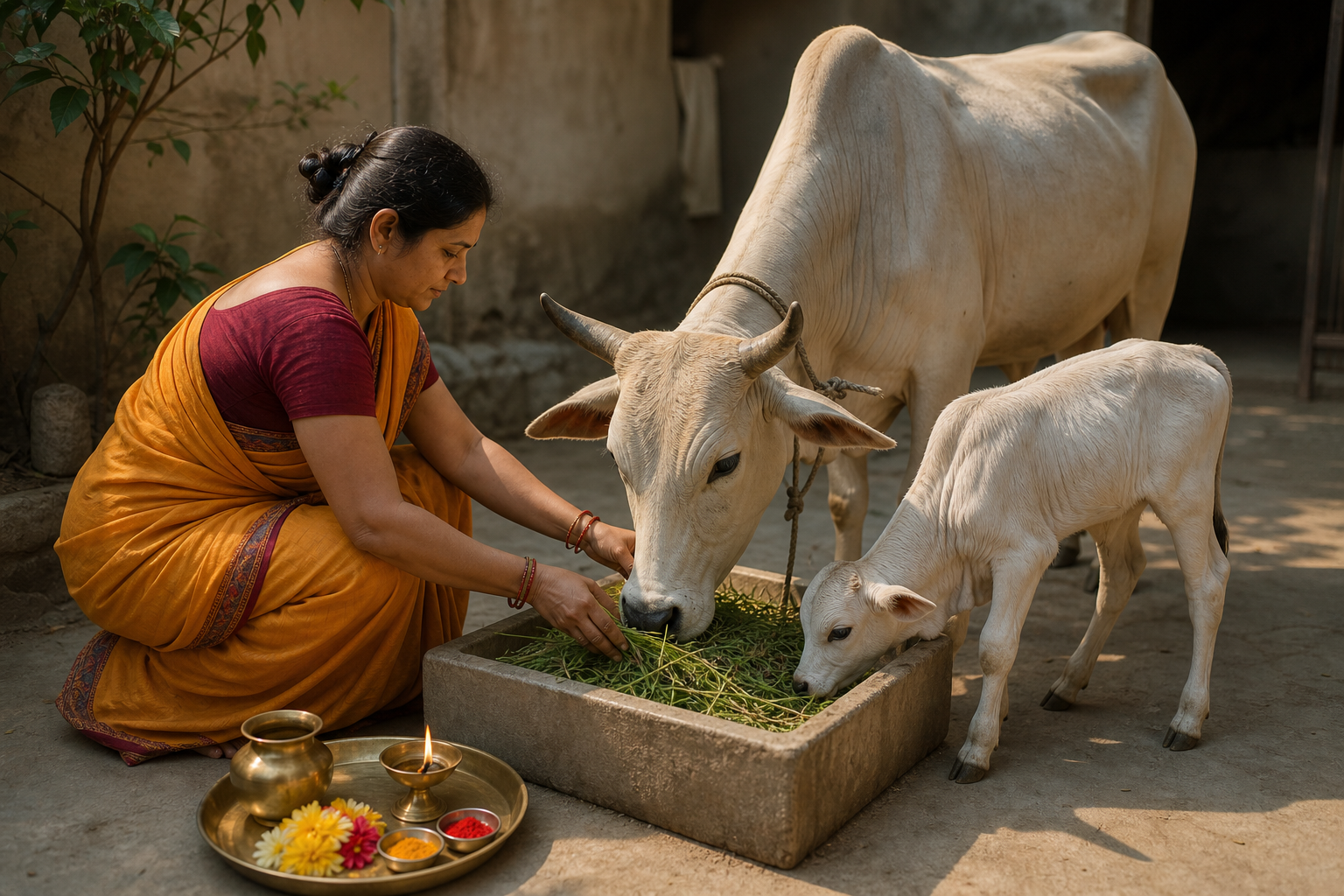
Family customs differ, so retain any inherited procedure your elders or sampradaya asks you to follow. If you need a clear starting point, use the sequence below. It includes the core practices without inventing a compulsory mantra, complicated offering, or uniform ritual that every region must adopt.
- Begin with a clear sankalpa. At sunrise, state what you are undertaking: gratitude for nourishment, the welfare of your family, kindness toward animals, and restraint as Diwali begins. A short, sincere intention is better than words you do not understand.
- Prepare the place and offerings. Clean the worship area or the space where the animals are cared for. Gather water, haldi-kumkum, a garland, seasonal grain or green fodder, an aarti lamp, and any simple naivedya used in your family.
- Approach the cow and calf gently. Let their keeper direct you. Do not crowd, restrain, startle, or decorate an unwilling animal. Haldi-kumkum and garlands are acts of honor only when they do not cause distress.
- Offer food that the caretaker approves. Green fodder, seasonal grains, water, and traditional sweets are associated with the observance, but the animal’s actual diet comes first. Hand unfamiliar food to the keeper rather than feeding it directly.
- Perform prayer and aarti. Honor the cow and calf as a living relationship of nurture, not as decorations for a festival photograph. If your family invokes Nandini, connect the prayer to the responsible use of prosperity and food.
- Practice restraint for the full day. Many families refrain from consuming milk and other dairy products. This voluntary abstinence makes the gratitude personal: for one day, you stop taking the very nourishment whose giver you are honoring.
- Complete one act of seva or dana. Give suitable fodder, help a local goshala, support community animal care, or contribute to the people who perform the daily labor of feeding and sheltering cattle. Ask what is needed before donating supplies.
- Bring the meaning home. Draw a cow-and-calf rangoli at the threshold, share prasada, and explain one practice to the children present. Give them a real task, such as filling a water vessel or helping prepare an approved fodder offering.
The Bhavishya Purana’s Nandini Vrata tradition associates gau-puja with well-being, prosperity, and progeny. Nandini, linked in the narrative tradition with the sage Vasistha, represents abundance that sustains life. Read that promise devotionally, not as a bargain in which one offering mechanically purchases a result. The discipline lies in learning to receive nourishment without forgetting responsibility.
If no cow is nearby, preserve the vrata rather than staging it
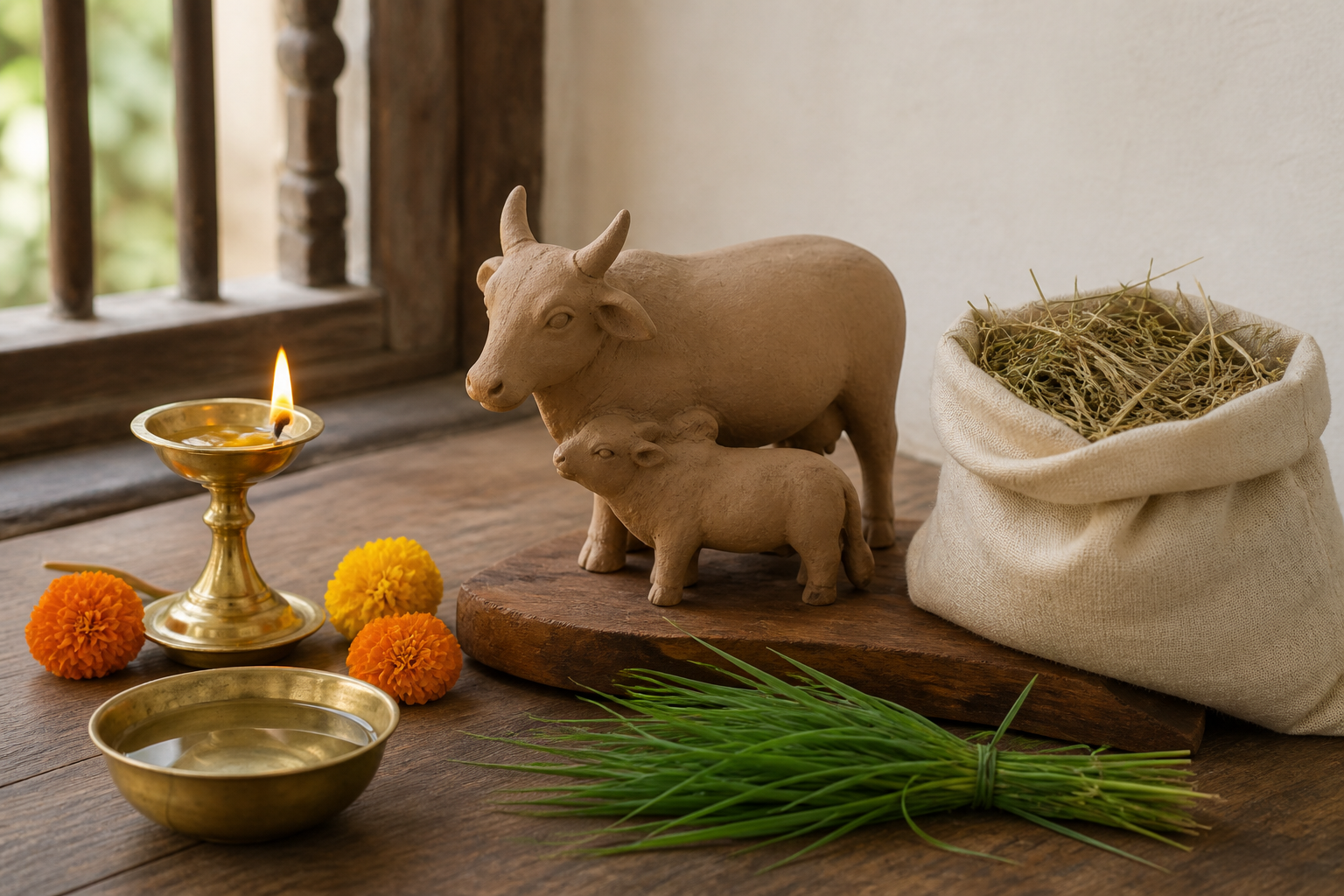
Urban and diaspora families often cannot visit cattle safely. That does not make the day empty. It does mean you should distinguish the purpose of the vrata from its most visible form. Transporting an animal, approaching unknown cattle, or arranging a hurried encounter for photographs can work against the compassion the day is meant to cultivate.
Build your home observance around four actions:
- Create a devotional focus. Make a cow-and-calf rangoli or place an existing image of Nandini in the puja space. Offer a lamp, water, prayer, and aarti according to your household custom.
- Let the vow affect consumption. If it is compatible with your health and family obligations, abstain from dairy for the day. Plan the meal beforehand so the vrata does not become last-minute food waste.
- Support competent animal care. Choose a genuine goshala or community animal-care initiative and ask whether it needs money, fodder, veterinary support, or volunteer help. A requested contribution is more useful than an unsuitable donation.
- Teach through participation. Ask each family member to name one form of nourishment they ordinarily take for granted. Then choose one household change for the Diwali period, such as wasting less food or directing part of the festival budget toward animal care.
This approach is especially useful if children think worship only counts when there is a large public ceremony. They can see that reverence has three parts: how you regard a living being, what you refrain from taking, and what care you help provide after the prayer ends.
Why Gujarati Vagh Baras also belongs at the ledger
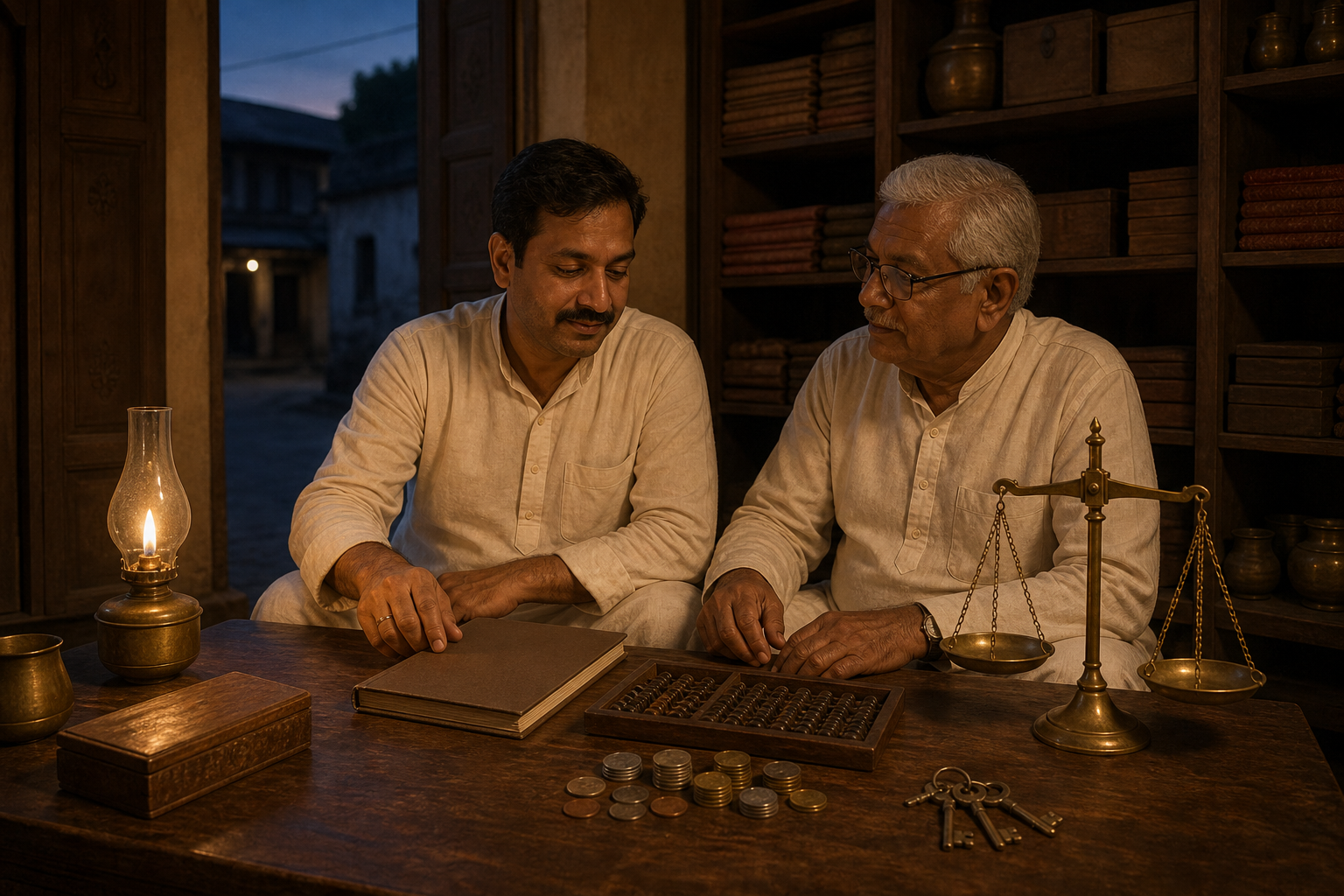
Gujarati Vagh Baras joins devotion to duty. Alongside cow worship, many traditional businesses treat it as a final day of transactions before the Diwali accounting transition. Ledgers are reviewed, dues are settled where possible, and commercial activity is brought to an orderly pause before the new cycle.
If you maintain business accounts, do not reduce this to closing a book and placing it near the puja. Use the occasion to make the numbers morally legible:
- Review outstanding receivables and payables, including small amounts that are easy to ignore.
- Match important ledger entries with the records that support them, and identify anything that remains unexplained.
- Settle dues that are genuinely payable and ready for settlement. Do not pressure another person into a disputed payment merely to create a ceremonial zero balance.
- Record unresolved items openly. A truthful carry-forward is more dharmic than hiding an obligation for the appearance of completion.
- Pause and offer gratitude for everyone whose labor, credit, trust, or custom sustained the enterprise.
Keep ceremonial closure distinct from formal financial obligations. Vagh Baras does not cancel a contract, change a statutory deadline, or justify delaying wages and necessary payments. Where a legal, tax, or accounting requirement applies, follow the applicable deadline and obtain qualified professional advice when needed. The religious practice adds scrutiny and conscience; it does not erase real-world liability.
This is where the Gujarati observance becomes particularly sharp. Prosperity is not treated as auspicious merely because money entered the ledger. It must also be accompanied by accurate accounts, honored commitments, and the willingness to face what remains unsettled. Cow worship and account review therefore express one ethic from two directions: acknowledge what sustains you, and do not conceal what you owe.
Let Vagh Baras set the moral pace of your Diwali
Diwali can quickly become a season of acquisition. Govatsa Dwadashi interrupts that momentum before it gathers speed. It asks you to begin with the giver of nourishment, the people who maintain the systems around you, and the obligations that prosperity creates. That order matters: gratitude first, then celebration.
The observance also offers a clear meeting point within the wider dharmic family. Ahimsa, dana, seva, responsible livelihood, and mindful consumption have recognizable importance across Hindu, Jain, Buddhist, and Sikh life. The traditions are not interchangeable, and their distinct teachings should not be flattened. Vagh Baras nevertheless gives families a concrete way to practice a shared moral vocabulary: avoid needless harm, honor labor, consume with awareness, and use resources responsibly.
Carry one commitment from the vrata into the remaining Diwali days. Use eco-conscious decorations and oil lamps, continue a useful form of animal-care support, reduce avoidable food waste, or settle an obligation you have allowed to linger. Choose one action specific enough to complete and tell your household who will do it and when.
Before Vagh Baras ends, write three lines: the living being you will help, the obligation you will put in order, and the form of excess you will refuse during Diwali. Then act on all three. That is a practical Nandini Vrata: reverence made visible in conduct.
References
- DharmaRenaissance Blog – Govatsa Dwadashi 2025: Discover the Complete Nandini Vrata and Pre-Diwali Cow Worship Guide
- DharmaRenaissance Blog – Vagh Baras in Gujarat: The Complete, Compassionate Start to Diwali – Discover the 2025 Date
