
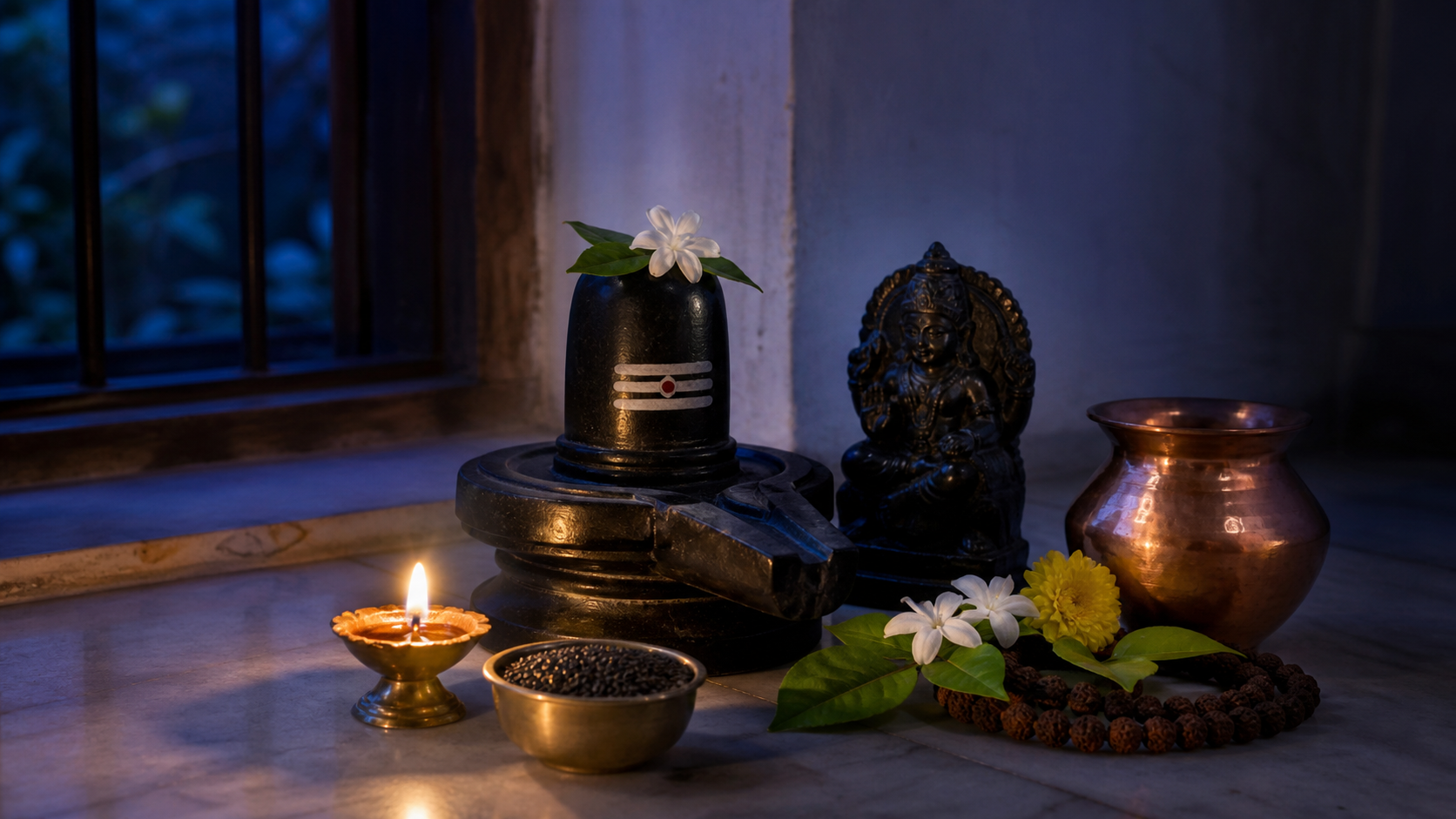
You may be trying to settle two practical questions: which evening counts as Shani Trayodashi, and what should you actually do once that evening arrives? Start with the local panchang, not a date copied from another city. Then choose a vrata and puja simple enough to perform with attention.
A coherent home observance can include disciplined conduct during the day, worship of Mahadeva and Shanidev at twilight, a til-oil lamp, black sesame, japa, reflective silence, and dana or seva. The aim is not to assemble the largest possible ritual. It is to bring worship, self-restraint, and responsible action into the same vow.
Confirm the Pradosha evening before planning your fast
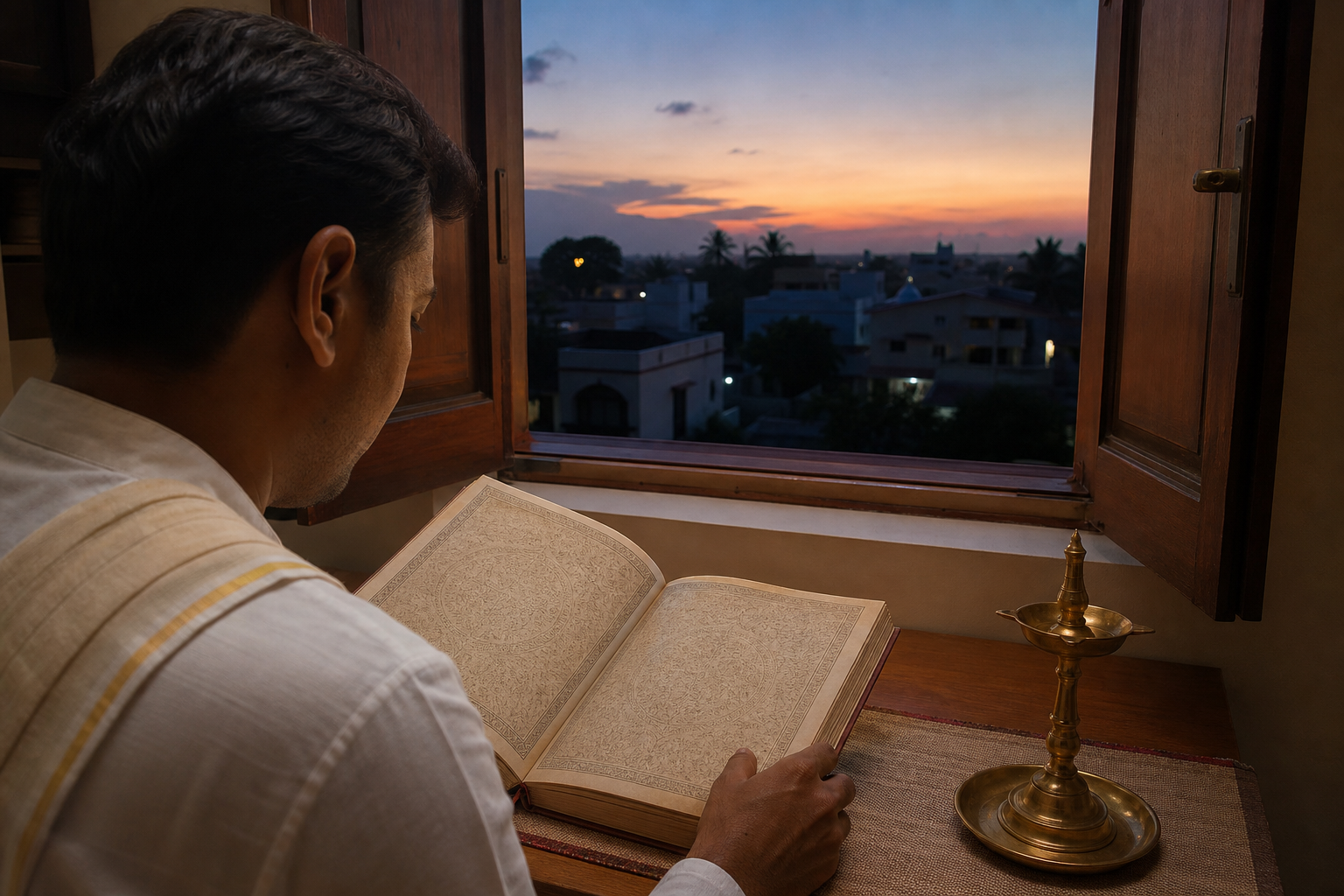
Shani Trayodashi, also called Shani Pradosham or Shani Pradosha Vratham, occurs when Trayodashi and the Pradosha twilight coincide with Shanivar. A Saturday printed beside Trayodashi on a general calendar is therefore not enough by itself. You need to know which tithi is present during the relevant twilight at your location.
Pradosha Kala is the twilight period around local sunset. Because sunset changes by place, the usable worship window also changes. Check a reliable panchang configured for your city or nearest available location, and use its stated Pradosha interval. Do not transplant a precise time from a distant city merely because both places share a time zone.
- Set the panchang to your actual city or the closest available location.
- Find the Saturday on which Trayodashi is present during the listed Pradosha Kala.
- Record the beginning and end of that local twilight window rather than remembering only the civil date.
- If two calendars disagree, compare their locations and calendrical conventions. Ask your temple which panchang it follows if you intend to join its worship.
- Prepare the lamp, offerings, prayer text, and dana before the window begins so that logistics do not consume the period meant for worship.
Month names can also look different without necessarily indicating different observances. A date may appear in Kartik in North Indian Hindi and Bengali calendars, while regional calendars may label the month Ashwayujam. When comparing family calendars, first compare the tithi, weekday, location, and Pradosha window; do not reject a date solely because the month label differs.
Choose a vrata that produces steadiness, not strain
A vrata is a vow, so its discipline is larger than its menu. Decide before the day what you are undertaking. Your family tradition may prescribe a particular degree of fasting; follow it when it is suitable for you. Alongside food restraint, make the day quieter: reduce unnecessary indulgence, guard your speech, avoid needless conflict, and complete an obligation you have been postponing.
Do not turn the severity of a fast into a measure of devotion. Moderation according to individual health is compatible with the observance. If fasting could interfere with a health condition, a required food schedule, or medication, keep the clinical instructions you have been given. You can still observe through a simple sattvic diet, japa, silence, mindful speech, worship, and seva.
Write one plain sentence of resolve before the day begins. It might be: “Today I will respond without anger,” “Today I will finish the duty I have avoided,” or “Today I will speak fairly about someone who cannot answer me.” This gives the vrata an ethical centre. Hunger without greater self-command misses the quality associated with Shani.
Keep the hours before worship orderly. Set aside the needed items, identify the local Pradosha time, and decide where your dana will go. After the twilight worship, conclude according to your family practice with a simple sattvic meal if you are eating. Avoid compensating for the fast with excess; the discipline should remain intact through its conclusion.
A simple Shani Trayodashi puja you can perform at home
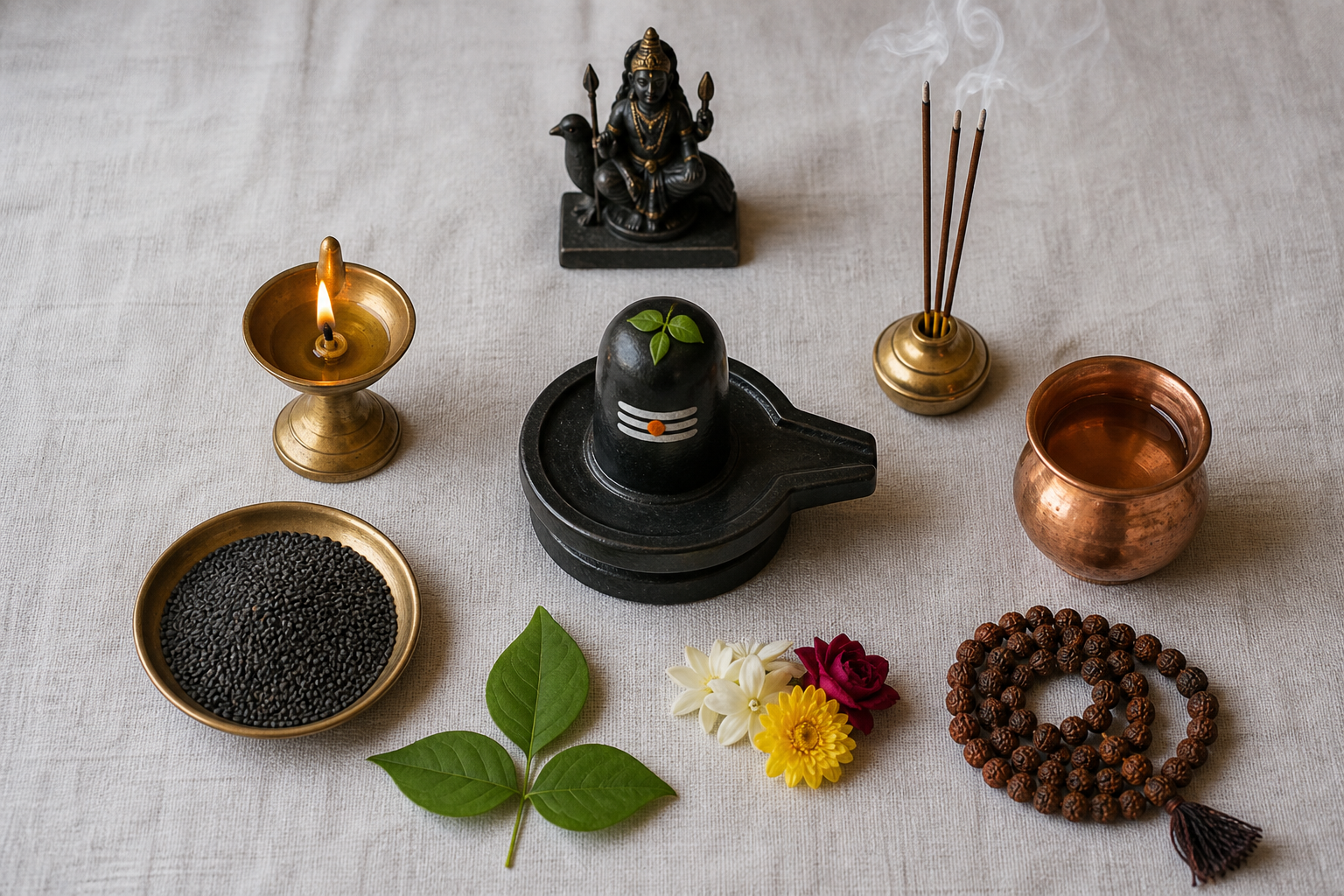
If you have an established household or sampradaya procedure, preserve it. The sequence below is a practical framework for someone who needs a modest home observance. It does not attempt to replace instructions received from your family, guru, or temple.
- Prepare before twilight. Arrange a stable place for worship, a til-oil diya, black sesame, and any prayer text you plan to use. Position the flame away from curtains, loose clothing, children, and anything that could knock it over.
- Enter the observance deliberately. Sit quietly, settle your breathing, and recall your resolve. Name the quality you are cultivating: patience, responsibility, fairness, or restraint.
- Offer worship to Mahadeva and Shanidev. Shani Trayodashi joins the worship of Shanidev with the Shaiva setting of Pradosham. Use the invocations and offerings already known in your tradition rather than inventing an elaborate procedure at the last moment.
- Light the til-oil lamp. Let the steady flame support attentive worship. Lighting the lamp is not a substitute for presence; put away the phone and remain with the practice.
- Offer black sesame. Make the offering respectfully and without anxiety about adding an unsupported number, formula, or display. Simplicity is sufficient when it is joined to sincere attention.
- Perform japa or recitation. You may recite Om Sham Shanaishcharaya Namah or a Shani Stotra. Follow the repetition taught in your tradition, or recite for a period you can sustain without rushing.
- Sit in reflective silence. Examine one recent action involving impatience, neglected responsibility, unfair judgment, or careless speech. Identify the specific repair you can make.
- Close with pranam and a commitment. Complete the worship reverently, then carry out the dana, seva, or corrective action you selected. If you have fasted, conclude with the simple sattvic meal appropriate to your practice and health.
If you are going to a temple, confirm its schedule in advance. Arrive early enough to settle before the Pradosha worship rather than assuming that every temple begins at the same clock time. A temple may also follow a local procedure more detailed than the home framework above; participate respectfully without treating every difference as a contradiction.
Make accountability the lasting offering to Shani
Shanidev is traditionally associated with patience, responsibility, just conduct, and reflection on karma. That makes Shani Trayodashi especially relevant when you feel burdened by delay, consequences, or duties that cannot be escaped. The useful response is not panic. It is to become more exact about what you owe, what you promised, and how your conduct affects others.
Before the puja ends, choose one repair that can be observed in ordinary life. Complete a promise instead of offering another explanation. Correct an unfair statement. Acknowledge work that has gone unseen. Stop passing a difficult duty to someone with less power. Put a neglected responsibility on the calendar with a definite next action. These are small choices, but they prevent the vrata from becoming a transaction in which an offering is expected to erase unchanged behaviour.
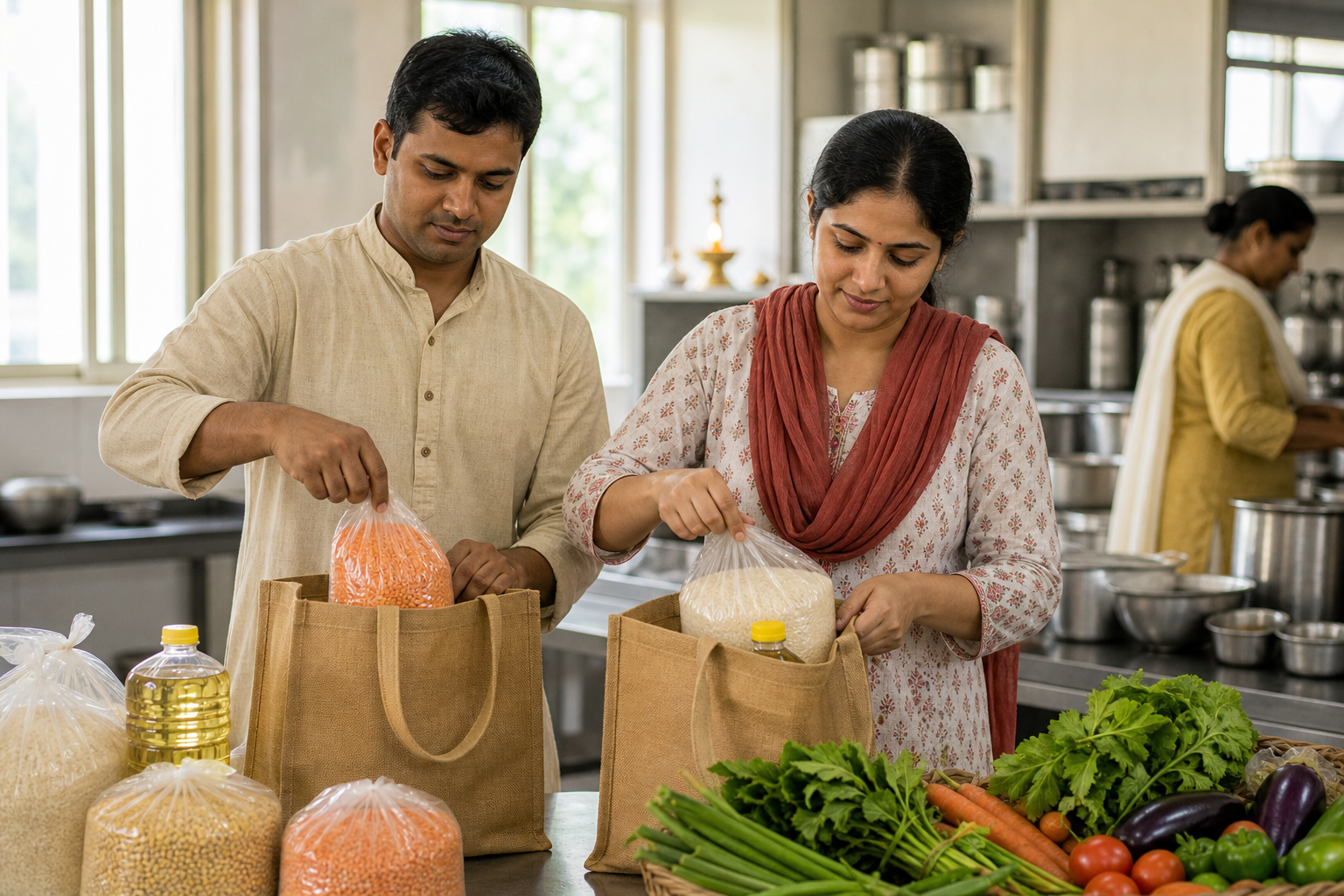
Dana may include sesame, food, or clothing, while seva can take the form of useful service. Give in a way that preserves the recipient’s dignity. If a particular item is not useful locally, choose an appropriate channel for food or clothing rather than forcing a symbolic gift on someone who cannot use it. The intention is service, not the public display of giving.
The ethical disciplines surrounding the observance also disclose a wider Dharmic kinship. Self-restraint, ahimsa, mindful speech, and service resonate with Buddhist metta, Jain vrata and aparigraha, and Sikh seva. Those resonances do not make the traditions interchangeable. They show how distinct paths can demand seriousness about conduct. In a multi-tradition family or community, you can preserve the specifically Hindu worship of Shiva and Shanidev while making compassion, restraint, and service a shared undertaking.
Key takeaways
- Use a reliable panchang for your location and confirm that Trayodashi is present during Saturday’s local Pradosha Kala.
- Choose a degree of fasting that respects your health and established obligations; vrata includes conduct, not food restriction alone.
- For a simple home observance, prepare before twilight, worship Mahadeva and Shanidev, light a til-oil diya, offer black sesame, and perform japa.
- Use Om Sham Shanaishcharaya Namah or a Shani Stotra without inventing a mandatory repetition count that your tradition has not taught you.
- Join worship to dana or seva, then correct one concrete lapse in responsibility, fairness, patience, or speech.
Before the next Shani Trayodashi, save the panchang entry for your location and choose the responsibility you will address. At twilight, do fewer things with full attention rather than many things in haste. Let the next day reveal the vrata’s value through steadier speech, completed duty, and fairer conduct.
References
