
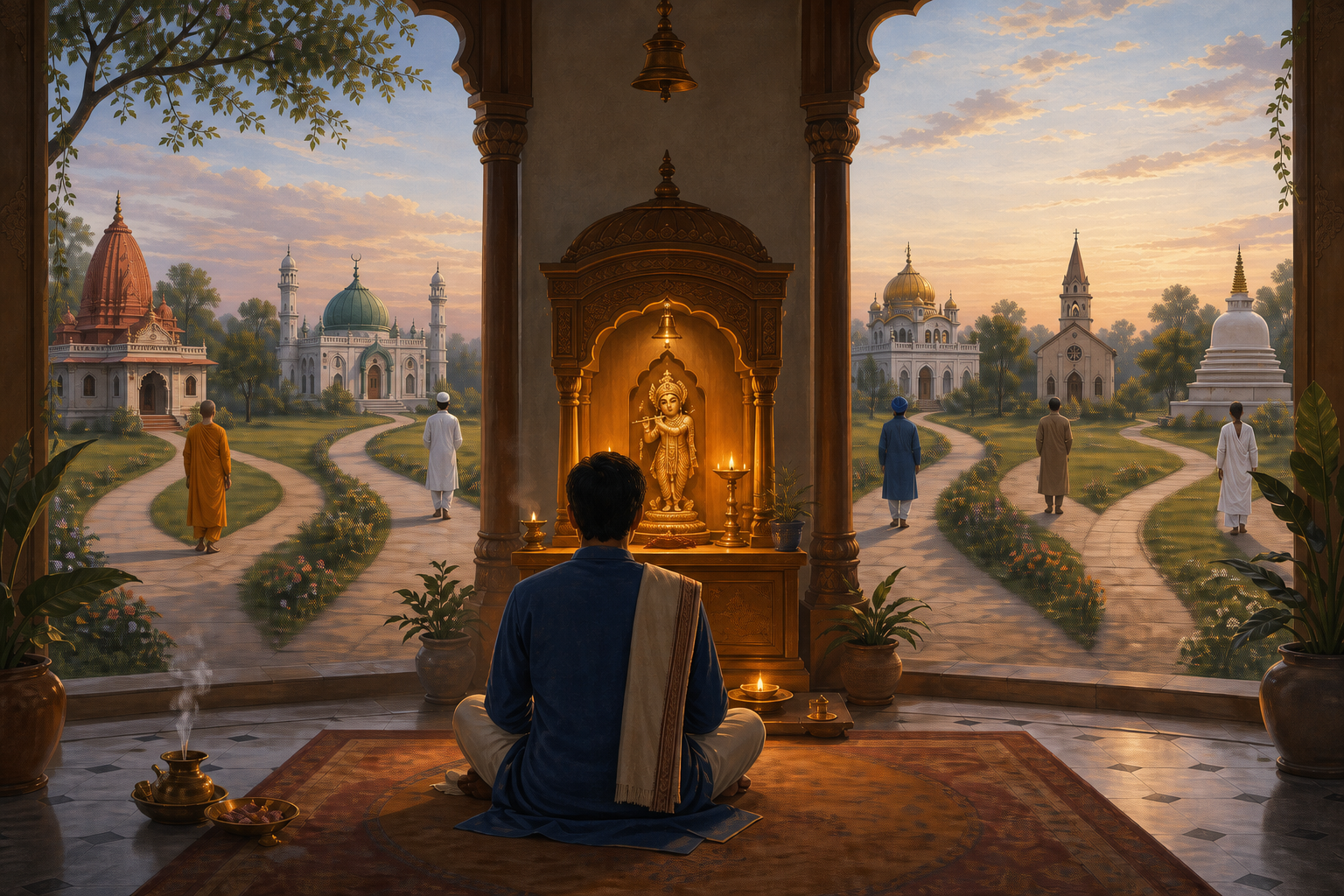
You may feel a deep attraction to Krishna, Shiva, Devi, or another sacred form while people around you worship differently. The question usually appears at that point: must serious devotion make you reject their paths, or does respecting them require you to weaken your own?
Ishta offers a more demanding answer. Choose a spiritual focus, practise with consistency, and let that commitment improve your conduct. At the same time, do not turn a form suited to your nature into a compulsory form for every other person. You can have roots without building walls.
Ishta gives devotion a centre without making it a prison
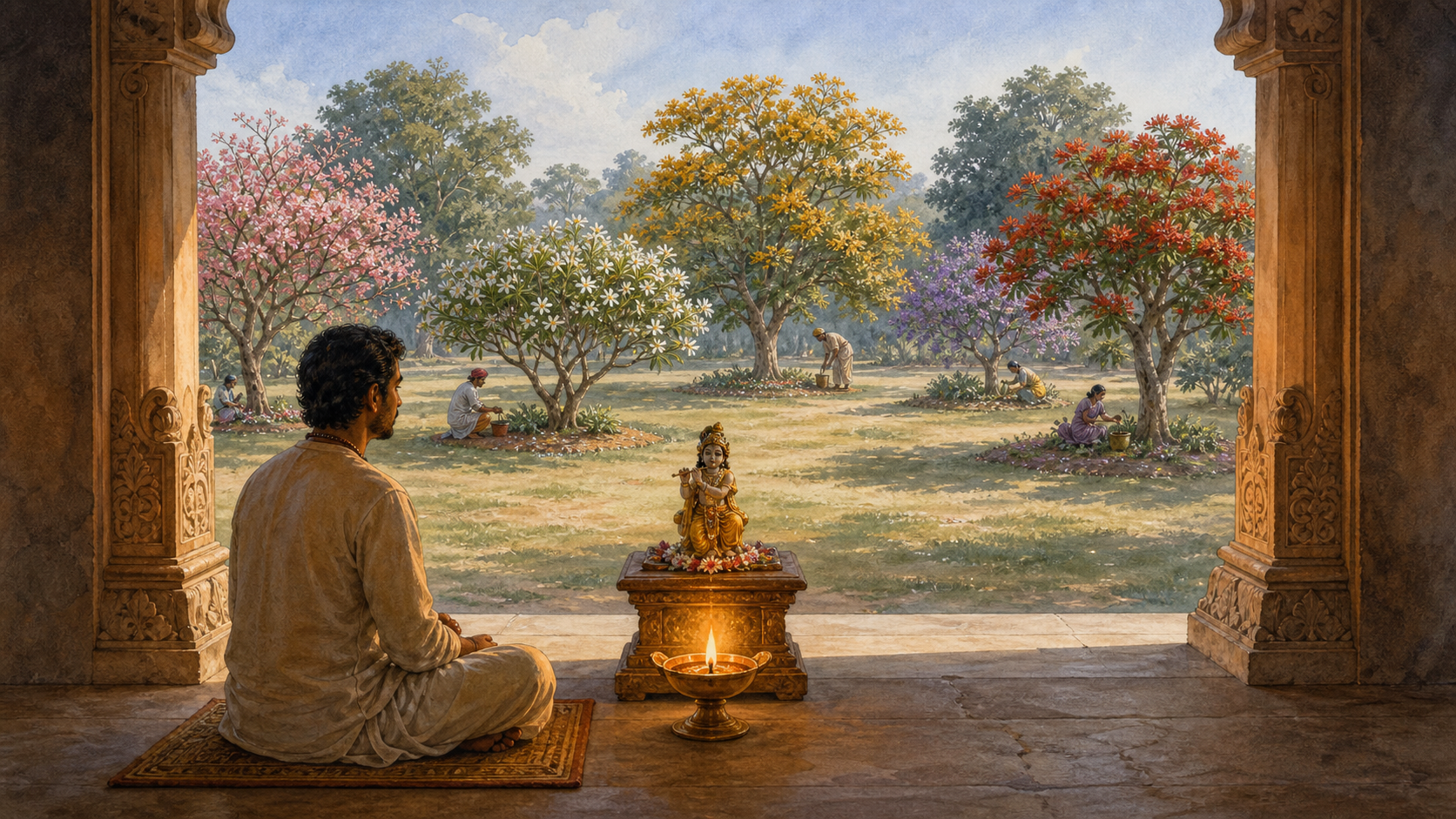
In Hindu practice, ishta-devata is the chosen or cherished form of the Divine through which a seeker develops a personal relationship with the sacred. One person may be drawn to Krishna, Shiva, or Devi, while another may orient spiritual life toward formless Brahman. The focus differs, but no individual form is required to exhaust the limitless reality it reveals.
Chosen does not mean disposable. An ishta is not a spiritual product selected for novelty and replaced whenever practice becomes difficult. It is a centre of attention: a name you remember, a form before which you become truthful, and a relationship that gives continuity to prayer. The purpose is depth.
This principle belongs within a wider recognition of different spiritual temperaments. Bhakti, jnana, karma, and raja yoga engage devotion, knowledge, action, and disciplined inner practice in different ways. They can be treated as complementary avenues rather than forced into one universal sequence. A person inclined toward loving worship need not imitate the language of a philosophical inquirer, and an inquirer need not perform emotion to prove sincerity.
This immediately corrects a common mistake. Religious pluralism does not require you to collect practices from every tradition. Constantly changing mantras, teachers, and metaphysical positions may create variety without producing transformation. Ishta permits you to concentrate. Pluralism governs how you regard other seekers; it does not forbid steadiness in your own sadhana.
Pluralism is disciplined openness, not the claim that everything is the same

Religious pluralism and relativism answer different questions. Pluralism asks whether people with serious differences can pursue truth, preserve their traditions, and live together without coercion. Relativism, in its careless form, treats differences as if they do not matter. Ishta supports the first position, not the second.
Hindu traditions contain real philosophical disagreement. Advaita Vedanta, Vishishtadvaita, and Dvaita articulate distinct accounts of ultimate reality. Their differences cannot be reduced to vocabulary, yet they have remained participants in a larger dharmic conversation. Coexistence does not require pretending that contradictory claims are identical.
- Name differences honestly. If two traditions understand the self, liberation, Divine form, or authority differently, say so accurately. Respect begins with listening, not with rewriting another person’s belief into your preferred system.
- Reject coercion without abandoning conviction. You may explain why you follow your sampradaya and still refuse the idea that everyone must be compelled to follow it.
- Look for ethical fruit. A practice should make its practitioner more responsible, disciplined, truthful, compassionate, and capable of service. Sectarian pride that produces contempt has missed the purpose of devotion.
- Keep boundaries visible. Respect does not obligate you to participate in every rite, affirm every doctrine, or conceal a disagreement. It obligates you to express the disagreement without dehumanising the person.
The familiar reference to 330 million Hindu deities is often used as an image of inexhaustible sacred variety. The classical expression 33 koti refers to categories or principles rather than a literal census of 330 million gods. The correction matters because Hindu plurality is not a random accumulation of unrelated divine beings. Many forms can participate in an integrated understanding of a reality greater than any single image.
Swami Vivekananda’s distinction between acceptance and mere tolerance is useful here. Tolerance can mean that you dislike another path but reluctantly endure its existence. Acceptance recognises that a different discipline may genuinely serve a seeker whose nature and circumstances differ from yours. Even then, acceptance is not automatic approval of every claim or action made in religion’s name. Dharma still requires discrimination.
Choose an ishta by testing what can sustain sincere practice
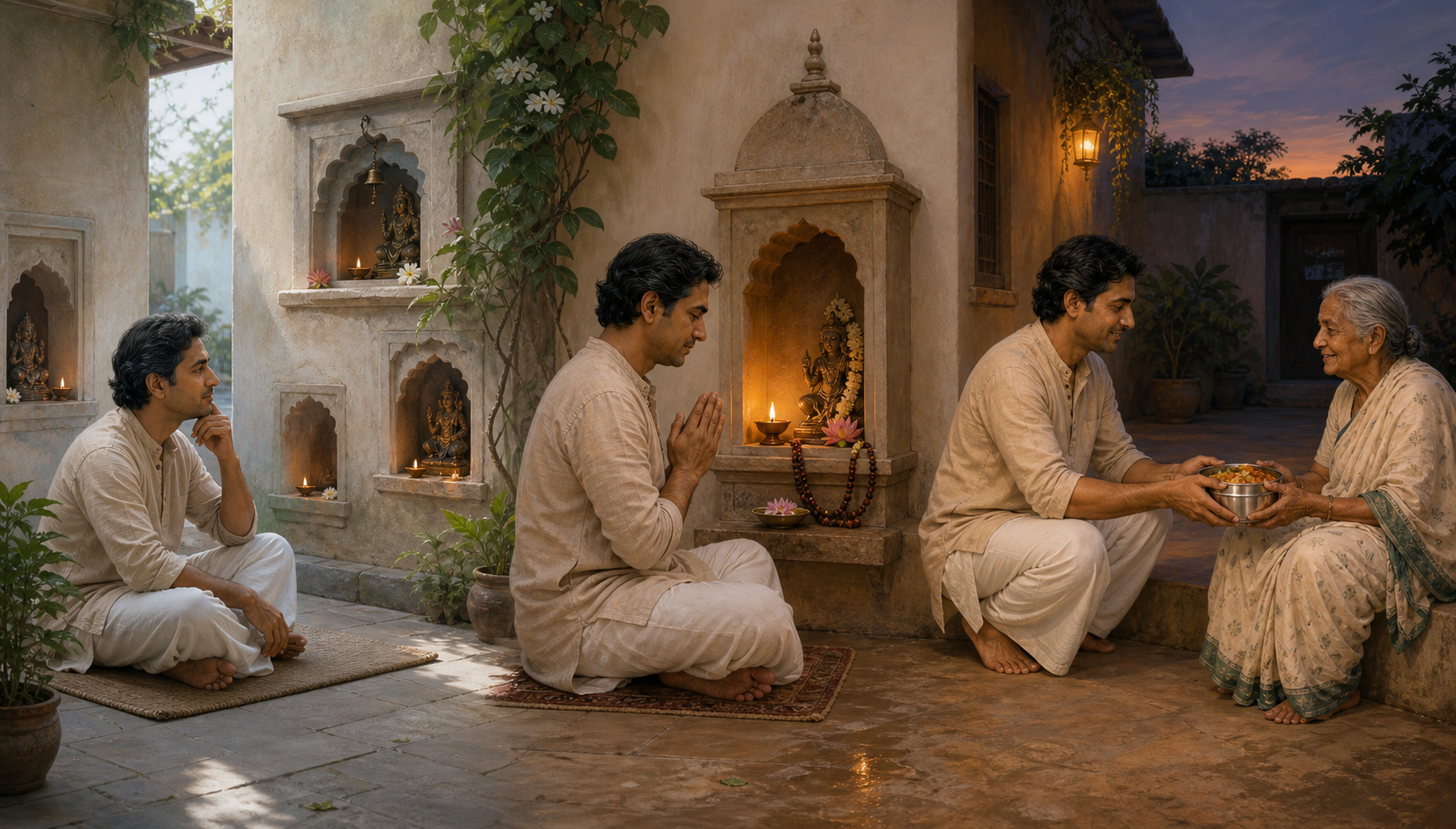
Some seekers delay practice because they are waiting for a dramatic sign. Others choose impulsively because a deity, teacher, or method has become fashionable. A sounder approach is to notice where reverence already becomes natural and then test whether that attraction can support disciplined living.
- Begin with the sacred relationship already asking for your attention. Notice which name, form, teaching, or mode of worship repeatedly draws you toward humility and remembrance. Attraction alone is not proof, but it is useful evidence about temperament.
- Learn the practice in context. Understand the basic meaning of the form, the purpose of the prayer, and the conduct expected of a devotee. Do not treat every mantra found in circulation as interchangeable. Where a tradition expects instruction or initiation, seek it from a trustworthy guide.
- Consult a guide who respects both commitment and freedom. A good guide can clarify whether a practice fits your disposition and stage of life. Pressure, fear, contempt for other legitimate paths, or demands for instant allegiance are reasons to slow down.
- Establish a small, repeatable daily sadhana. Use a regular time for japa or prayer, a manageable portion of study, and an act of service connected to ordinary duty. Consistency is more revealing than an occasional surge of religious emotion.
- Examine the effect on conduct. Ask whether the practice is making you steadier in responsibility, less ruled by anger, and more willing to serve. If devotion is increasing vanity or hostility, first correct the interpretation and behaviour instead of merely changing the object of worship.
If you remain uncertain, you do not need to manufacture certainty. Begin with the form or name that evokes genuine reverence, or with contemplation of formless Brahman if that is the orientation you can practise honestly. Keep the discipline simple enough to sustain. Clarity often grows through faithful practice rather than through endless comparison.
You also do not need to erase inherited practice to make an ishta meaningful. A family may honour several deities while an individual maintains a particular devotional centre. Shared festival worship and personal sadhana can coexist. The key is knowing which practice anchors you and which practices express family or community belonging.
Practise pluralism where disagreement actually occurs
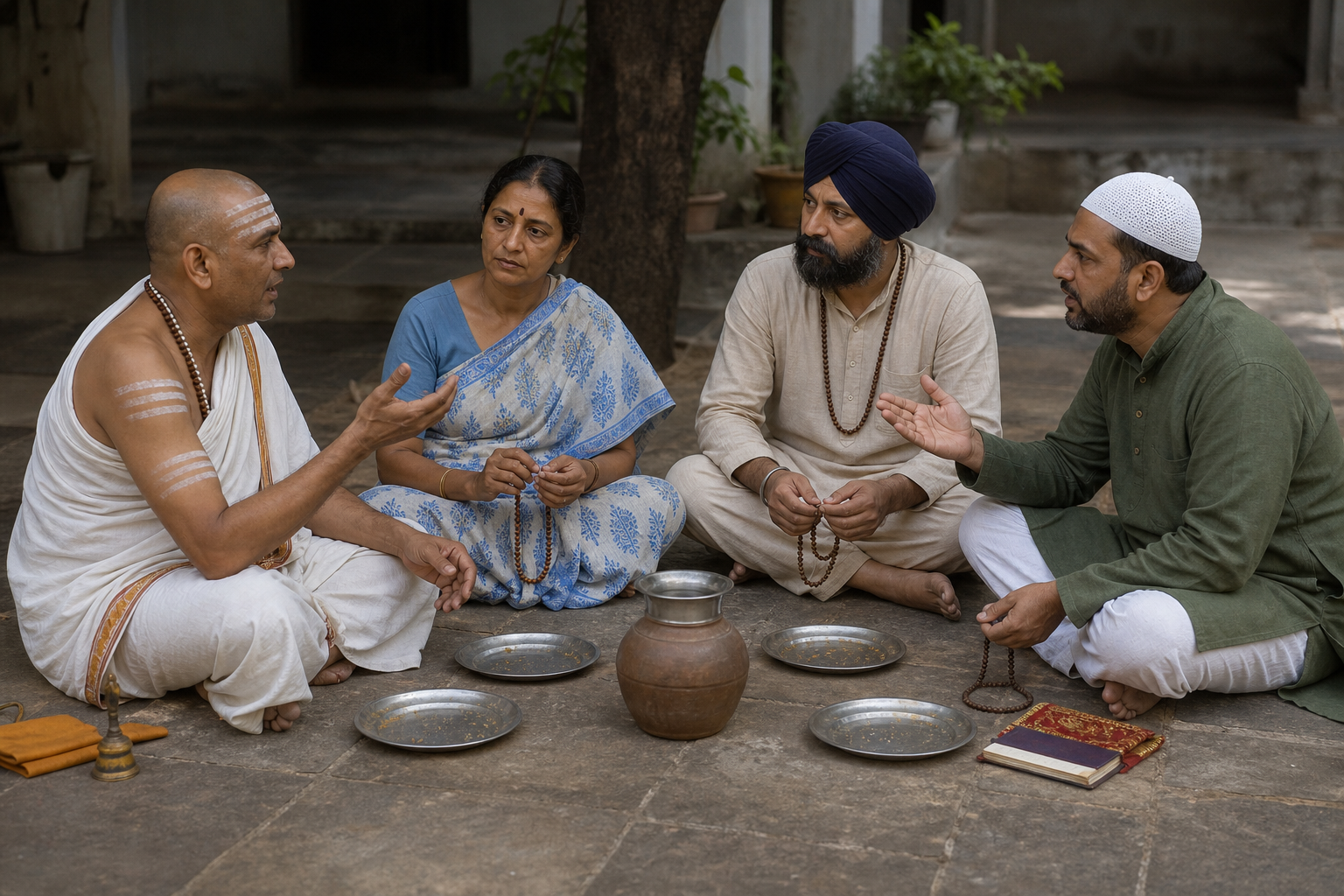
The test of pluralism is rarely a grand interfaith event. It is the household altar, the family discussion, the temple committee, the neighbourhood celebration, or the conversation in which someone dismisses a practice you hold sacred. That is where a philosophy must become a habit.
- In a family with different ishtas: preserve a common act of reverence while protecting time for individual practice. Do not turn the household shrine into a contest over which form receives the most visible place.
- In a disagreement between sampradayas: ask what is actually disputed. A difference in metaphysics, ritual procedure, devotional mood, and community custom should not be collapsed into one vague accusation of being wrong.
- When visiting another sacred space: learn its etiquette, follow the host community’s boundaries, and observe without pretending to hold convictions you do not hold. Respectful presence is possible without imitation.
- When your own tradition is misrepresented: correct the claim plainly and with evidence. Pluralism does not demand silence, self-erasure, or one-sided surrender. Firm cultural self-respect and civil speech belong together.
Other dharmic traditions offer related disciplines without becoming interchangeable with ishta. Jain anekantavada draws attention to the many-sided character of truth; Buddhism foregrounds compassion, mindfulness, and experiential practice; Sikh teaching affirms Ik Onkar while giving seva a central communal expression. These are not different labels for one doctrine. They are distinct teachings that can train people to approach difference without intellectual laziness or social hostility.
When a mandir, gurdwara, and vihara stand near one another, physical proximity alone does not produce harmony. People must still learn one another’s boundaries, resist caricature, and cooperate where duty is shared. Sacred geography becomes pluralism only through lived conduct.
Three questions can keep a difficult conversation useful: What does this practice cultivate in the practitioner? What claim is actually being made? What duty can we perform together without asking anyone to falsify a conviction? The first question looks at spiritual fruit, the second protects intellectual honesty, and the third moves respect into action.
Seva is especially important because it prevents pluralism from remaining polite speech. People who differ in worship can still support education, relieve suffering, preserve shared cultural spaces, or serve a local community. The cooperation is strongest when no group treats service as a concealed method of domination or conversion.
Key takeaways
- Ishta gives you a stable devotional centre; it does not require you to claim that your chosen form is compulsory for every seeker.
- Religious pluralism preserves real differences. It is not the assertion that every doctrine says the same thing or that every religious action is acceptable.
- A suitable practice should be sustainable, ethically formative, and grounded in trustworthy guidance rather than novelty or pressure.
- Respect includes the freedom to decline participation, defend your tradition, and disagree without degrading another person.
- Pluralism becomes credible through daily sadhana, accurate conversation, proper conduct in sacred spaces, and shared seva.
At your next sadhana, make the principle concrete. Give undivided attention to the form or spiritual focus you have chosen. Then make one gesture of truthful respect toward another path: learn its correct name for a teaching, observe its sacred-space etiquette, listen without interrupting, or join a shared act of seva.
You do not have to become less Hindu to live peacefully with difference. The task is to become more disciplined in devotion, more accurate in disagreement, and more reliable in service. That is how ishta turns diversity from a slogan into dharmic conduct.
References
