
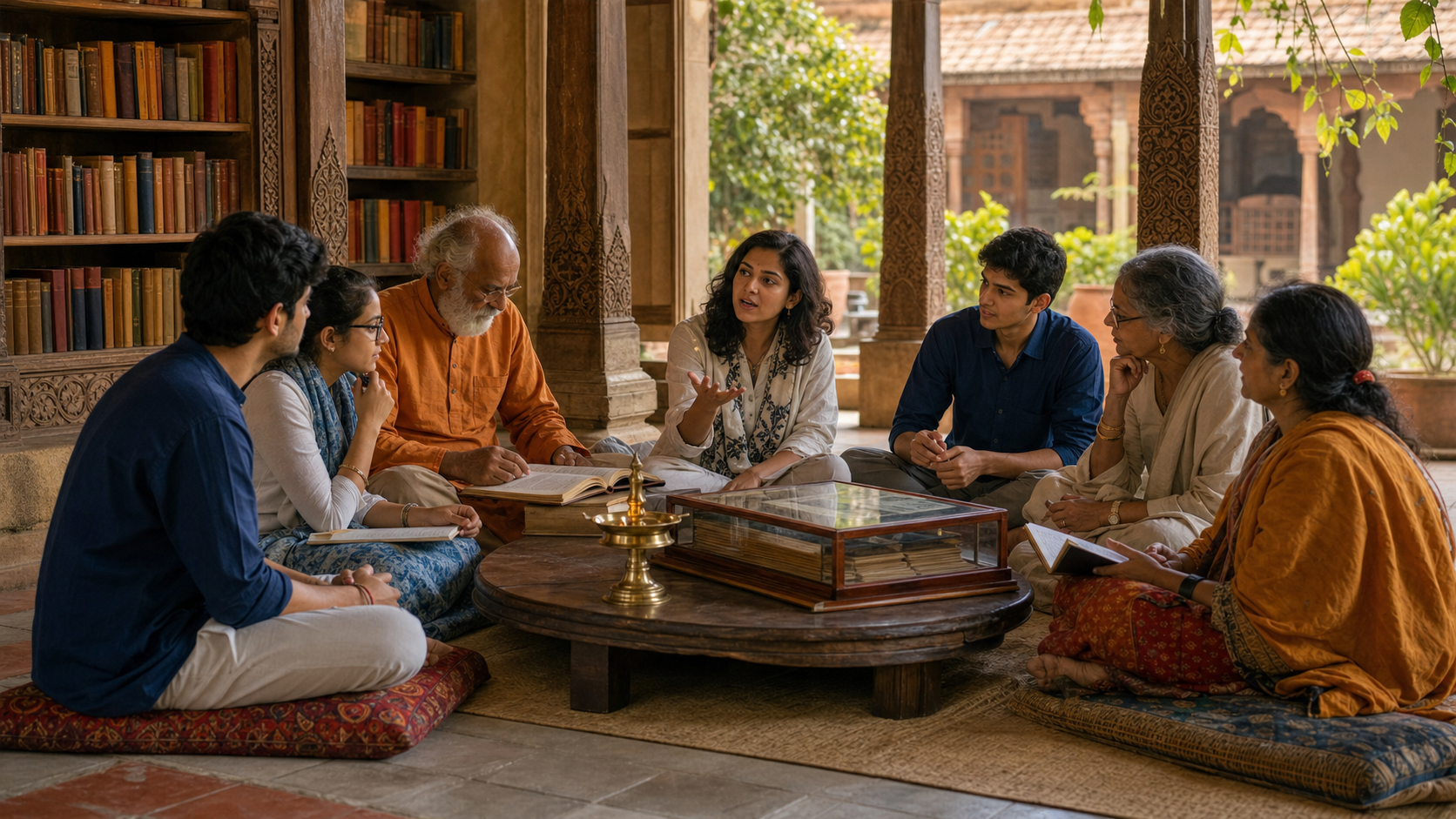
You may already know the revered names. The harder question is whether a woman in your family, temple, classroom, or satsang has the same standing to ask a difficult question, interpret a text, challenge an inherited answer, and pursue the truth wherever it leads.
That is the practical measure of intellectual freedom. It is not satisfied by praising learned women from the past while expecting women in the present to listen quietly. Hindu traditions contain substantial resources for a stronger culture of inquiry, but those resources have to become habits rather than slogans.
Key takeaways for a living culture of inquiry
- Teach the questions and arguments of Hindu women thinkers, not merely their names or devotional images.
- Test intellectual freedom through five distinct permissions: access to learning, freedom to question, authority to interpret, room to disagree, and opportunities to teach.
- Use dharma, jnana, viveka, and the overcoming of avidya as disciplines of inquiry. Do not use religious vocabulary to end a discussion before it begins.
- Remember that respect for a guru does not require intellectual passivity. Serious questions can combine rigor with humility.
- Turn inclusion into a repeatable practice by rotating who selects texts, frames questions, leads discussions, and records unresolved disagreements.
Move from celebrating exceptional women to studying their thought
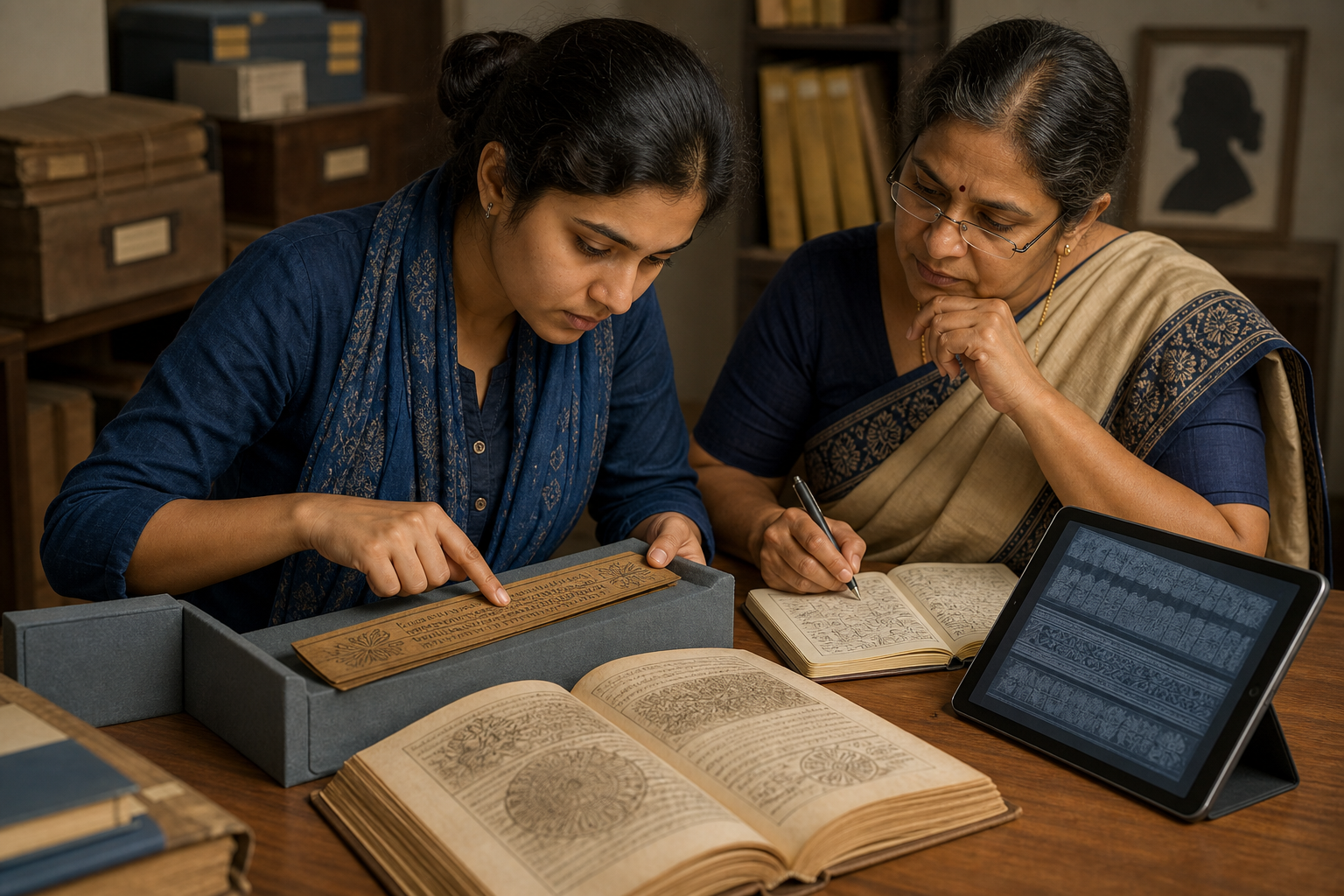
Gargi Vachaknavi and Maitreyi appear in the Upanishadic world as participants in inquiry into Atman, Brahman, and liberation. Their importance does not lie simply in the fact that they were women who became famous. They matter because their presence places women inside philosophical argument, where questions can expose assumptions and demand better accounts of reality.
These examples should be handled precisely. They do not prove that every Hindu woman in every region and period enjoyed equal educational access. A few eminent names cannot carry such a sweeping social claim. They establish a narrower but powerful point: a woman’s capacity for metaphysical reasoning and spiritual realization is not foreign to the Hindu inheritance.
The Bhakti traditions show another form of intellectual agency. Andal, Akka Mahadevi, Mirabai, and Lal Ded articulated knowledge grounded in direct devotion and spiritual experience. Their voices did more than express religious emotion. They made claims about authority, identity, convention, and the relationship between the seeker and the divine. When inherited social expectations became too narrow for that pursuit, these women did not allow convention to have the final word.
A community can still neutralize such figures by turning them into harmless symbols. Akka Mahadevi can be praised as a saint without anyone asking what made her spiritual judgment authoritative. Mirabai can be sung without examining what happens when devotion refuses an imposed social script. Gargi can be named at a celebration without girls being encouraged to question a respected speaker with comparable seriousness.
When you teach one of these women, use four questions to prevent commemoration from replacing thought:
<!– wp:list {