
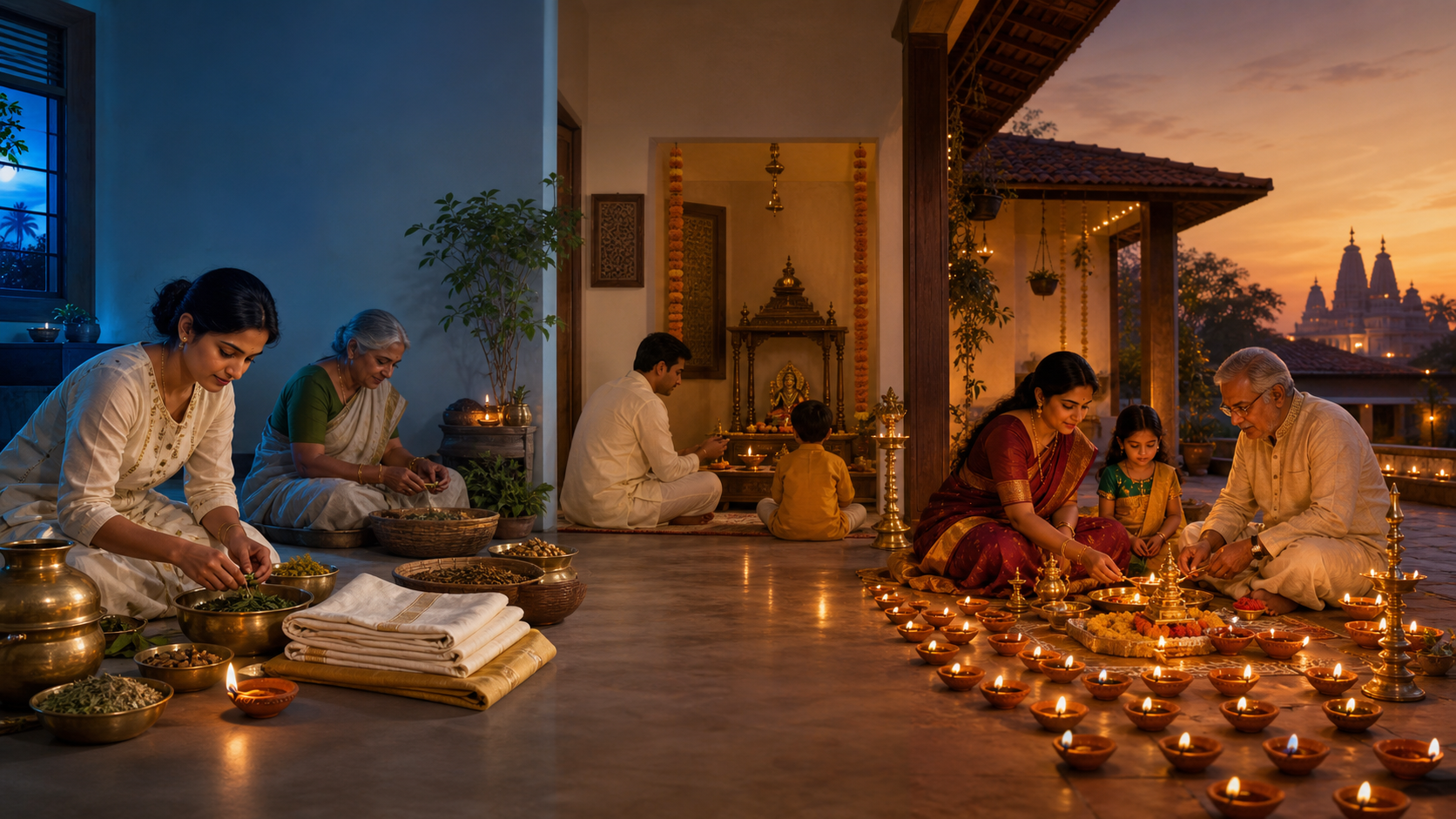
If your family calendar marks Narak Chaturdashi on Monday, 20 October 2025, while a temple notice calls the same date Deepavali, you don’t have to choose which label is correct. The useful response is to separate the observances by time, place, and family tradition.
Use 20 October as your principal planning date, but obtain the muhurta from a panchang calculated for your city. Then decide which parts belong to your inherited practice: the pre-dawn oil bath, Narakasura remembrance, Roop Chaudas, Kali or Hanuman worship, an evening lamp for Yama, a family Diwali puja, or temple darshan. You are preparing a coherent day of sadhana, not trying to perform every custom found across Bharat.
Resolve the 2025 date question before planning the rituals
Narak Chaturdashi falls on Krishna Paksha Chaturdashi, the fourteenth lunar day of the waning fortnight. Its regional names include Choti Diwali, Kali Chaudas, and Roop Chaudas. These names describe overlapping traditions, not four additional festivals that every household must observe.
The word “Choti” can also mislead you into assuming that the observance must occupy a completely separate civil date from every event called Diwali. A Hindu tithi does not begin automatically at midnight. Its boundary, the local sunrise, and the ritual selected for a particular tithi can place morning and evening observances under different festival labels on the same Gregorian date. That is why Deepavali Asthanam at TTD temples and Narak Chaturdashi household practices are both associated with 20 October in 2025.
If you live outside Bharat, don’t copy an Indian clock time into your schedule. Consult a local panchang because sunrise, sunset, and tithi boundaries are location-dependent. If two calendars disagree, follow the one used by your family, sampradaya, or temple rather than mixing a date from one calendar with a muhurta from another.
| Planning window | Observance | What you should confirm |
|---|---|---|
| 19-20 October | Regional Kali Chaudas and Hanuman worship | Which night your family or temple follows; the observance is placed across 19-20 October in several regional traditions. |
| Pre-dawn on 20 October | Abhyanga Snana for Narak Chaturdashi or Roop Chaudas | Your city’s pre-dawn window and your household’s customary oil, ubtan, and prayer. |
| Daytime on 20 October | Home preparation, food, rangoli, dana, and temple visits | Which tasks can be completed earlier so practical work does not displace worship. |
| Evening on 20 October | Diyas, Yam Deep Daan, and the Diwali observance followed by your family | The local puja window and whether Yam Deep Daan belongs to your family practice. |
| 20 October at TTD temples | Deepavali Asthanam | The official temple schedule, darshan arrangements, identification requirements, and route advisories. |
This table is a planning map, not a universal vidhi. It deliberately does not assign one clock time to all readers. Panchang timing is local, and ritual authority remains with your family tradition, guru, priest, or temple.
Build the day around purification, prayer, and light
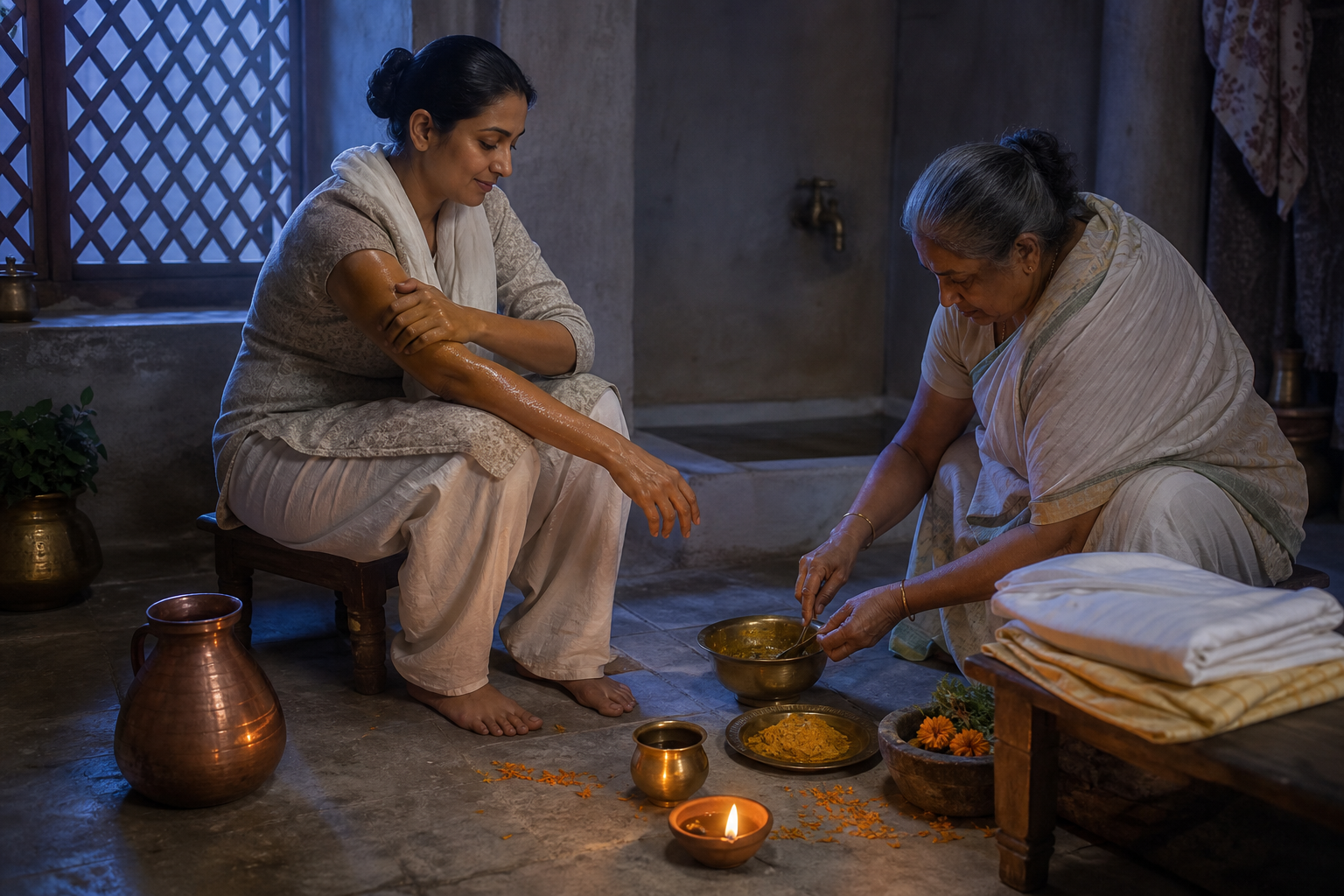
The simplest complete home observance has a clear arc: prepare the night before, bathe before dawn, pray without hurry, finish practical Diwali work during the day, and light the evening lamps safely. This sequence protects the spiritual centre of Narak Chaturdashi from being swallowed by shopping, cooking, and decoration.
- Prepare before sleeping on 19 October. Place your bath oil, towel, clean clothes, ubtan ingredients, diya supplies, and puja materials where you can reach them quietly. Finish heavy cleaning beforehand; pre-dawn should not become another household work shift.
- Begin with a short sankalpa. Settle your breath and state a plain intention for purification, courage, right conduct, and the welfare of your household. A sincere sentence in the language you understand is better than hurried recitation you cannot follow.
- Undertake abhyanga according to family custom. Sesame oil followed by a warm bath is a widely described form. Some families use an ubtan made with gram flour and turmeric; others retain their own regional mixture. Use only materials already known to be suitable for your household.
- Treat the bath as a discipline, not a cosmetic performance. As you wash, identify one form of inner disorder you intend to reduce: anger, fear, carelessness, resentment, or inertia. The physical act becomes meaningful when it is joined to an ethical resolution.
- Wear clean clothes and establish the altar. Light a diya, make a simple offering, and recite the prayer or stotra your family normally uses. You do not need an elaborate arrangement to make the observance complete.
- Use the daytime for preparation and dana. Complete rangoli, sweets, savouries, flowers, lamps, and the evening altar. Set aside food, time, or another practical offering for someone beyond your immediate household so that festive abundance takes the form of seva.
- Conclude with evening light. Arrange household diyas and, where customary, perform Yam Deep Daan at or near the entrance as a prayer for well-being, protection, and a righteous life.
Oil on a bathing floor creates a real slipping hazard. Keep a stable mat ready, clean spills immediately, and assist anyone whose balance is limited. In the evening, place every flame on a stable, non-flammable surface away from curtains, loose clothing, rangoli material, pets, and walkways. Never leave a diya or firework unattended.
Choose one prayer stream instead of reciting everything
Narak Chaturdashi prayers commonly emphasise purification, protection, courage, and clarity. Suitable choices described for the day include Om Gam Ganapataye Namaha, Om Namo Narayanaya, Om Namah Shivaya, the Gayatri Mantra, and the Mahamrityunjaya Mantra. Kali worshippers may use the mantra received within their own practice.
Don’t turn that range into a compulsory checklist. Select the mantra you know, recite it attentively, and retain any count established by your family or teacher. If your household normally reads from the Vishnu Sahasranama, a Devi stotra, the Hanuman Chalisa, or Sundara Kanda, keep that continuity. Diwali is not improved by replacing an inherited practice with an improvised collection of unrelated mantras.
Perform Yam Deep Daan without inventing missing details
Many households place a lamp at the threshold or near the entrance in the evening. The act is associated with Yama and carries a prayer for family well-being and protection. Details such as the lamp’s direction, wick arrangement, exact placement, and accompanying words differ. Ask an elder or priest if those details matter in your tradition; don’t promote one household’s method as a universal rule.
If your entrance is windy, narrow, shared with neighbours, or unsafe for an open flame, move the diya to a protected place that preserves both reverence and safety. The purpose of a protective rite is not served by creating a fire or tripping hazard.
Choose the regional form your family can practise with integrity
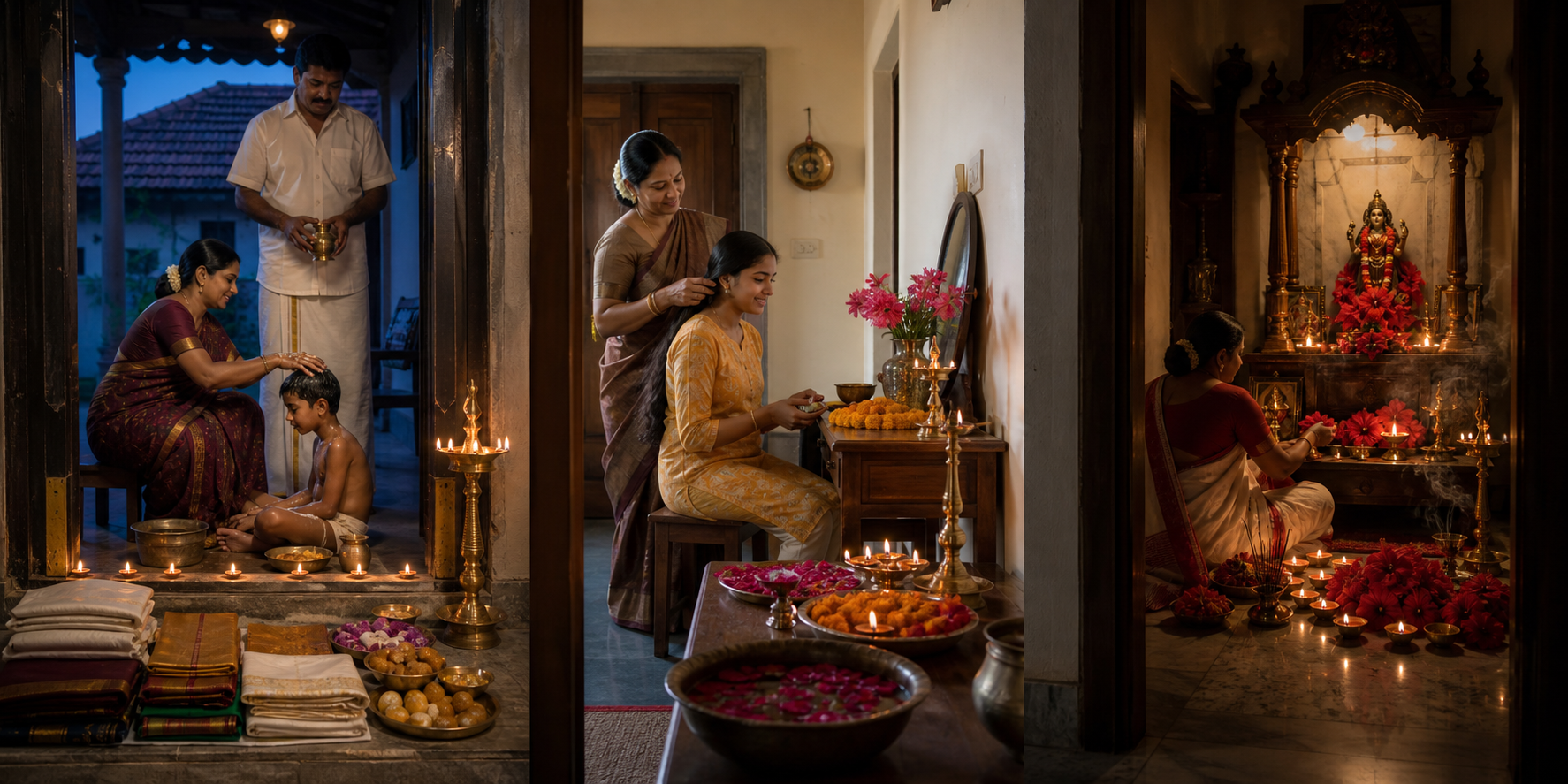
The many names of 20 October tell you where to look for your own emphasis. They do not require you to merge every narrative, deity, and specialized rite into one ceremony.
Narak Chaturdashi: confront the disorder within
Many families remember Sri Krishna and Satyabhama overcoming Narakasura. The narrative gives the morning bath and the lamps an ethical direction: darkness is not merely outside us, and victory requires courage joined to dharma. When telling the story to children, ask them to name one habit that makes the home less truthful, kind, or orderly. Then let each person choose one small corrective action for the Diwali period.
Roop Chaudas: care for the body without reducing the day to beauty
Roop Chaudas places greater emphasis on bathing, grooming, and freshness. Its deeper use is readiness: you clean and care for the body so that you can enter the festival alert, dignified, and composed. Keep the herbal bath if it belongs to your household, but don’t let shopping or appearance become the measure of an auspicious observance.
Kali Chaudas and Hanuman Puja: seek strength without feeding fear
In Gujarat, Maharashtra, and parts of North India, the Kali Chaudas period carries a strong protective emphasis. Some households worship Kali; others perform Hanuman Puja for courage, steadfastness, and freedom from fear. A simple Hanuman observance can consist of a clean altar, an oil lamp, fruit or sweets, and a calm recitation of the Hanuman Chalisa or a passage from Sundara Kanda. Sindoor and oil should be offered only in the manner accepted by your family or temple.
Kali Yantra Puja, tarpan, and lineage-specific worship are not festive accessories. If you have not received their procedure from a competent family or spiritual authority, keep to nama-japa, a familiar stotra, a diya, and a sattvic offering. Restraint is more dharmic than performing a specialized rite from incomplete instructions.
Coordinate home worship with a temple visit
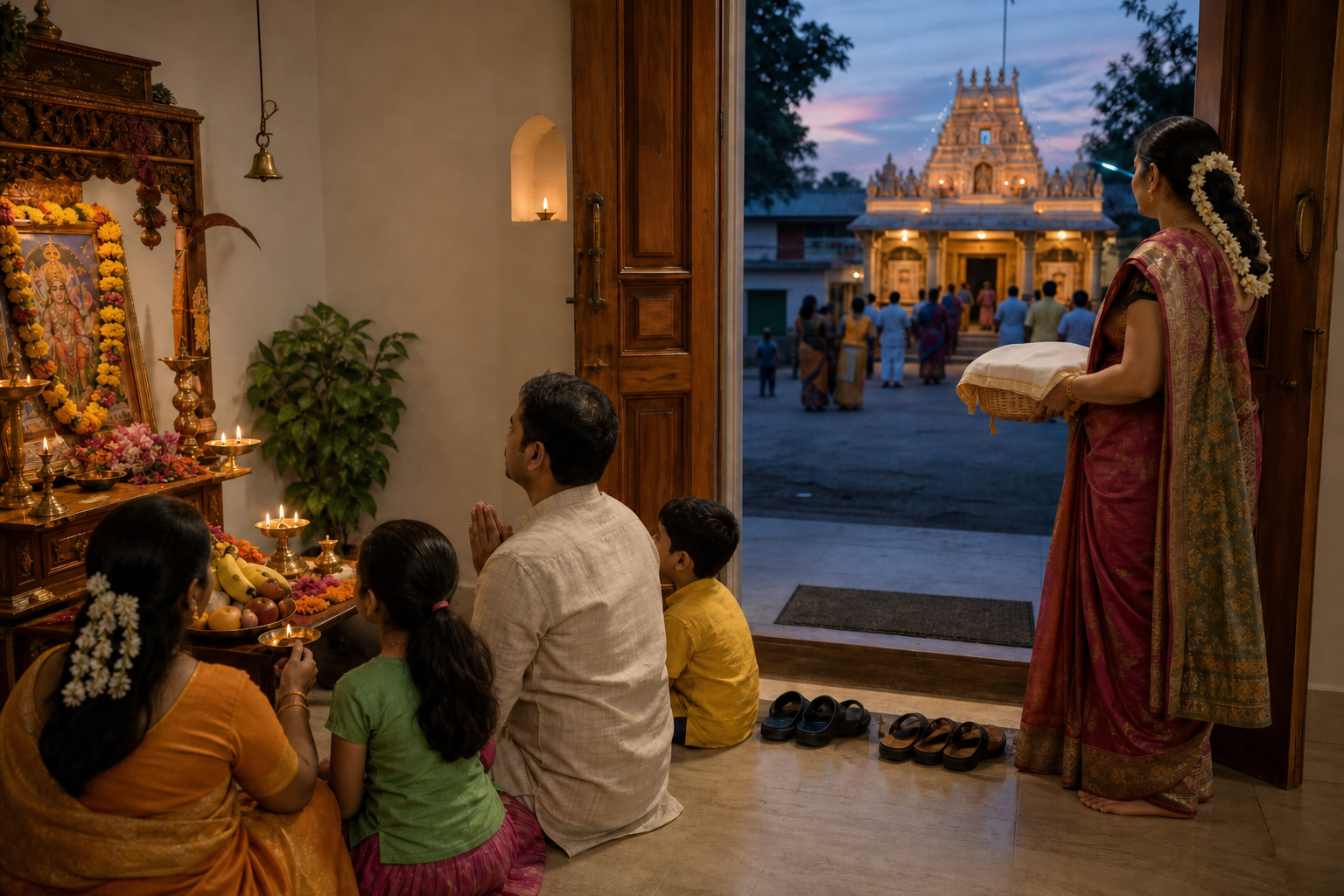
If you plan to visit Tirupati, 20 October also carries a major temple observance. Deepavali Asthanam is the ceremonial royal assembly of the presiding deity, expressing divine sovereignty and benevolent guardianship. The liturgical sequence can include archana, naivedyam, harati, Vedic recitation, and devotional hymns.
TTD’s 2025 observance includes Sri Govindaraja Swamy Temple and Sri Kodanda Rama Swamy Temple in Tirupati. Festival crowds can lead to extended queues, time-slot arrangements, temporary route changes, and special access procedures. Those details may be issued close to the date, so an old festival timetable is not a reliable substitute for the current official notice.
- Check official TTD communications again shortly before travelling, even if you have already made a booking.
- Carry valid identification and any darshan confirmation required for your entry.
- Follow the temple dress code and avoid bringing unnecessary bags or prohibited items.
- Arrive with enough margin for security, walking, and queues; a festival-day visit should not be planned like an ordinary weekday darshan.
- Review the current provisions for seniors and persons with disabilities rather than assuming that a previous arrangement remains unchanged.
- Choose a family meeting point before entering a crowded queue, especially if children or elders are with you.
- Keep flowers, prasadam, and other offerings modest and compliant with temple instructions.
You do not have to reproduce the temple’s full liturgy at home. If attending Asthanam, perform the pre-dawn bath and brief household prayer, travel without rushing, and reserve only the customary threshold lamp or family puja for your return. Let temple worship and home worship support each other instead of exhausting the family through duplication.
Express dharmic unity without erasing real distinctions
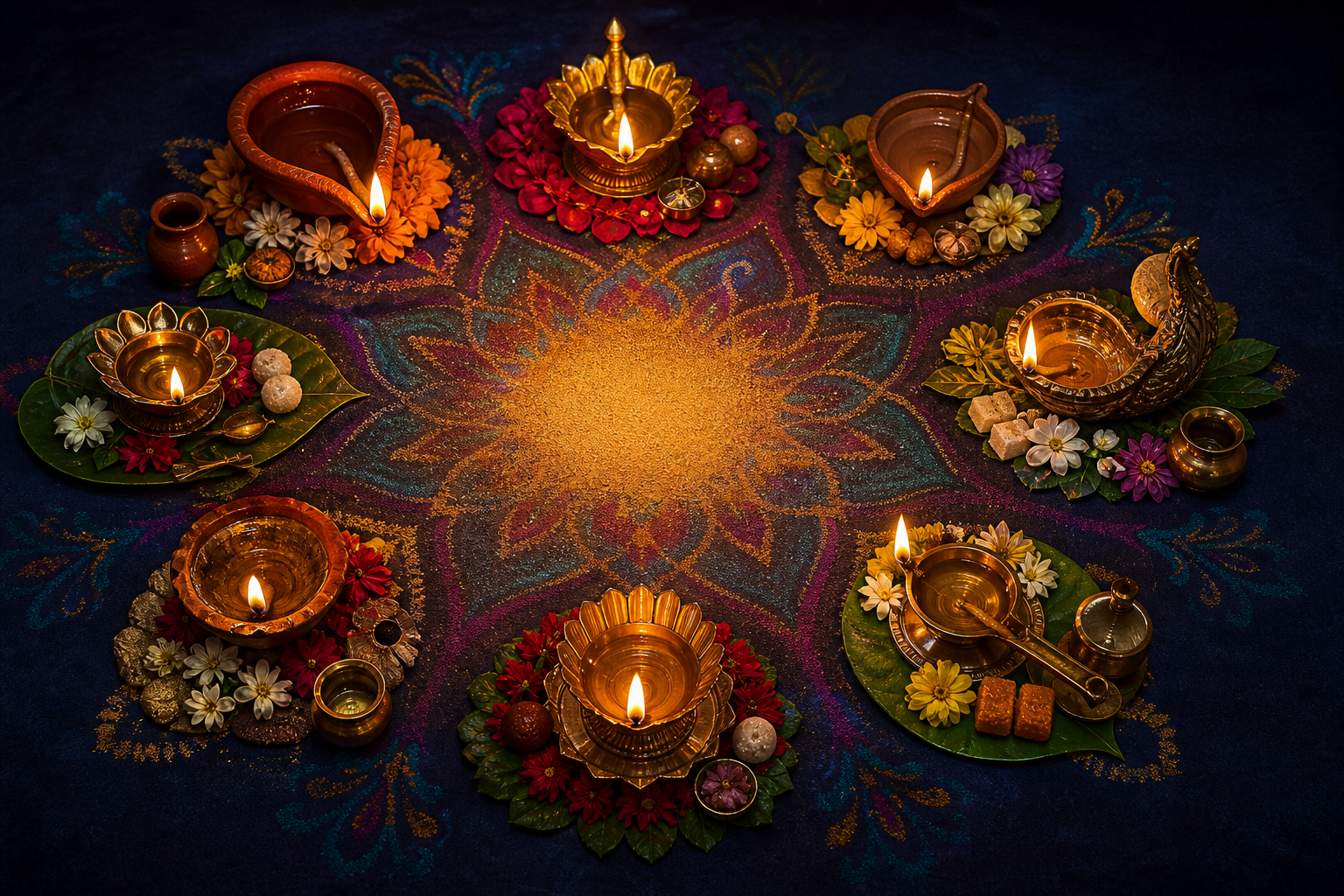
Diwali belongs to a broad civilizational season of illumination, but the traditions within that season are not interchangeable. Hindu families preserve several narratives and deity-centred observances. Jains commemorate the nirvana of Mahavira around Diwali, while Sikhs observe Bandi Chhor Divas near this period. Certain Buddhist communities also participate through their own regional settings. Shared values such as dana, daya, ahimsa, courage, wisdom, and service create kinship without making every theology or ritual identical.
You can teach this distinction in two sentences. First explain, “This is what our family does and why.” Then add, “Other dharmic families mark this season through their own sacred history.” That gives children both roots and respect. It is stronger than either pretending that all traditions are the same or treating diversity as division.
Make the shared ethics visible. Use earthen diyas and natural oils where practical, choose biodegradable rangoli material, limit waste, and keep fireworks modest and lawful. More importantly, include one deliberate act of generosity or service. A festival devoted to dispelling darkness should leave another person with more food, companionship, dignity, or practical help than they had before it.
Key takeaways for your 2025 observance
- Use Monday, 20 October 2025 as the principal planning date for Narak Chaturdashi and the Diwali observances covered here.
- Check a panchang calculated for your location before assigning clock times, especially if you live outside Bharat.
- Prepare bath and puja materials on 19 October so that the pre-dawn Abhyanga Snana remains calm and intentional.
- Choose the regional form inherited by your household: Narak Chaturdashi, Roop Chaudas, Kali Chaudas, Hanuman Puja, or a simple combination already established by your elders.
- Keep unfamiliar, lineage-specific rites out of an improvised home ceremony; a diya, familiar prayer, and sincere sankalpa are enough for a simple observance.
- Place the Yam Deep safely and confirm any family-specific procedure instead of treating an online variation as universal.
- If visiting a TTD temple, check current official communications for darshan timing, identification, crowd controls, and accessibility arrangements.
- Join purification to conduct: choose one habit to correct and one act of dana or seva to complete during the festival.
Before 19 October, save your local panchang, check any temple notice you intend to follow, and decide which optional regional puja belongs in your home. Set aside the oil, clean clothes, diyas, and offerings at the same time. Then 20 October can begin with purification and end with light, rather than being consumed by a calendar dispute or a last-minute search for ritual instructions.
References
- DharmaRenaissance Blog — Deepavali Asthanam 2025 at TTD Temples: Complete Guide to Rituals, Darshan, and Devotee Insights
- DharmaRenaissance Blog — Complete Guide to Naraka Chaturdashi Snan Mantras: Master Choti Diwali’s Auspicious Rituals
- DharmaRenaissance Blog — Complete Guide to Hanuman Puja on Diwali 2025: Discover Dates, Rituals, and Dharmic Unity
- DharmaRenaissance Blog — Complete Guide to Choti Diwali 2025 (Narak Chaturdashi): Significance, Rituals, Preparations
- DharmaRenaissance Blog — Discover Narak Chaturdashi 2025: Complete Guide to Kali Chaudas, Roop Chaudas, Hanuman Puja
