
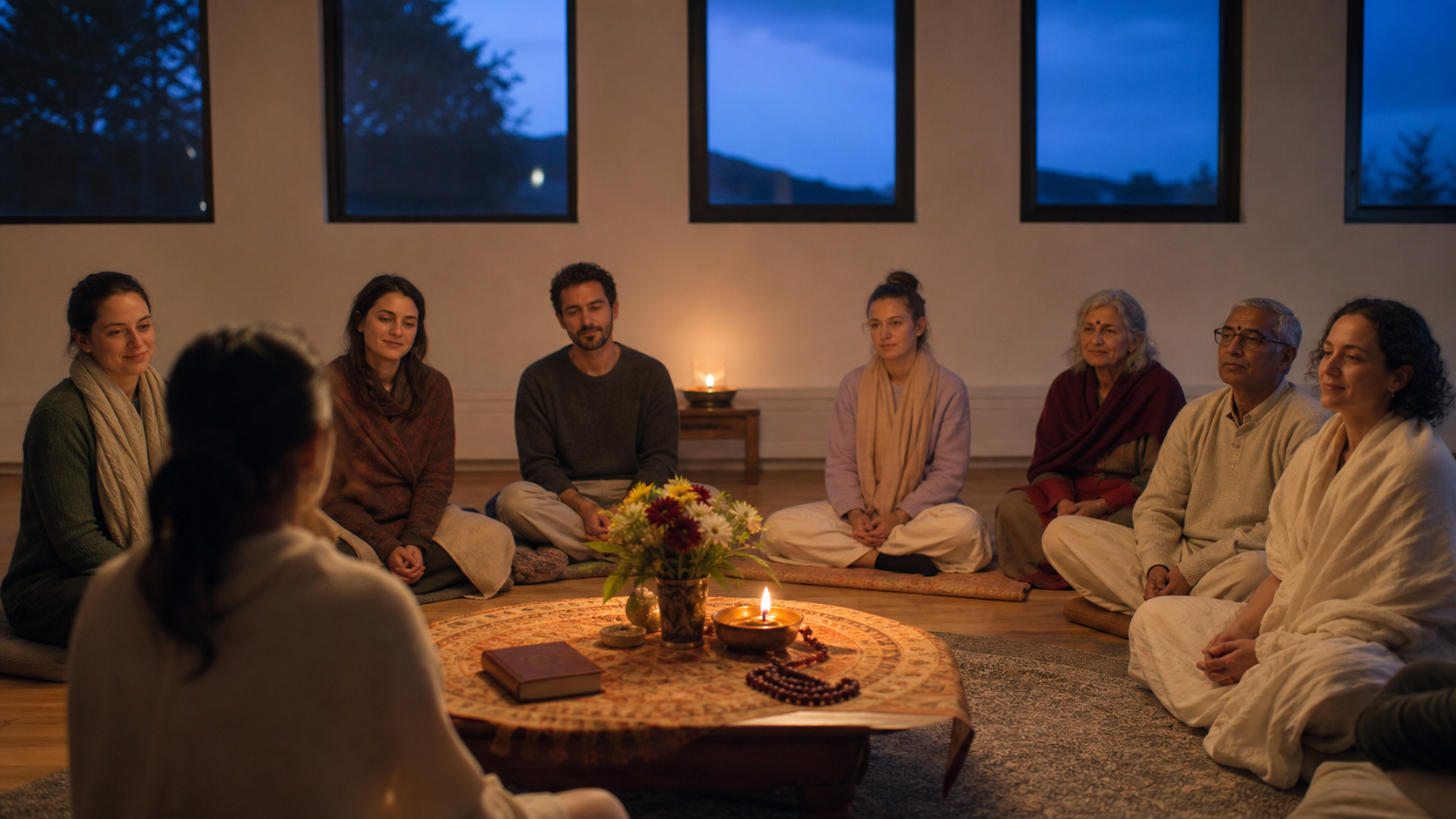
A talk on bhakti can leave you moved, amused or intellectually stimulated, yet unsure what to do when the screen goes dark. The useful question is not whether you enjoyed the speaker. It is whether one part of your life will now be offered more consciously to the Divine.
Patri Das’s appearance at Bhakti Night gives you an occasion to examine that question. Listen for the point that asks something of you, translate it into a modest practice, and then test the practice in your conduct. That is how inspiration begins to become sadhana.
Listen for the demand hidden inside inspiration
Patri Das’s Bhakti Night appearance presents him as a monk and an unconventional wisdom speaker. An unusual manner can make a familiar spiritual subject newly audible. It can also tempt you to remember the personality while forgetting the instruction. Keep those two things separate.
Do not try to preserve every appealing sentence. Listen for the moment that exposes a gap between the devotion you profess and the life you actually lead. Perhaps your worship is regular but your speech is harsh. Perhaps you sing the Divine Name but carry resentment through the day. Perhaps you seek devotional emotion while neglecting a duty that could itself become an offering.
When such a moment arrives, pause. Put it into a sentence beginning with an action verb: apologise, remember, serve, restrain, offer, return or simplify. A statement such as “I should be more devotional” is too vague to guide you. “Before replying in anger, I will remember the Divine Name” can be practised and observed.
Use the speaker’s eccentricity as an aid to attention, not as a spiritual costume. You do not need to borrow another person’s mannerisms to receive a useful teaching. What matters is whether the insight makes your remembrance steadier, your ego less demanding and your behaviour more aligned with dharma.
Bhakti is a relationship, not merely a religious mood

Bhakti is commonly rendered as devotion, but devotion is easily mistaken for a feeling. Feeling may accompany bhakti, especially in prayer, kirtan, darshan or remembrance. It is not the whole of bhakti. Feelings rise and fall with fatigue, company, music and circumstance. A devotional relationship must also be able to shape an ordinary day.
Different Hindu sampradayas explain the relationship between the jiva and the Divine in different ways. Those distinctions matter, and a serious practitioner should learn within the vocabulary and discipline of the tradition being followed. You need not flatten those teachings into a generic spirituality to recognise a practical question shared across devotional life: what is your love directing you to remember, relinquish and do?
Test remembrance. When no ritual, music or audience is present, does the Divine return to mind? If remembrance exists only in a charged gathering, connect it to an ordinary daily cue you already keep.
Test conduct. Does worship make you more truthful, patient and dependable? A devotional emotion that repeatedly excuses careless behaviour needs examination. Love of the Divine should not require indifference toward the people who depend on you.
Test service. Are you willing to perform necessary work that brings no applause? Seva reveals whether devotion is becoming an offering or remaining a preferred experience.
Test humility. Can you honour another devotee without measuring your practice against theirs? Spiritual comparison is still comparison. The ego can take pride in austerity, knowledge, emotion, proximity to a teacher or even its own supposed humility.
These tests are not invitations to condemn yourself. They are ways to locate the next honest step. Bhakti matures through returning: from distraction to remembrance, from self-display to offering, and from possessiveness to service.
Turn one insight into a repeatable sadhana
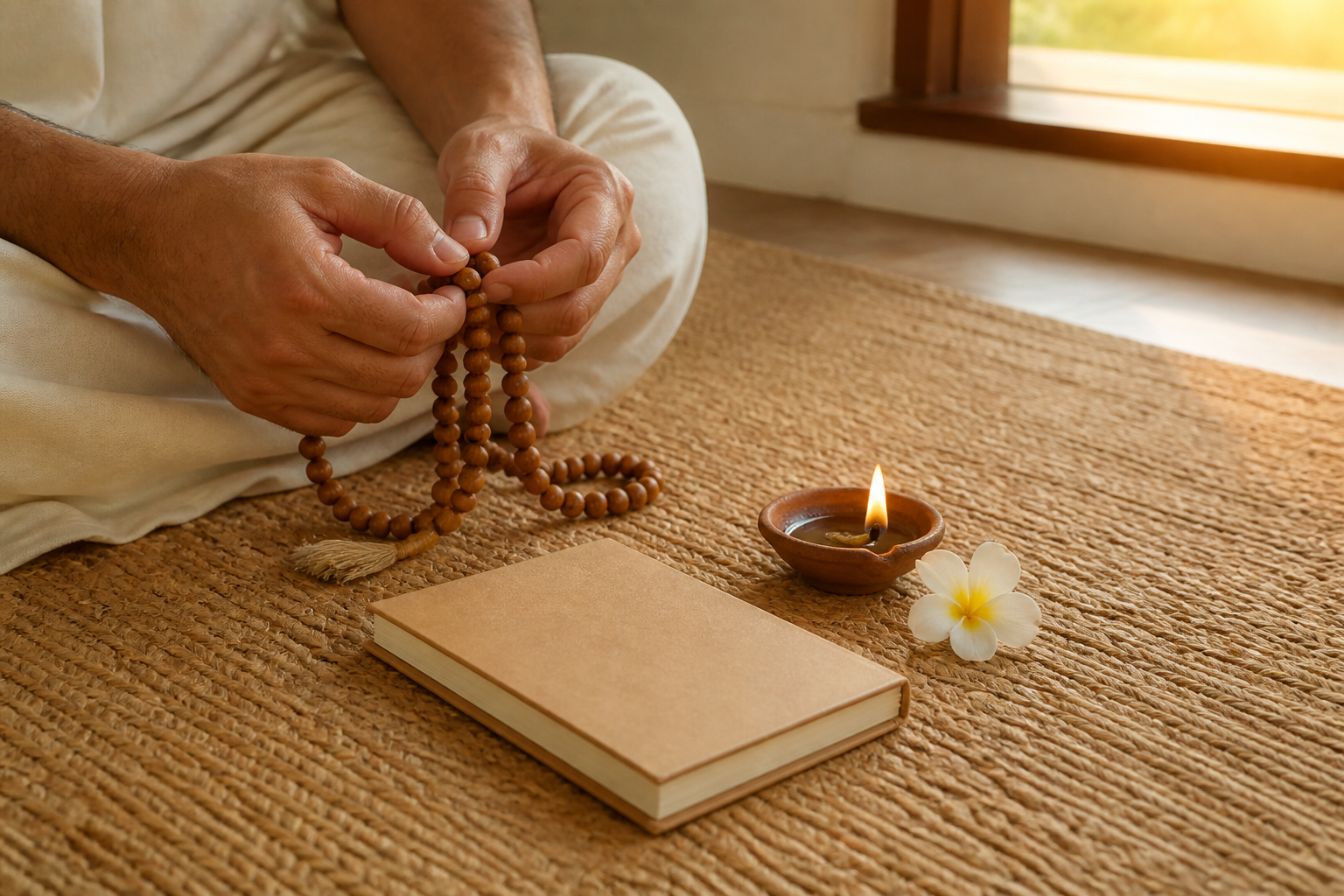
The strongest response to a spiritual talk is usually smaller than a dramatic vow. Choose one practice that fits your sampradaya, present responsibilities and actual capacity. Make it definite enough to repeat without needing a particular mood.
- Name the relationship. Be clear about whom you are remembering and how your tradition teaches you to approach the Divine. If you have received a mantra or discipline from a qualified guru, follow the guidance attached to it. Do not replace it casually with an esoteric practice encountered in passing.
- Choose an existing daily cue. Link remembrance to something that already happens, such as lighting the lamp, beginning a meal, opening your work or preparing for sleep. A stable cue removes the need to renegotiate the practice each day.
- Select one devotional action. This may be nama-japa, kirtan, pranam, prayer, reading from a text honoured by your tradition, offering food, caring for a sacred space or performing seva. Keep the form clear rather than assembling an ever-changing collection.
- Carry it into one duty. Choose a responsibility you are tempted to resent and consciously offer the care with which you perform it. The task does not become sacred because it is pleasant; it becomes part of sadhana when self-centred resistance is relinquished.
- End with an honest check. Ask where you remembered, where you forgot and what repair is needed. Do not convert the check into self-dramatisation. Make the repair, return to the practice and continue.
Resist the urge to expand the routine immediately. Adding more chants, talks, books and observances can feel like progress while protecting you from consistency. Let the chosen practice become part of the architecture of your day before adding another commitment.
If you are still finding your footing, begin with a form of prayer or remembrance already familiar in your family or community and seek guidance from a trustworthy teacher in that lineage. Curiosity is valuable, but collecting initiations, mantras or teachers without understanding their disciplines can leave you spiritually scattered.
Keep devotion from becoming performance or escape

Bhakti works upon the ego, so the ego naturally tries to appropriate bhakti. It can turn devotion into identity, belonging into superiority and visible practice into a demand for recognition. You can notice this early by watching what happens when nobody praises your piety or accommodates your preferences.
When bhakti becomes performance, reduce display. Keep some practice unseen. You need not publish every pilgrimage, offering, fast or encounter with a teacher. Sharing can encourage a community, but the desire to be witnessed should not become the hidden recipient of worship.
When bhakti becomes bargaining, restore offering. It is natural to bring needs and fears into prayer. The distortion begins when devotion is treated as a transaction: worship is given so that the Divine must produce the preferred result. State the need honestly, do what dharma requires, and leave room for surrender rather than attempting to control the outcome through piety.
When bhakti becomes sectarian vanity, return to your own discipline. Fidelity to a sampradaya does not require caricaturing another path. Learn your tradition accurately, practise it seriously and resist using theological differences as fuel for contempt. Confidence rooted in practice has less need to shout.
When bhakti becomes avoidance, face the neglected duty. More devotional content is not always the answer. If listening to talks repeatedly displaces work, reconciliation, family care or promised service, the next devotional act may be to close the recording and complete what you owe.
When admiration becomes imitation, separate principle from personality. A monk’s unconventional public manner is not permission to copy eccentricity. Receive the insight that deepens your practice, while allowing the speaker’s temperament to remain his own. Bhakti asks for your self-offering, not the manufacture of a borrowed persona.
Key takeaways
- Listen for one point that requires a change in conduct, not merely a change in opinion.
- Translate that point into a specific action attached to a daily cue you already keep.
- Judge devotional growth through remembrance, duty, service and humility rather than emotional intensity alone.
- Follow mantra and initiation practices according to the guidance of the tradition from which you received them.
- Watch for performance, bargaining, spiritual comparison and the use of religious activity to avoid ordinary responsibilities.
- Receive an unconventional speaker’s insight without turning his personality into something you must imitate.
Before you move to another talk, write down the one action this encounter has clarified. Practise it in the next ordinary situation that tests your patience, pride or willingness to serve. The lasting measure of a bhakti talk is not how elevated you felt while listening, but what you remember to offer afterward.
References
